Christmas Lights
CN → US| HS Code | Tariff Rate | Origin | Destination | Doc |
|---|---|---|---|---|
| 9405390010 | 43.0% | CN | US | Official Doc |
| 9405310010 | 43.0% | CN | US | Official Doc |
| 8539291000 | 15.8% | CN | US | Official Doc |
| 8539224000 | 15.8% | CN | US | Official Doc |
Product Images
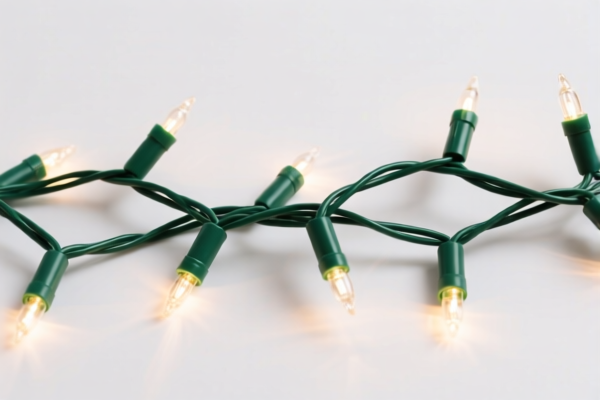
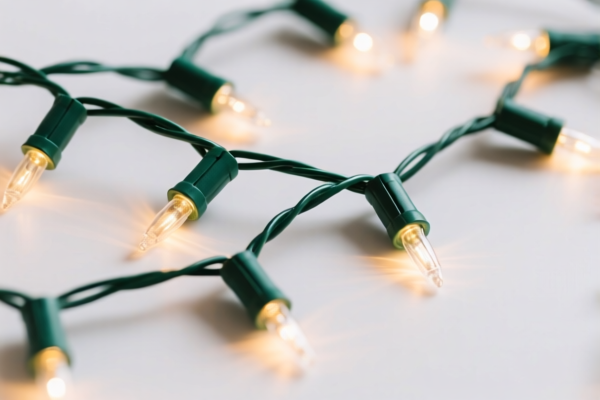
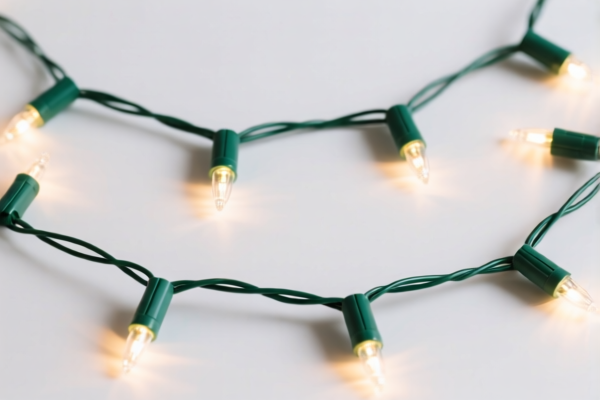
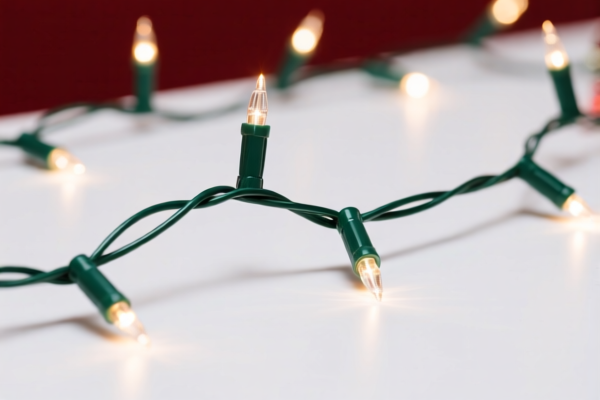
AI Analysis
🎄 Christmas Lights (Holiday Lighting)
🌐 HS Code Reference & Customs Clearance Guide | 2026 Latest Tariff Analysis | Professional Clearance Strategy
📌 I. Product Definition & Classification: Do You Really Understand "Christmas Lights"?
Christmas lights, broadly referred to as holiday lighting, are electric lighting strings primarily used for festive decoration. However, in international trade and customs classification, the term "Christmas Lights" is not a single HS code. It is split based on technology type (LED vs. Filament/Incandescent) and construction (String vs. Individual Bulbs).
Misclassification is the most common cause of delays and penalties for this category. The critical distinction lies between:
- LED String Lights (9405 Series): The modern standard, classified under "Lighting strings of a kind used for Christmas trees."
- Filament/Incandescent Bulbs (8539 Series): Traditional bulbs, often sold individually or as replacements, classified under "Electrical filament lamps."
⚠️ Key Distinction:
- If the product is a pre-wired string designed specifically for Christmas trees, regardless of bulb type, it generally falls under Chapter 94 (Articles of furniture...).
- If the product is individual bulbs (not wired into a string) or sealed beam units, it falls under Chapter 85 (Electrical machinery...).
📦 II. HS Code Classification Details (2026 Latest Tariff Authority Comparison)
Based on the provided data, here are the four specific HS codes relevant to Christmas lighting products. Note that the tax burden varies significantly depending on the technology (LED vs. Incandescent) and voltage.
| HS Code | Product Description | Applicable Scenario | Technology/Voltage |
|---|---|---|---|
9405.31.00.10 |
Lighting strings for Christmas trees: Designed for use solely with LED light sources (Miniature series wired sets) | Modern LED Christmas tree lights, mini-string lights | ✅ LED Only |
9405.39.00.10 |
Lighting strings for Christmas trees: Other Miniature series wired sets (Non-LED) | Traditional incandescent or halogen mini-string lights | ❌ Not LED |
8539.29.10.00 |
Other filament lamps: Designed for voltage ≤ 100 V (Excl. UV/IR) | Individual incandescent bulbs, low-voltage holiday bulbs | ✅ Filament ≤ 100V |
8539.22.40.00 |
Other filament lamps: Power ≤ 200 W, Voltage > 100 V | Individual incandescent bulbs, high-voltage decorative bulbs | ✅ Filament > 100V |
🔍 Critical Reminder:
- String vs. Bulb: Do not classify a pre-wired LED string as8539(Lamps). It must be9405.
- LED Priority: LED strings (9405.31) and Non-LED strings (9405.39) are grouped together in Chapter 94, but they have different sub-descriptions.
- Individual Bulbs: If you are importing only bulbs (not wired), they go to8539. If you are importing wired sets, they go to9405.
💰 III. 2026 Latest Tariff Rate Detailed Breakdown (Including Surcharges)
✅ Applicable Country: United States (US)
✅ Origin: China (CN)
✅ Effective Time: Current rates apply (based on provided data)
🎯 1. 9405.31.00.10 & 9405.39.00.10 —— Christmas Tree Lighting Strings (LED & Non-LED)
This category applies to wired strings intended for Christmas trees.
| Item | Content |
|---|---|
| Base Tariff | 8.0% (ad valorem) |
| Additional Tariff (Section 301) | +25.0% |
| Total Tariff | 33.0% |
| Tax Calculation | CIF Value × 33% |
| De Minimis Exemption Eligible? | ❌ No (High tariff rates typically exclude de minimis benefits for China origin in many contexts, or are explicitly non-exempt under specific trade acts. Note: Standard de minimis is $800, but high tariffs often trigger rigorous scrutiny or exclusion depending on specific enforcement periods. Based on provided data, total tax is fixed at 33%.) |
📌 Explanation:
- Base Tariff (8%): The standard Most Favored Nation (MFN) rate for lighting strings under Chapter 94.
- Additional Tariff (25%): Under US Trade Law Section 301, many Chinese-origin goods are subject to an additional 25% duty.
- Total 33%: This is a high-cost item for importers. Profit margins must account for this significant duty burden.
🎯 2. 8539.29.10.00 —— Filament Lamps (Voltage ≤ 100 V)
This category applies to individual incandescent bulbs or small filament lamps with low voltage.
| Item | Content |
|---|---|
| Base Tariff | 0.0% |
| Additional Tariff | 0.0% |
| Total Tariff | 0.0% |
| Tax Calculation | CIF Value × 0% |
📌 Explanation:
- Zero Duty: These specific low-voltage filament lamps enjoy 0% duty.
- Strategic Advantage: If your business model involves importing individual bulb replacements rather than complete strings, this tariff advantage is significant. However, verify if the product is truly "not a string."
🎯 3. 8539.22.40.00 —— Filament Lamps (Voltage > 100 V, Power ≤ 200 W)
This category applies to individual incandescent bulbs with standard household voltage (e.g., 120V/220V).
| Item | Content |
|---|---|
| Base Tariff | 0.0% |
| Additional Tariff | 0.0% |
| Total Tariff | 0.0% |
| Tax Calculation | CIF Value × 0% |
📌 Explanation:
- Zero Duty: Like low-voltage bulbs, standard voltage filament lamps also enjoy 0% duty.
- Caution: Do not confuse this with LED bulbs. LED bulbs (if sold individually) may have different classifications. This 0% rate is specific to filament/incandescent lamps in this voltage/power range.
🛠️ IV. Customs Clearance Practical Advice (Combat Pitfall Guide)
✅ 1. Required Documentation Checklist
| Document | Mandatory | Description |
|---|---|---|
| ✅ Product Photos | ✔️ | Must show if items are wired strings (Chapter 94) or individual bulbs (Chapter 85). |
| ✅ Technical Spec Sheet | ✔️ | Must specify: Voltage, Power, Light Source Type (LED vs. Incandescent), and Wiring Status. |
| ✅ Commercial Invoice | ✔️ | Must clearly describe goods as "Christmas Tree Lighting String" or "Incandescent Lamp Bulb" – NOT just "Christmas Lights." |
| ✅ CE/FCC Certification | ✔️ | Electrical safety and EMC compliance are mandatory for the US market. |
| ✅ List of Components | ✔️ | For strings: List wire, plugs, bulbs, controller. For bulbs: Just the bulb. |
✅ 2. Declaration Tips (Key Mnemonics)
🔥 “Strings go to 94, Bulbs go to 85. LED or Incandescent, check the voltage!”
| Scenario | Correct HS Code | Error Risk |
|---|---|---|
| Pre-wired LED String | 9405.31.00.10 |
❌ If declared as 8539, you underpay duty (0% vs 33%). Big Risk! |
| Pre-wired Incandescent String | 9405.39.00.10 |
❌ If declared as 8539, you underpay duty (0% vs 33%). Big Risk! |
| Individual Incandescent Bulb | 8539.29.10.00 or 8539.22.40.00 |
✅ Correct if sold as loose bulbs. |
| Individual LED Bulb | Not in provided data | ⚠️ Likely 8539.21 or similar. Verify if it fits "filament." |
📌 Critical Warning:
- Do NOT use "Christmas Lights" as the sole description.
- Do NOT mix wired strings with individual bulbs in one line item.
- If you import a kit with a string AND loose bulbs, declare them separately to avoid misclassification.
✅ 3. Special Handling Cases
| Scenario | Handling Advice |
|---|---|
| Smart LED Strings (App-Controlled) | Still 9405.31.00.10. The control chip does not change the classification from "Lighting String" to "Electronic Apparatus." |
| Outdoor vs. Indoor | Classification remains 9405.31 or 9405.39. However, outdoor strings may require stricter UL/ETL certification for customs clearance. |
| Bulbs with Integrated Driver (Plug-in) | If the plug and driver are integral to the string, it is still a "String" (9405). If the driver is separate (e.g., a transformer), the transformer might be classified separately (8504). |
🌍 V. Global Market Comparison (2026 Latest)
| Country/Region | Recommended HS Code (String) | Tariff (China Origin) | Certification Required | Notes |
|---|---|---|---|---|
| 🇺🇸 USA | 9405.31.00.10 (LED) |
33% (8% Base + 25% Surtax) | FCC, UL/ETL | High duty burden. |
| 🇪🇺 EU | 9405.40 (General) |
Varies (Often 0-4%) | CE, RoHS, WEEE | Lower tariffs, but strict eco-design. |
| 🇨🇳 China | 9405.40 |
5-8% | CCC (if applicable) | Domestic trade standards. |
| 🇬🇧 UK | 9405.40 |
0-5% | UKCA, CE | Post-Brexit certification. |
📌 Conclusion:
- USA is the most expensive market for Christmas lighting imports due to the 33% total duty on strings.
- Filament bulbs enjoy 0% duty in the US, making bulk bulb imports attractive for retail replacement markets.
📌 VI. Common Errors & Pitfall Guide (Lessons Learned)
❌ Mistake 1: Declaring LED strings as 8539.21 (LED Lamps)
👉 Consequence: Underpayment of duty (0-2% vs 33%). Customs will assess back duties + penalties.
👉 Fix: Always check if the item is a wired string. If yes, it is 9405.
❌ Mistake 2: Mixing "LED" and "Incandescent" in one description without specifying
👉 Consequence: Customs cannot determine if it is 9405.31 (LED) or 9405.39 (Non-LED). May lead to hold for examination.
👉 Fix: Be explicit: "LED Miniature String Lights."
❌ Mistake 3: Ignoring Voltage in Filament Lamp Declaration
👉 Consequence: Misclassification between 8539.29 (≤100V) and 8539.22 (>100V).
👉 Fix: Verify voltage on the product nameplate.
✅ Correct Declaration Example:
"LED Miniature Christmas Tree Lighting String, 100 LED, 120V, UL Listed, Model X100, HS 9405.31.00.10"
🎯 VII. Conclusion: Professional Declaration for Cost Efficiency
🎯 Remember the Mnemonic:
🔹 “Strings are 94, Bulbs are 85. Strings pay 33%, Bulbs pay 0% (if filament).”
🔹 “Be specific: LED vs. Incandescent, Wired vs. Loose. One word wrong, costs you big!”
📌 Pro Tip:
- If you are importing individual LED bulbs (not filaments), they may fall under 8539.21. Check if they qualify as "filament" (incandescent) or general LED. If general LED, they may have different duties not listed in the 0% filament examples above.
- For Christmas tree strings, the 33% tariff is non-negotiable for China-origin goods under current Section 301 rules. Plan your pricing accordingly.
📣 Immediate Action:
📞 Contact a licensed customs broker + Provide product photos of wiring + Request HS Code Pre-Ruling.
🚀 Clear customs smoothly, protect margins, and celebrate a successful holiday season!
✨ Professional clearance starts with precise classification!
💼 Your duty cost is directly tied to your HS Code accuracy!
Customer Reviews
About HS Code Classification
The Harmonized System (HS) is an internationally standardized nomenclature developed by the World Customs Organization (WCO) to classify traded products. Over 200 countries use the HS system as the basis for customs tariffs, trade statistics, and import/export regulations.
Each HS code follows a hierarchical structure:
- Chapter (2 digits) — Broad category of goods (e.g., Chapter 84: Machinery and Mechanical Appliances)
- Heading (4 digits) — More specific grouping within the chapter
- Subheading (6 digits) — Internationally standardized breakdown, used by all WCO member countries
- National subdivisions (8-10 digits) — Country-specific extensions for further classification, such as US HTSUS 10-digit codes
Correct HS code classification is essential for smooth customs clearance, accurate duty payment, and compliance with trade regulations. Misclassification can lead to customs delays, overpayment of duties, or penalties.
When importing from CN to US, the applicable tariff rates may include:
- Most-Favored-Nation (MFN) rate — The standard duty rate applied to WTO members
- General rate — Applied to countries without trade agreements
- Trade remedy duties — Additional tariffs such as Section 301 (anti-dumping), Section 232 (national security), or countervailing duties
The information provided on this page is for reference purposes only. For official classification, please consult with your local customs authority or a licensed customs broker.