Christmas Money Pulling Toy
CN → US| HS Code | Tariff Rate | Origin | Destination | Doc |
|---|---|---|---|---|
| 9503000073 | 10.0% | CN | US | Official Doc |
| 9503000071 | 10.0% | CN | US | Official Doc |
Product Images
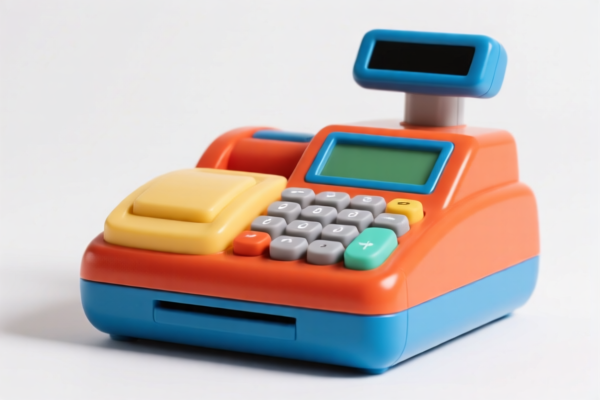
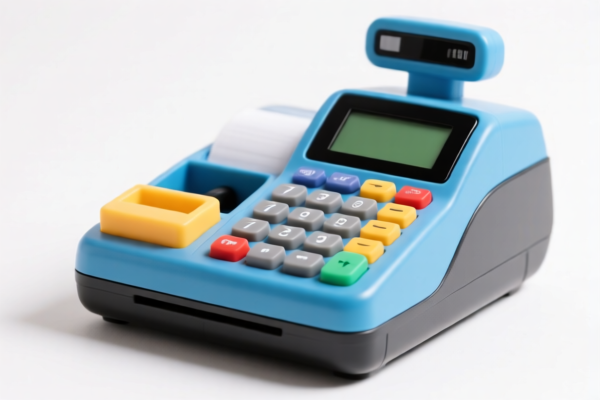
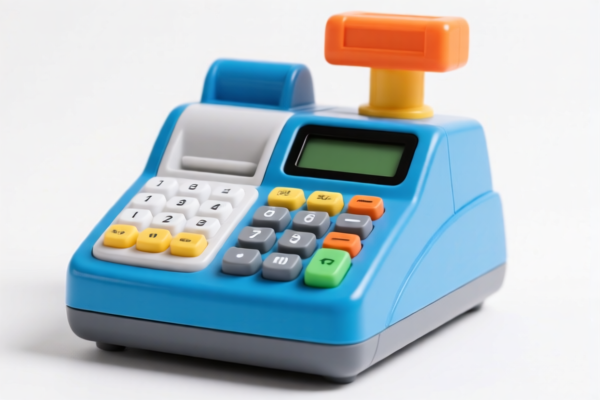
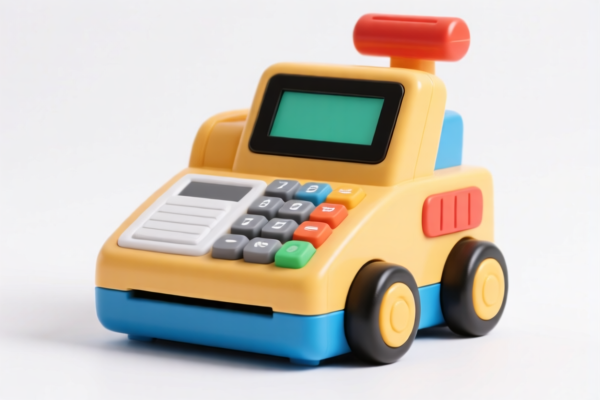
AI Analysis
🎄 Christmas Money Pulling Toy (Seasonal Gifting & Novelty Toys)
🌐 HS Code Reference & Customs Clearance Guide | 2026 Latest Tariff Analysis | Professional Customs Strategy
📌 I. Product Definition & Classification: Do You Really Understand "Christmas Money Pulling Toys"?
The "Christmas Money Pulling Toy" is a seasonal novelty item, often used as a stocking stuffer or gift wrap alternative. It typically consists of a decorative container (box, bag, or pull-string mechanism) designed to dispense money when a string is pulled. In international trade, it falls under the broad category of toys and reduced-scale models, with specific classification depending on the intended age group and labeling.
⚠️ Key Distinction:
- If labeled/determined as intended for use by persons Under 3 years of age →归入 9503.00.00.71
- If labeled/determined as intended for use by persons 3 to 12 years of age → 归入 9503.00.00.73📌 Critical Note:
The classification hinges on the importer's determination of the target age group, as defined in 15 U.S.C. § 2052 ("Children’s Products"). Even if the toy appears simple, proper labeling and intent documentation are crucial for accurate HS Code assignment.
📦 II. HS Code Classification Details (2026 Latest Tariff Authoritative Comparison)
| HS Code | Product Description | Applicable Scenario | Age Group Determination |
|---|---|---|---|
9503.00.00.71 |
Tricycles, scooters, pedal cars and similar wheeled toys; dolls’ carriages; dolls, other toys; reduced-scale (“scale”) models and similar recreational models, working or not; puzzles of all kinds; parts and accessories thereof “Children’s products” as defined in 15 U.S.C. § 2052: Other: Labeled or determined by importer as intended for use by persons: Under 3 years of age | Younger children (infants/toddlers) | ✅ Under 3 years |
9503.00.00.73 |
Tricycles, scooters, pedal cars and similar wheeled toys; dolls’ carriages; dolls, other toys; reduced-scale (“scale”) models and similar recreational models, working or not; puzzles of all kinds; parts and accessories thereof “Children’s products” as defined in 15 U.S.C. § 2052: Other: Labeled or determined by importer as intended for use by persons: 3 to 12 years of age | Older children (kids/pre-teens) | ✅ 3 to 12 years |
🔍 Important Reminder:
- Both codes belong to Chapter 95 (Toys, Games, and Sports requisites). - The distinction is purely based on age determination, not the physical complexity of the toy. - Misclassification can lead to compliance issues, especially regarding children’s product safety standards (e.g., CPSIA in the US).
💰 III. 2026 Latest Tariff Rate Details (Including Surtaxes, Policy Surcharges)
✅ Applicable Country: United States (US)
✅ Origin: China (CN)
✅ Effective Date: November 10, 2025 (and subsequent imports)
🎯 1. 9503.00.00.71 —— For Children Under 3 Years of Age
| Item | Content |
|---|---|
| Base Tariff Rate | 0.0% (ad valorem) |
| USITC Surtax | 0.0% |
| IEEPA Surtax | 0.0% |
| Total Tariff Rate | 0.0% |
| Tax Calculation | CIF Value × 0.0% |
| De Minimis Eligibility | ✅ Yes (subject to $800 threshold) |
| Legal Basis Path | USITC:9503.00.00.71 → 0% Base |
📌 Explanation:
- Toys for children under 3 are classified under a specific subheading that enjoys zero tariff under current US trade policy for Chinese origin goods. - This applies even with the 301 tariffs and IEEPA surcharges, which do not apply to this specific category.
🎯 2. 9503.00.00.73 —— For Children Aged 3 to 12 Years
| Item | Content |
|---|---|
| Base Tariff Rate | 0.0% (ad valorem) |
| USITC Surtax | 0.0% |
| IEEPA Surtax | 0.0% |
| Total Tariff Rate | 0.0% |
| Tax Calculation | CIF Value × 0.0% |
| De Minimis Eligibility | ✅ Yes (subject to $800 threshold) |
| Legal Basis Path | USITC:9503.00.00.73 → 0% Base |
📌 Note:
- Similar to the under-3 category, toys for children aged 3-12 also enjoy zero tariff. - This is a significant advantage for importers compared to other consumer goods subject to 301 tariffs.
🛠️ IV. Customs Clearance Practical Advice (Real-World Pitfall Avoidance Guide)
✅ 1. Required Document Checklist (None are Optional)
| Document | Must Provide | Explanation |
|---|---|---|
| ✅ Product Specification Sheet | ✔️ | Includes material, size, mechanism type, safety warnings |
| ✅ Age Labeling/Documentation | ✔️ | Clear indication of intended age group (Under 3 vs. 3-12) |
| ✅ Product Photos (Including Labels) | ✔️ | Clear images of packaging, age labels, and product features |
| ✅ Third-Party Test Reports | ✔️ | CPSIA, ASTM F963, EN71 (if applicable) |
| ✅ Commercial Invoice | ✔️ | Must clearly state "Children's Toy - Money Pulling Toy" and age group |
| ✅ Packing List | ✔️ | Details quantity, weight, and packaging structure |
✅ 2. Declaration Tips (Key Mantra)
🔥 "Age Determines Code, Label is Key, Zero Tariff Awaits, Mislabeling Brings Delays!"
| Scenario | Correct Declaration | Incorrect Approach |
|---|---|---|
| Toy labeled for Under 3 | 9503.00.00.71 |
Misdeclared as 3-12 → Delay in clearance |
| Toy labeled for 3-12 | 9503.00.00.73 |
Misdeclared as Under 3 → Potential compliance issue |
| Toy without age label | Request importer determination | Guessing → High risk of misclassification |
| Toy with multiple age groups | Declare based on primary target | Split declaration → Complex and costly |
✅ 3. Special Case Handling
| Scenario | Handling Advice |
|---|---|
| OEM Custom Toys | Provide customer order + design specs to prove intended age group |
| Mixed Age Groups in One Shipment | Separate declarations for each age group HS Code |
| Toys with Small Parts | Must include choking hazard warnings and pass CPSIA tests |
| Non-Toy Items (e.g., Gift Boxes) | If not intended as a toy, may fall under Chapter 48 or 70, but must not be marketed as a toy |
🌍 V. Global Market Customs Clearance Comparison (2026 Latest)
| Country/Region | Recommended HS Code | Tariff | Certification Requirements | Notes |
|---|---|---|---|---|
| 🇺🇸 United States | 9503.00.00.71 / 9503.00.00.73 |
0% | CPSIA + ASTM F963 | Zero tariff for Chinese origin |
| 🇨🇳 China | 9503.00.00.71 / 9503.00.00.73 |
0% | CCC + GB 6675 | No additional surtax |
| 🇪🇺 European Union | 9503.00.00 |
0% | CE + EN71 | No surtax |
| 🇬🇧 United Kingdom | 9503.00.00 |
0% | UKCA + EN71 | Post-Brexit rules apply |
| 🇯🇵 Japan | 9503.00.00 |
0% | Japanese Industrial Standard (JIS) | No surtax |
📌 Conclusion:
- Toys are generally tariff-free in major markets, but safety compliance is strict. - US market requires careful age group determination for accurate HS Code assignment.
📌 VI. Common Mistakes & Pitfall Guide (Lessons Learned the Hard Way)
❌ Mistake 1: Declaring a toy for 3-12 year olds as Under 3
👉 Consequence: CPSIA compliance failure → Goods held at customs, fines imposed!
❌ Mistake 2: No age label on packaging
👉 Consequence: Customs cannot determine HS Code → Shipment delayed for classification review
❌ Mistake 3: Misidentifying a "gift box" as a "toy"
👉 Consequence: Wrong HS Code → Potential tariff discrepancies and audit risks
❌ Mistake 4: Ignoring safety tests for young children
👉 Consequence: Product recall → Brand damage and legal liability
✅ Correct Approach:
"Christmas Money Pulling Toy, Plastic, Age 3+, ASTM F963 Certified, Model XMAS-PULL-01"
🎯 VII. Conclusion: Professional Declaration, Time-Saving, Cost-Effective!
🎯 Remember the Mantra:
🔹 "Age Label is King, HS Code Follows, Zero Tariff is Sweet, Compliance is Key!"
🔹 "HS Code defines your duty, age group dictates compliance, declare accurately, save thousands!"
📌 Pro Tip:
If your toy is intended for multiple age groups, consult with a customs broker to determine the most appropriate classification based on marketing and design.
Consider applying for an Advance Ruling (Pre-classification) from US CBP for high-volume shipments to ensure consistency and avoid delays.
📣 Immediate Action:
📞 Contact a professional customs broker + Provide product images + Apply for HS Code Advance Ruling
🚀 Ensure your Christmas toys clear customs smoothly, efficiently, and profitably!
✨ Professional Customs Clearance Starts with Accurate Classification!
💼 Every cent of your cost deserves precise calculation!
Customer Reviews
About HS Code Classification
The Harmonized System (HS) is an internationally standardized nomenclature developed by the World Customs Organization (WCO) to classify traded products. Over 200 countries use the HS system as the basis for customs tariffs, trade statistics, and import/export regulations.
Each HS code follows a hierarchical structure:
- Chapter (2 digits) — Broad category of goods (e.g., Chapter 84: Machinery and Mechanical Appliances)
- Heading (4 digits) — More specific grouping within the chapter
- Subheading (6 digits) — Internationally standardized breakdown, used by all WCO member countries
- National subdivisions (8-10 digits) — Country-specific extensions for further classification, such as US HTSUS 10-digit codes
Correct HS code classification is essential for smooth customs clearance, accurate duty payment, and compliance with trade regulations. Misclassification can lead to customs delays, overpayment of duties, or penalties.
When importing from CN to US, the applicable tariff rates may include:
- Most-Favored-Nation (MFN) rate — The standard duty rate applied to WTO members
- General rate — Applied to countries without trade agreements
- Trade remedy duties — Additional tariffs such as Section 301 (anti-dumping), Section 232 (national security), or countervailing duties
The information provided on this page is for reference purposes only. For official classification, please consult with your local customs authority or a licensed customs broker.