Christmas Packaging Bag
CN → US| HS Code | Tariff Rate | Origin | Destination | Doc |
|---|---|---|---|---|
| 4819400040 | 35.0% | CN | US | Official Doc |
| 6307909891 | 24.5% | CN | US | Official Doc |
| 6307908995 | 17.0% | CN | US | Official Doc |
| 4202923131 | 52.6% | CN | US | Official Doc |
| 4202923316 | 52.6% | CN | US | Official Doc |
Product Images
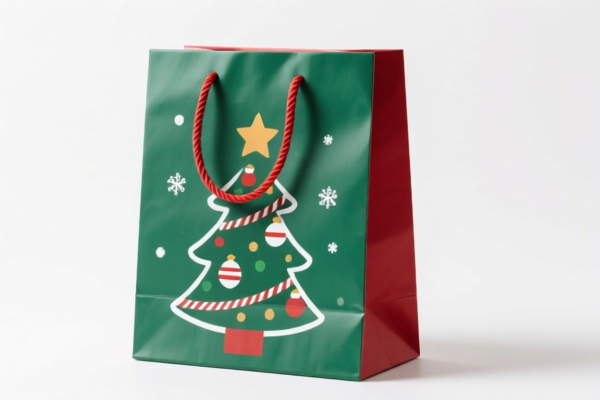
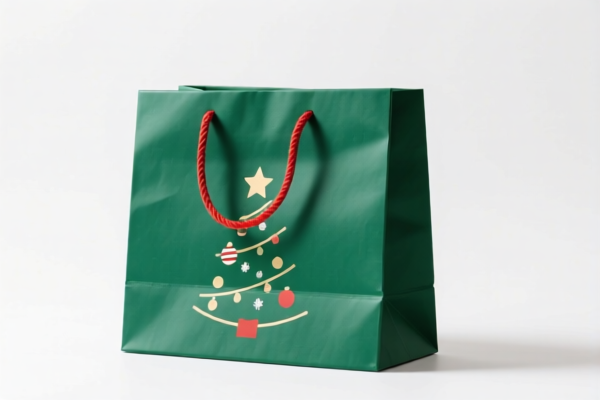
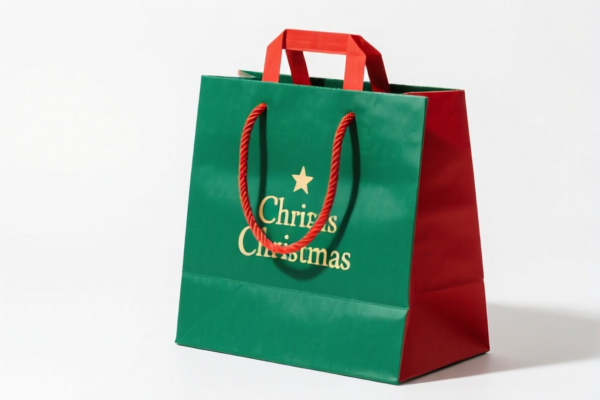
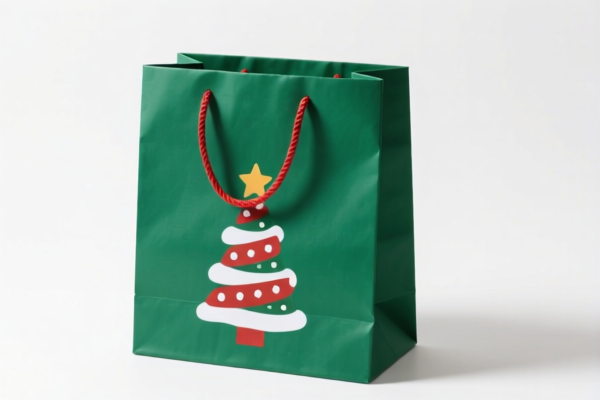
AI Analysis
🎄 Christmas Packaging Bag (Gift Bags & Pouches)
🌐 HS Code Reference & Customs Clearance Guide | 2026 Latest Tariff Analysis | Professional Clearance Strategy
📌 I. Product Definition & Classification: Do You Really Know What a "Christmas Bag" Is?
Christmas packaging bags are seasonal goods used primarily for gifting, decoration, or carrying small items during the holiday season. In international trade, they are classified based on material composition and functional category, leading to significantly different tariff rates.
Paper Bags (Non-woven/Standard Paper): Bags made primarily of paper or paperboard, often used for lightweight gifts.
Textile/Non-woven Fabric Bags: Bags made from woven or non-woven synthetic fibers (e.g., polypropylene, polyester), offering durability and reusability.
Leather/Plastic-Coated Bags: Higher-end bags made from leather substitutes, plastic, or textile-covered materials, often classified under "other articles of apparel/accessories."
⚠️ Key Classification Point:
- If the bag is paper-based (even with handles) → Likely Chapter 48;
- If the bag is textile/non-woven fabric → Likely Chapter 63;
- If the bag is fashion accessory-style (e.g., non-woven with handles, resembling a purse) → Likely Chapter 42.
📦 II. HS Code Classification Details (2026 Latest Tariff Authority Comparison)
| HS Code | Product Description | Material/Structure | Key Application Scenario |
|---|---|---|---|
4819.40.00.40 |
Christmas Bag, Paper-Based | Paper or Non-woven (Paper-like) | Lightweight gift bags, simple paper pouches |
6307.90.98.91 |
Christmas Bag, General Textile | Fabric/Non-woven (General Finished Goods) | Standard reusable shopping/gift bags |
6307.90.89.95 |
Christmas Bag, Textile/Non-woven | Textile or Non-woven (Other Finished Goods) | Durable fabric bags, reusable tote bags |
4202.92.31.31 |
Christmas Bag, Fashion/Accessory Type | Textile (e.g., Non-woven) resembling purse | High-end decorative bags, shaped like handbags |
4202.92.33.16 |
Christmas Bag, Bag/Pouch Type | Textile or Plastic Materials | General "catch-all" category for textile/plastic bags |
🔍 Critical Note:
- Paper vs. Textile: The biggest confusion lies between4819(Paper) and6307(Textile). If the bag feels like cloth or is made of PP non-woven fabric, it is NOT Chapter 48.
- Accessory vs. Household: Bags that look like fashion accessories (e.g., structured, with zippers, metal hardware) may fall under Chapter 42 (Leather goods substitutes), which often carries higher tariffs.
💰 III. 2026 Latest Tariff Rate Breakdown (Including Additional Taxes, Policy Surcharges)
✅ Applicable Country: United States (US)
✅ Origin: China (CN)
✅ Effective Time: From November 10, 2025 (and subsequent imports)
🎯 1. 4819.40.00.40 — Paper-Based Christmas Bag
| Item | Content |
|---|---|
| Base Tariff | 0.0% (ad valorem) |
| USITC Additional Tariff (Section 301) | +25.0% |
| IEEPA Additional Tariff | +10.0% (Section 122, targeting China/HK) |
| Total Tariff | 35.0% |
| Tax Calculation | CIF Value × 35% |
| De Minimis Exemption | ❌ Not Eligible (deny_de_minimis) |
| Legal Basis Path | IEEPA:122 → USITC:4819.40.00.40 |
📌 Explanation:
- Even though the base tariff is 0%, the 35% total rate makes this category expensive.
- This category is common for simple paper gift bags with twisted paper handles.
🎯 2. 6307.90.98.91 — General Textile/Non-woven Bag
| Item | Content |
|---|---|
| Base Tariff | 7.0% |
| USITC Additional Tariff (Section 301) | +7.5% |
| IEEPA Additional Tariff | +10.0% (Section 122) |
| Total Tariff | 24.5% |
| Tax Calculation | CIF Value × 24.5% |
| De Minimis Exemption | ❌ Not Eligible (deny_de_minimis) |
| Legal Basis Path | IEEPA:122 → USITC:6307.90.98.91 |
📌 Explanation:
- This is a "Other Made-up Articles" category.
- Suitable for non-specific textile bags that don't fit neatly into apparel or household linen.
🎯 3. 6307.90.89.95 — Textile/Non-woven Bag (Other Finished Goods)
| Item | Content |
|---|---|
| Base Tariff | 7.0% |
| USITC Additional Tariff (Section 301) | +0.0% |
| IEEPA Additional Tariff | +10.0% (Section 122) |
| Total Tariff | 17.0% |
| Tax Calculation | CIF Value × 17.0% |
| De Minimis Exemption | ❌ Not Eligible (deny_de_minimis) |
| Legal Basis Path | IEEPA:122 → USITC:6307.90.89.95 |
📌 Explanation:
- Best Rate for Textile Bags!
- This category often applies to reusable fabric bags or non-woven bags that are clearly identified as "other finished articles of textile materials."
- Strategy: If your bag is made of PP non-woven fabric, try to classify under6307.90.89.95instead of4819or4202to save 17%-35% in duties.
🎯 4. 4202.92.31.31 — Fashion-Style Textile Bag
| Item | Content |
|---|---|
| Base Tariff | 17.6% |
| USITC Additional Tariff (Section 301) | +25.0% |
| IEEPA Additional Tariff | +10.0% (Section 122) |
| Total Tariff | 52.6% |
| Tax Calculation | CIF Value × 52.6% |
| De Minimis Exemption | ❌ Not Eligible (deny_de_minimis) |
| Legal Basis Path | IEEPA:122 → USITC:4202.92.31.31 |
📌 Explanation:
- Highest Tariff Risk.
- Applies to bags that are considered "articles of apparel or accessories" (e.g., structured bags with zippers, metal clasps, resembling handbags).
- Avoid this classification unless necessary; it is extremely costly.
🎯 5. 4202.92.33.16 — Textile/Plastic Bag (Catch-all)
| Item | Content |
|---|---|
| Base Tariff | 17.6% |
| USITC Additional Tariff (Section 301) | +25.0% |
| IEEPA Additional Tariff | +10.0% (Section 122) |
| Total Tariff | 52.6% |
| Tax Calculation | CIF Value × 52.6% |
| De Minimis Exemption | ❌ Not Eligible (deny_de_minimis) |
| Legal Basis Path | IEEPA:122 → USITC:4202.92.33.16 |
📌 Explanation:
- Similar to above, this is a "catch-all" for other bags not specified elsewhere in Chapter 42.
- Often used for plastic-coated textile bags or composite material bags that resemble accessories.
🛠️ IV. Customs Clearance Practical Advice (Pitfall Avoidance Guide)
✅ 1. Preparation Checklist (Essential Documents)
| Document | Required | Description |
|---|---|---|
| ✅ Product Specifications | ✔️ | Material composition (e.g., "100% PP Non-woven"), dimensions, handle type |
| ✅ Photos (Clear) | ✔️ | Show the bag empty and full, highlighting seams, zippers, and material texture |
| ✅ Commercial Invoice | ✔️ | Clearly state "Christmas Gift Bag, [Material], [Use]" |
| ✅ Packing List | ✔️ | Include quantity, weight, and packaging details |
| ✅ Certificate of Origin | ✔️ | If claiming preferential rates (though not available for China-US in this case) |
| ✅ Material Test Report | ✔️ | To prove material is "non-woven fabric" (for 6307) and not "paper" (4819) or "leather substitute" (4202) |
✅ 2. Declaration Strategy (Key Mantras)
🔥 "Material First, Function Second, Avoid 'Accessory' Labels!"
| Scenario | Correct Declaration | Wrong Approach |
|---|---|---|
| Paper Bag | "Paper Gift Bag, Paper Handles" → 4819.40.00.40 |
Calling it "Fabric Bag" → Misclassification Risk |
| PP Non-woven Bag | "PP Non-woven Fabric Bag, Reusable" → 6307.90.89.95 |
Calling it "Plastic Bag" → May fall under 4202 (52.6%) |
| Structured Bag with Zipper | "Textile Accessory Bag, Christmas Design" → 4202.92.31.31 |
Trying to force it into 6307 → Customs may reject |
| Simple Cloth Bag | "Cotton/Blend Cloth Bag, No Hardware" → 6307.90.89.95 |
Using vague terms like "Party Supply" |
✅ 3. Special Case Handling
| Situation | Handling Advice |
|---|---|
| Composite Material (Paper + Non-woven) | If non-woven is the main component, use 6307. If paper is dominant, use 4819. |
| Bag with Metal Zipper/Clasp | Presence of metal hardware may push classification to Chapter 42 (4202). Check if hardware is purely decorative. |
| Plastic-Coated Paper Bag | If coating is thin and doesn't change basic character, may still be 4819. If thick plastic layer, may become 4202. |
| Reusable Shopping Bag vs. Gift Bag | Both can fall under 6307, but ensure description emphasizes "Gift" if intended for holiday use to match seasonal marketing. |
🌍 V. Global Market Clearance Comparison (2026 Latest)
| Country/Region | Recommended HS Code | Tariff (China Origin) | Notes |
|---|---|---|---|
| 🇺🇸 USA | 6307.90.89.95 |
17.0% (Best Option) | Avoid 4202 (52.6%) and 4819 (35.0%) if possible. |
| 🇨🇳 China | 6307.90.98.91 |
7.0% (Base) + No Additional | Domestic sales prefer broader categories. |
| 🇪🇺 EU | 6307.90 |
0-4% | No Section 301 or IEEPA equivalents. Low tariff environment. |
| 🇬🇧 UK | 6307.90 |
0-4% | Similar to EU post-Brexit. |
| 🇨🇦 Canada | 6307.90 |
0% (under CUSMA if qualified) | Check rules of origin for preferential treatment. |
📌 Conclusion:
- USA is the most critical market due to high additional tariffs.
- Optimal Strategy for US: Aim for6307.90.89.95(17.0%) by ensuring bags are classified as "textile/non-woven finished goods" rather than "accessories" or "paper."
📌 VI. Common Mistakes & Pitfall Guide (Lessons Learned)
❌ Mistake 1: Classifying PP Non-woven bags as Paper Bags (4819)
👉 Consequence: 35% tariff. If correctly classified as 6307.90.89.95, tariff drops to 17%. Save 18%!
❌ Mistake 2: Classifying simple cloth bags as Fashion Accessories (4202)
👉 Consequence: 52.6% tariff. Simple bags without complex hardware should be 6307. Save 35.6%!
❌ Mistake 3: Vague Description: "Christmas Gift"
👉 Consequence: Customs may assign the highest default rate or request additional documentation, causing delays.
✅ Correct Description Example:
"Christmas Gift Bag, Made of 100% Polypropylene Non-woven Fabric, Handle-less, Reusable, Printed Design, Model Xmas-Bag-01"
🎯 VII. Conclusion: Precision in Classification, Profit in Clearance!
🎯 Remember the Mantra:
🔹 "Non-woven is Textile (6307), Not Paper (4819) or Accessory (4202)!"
🔹 "17% vs. 35% vs. 52%: One material detail changes everything!"
📌 Pro Tip:
- If your bag is simple, soft, and fabric-like, insist on 6307.90.89.95.
- If your bag has metal zippers, structured shape, or leather-like finish, expect 4202 and budget accordingly.
- Apply for Advance Ruling with US Customs (CBP) if shipping large volumes to ensure classification certainty.
📣 Immediate Action:
📞 Consult with a licensed customs broker.
🚀 Provide material samples and photos to verify classification before shipment.
💼 Optimize your HS Code to save up to 35% in duties!
✨ Professional Customs Clearance Starts with Precise Classification!
💼 Every dollar saved in tariffs is pure profit!
Customer Reviews
About HS Code Classification
The Harmonized System (HS) is an internationally standardized nomenclature developed by the World Customs Organization (WCO) to classify traded products. Over 200 countries use the HS system as the basis for customs tariffs, trade statistics, and import/export regulations.
Each HS code follows a hierarchical structure:
- Chapter (2 digits) — Broad category of goods (e.g., Chapter 84: Machinery and Mechanical Appliances)
- Heading (4 digits) — More specific grouping within the chapter
- Subheading (6 digits) — Internationally standardized breakdown, used by all WCO member countries
- National subdivisions (8-10 digits) — Country-specific extensions for further classification, such as US HTSUS 10-digit codes
Correct HS code classification is essential for smooth customs clearance, accurate duty payment, and compliance with trade regulations. Misclassification can lead to customs delays, overpayment of duties, or penalties.
When importing from CN to US, the applicable tariff rates may include:
- Most-Favored-Nation (MFN) rate — The standard duty rate applied to WTO members
- General rate — Applied to countries without trade agreements
- Trade remedy duties — Additional tariffs such as Section 301 (anti-dumping), Section 232 (national security), or countervailing duties
The information provided on this page is for reference purposes only. For official classification, please consult with your local customs authority or a licensed customs broker.