Cinema Film Reel
CN → US| HS Code | Tariff Rate | Origin | Destination | Doc |
|---|---|---|---|---|
| 3706106060 | 35.0% | CN | US | Official Doc |
| 3706106030 | 35.0% | CN | US | Official Doc |
| 3702560030 | 35.0% | CN | US | Official Doc |
| 3704000000 | 35.0% | CN | US | Official Doc |
| 3923400010 | 40.3% | CN | US | Official Doc |
Product Images

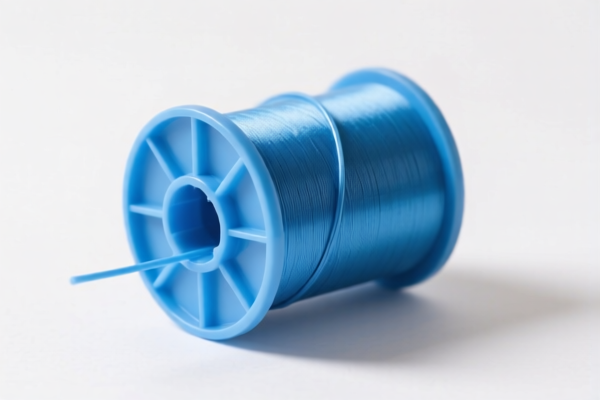
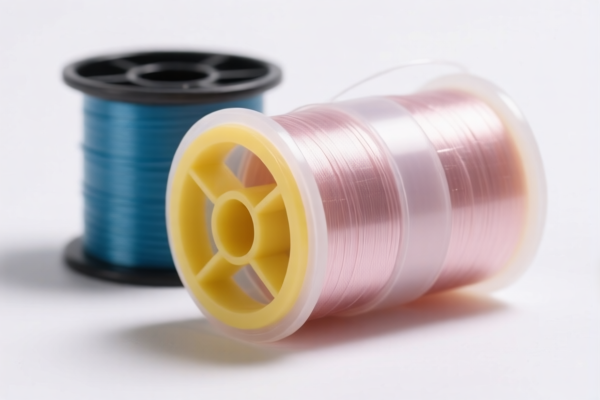
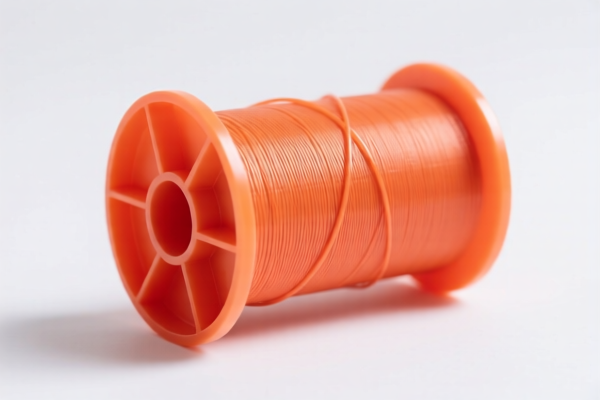
AI Analysis
🎞️ Cinema Film Reel (Motion Picture Film)
🌐 HS Code Reference & Customs Clearance Guide | 2026 Latest Tariff Analysis | Professional Clearance Strategy
📌 I. Product Definition: What Exactly is "Cinema Film Reel"?
Cinema Film Reels refer to unexposed or exposed photographic film strips specifically designed for motion picture production, distribution, or archival. In international trade, these are classified under Chapter 37 (Photographic or Cinematographic Goods).
The key distinction lies in the state of the film and its physical format: 1. Unexposed Raw Stock (Negative/Positive/Intermediate): Used for shooting. 2. Finished Prints (Release Copies): Used for theatrical distribution. 3. Reels/Cans/Containers: The plastic or metal cylinders holding the film.
⚠️ Critical Distinction for Classification:
- If the item is the film strip itself (celluloid or polyester base with emulsion) → Chapter 37.
- If the item is merely the empty plastic reel or can → Chapter 39 (Plastics).
- Mistake Alert: Do not classify the film inside a can as a "plastic container." The primary purpose determines the classification.
📦 II. HS Code Classification Details (2026 Latest Tariff Authority)
Based on the provided data, here is the breakdown of the 5 matching HS Codes for Cinema Film Reels:
| HS Code | Summary of Match | Product Description & Use Case |
|---|---|---|
| 3706.10.60.60 | Exact Match: Keywords, Material & Form | Unexposed Motion Picture Film: Specifically matches the physical form of "film reels" and material (photographic emulsion). Best for raw, unexposed stock in reel format. |
| 3706.10.60.30 | Attribute Match: Distribution Copy | Unexposed Motion Picture Film (Distribution Copy): Specifically for positive prints or intermediate films intended for release copies. Matches the "distribution" attribute of cinema reels. |
| 3702.56.00.30 | Direct Hit: Purpose & Form | Other Photographic Film in Roll Form: Directly hits the "film" purpose and "roll/reel" form. Often used for specific types of cinematographic film not covered in 3706. |
| 3704.00.00.00 | Material Match: Film Material | Exposed Photographic Film: If the reel contains exposed (used) film (e.g., for archival or lab processing), this code applies. Matches the material and form completely. |
| 3923.40.00.10 | Component Match: Reel/Cans | Plastic Reels & Cans: If the shipment is only the empty plastic reels/cans (no film), this code applies. Matches the "photographic film reel/can" material (plastic) and use. |
🔍 Key Takeaway:
- With Film? Use 3706, 3702, or 3704 (depending on exposed/unexposed status).
- Empty Containers Only? Use 3923.40.00.10.
- Total Tax Liability: All codes above attract high tariffs due to US-China trade policies (see below).
💰 III. 2026 Tariff Rate Breakdown (Detailed Policy Explanation)
✅ Applicable Country: USA (US)
✅ Origin: China (CN)
✅ Effective Date: From November 10, 2025 (and subsequent imports)
🎯 1. HS Codes: 3706.10.60.60, 3706.10.60.30, 3702.56.00.30, 3704.00.00.00 (The Film Itself)
| Item | Detail |
|---|---|
| Base Tariff | 0.0% (Ad Valorem) |
| USITC Surcharge | +25.0% (Section 301 Duties) |
| IEEPA Surcharge | +10.0% (122 Clause: China-Specific) |
| Total Tax Rate | 35.0% |
| Calculation | CIF Value × 35% |
| De Minimis Exemption | ❌ NOT Eligible (deny_de_minimis applies to these categories) |
| Legal Basis Path | IEEPA:9903.01.24 → USITC:3706/3704/3702 → FOOTNOTE:122 |
📌 Explanation:
- "Base 0%": Standard MFN rate for film is zero.
- "+25% USITC": Section 301 tariffs on Chinese goods.
- "+10% IEEPA": Specific 122 clause tariffs targeting Chinese imports under the International Emergency Economic Powers Act.
- Total 35%: This is a significant cost. Must be factored into pricing strategies.
🎯 2. HS Code: 3923.40.00.10 (Empty Plastic Reels/Cans)
| Item | Detail |
|---|---|
| Base Tariff | 5.3% (Ad Valorem) |
| USITC Surcharge | +25.0% (Section 301 Duties) |
| IEEPA Surcharge | +10.0% (122 Clause: China-Specific) |
| Total Tax Rate | 40.3% |
| Calculation | CIF Value × 40.3% |
| De Minimis Exemption | ❌ NOT Eligible |
| Legal Basis Path | IEEPA:9903.01.24 → USITC:3923.40.00.10 → FOOTNOTE:122 |
📌 Note:
- Even though the base rate is 5.3%, the additional surcharges push the total to 40.3%, which is higher than the film itself (35%)!
- This makes shipping empty plastic reels from China to the US extremely expensive per unit value.
🛠️ IV. Customs Clearance Practical Advice (Real-World Pitfall Guide)
✅ 1. Required Documentation Checklist (Non-Negotiable)
| Document | Required | Purpose |
|---|---|---|
| ✅ Commercial Invoice | ✔️ | Must clearly state "Cinema Film Reel" and specify if "Exposed" or "Unexposed". |
| ✅ Product Specification Sheet | ✔️ | Details: Film gauge (35mm/70mm), base material (acetate/polyester), emulsion type. |
| ✅ Photo of Film Leader/Edge | ✔️ | To prove if exposed (has sprocket holes with image) or unexposed (blank). |
| ✅ Bill of Lading (B/L) | ✔️ | Must match invoice description exactly. |
| ✅ Origin Certificate (CO) | ✔️ | Proof of Chinese origin (triggers the 35%-40.3% tariffs). |
| ✅ Safety Data Sheet (SDS) | ✔️ | If film contains chemical emulsions, some ports may request this. |
✅ 2. Declaration Tips (Key Mnemonics)
🔥 "Film vs. Can, Don't Mix the Plan! Exposed or Blank, Know the Brand!"
| Scenario | Correct HS Code | Wrong Way (Risk) |
|---|---|---|
| Unexposed 35mm Reel | 3706.10.60.60 (35%) |
Declare as "Plastic Reel" → 40.3% (Higher tax!) |
| Exposed Archived Reel | 3704.00.00.00 (35%) |
Declare as "New Film" → Misdeclaration penalties |
| Empty Plastic Can | 3923.40.00.10 (40.3%) |
Declare as "Film" → Customs will inspect and reject |
| Mixed Shipment (Film + Cans) | Declare Separately! | Combine into one line → Customs may classify whole shipment under highest tax or delay for inspection |
✅ 3. Special Handling
| Situation | Recommendation |
|---|---|
| OEM Custom Film | Provide client order + design specs. Avoid generic "film" description. |
| Reel Contains Data (e.g., DCP) | If digital, it’s not cinema film. Classify under 8523.49 or 8517.62. Different tax rate! |
| High-Value Archival Film | Consider Advance Ruling from CBP to confirm 3704 vs 3706 status before shipping. |
| Transshipment | If routed through Vietnam/Malaysia, ensure no substantial transformation. US checks for Origin Fraud. |
🌍 V. Global Market Comparison (2026 Update)
| Country/Region | Recommended HS Code | Approx. Total Tax (China Origin) | Key Requirements | Note |
|---|---|---|---|---|
| 🇺🇸 USA | 3706.10.60.60 / 3704.00.00.00 |
35.0% | FCC/CE (if electronic parts), SDS | Highest tariff due to 301 + IEEPA. |
| 🇪🇺 EU | 3702 / 3706 |
0% - 4.5% | CE, REACH | No Section 301 tariffs. Much cheaper. |
| 🇨🇳 China | 3702 / 3706 |
0% - 6% | CCC (if applicable) | No import surcharges for domestic production. |
| 🇬🇧 UK | 3702 / 3706 |
0% - 4.5% | UKCA | Post-Brexit, similar to EU but separate rules. |
📌 Conclusion:
- USA is the most expensive market for China-origin cinema film due to 35% total duty.
- EU/UK are cost-effective alternatives if supply chain allows.
- Empty plastic reels (3923.40.00.10) are 40.3% taxed in the US – consider sourcing reels locally if possible.
📌 VI. Common Errors & Pitfalls (Blood & Tears Lessons)
❌ Error 1: Declaring "Cinema Film" as "Photographic Paper"
👉 Consequence: HS Code mismatch → Audit + Fine. Paper has different tax rules.
❌ Error 2: Combining Film + Empty Reels in One Line Item
👉 Consequence: Customs may classify the whole shipment under the higher tax code (40.3%) or hold it for valuation.
❌ Error 3: Ignoring the "Exposed" vs. "Unexposed" Distinction
👉 Consequence: 3704 (Exposed) vs 3706 (Unexposed) have different sub-codes. Wrong code = Delayed Clearance.
❌ Error 4: Assuming "De Minimis" (Section 321) Applies
👉 Consequence: NO. These items are explicitly excluded. Every shipment pays tax, even small ones.
✅ Correct Practice:
"35mm Unexposed Motion Picture Film, Roll Form, Acetate Base, 400ft Length, for Cinematographic Use. Origin: China."
🎯 VII. Conclusion: Professional Classification Saves Money!
🎯 Remember the Mnemonic:
🔹 "Film is 35%, Cans are 40.3% – Don't Mix the Two!"
🔹 "Exposed is 3704, Unexposed is 3706 – Know Your Stock!"
🔹 "USA Tariffs Hit Hard – Plan Your Supply Chain!"
📌 Pro Tip:
If your cinema film is originally from Japan, Korea, or Europe, you DO NOT pay the 25%+10% surcharges.
👉 Total Tax in USA: 0% - 6.5% (depending on specific HS).
Strategy: Source film from non-China countries to avoid the 35% tariff burden.
📣 Immediate Action:
📞 Contact a Licensed Customs Broker + Provide Film Edge Photos + Apply for CBP Advance Ruling
🚀 Ensure your Cinema Film Reels clear US Customs Smoothly, On Time, and Cost-Effectively!
✨ Professional Clearance Starts with Precise Classification!
💼 Every Dollar Saved is a Dollar Earned!
Customer Reviews
About HS Code Classification
The Harmonized System (HS) is an internationally standardized nomenclature developed by the World Customs Organization (WCO) to classify traded products. Over 200 countries use the HS system as the basis for customs tariffs, trade statistics, and import/export regulations.
Each HS code follows a hierarchical structure:
- Chapter (2 digits) — Broad category of goods (e.g., Chapter 84: Machinery and Mechanical Appliances)
- Heading (4 digits) — More specific grouping within the chapter
- Subheading (6 digits) — Internationally standardized breakdown, used by all WCO member countries
- National subdivisions (8-10 digits) — Country-specific extensions for further classification, such as US HTSUS 10-digit codes
Correct HS code classification is essential for smooth customs clearance, accurate duty payment, and compliance with trade regulations. Misclassification can lead to customs delays, overpayment of duties, or penalties.
When importing from CN to US, the applicable tariff rates may include:
- Most-Favored-Nation (MFN) rate — The standard duty rate applied to WTO members
- General rate — Applied to countries without trade agreements
- Trade remedy duties — Additional tariffs such as Section 301 (anti-dumping), Section 232 (national security), or countervailing duties
The information provided on this page is for reference purposes only. For official classification, please consult with your local customs authority or a licensed customs broker.