Circuit Breaker
CN → US| HS Code | Tariff Rate | Origin | Destination | Doc |
|---|---|---|---|---|
| 8536200040 | 37.7% | CN | US | Official Doc |
| 8535290020 | 37.0% | CN | US | Official Doc |
| 8538908120 | 38.5% | CN | US | Official Doc |
| 8536200020 | 37.7% | CN | US | Official Doc |
| 8538903000 | 38.5% | CN | US | Official Doc |
Product Images
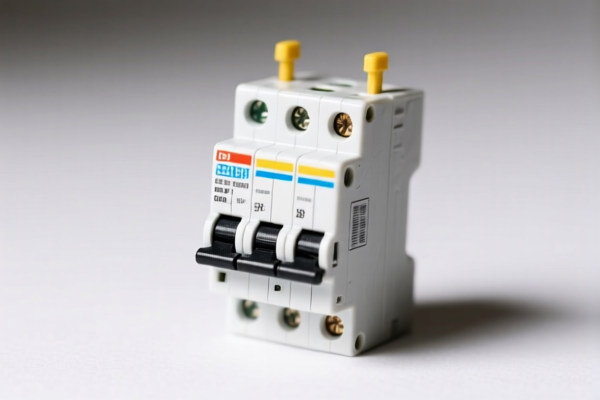
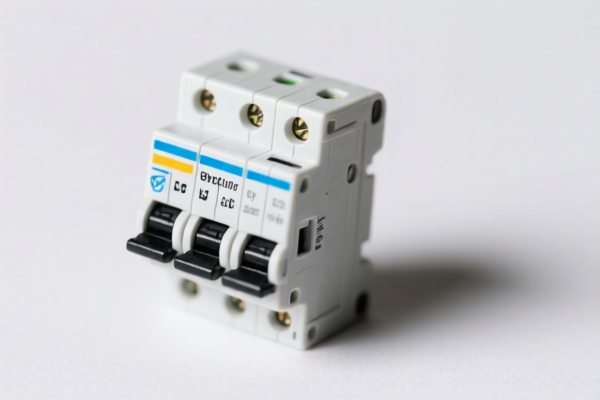
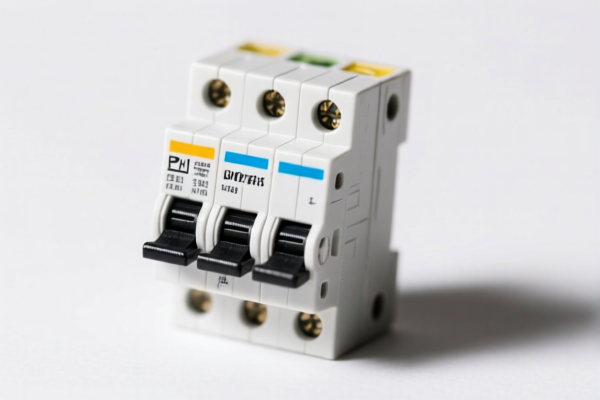
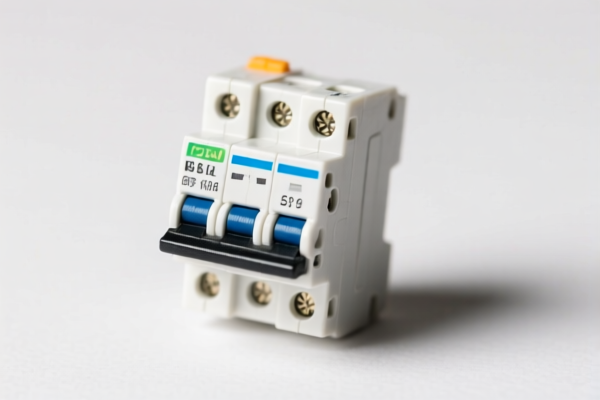
AI Analysis
🔌 Circuit Breakers (Automatic Switching Devices for Protecting Electrical Circuits)
🌐 HS Code Reference & Customs Clearance Guide | 2026 Latest Tariff Analysis | Professional-Level Entry Strategy
📌 I. Product Definition & Classification: Do You Really Understand "Circuit Breakers"?
Circuit breaker trip units (often referred to simply as "circuit breakers" in trade contexts) are critical components in electrical distribution systems. In international trade, they are broadly categorized based on their functional completeness:
1. The Complete Unit (Automatic Circuit Breaker):
Devices that include the tripping mechanism, contacts, and housing, capable of automatically interrupting current flow under fault conditions. These fall under Chapter 85.36.
2. The Component/Part (Trip Unit/Trip Mechanism):
The internal core component (thermal, magnetic, or electronic) responsible for detecting faults and triggering the trip mechanism. Classification depends on whether it is sold as a standalone "part" or as part of the "automatic breaker" assembly.
⚠️ Key Distinction Point:
- If the item is a complete, self-contained unit designed to protect a circuit → It is classified as an "Automatic Circuit Breaker" (8536.20).
- If the item is a loose part/component specifically designed for use with automatic circuit breakers → It is classified as a "Part of Automatic Circuit Breakers" (8538.90) or potentially under 8535/8536 general parts depending on specific construction (e.g., printed circuit assembly).
📦 II. HS Code Classification Details (2026 Latest Tariff Authority Comparison)
Based on the provided data, here are the five most relevant HS Codes for Circuit Breaker Trip Units/Components:
| HS Code | Product Description | Application Scenario | Classification Logic |
|---|---|---|---|
8536.20.00.40 |
Automatic Circuit Breakers | Complete units; Trip units considered part of the "automatic breaker" scope. | ✅ Primary Match: Directly covers the "use case" of automatic breakers. |
8535.29.00.20 |
Other Automatic Circuit Breakers (Parts/Components) | Core components where default "parts" logic applies to breakers. | ✅ Partial Match: Treated as a core part of the breaker system. |
8538.90.81.20 |
Parts Suitable for Automatic Circuit Breakers | Specific components explicitly identified as parts of automatic breakers. | ✅ Strong Match: Explicitly fits the "part for automatic breaker" definition. |
8536.20.00.20 |
Automatic Circuit Breakers (Other) | Core components aligned with the general use description of 8536.20. | ✅ Primary Match: Broadly covers breaker-related devices without material conflict. |
8538.90.30.00 |
Printed Circuit Assemblies (Parts) | Electronic trip units that function as printed circuit components. | ⚠️ Alternative Match: Used if the trip unit is primarily an electronic PCB assembly. |
🔍 Key Reminder:
- 8536.20 is generally the preferred classification for complete automatic breakers or integrated trip mechanisms because they define the primary function (protection).
- 8538.90 is suitable for loose, replaceable parts that are not yet assembled into a complete breaker.
- 8535.29 is a less specific "other" category but may apply if the component is considered a generic part rather than a dedicated breaker part.
💰 III. 2026 Latest Tariff Rate Breakdown (Including Surcharges & Policy Add-ons)
✅ Applicable Country: United States (US)
✅ Origin: China (CN)
✅ Effective Time: 2025/2026 Period (Post-Section 301 & IEEPA Adjustments)
🎯 1. 8536.20.00.40 & 8536.20.00.20 —— Automatic Circuit Breakers
These codes represent the most direct classification for the product.
| Item | Content |
|---|---|
| Base Duty Rate | 2.7% (Ad Valorem) |
| Section 301 Duty | +25.0% (USITC Footnote for Electrical Machinery) |
| IEEPA (Section 122) Duty | +10.0% (Additional surcharge on Chinese origin) |
| Total Effective Rate | 37.7% |
| Tax Calculation | CIF Value × 37.7% |
| De Minimis Exemption | ❌ Not Applicable (High tariff burden) |
| Legal Basis Path | HTSUS:8536.20.00.40 → Section 301: Footnote 9903.88.01 → IEEPA:9903.01.25 |
📌 Explanation:
- The 2.7% base rate reflects the standard MFN (Most Favored Nation) tariff for automatic breakers.
- The 25% Section 301 duty is the significant hit for Chinese-origin electrical equipment.
- The 10% IEEPA/122 Clause duty is an additional penalty tariff specifically targeting certain Chinese industrial goods.
- Total: 37.7% is a substantial cost that must be factored into pricing.
🎯 2. 8535.29.00.20 —— Other Automatic Circuit Breakers (Core Parts)
| Item | Content |
|---|---|
| Base Duty Rate | 2.0% |
| Section 301 Duty | +25.0% |
| IEEPA (Section 122) Duty | +10.0% |
| Total Effective Rate | 37.0% |
| Tax Calculation | CIF Value × 37.0% |
| De Minimis Exemption | ❌ Not Applicable |
| Legal Basis Path | HTSUS:8535.29.00.20 → Section 301 → IEEPA |
📌 Note:
- Slightly cheaper than the 8536.20 codes (0.7% savings).
- However, customs may challenge this if the item is clearly a main breaker component rather than a generic "other" part.
🎯 3. 8538.90.81.20 & 8538.90.30.00 —— Parts of Automatic Circuit Breakers
| Item | Content |
|---|---|
| Base Duty Rate | 3.5% |
| Section 301 Duty | +25.0% |
| IEEPA (Section 122) Duty | +10.0% |
| Total Effective Rate | 38.5% |
| Tax Calculation | CIF Value × 38.5% |
| De Minimis Exemption | ❌ Not Applicable |
| Legal Basis Path | HTSUS:8538.90.81.20 / 8538.90.30.00 → Section 301 → IEEPA |
📌 Note:
- These codes have a higher base rate (3.5%), making the total tax 38.5%.
- They are valid if the product is sold strictly as a replacement part or component (e.g., a loose electronic trip board) rather than a complete breaker unit.
- Risk: If customs determines the item functions as a complete breaker, they may reclassify it to 8536.20 (37.7%), but the discrepancy in base rate could trigger audits.
🛠️ IV. Customs Clearance Practical Advice (实战避坑指南)
✅ 1. Documentation Checklist (Essential)
| Document | Required? | Explanation |
|---|---|---|
| ✅ Product Specifications | ✔️ | Must detail voltage, amperage, breaking capacity, and tripping type (thermal/magnetic/electronic). |
| ✅ Technical Diagrams | ✔️ | Show internal structure. Is it a PCB? A mechanical assembly? Crucial for distinguishing between 8536, 8535, and 8538. |
| ✅ Product Photos | ✔️ | Clear images of the nameplate, connections, and overall form factor. |
| ✅ Commercial Invoice | ✔️ | Must clearly state: "Circuit Breaker Trip Unit, Model XYZ, Used for Automatic Circuit Breakers". Avoid vague terms like "Switch." |
| ✅ Bill of Lading | ✔️ | Ensure HS Codes match the invoice. |
| ✅ Origin Certificate | ✔️ | Confirm Chinese origin to anticipate Section 301/IEEPA tariffs. |
✅ 2. Declaration Strategy (Key Mnemonics)
🔥 "Complete = 8536, Loose Part = 8538, PCB = 8538.30, Never Split!"
| Scenario | Correct HS Code | Error to Avoid |
|---|---|---|
| Complete Breaker Unit | 8536.20.00.40 (37.7%) |
Misdeclaring as "Part" to save base duty? Customs may reclassify and penalize. |
| Loose Trip Mechanism | 8538.90.81.20 (38.5%) |
Declaring as "Complete Breaker"? Higher base rate, but lower total duty if reclassified? Risky. |
| Electronic Trip Board (PCB) | 8538.90.30.00 (38.5%) |
Declaring as "Mechanical Part"? Misclassification of material function. |
| Breaker + Trip Unit Sold Together | Declare as Complete Unit (8536.20) |
Splitting shipment into "Breaker Body" + "Trip Unit" → Complex & Risky. |
✅ 3. Special CircumHandling
| Situation | Handling Advice |
|---|---|
| OEM Custom Parts | Provide original design documents. If it’s a unique electronic trip unit, 8538.90.30.00 (PCB) might be more accurate. |
| Mixed Shipments | If shipping both complete breakers and loose trips, declare separately. Do not mix HS codes in one line item. |
| High-Value Electronic Breakers | Ensure FCC/UL certification is ready. Customs may inspect for electrical safety compliance alongside tariff classification. |
| Origin Transshipment | If the trip unit is shipped from Vietnam but made in China, Chinese origin rules still apply for Section 301/IEEPA. Do not attempt to bypass tariffs via minor assembly in third countries without substantial transformation. |
🌍 V. Global Market Customs Comparison (2026 Latest)
| Country/Region | Recommended HS Code | Tariff (China Origin) | Certification Requirements | Notes |
|---|---|---|---|---|
| 🇺🇸 USA | 8536.20.00.40 |
37.7% (Total) | UL, NEMA, FCC (if electronic) | High tariffs due to 301 & IEEPA. |
| 🇨🇳 China | 8536.20.00.40 |
5-10% (Import Duty) | CCC | Lower tariffs, strict safety standards. |
| 🇪🇺 EU | 8536.20.00 |
2.7% (Base) + 0% VAT adjustment | CE, RoHS | No Section 301 equivalent, but anti-dumping checks may apply. |
| 🇨🇦 Canada | 8536.20.00.00 |
0% (CUSMA Eligible*) | CSA, UL | If manufactured in CUSMA region, 0% duty. |
| 🇦🇺 Australia | 8536.20.00.00 |
5% | RCM, ACMA | Moderate tariff, no major surcharges. |
📌 Conclusion:
- The USA is the most expensive market for Chinese-made circuit breakers due to the 37.7% combined tariff.
- Parts (8538) are slightly more expensive in base rate (38.5%) but offer a different classification path.
- Strategy: If you are exporting to the US, consider if the product can be classified as a part (8538) to avoid "complete breaker" scrutiny, BUT be aware the total tax is actually higher (38.5% vs 37.7%). Therefore, 8536.20 is currently the most cost-effective legal classification for complete units.
📌 VI. Common Errors & Pitfalls (Blood & Tears Lessons)
❌ Error 1: Declaring a complete breaker as a "Switch" or "Relay" (8536.50)
👉 Consequence: Customs reclassifies to 8536.20 + penalties. Base rate difference may seem small, but fines are heavy.
❌ Error 2: Declaring a trip unit as a "General Part" (8538.90.90)
👉 Consequence: If the item is clearly for automatic breakers, customs will use 8538.90.81 or 8536.20. Incorrect code = audit risk.
❌ Error 3: Ignoring IEEPA/122 Clause
👉 Consequence: Underestimating total cost by 10%. The 37.7% figure is not just 301 duty; it includes the additional 10% surcharge.
❌ Error 4: Mixing Mechanical and Electronic Trip Units
👉 Consequence: Mechanical trips go to 8538.90.81 (Parts); Electronic/PCB trips may go to 8538.90.30 (PCBs). Misclassification leads to wrong duty calculation.
✅ Correct Practice:
"Automatic Circuit Breaker, 120V, 15A, Thermal-Magnetic Trip, UL Listed, Model XYZ"
🎯 VII. Conclusion: Professional Declaration, Cost Optimization!
🎯 Remember the Mnemonic:
🔹 "Complete = 8536 (37.7%), Parts = 8538 (38.5%), PCB = 8538.30."
🔹 "301 + 122 = 35% Surcharge. Base Rate Matters Less."
🔹 "Don't Split Complete Units. Declare as One."
📌 Pro Tip:
If your circuit breakers are manufactured in Mexico, Vietnam, or Malaysia, you may qualify for 0%~5% tariffs (depending on the trade agreement) and avoid IEEPA/Section 301 surcharges.
Recommendation: Apply for an Advance Ruling (CBP Form 5000) before shipment to confirm the HS Code and tariff liability.
📣 Immediate Action:
📞 Contact a licensed customs broker + Provide technical datasheets + Apply for Pre-classification.
🚀 Ensure your Circuit Breakers pass US customs smoothly, avoiding costly delays and unexpected taxes!
✨ Professional Clearance Starts with Precise Classification!
💼 Every Cent of Duty is Calculated!
Customer Reviews
About HS Code Classification
The Harmonized System (HS) is an internationally standardized nomenclature developed by the World Customs Organization (WCO) to classify traded products. Over 200 countries use the HS system as the basis for customs tariffs, trade statistics, and import/export regulations.
Each HS code follows a hierarchical structure:
- Chapter (2 digits) — Broad category of goods (e.g., Chapter 84: Machinery and Mechanical Appliances)
- Heading (4 digits) — More specific grouping within the chapter
- Subheading (6 digits) — Internationally standardized breakdown, used by all WCO member countries
- National subdivisions (8-10 digits) — Country-specific extensions for further classification, such as US HTSUS 10-digit codes
Correct HS code classification is essential for smooth customs clearance, accurate duty payment, and compliance with trade regulations. Misclassification can lead to customs delays, overpayment of duties, or penalties.
When importing from CN to US, the applicable tariff rates may include:
- Most-Favored-Nation (MFN) rate — The standard duty rate applied to WTO members
- General rate — Applied to countries without trade agreements
- Trade remedy duties — Additional tariffs such as Section 301 (anti-dumping), Section 232 (national security), or countervailing duties
The information provided on this page is for reference purposes only. For official classification, please consult with your local customs authority or a licensed customs broker.