Circuit Breaker Switch
CN → US| HS Code | Tariff Rate | Origin | Destination | Doc |
|---|---|---|---|---|
| 8536200020 | 37.7% | CN | US | Official Doc |
| 8535210000 | 37.7% | CN | US | Official Doc |
| 8536200040 | 37.7% | CN | US | Official Doc |
| 8535290020 | 37.0% | CN | US | Official Doc |
Product Images
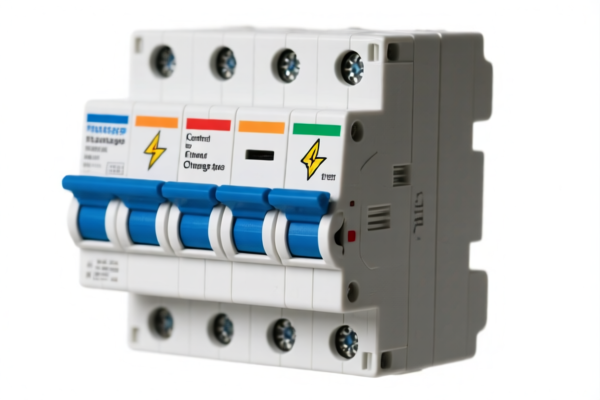
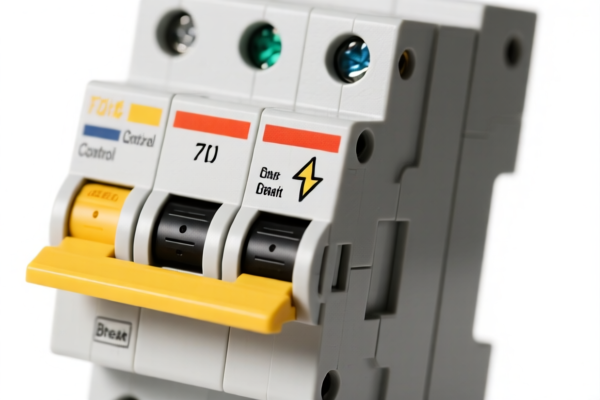
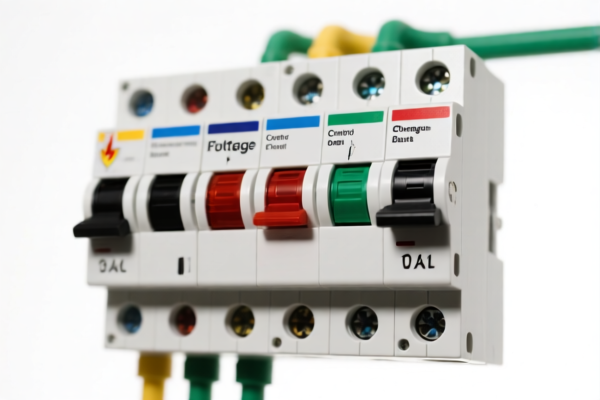
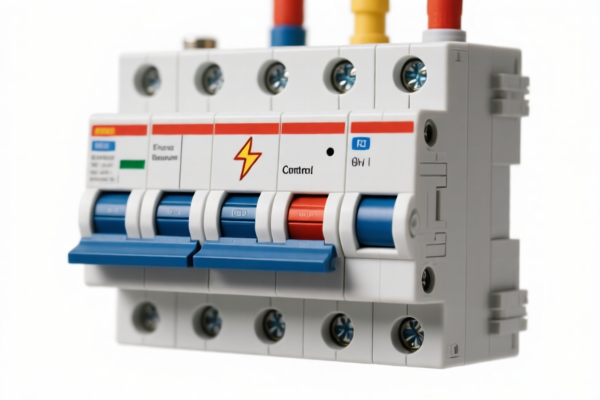
AI Analysis
⚡️ Circuit Breaker Switch (断路开关)
🌐 HS Code Reference & Customs Clearance Guide | 2026 Latest Tariff Analysis | Professional Clearance Strategy
📌 I. Product Definition & Classification: Do You Truly Understand “Circuit Breakers”?
A Circuit Breaker Switch is a critical electrical protection device designed to protect an electrical circuit from damage caused by excess current from an overload or short circuit. Its basic function is to detect a fault; after a fault, it automatically interrupts the current flow.
In international trade, classification depends heavily on the voltage rating, operating mechanism (automatic vs. manual), and structural design. However, for most industrial/commercial "Automatic Circuit Breakers," the primary classification falls under Chapter 85.
⚠️ Key Distinction Point:
- If the device operates automatically to interrupt current upon fault detection → HS Code 8536 or 8535.
- If it is a manual switch without automatic tripping mechanisms → May fall under 8536.30 (Other Switches).
- Material Conflict Check: None reported in current data; focus remains on functional classification.
📦 II. HS Code Classification Details (2026 Latest Tariff Authority Comparison)
Based on the provided data for "Circuit Breaker Switch" (断路开关), the following HS Codes are applicable. All entries indicate High Tariff Risk due to US-China trade tensions.
| HS Code | Product Description | Match Summary | Total Tax Rate (US/China) |
|---|---|---|---|
8536.20.00.20 |
Circuit Breakers, For a Voltage Not Exceeding 1,000 V | Matches automatic circuit breaker purpose. No material conflict. | 37.7% |
8535.21.00.00 |
Automatic Circuit Breakers | Highly matches automatic circuit breaker function. No material/shape conflict. | 37.7% |
8536.20.00.40 |
Other Circuit Breakers | Completely fits the definition of automatic circuit breaker. Belongs to "other" category, no obvious conflict. | 37.7% |
8535.29.00.20 |
Other Automatic Circuit Breakers | Falls under the scope of automatic circuit breakers. Usage aligns with classification. Description missing but no conflict. | 37.0% |
🔍 Critical Observation:
- 8535.21.00.00 is often the most precise code for automatic circuit breakers.
- 8536.20.00.x series is commonly used for breakers rated ≤1,000V.
- Tax Rate Variance: Most codes carry 37.7%, while8535.29.00.20carries 37.0%.
- All Codes Involve Additional Duties: Base tariffs are low, but Section 301 and Section 122 surcharges dominate the cost.
💰 III. 2026 Latest Tariff Rate Breakdown (Including Surcharges & Policy Add-ons)
✅ Applicable Country: USA (US)
✅ Country of Origin: China (CN)
✅ Effective Date: Ongoing (Subject to ongoing trade policies)
🎯 1. Codes 8536.20.00.20, 8535.21.00.00, 8536.20.00.40
Total Tax Rate: 37.7%
| Item | Content |
|---|---|
| Base Tariff (MFN) | 2.7% (Ad Valorem) |
| Section 301 Surcharge | +25.0% (List 3/4 Items, China Origin) |
| Section 122 Surcharge | +10.0% (Specific clause on certain industrial/electrical goods) |
| Total Effective Rate | 37.7% |
| Calculation Method | CIF Value × 37.7% |
| De Minimis Exemption | ❌ Not Applicable (High tariff value exceeds threshold for exemption) |
| Legal Basis Path | USITC:8536.20.00.20 / 8535.21.00.00 → Section 301: 25% → Section 122: 10% |
📌 Explanation:
- The Base Tariff (2.7%) is minimal, but the Section 301 tariff (25%) is the primary driver, imposed under US Trade Act Section 301 to address unfair trade practices.
- The Section 122 tariff (10%) is an additional layer applied to specific categories of electrical equipment, significantly increasing the landed cost.
- Total 37.7% is a High-Cost classification. Profit margins must account for this before shipping.
🎯 2. Code 8535.29.00.20
Total Tax Rate: 37.0%
| Item | Content |
|---|---|
| Base Tariff (MFN) | 2.0% (Ad Valorem) |
| Section 301 Surcharge | +25.0% (List 3/4 Items, China Origin) |
| Section 122 Surcharge | +10.0% (Specific clause on certain industrial/electrical goods) |
| Total Effective Rate | 37.0% |
| Calculation Method | CIF Value × 37.0% |
| De Minimis Exemption | ❌ Not Applicable |
| Legal Basis Path | USITC:8535.29.00.20 → Section 301: 25% → Section 122: 10% |
📌 Note:
- This code offers a slight 0.7% savings compared to the other codes.
- It still carries the same punitive surcharges (25% + 10%).
- Suitable if the product is categorized as "Other Automatic Circuit Breakers" not specifically covered by 8535.21.
🛠️ IV. Customs Clearance Practical Advice (Real-World Pitfall Guide)
✅ 1. Required Documentation Checklist (Missing One = Delay)
| Document | Mandatory | Explanation |
|---|---|---|
| ✅ Product Specification Sheet | ✔️ | Must include Voltage Rating (≤1,000V vs >1,000V), Current Rating, and Tripping Mechanism Type. |
| ✅ Technical Datasheet | ✔️ | Proof that it is an Automatic breaker (self-interrupting) vs. Manual Switch. |
| ✅ Commercial Invoice | ✔️ | Clearly state: "Automatic Circuit Breaker, For Voltage Not Exceeding 1,000V, Model: [XYZ], Origin: China" |
| ✅ Packing List | ✔️ | Ensure weight and dimensions match the invoice exactly. |
| ✅ Certificate of Origin (CO) | ✔️ | Critical for proving China origin (which triggers Section 301 & 122 duties). |
| ✅ UL/CSA Certification | ✔️ | Highly Recommended. US Customs and CBP may request safety certifications to verify the product is not contraband or unsafe. |
✅ 2. Declaration Tips (Key Mantra)
🔥 “Auto is Key, Voltage Matters, Section 301 is Real, No De Minimis!”
| Scenario | Correct Declaration | Wrong Practice |
|---|---|---|
| Automatic Breaker | HS: 8535.21.00.00 or 8536.20.00.20 |
Declare as "Manual Switch" → Misclassification Penalty |
| Voltage > 1,000V | Different HS Code (e.g., 8535.50) | Declare as ≤1,000V → Audit Risk & Retention |
| Mixed Shipment | Separate HS Codes for each item type | Lump-sum declaration → Clearance Delay |
| Origin Marking | Clearly marked "Made in China" on product/packaging | Hidden origin → Seizure Risk |
✅ 3. Special Case Handling
| Situation | Handling Advice |
|---|---|
| OEM Custom Breakers | Provide Customer PO and Design Specs. Ensure they match the declared HS Code function. |
| Breaker + Enclosure | If sold as a complete unit, the Breaker is the essential character. Do not split declaration. |
| Samples for Testing | Still subject to 37.7% duty. Use PPID (Prior Notice) if applicable, but duty is still owed. |
| Return/Re-export | Keep original entry documents to apply for Duty Drawback if re-exported within 3 years. |
🌍 V. Global Market Clearance Comparison (2026 Latest)
| Country/Region | Recommended HS Code | Tariff (China Origin) | Certification | Note |
|---|---|---|---|---|
| 🇺🇸 USA | 8535.21.00.00 / 8536.20.00.20 |
37.7% (Base 2.7% + 25% S301 + 10% S122) | UL, CSA, FCC (if electronic) | Highest Cost Market. High audit risk. |
| 🇨🇳 China | 8536.20.00.20 |
~2.7% | CCC | No Section 301/122. Low entry barrier. |
| 🇪🇺 EU | 8536.20.00 |
0% - 4% (CE Mark) | CE, RoHS | No major punitive tariffs. CE is mandatory. |
| 🇦🇺 Australia | 8536.20.00 |
5% | RCM | Moderate duty. RCM certification required. |
| 🇯🇵 Japan | 8536.20.00 |
0% - 6% | PSE | PSE Diamond/Star mark required. |
📌 Conclusion:
- USA is the most expensive market for Chinese-made circuit breakers due to Section 301 (25%) and Section 122 (10%).
- EU/Japan/Australia are significantly cheaper but require strict safety certifications (CE, PSE, RCM).
- Duty Optimization: Consider substantial transformation in a third country (e.g., Vietnam, Mexico) to avoid China-origin surcharges, but ensure Rules of Origin are met.
📌 VI. Common Errors & Pitfalls (Lessons Learned)
❌ Error 1: Declaring "Circuit Breaker" as "Switch" (8536.30) to avoid Section 301.
👉 Consequence: CBP will reclassify it as an Automatic Breaker (8535 or 8536.20) → Back Taxes + Penalties.
❌ Error 2: Ignoring the 10% Section 122 Surcharge.
👉 Consequence: Underpayment of 10% on all declarations → Liquidation Audit.
❌ Error 3: No UL/CSA Mark on the product.
👉 Consequence: CBP may detain the shipment for safety verification → Storage Fees + Delays.
❌ Error 4: Confusing Automatic vs. Manual breakers.
👉 Consequence: Misclassification → Wrong HS Code → Compliance Violation.
✅ Correct Practice:
"Automatic Circuit Breaker, 120V AC, 20A, UL Listed, For Industrial Panel Use, Model: CB-2000, Made in China"
🎯 VII. Conclusion: Professional Declaration, Save Money, Stay Compliant!
🎯 Remember the Mantra:
🔹 "Auto is Key, Voltage Matters, 37.7% is Real, No De Minimis!"
🔹 "HS Code Decides Fate, 37% is Steep, Declare Accurately, Avoid Debt!"
📌 Pro Tip:
If your circuit breakers are assembled in Vietnam, Mexico, or Thailand, and meet Rules of Origin, you may avoid Section 301 and Section 122 surcharges.
Recommendation: Apply for Advance Ruling and Verify Substantial Transformation before shipping to the US.
📣 Immediate Action:
📞 Contact a Professional Customs Broker + Provide UL Specs + Apply for HS Code Advance Ruling
🚀 Let your Circuit Breakers Clear Smoothly, Reduce Costs, and Maximize Profit!
✨ Professional Customs Clearance Starts with Accurate Classification!
💼 Every Percent of Tax Matters!
Customer Reviews
About HS Code Classification
The Harmonized System (HS) is an internationally standardized nomenclature developed by the World Customs Organization (WCO) to classify traded products. Over 200 countries use the HS system as the basis for customs tariffs, trade statistics, and import/export regulations.
Each HS code follows a hierarchical structure:
- Chapter (2 digits) — Broad category of goods (e.g., Chapter 84: Machinery and Mechanical Appliances)
- Heading (4 digits) — More specific grouping within the chapter
- Subheading (6 digits) — Internationally standardized breakdown, used by all WCO member countries
- National subdivisions (8-10 digits) — Country-specific extensions for further classification, such as US HTSUS 10-digit codes
Correct HS code classification is essential for smooth customs clearance, accurate duty payment, and compliance with trade regulations. Misclassification can lead to customs delays, overpayment of duties, or penalties.
When importing from CN to US, the applicable tariff rates may include:
- Most-Favored-Nation (MFN) rate — The standard duty rate applied to WTO members
- General rate — Applied to countries without trade agreements
- Trade remedy duties — Additional tariffs such as Section 301 (anti-dumping), Section 232 (national security), or countervailing duties
The information provided on this page is for reference purposes only. For official classification, please consult with your local customs authority or a licensed customs broker.