Circuit Control Board
CN → US| HS Code | Tariff Rate | Origin | Destination | Doc |
|---|---|---|---|---|
| 8542900000 | 60.0% | CN | US | Official Doc |
| 8537109170 | 37.7% | CN | US | Official Doc |
| 8534000080 | 35.0% | CN | US | Official Doc |
Product Images
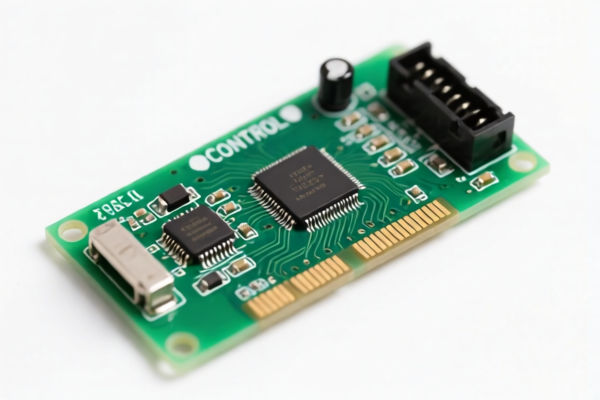
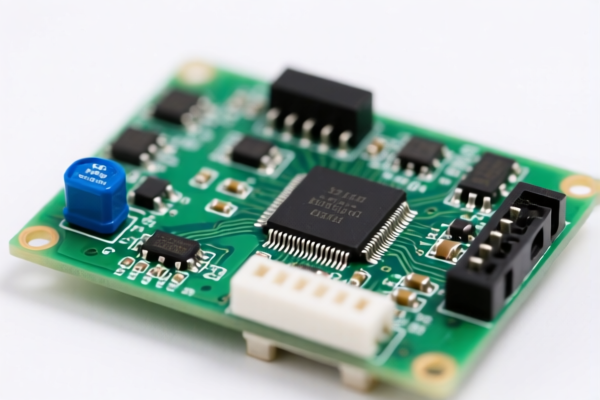
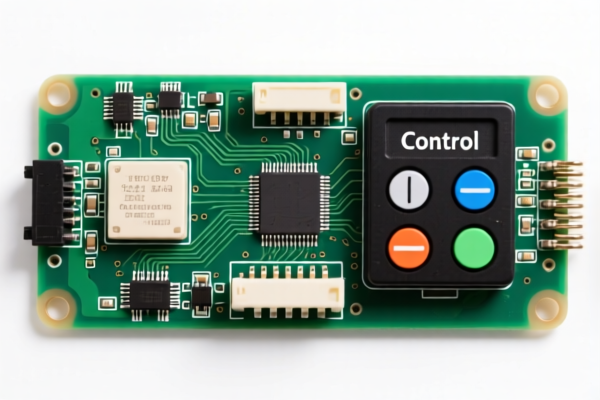
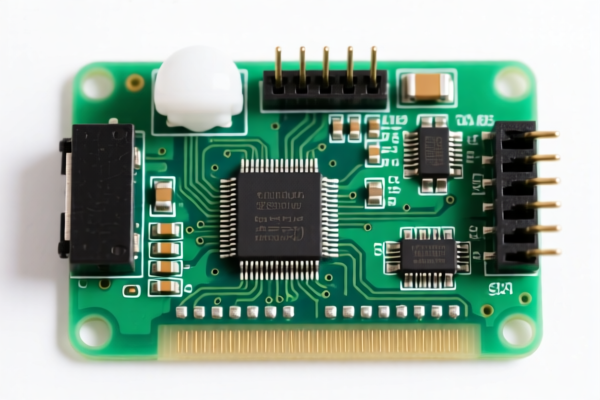
AI Analysis
🛠️ Circuit Control Board (Circuit Board)
🌐 HS Code Reference & Customs Clearance Guide | 2026 Latest Tariff Analysis | Strategic Clearance Strategy
📌 I. Product Definition: What is a "Circuit Control Board"?
A "Circuit Control Board" is a generic term that can refer to several distinct types of electronic components depending on its structure, function, and integration level. In international trade, classification is not based on the name but on the specific physical characteristics and intended use.
The provided data highlights three primary classification scenarios: 1. Integrated Circuit Part: If it is a core component of an IC. 2. Voltage Control Equipment Part: If it performs power distribution or control functions within a larger electrical apparatus. 3. Printed Circuit Board (PCB): If it is primarily a passive substrate for mounting components.
⚠️ Key Distinction Point:
- Is it a functional device itself? → Classify as an electrical control apparatus (e.g., 8537).
- Is it a core component of another high-tech device? → Classify as a part of that device (e.g., 8542).
- Is it a passive structure (substrate)? → Classify as a printed circuit (e.g., 8534).
📦 II. HS Code Classification Details (2026 Latest Tariff Authority)
Based on the provided dataset, here are the three most likely HS Codes, their rationales, and corresponding tax structures.
| HS Code | Product Description | Classification Rationale | Total Tax Rate (China Origin to US)* |
|---|---|---|---|
8542.90.00.00 |
Parts of Electronic Integrated Circuits | Core Component Logic: The board is deemed a core component of electronic integrated circuits, fitting the "part/shape" definition of IC parts. | 60.0% |
8537.10.91.70 |
Other Boards for Voltage Control | Functional Logic: Inferred to perform power control or distribution, falling under the "other" bucket for voltage control equipment. | 37.7% |
8534.00.00.80 |
Other Printed Circuits | Structural Logic: Matches the core attribute of a printed circuit. No material conflict; classified under the "other" fallback category. | 35.0% |
🔍 Critical Warning:
- 8542.90.00.00 carries the highest tariff (60%). Only choose this if the board is explicitly defined as a part of an Integrated Circuit (IC). - 8537.10.91.70 and 8534.00.00.80 are more favorable for general control boards or PCBs. Misclassification here can lead to significant duty differences.
💰 III. 2026 Latest Tariff Rate Breakdown (Including Additional Duties)
✅ Applicable Country: United States (US)
✅ Country of Origin: China (CN)
✅ Effective Date: Post-2025 (Current Policy Framework)
🎯 1. 8542.90.00.00 — Parts of Electronic Integrated Circuits
Highest Risk / Highest Cost
| Item | Detail |
|---|---|
| Base Tariff | 0.0% |
| Additional Tariff (Section 301) | +50.0% |
| 122 Section Tariff (China-specific) | +10.0% |
| Total Effective Rate | 60.0% |
| Tax Calculation | CIF Value × 60% |
| De Minimis Exemption | ❌ Not Eligible (Denied) |
| Legal Basis Path | Base: 0% → Section 301: 50% → 122 Clause: 10% |
📌 Explanation:
- The 50% Section 301 tariff is the standard additional duty for many electronic parts from China.
- The 10% "122 Clause" tariff is a specific additional levy targeting certain Chinese goods, significantly increasing the cost.
- Total 60% is extremely high. Ensure the product is strictly an IC part before using this code.
🎯 2. 8537.10.91.70 — Other Boards for Voltage Control Equipment
Medium Risk / High Cost
| Item | Detail |
|---|---|
| Base Tariff | 2.7% |
| Additional Tariff (Section 301) | +25.0% |
| 122 Section Tariff (China-specific) | +10.0% |
| Total Effective Rate | 37.7% |
| Tax Calculation | CIF Value × 37.7% |
| De Minimis Exemption | ❌ Not Eligible (Denied) |
| Legal Basis Path | Base: 2.7% → Section 301: 25% → 122 Clause: 10% |
📌 Explanation:
- This code assumes the board is part of a voltage control/distribution apparatus (e.g., a PLC, switchgear, or power controller).
- The base tariff is 2.7%, but the 25% Section 301 and 10% 122 Clause drive the total to 37.7%.
- Justification Needed: You must prove the board’s primary function is voltage control/distribution within an electrical system.
🎯 3. 8534.00.00.80 — Other Printed Circuits
Lowest Risk / Lowest Cost (Among Options)
| Item | Detail |
|---|---|
| Base Tariff | 0.0% |
| Additional Tariff (Section 301) | +25.0% |
| 122 Section Tariff (China-specific) | +10.0% |
| Total Effective Rate | 35.0% |
| Tax Calculation | CIF Value × 35.0% |
| De Minimis Exemption | ❌ Not Eligible (Denied) |
| Legal Basis Path | Base: 0% → Section 301: 25% → 122 Clause: 10% |
📌 Explanation:
- This code applies if the product is essentially a Printed Circuit Board (PCB) without complex integrated control logic that would push it into 8537 or 8542.
- It is the most tax-efficient option in this dataset (35% total).
- Key Argument: The board is a "printed circuit" core. If it has no active control components or if it’s a substrate, this is the best fit.
🛠️ IV. Customs Clearance Practical Advice (Avoid Pitfalls)
✅ 1. Documentation Checklist (Must-Have)
| Document | Required? | Purpose |
|---|---|---|
| ✅ Product Specification Sheet | ✔️ | Clearly defines dimensions, layers, and material (e.g., FR4, Aluminum). |
| ✅ Circuit Diagram / Schematic | ✔️ | Crucial: Proves whether it has control logic (8537), is an IC part (8542), or is a passive PCB (8534). |
| ✅ Product Photos (Clear) | ✔️ | Shows markings, connectors, and component density. |
| ✅ Commercial Invoice | ✔️ | Must state "Printed Circuit Board" or "Control Panel Part" accurately. |
| ✅ Origin Certificate (CO) | ✔️ | Mandatory for China-origin goods to confirm 122 Clause applicability. |
✅ 2. Classification Strategy (The "Golden Rule")
🔥 "Function Dictates Code, Logic Dictates Duty!"
| Scenario | Recommended HS Code | Why? | Tax Impact |
|---|---|---|---|
| It is a bare PCB substrate | 8534.00.00.80 |
No complex control logic; just conductive paths. | 35.0% (Best) |
| It controls voltage/power | 8537.10.91.70 |
Acts as a switch, regulator, or distributor. | 37.7% (Acceptable) |
| It is a core part of an IC | 8542.90.00.00 |
Specifically used within microchips/ICs. | 60.0% (Avoid if possible) |
💡 Pro Tip:
- If your board is a standard PCB with soldered components (resistors, capacitors, chips), it often falls under 8534 if it doesn't perform a specific control function as a standalone unit.
- If it is a complete control unit (e.g., a board with a microcontroller that manages power), it may be classified under 8537.
- Do not classify a standard PCB as8542unless it is strictly an IC part, as the 60% tax is punitive.
✅ 3. Common Mistakes & Penalties
❌ Mistake 1: Calling everything "Circuit Board" in the description.
👉 Result: CBP (U.S. Customs) will examine the diagram. If they see control logic, they may reclassify to 8537 or 8542, resulting in back taxes + penalties.
❌ Mistake 2: Assuming "PCB" always means low tax.
👉 Result: If the PCB is part of a medical device or automotive control system, different rules may apply. Always check the end-use.
❌ Mistake 3: Ignoring the 122 Clause (10%).
👉 Result: This tax applies to all China-origin electronics in this category. You cannot avoid it by misclassifying, only by changing origin.
🌍 V. Global Market Comparison (2026)
| Market | Recommended HS Code | Est. Total Tax | Notes |
|---|---|---|---|
| 🇺🇸 USA | 8534.00.00.80 |
35.0% | Best option for PCBs. Includes 10% 122 Clause. |
| 🇺🇸 USA | 8537.10.91.70 |
37.7% | For control boards. Includes 10% 122 Clause. |
| 🇪🇺 EU | 8534.00.00 |
0% - 2.7% | No Section 301 or 122 Clause. Lower burden. |
| 🇨🇳 China | 8534.00.00 |
0% | Import duty is often 0% for PCBs. |
📌 Conclusion:
- The US market is the most expensive due to Section 301 and 122 Clause tariffs.
- Cost-saving Strategy: If possible, consider transshipment (via Vietnam, Mexico, etc.) or origin change to avoid the 10% 122 Clause. However, ensure compliance with rules of substantial transformation.
📌 VI. Final Recommendation
-
Analyze the Circuit: Does it have active control logic?
- No → Go for
8534.00.00.80(35% tax). - Yes → Does it control voltage/power?
- Yes → Go for
8537.10.91.70(37.7% tax). - No (IC Part) → Forced into
8542.90.00.00(60% tax).
- Yes → Go for
- No → Go for
-
Prepare Evidence: Always provide a schematic diagram to CBP to justify the classification.
-
Calculate Landed Cost: Factor in the 35%-60% duty into your pricing strategy. The 10% 122 Clause is non-negotiable for China-origin goods.
📣 Action Required:
📞 Consult a Customs Broker: Provide your PCB layout and Bill of Materials (BOM).
🚀 Optimize for 8534: If your product is a standard PCB, fight for the 35% rate instead of the 60% rate.
💼 Every Percent Counts: A 25% difference in duty can make or break your margin!
✨ Smart Classification = Smart Savings!
💼 Don't let misclassification cost you 25% of your profit!
Customer Reviews
About HS Code Classification
The Harmonized System (HS) is an internationally standardized nomenclature developed by the World Customs Organization (WCO) to classify traded products. Over 200 countries use the HS system as the basis for customs tariffs, trade statistics, and import/export regulations.
Each HS code follows a hierarchical structure:
- Chapter (2 digits) — Broad category of goods (e.g., Chapter 84: Machinery and Mechanical Appliances)
- Heading (4 digits) — More specific grouping within the chapter
- Subheading (6 digits) — Internationally standardized breakdown, used by all WCO member countries
- National subdivisions (8-10 digits) — Country-specific extensions for further classification, such as US HTSUS 10-digit codes
Correct HS code classification is essential for smooth customs clearance, accurate duty payment, and compliance with trade regulations. Misclassification can lead to customs delays, overpayment of duties, or penalties.
When importing from CN to US, the applicable tariff rates may include:
- Most-Favored-Nation (MFN) rate — The standard duty rate applied to WTO members
- General rate — Applied to countries without trade agreements
- Trade remedy duties — Additional tariffs such as Section 301 (anti-dumping), Section 232 (national security), or countervailing duties
The information provided on this page is for reference purposes only. For official classification, please consult with your local customs authority or a licensed customs broker.