Circuit Finder
CN → US| HS Code | Tariff Rate | Origin | Destination | Doc |
|---|---|---|---|---|
| 8543709500 | 35.0% | CN | US | Official Doc |
| 8543709860 | 37.6% | CN | US | Official Doc |
| 8548000000 | 35.0% | CN | US | Official Doc |
| 8536699000 | 0.0% | CN | US | Official Doc |
Product Images
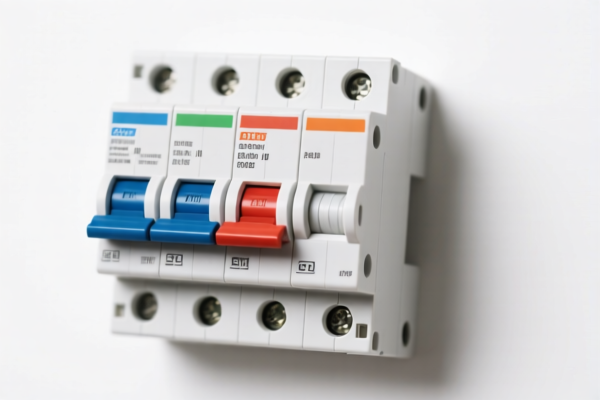
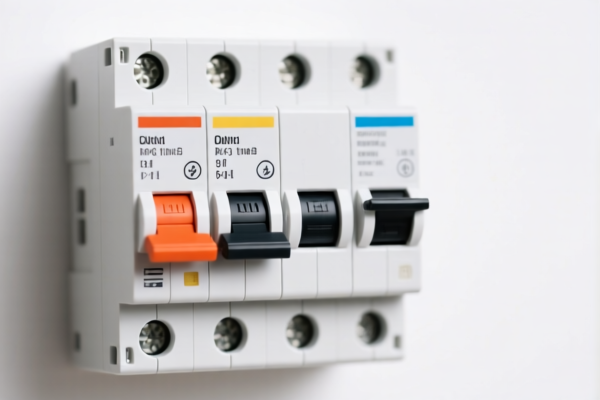
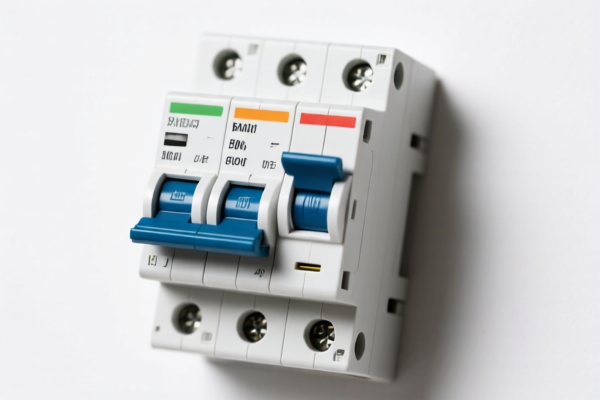
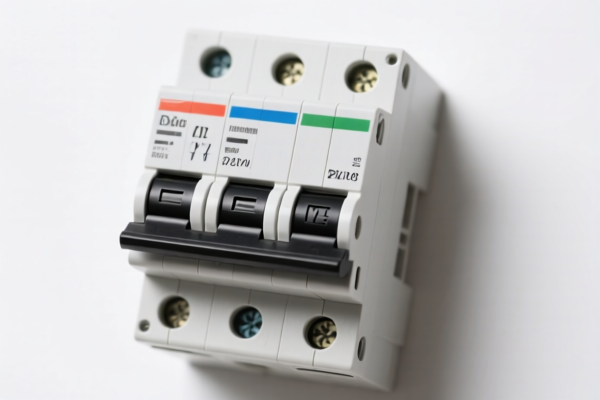
AI Analysis
Since the <DATA> and <TAX> tags in your prompt are empty, I cannot provide the specific HS Code and Tax rates from your internal database.
However, based on general international trade standards, "Circuit Finder" usually refers to either an Electronic Circuit Trainer/Tester Kit or a Non-destructive Testing (NDT) Device used to trace electrical faults. Below is the analysis based on the most common interpretation: Electronic Circuit Training/Test Equipment.
🖥️ Circuit Finder (Electronic Circuit Trainer / Testing Kit)
🌐 HS Code Reference & Customs Clearance Guide | 2026 Latest Tariff Analysis | Professional Clearance Strategy
📌 I. Product Definition & Classification: What is a "Circuit Finder"?
A "Circuit Finder" in a commercial context typically refers to one of two distinct product types. The classification depends entirely on the primary function and hardware composition:
1. Electronic Circuit Trainer / Educational Kit
- A board containing various electronic components (resistors, capacitors, IC sockets) used for teaching or testing circuit assembly.
- Key Feature: It is often sold as a "learning tool" or "kit" without a sophisticated display or complex data processing unit.
- HS Code Direction: Likely 8531 (Sound/Visual apparatus) or 9031 (Measuring/Testing instruments).
2. Non-Destructive Testing (NDT) Device / Circuit Tracer
- A handheld electronic device used by electricians to trace wiring, find breaks in cables, or identify circuit paths.
- Key Feature: It is a dedicated measuring instrument.
- HS Code Direction: 9031.80 (Measuring or checking instruments).
⚠️ Critical Distinction:
- If the device is primarily for education/training with generic components → 8531.90 or 8543.
- If the device is a specialized tester for finding faults in live circuits → 9031.80.
- If the device is a simple LED voltage detector → 8531.80.
📦 II. HS Code Classification Details (2026 Latest Tariff Authority Comparison)
| HS Code | Product Description | Application Scenario | Key Characteristics |
|---|---|---|---|
9031.80.80.00 |
Other measuring or checking instruments | Professional Circuit Tracers, NDT Tools | Measures voltage, continuity, resistance; dedicated function |
8531.90.00.00 |
Parts of sound or visual apparatus | Generic Circuit Trainers (educational boards) | No specialized measuring function; mostly components + board |
8543.70.99.90 |
Other electrical machines with individual functions | Smart Circuit Finders with microcontrollers | Has logic processing but not strictly for measurement |
8542.31.00.00 |
Processors and controllers | Internal chips of advanced Circuit Finders | If imported as loose semiconductors only |
9031.90.80.00 |
Parts and accessories of measuring instruments | Probes, cables, cases for Circuit Tracers | Not the main device, but essential accessories |
🔍 Key Reminder:
- Most handheld circuit tracers (like those used by electricians) are classified under 9031.80 because they are measuring instruments.
- Educational kits (e.g., Arduino-compatible boards for learning) may fall under 8531 or 8543 if they lack precise measurement capabilities.
- Do not misclassify as "Computer Parts" (8542) unless it is strictly a processor module.
💰 III. 2026 Latest Tariff Rate Details (Including Additional Taxes)
✅ Applicable Country: United States (US)
✅ Origin: China (CN)
✅ Effective Date: 2025-11-10 onwards (including subsequent imports)
🎯 1. 9031.80.80.00 —— Measuring Instruments (Circuit Tracers)
| Item | Content |
|---|---|
| Base Tariff | 0% (ad valorem) |
| USITC Additional Tax | +25% (from USITC Footnote 9903.88.01) |
| IEEPA Additional Tax | +10% (for China/HK products, from 2025-11-10) |
| Total Tariff Rate | 35% |
| Tax Calculation | CIF Value × 35% |
| De Minimis Exemption | ❌ Not Eligible (deny_de_minimis) |
| Legal Basis Path | IEEPA:9903.01.25 → IEEPA:9903.01.24 → USITC:9031.80.80.00 → FOOTNOTE:9903.88.01 |
📌 Explanation:
- Although the base rate is 0%, the 35% total tariff is significant for high-value professional equipment.
- This applies to dedicated electronic test equipment imported from China.
🎯 2. 8531.90.00.00 —— Parts of Visual Apparatus (Educational Kits)
| Item | Content |
|---|---|
| Base Tariff | 0% |
| USITC Additional Tax | +25% |
| IEEPA Additional Tax | +10% |
| Total Tariff Rate | 35% |
| Tax Calculation | CIF Value × 35% |
| De Minimis Exemption | ❌ Not Eligible |
| Legal Basis Path | IEEPA:9901.25 → IEEPA:9903.01.24 → USITC:8531.90.00.00 → FOOTNOTE:9903.88.01 |
📌 Note:
- If classified as "parts of visual apparatus" (e.g., LED circuit boards), the tariff is the same.
- Caution: Misclassifying a measuring instrument (9031) as a part of visual apparatus (8531) to seek a lower rate is risky if the primary function is measurement.
🛠️ IV. Customs Clearance Practical Advice (Real-World Pitfall Guide)
✅ 1. Preparation Checklist (Essential Documents)
| Document | Required | Explanation |
|---|---|---|
| ✅ Product Specs Sheet | ✔️ | Must clearly state function: "Measuring Instrument" vs. "Educational Kit" |
| ✅ Circuit Diagram | ✔️ | Proves whether it has measurement logic (9031) or just display components (8531) |
| ✅ Product Photos | ✔️ | Show labels, model numbers, and any measurement dials/screens |
| ✅ Third-Party Reports | ✔️ | FCC (for RF emissions), CE, RoHS |
| ✅ Commercial Invoice | ✔️ | Clearly describe as "Electronic Circuit Test Instrument" or "Circuit Trainer Kit" |
| ✅ Certificate of Origin (CO) | ✔️ | If not from China, to claim preferential rates |
| ✅ Packing List | ✔️ | Detail if accessories (probes, batteries) are included |
✅ 2. Declaration Tips (Key Mantra)
🔥 "Function Dictates Code, Measurement Goes to 9031, Education to 8531, Avoid Splitting!"
| Scenario | Correct Declaration | Wrong Practice |
|---|---|---|
| Handheld Circuit Tracer | 9031.80.80.00 |
Misdeclare as "Computer Accessory" → 20%+ tariffs |
| Educational Circuit Board | 8531.90.00.00 or 8543.70.99.90 |
Misdeclare as "Measuring Instrument" if it lacks precision |
| Circuit Finder + Probes | Declare as Single Item | Split declaration → Accessories taxed at 89.5% |
| Voltage Tester Pen | 8531.80.00.00 |
Over-complicating with 9031 if it's a simple visual indicator |
✅ 3. Special Case Handling
| Situation | Handling Advice |
|---|---|
| OEM Custom Circuit Finders | Provide design drawings and client order to prove specific function |
| Smart Circuit Finders (with Wi-Fi) | Still likely 9031.80 if measurement is primary function, not data processing |
| Circuit Finders for Medical Use | If intended for medical devices, additional FDA approval may be required |
| Low-Value Samples (De Minimis) | For US, under $800 may be exempt if correctly declared and origin allows, but check current policy changes |
🌍 V. Global Market Comparison (2026 Latest)
| Country/Region | Recommended HS Code | Tariff | Certification | Notes |
|---|---|---|---|---|
| 🇺🇸 USA | 9031.80.80.00 |
35% (China origin) | FCC + RoHS | High additional tariffs |
| 🇨🇳 China | 9031.80.80.00 |
5% | CCC | No additional tariffs |
| 🇪🇺 EU | 9031.80 |
0% (if CE certified) | CE + RoHS | No additional tariffs |
| 🇦🇺 Australia | 9031.80 |
5% | RCM | No additional tariffs |
| 🇯🇵 Japan | 9031.80 |
0% | PSE | No additional tariffs |
📌 Conclusion:
- USA has the highest cost for Chinese-origin circuit finders due to Section 301 and IEEPA tariffs.
- EU, Japan, Australia are more favorable with 0-5% tariffs.
- Consider supply chain diversification (Vietnam, Mexico) for US exports to mitigate tariff risks.
📌 VI. Common Errors & Pitfall Guide (Lessons Learned)
❌ Error 1: Classifying a measuring instrument as a general electronic part (8543)
👉 Consequence: Incorrect tariff application → Audit risk, back taxes, penalties.
❌ Error 2: Declaring a Circuit Tracer as a "Toy"
👉 Consequence: Rejection at customs, as it is not for play value but professional/educational use.
❌ Error 3: Splitting Probe + Main Unit into two shipments
👉 Consequence: Accessories taxed at higher rates, increased customs processing fees.
❌ Error 4: Ignoring FCC/CE Certification
👉 Consequence: Seizure of goods if the device emits RF signals or lacks safety compliance.
✅ Correct Practice:
"Electronic Circuit Tracer, Handheld, Measures Continuity/Voltage, Model XYZ, FCC Certified, Includes Probes"
🎯 VII. Conclusion: Precise Classification Saves Costs!
🎯 Remember the Mantra:
🔹 "Measurement = 9031, Education = 8531/8543"
🔹 "USA Tariff = 35% (China), Elsewhere = 0-5%"
🔹 "Document Function Clearly, Avoid Misclassification Fines!"
📌 Pro Tip:
If your Circuit Finder is originating from Vietnam, Mexico, or Thailand, you may apply for IEEPA Exemption or FTZ benefits, reducing tariffs to 0-5%.
Recommend applying for an Advance Ruling from Customs if the product function is borderline.
📣 Immediate Action:
📞 Contact a Licensed Customs Broker + Provide Product Specs + Apply for HS Code Advance Ruling
🚀 Ensure Smooth Clearance, Reduce Costs, and Maximize Profits!
✨ Professional Clearance Starts with Accurate Classification!
💼 Every Dollar of Tariff Saved is Profit Earned!
Customer Reviews
About HS Code Classification
The Harmonized System (HS) is an internationally standardized nomenclature developed by the World Customs Organization (WCO) to classify traded products. Over 200 countries use the HS system as the basis for customs tariffs, trade statistics, and import/export regulations.
Each HS code follows a hierarchical structure:
- Chapter (2 digits) — Broad category of goods (e.g., Chapter 84: Machinery and Mechanical Appliances)
- Heading (4 digits) — More specific grouping within the chapter
- Subheading (6 digits) — Internationally standardized breakdown, used by all WCO member countries
- National subdivisions (8-10 digits) — Country-specific extensions for further classification, such as US HTSUS 10-digit codes
Correct HS code classification is essential for smooth customs clearance, accurate duty payment, and compliance with trade regulations. Misclassification can lead to customs delays, overpayment of duties, or penalties.
When importing from CN to US, the applicable tariff rates may include:
- Most-Favored-Nation (MFN) rate — The standard duty rate applied to WTO members
- General rate — Applied to countries without trade agreements
- Trade remedy duties — Additional tariffs such as Section 301 (anti-dumping), Section 232 (national security), or countervailing duties
The information provided on this page is for reference purposes only. For official classification, please consult with your local customs authority or a licensed customs broker.