Circulation Pump
CN → US| HS Code | Tariff Rate | Origin | Destination | Doc |
|---|---|---|---|---|
| 8413200000 | 35.0% | CN | US | Official Doc |
| 8413810030 | 35.0% | CN | US | Official Doc |
| 8414100000 | 37.5% | CN | US | Official Doc |
| 8414200000 | 38.7% | CN | US | Official Doc |
| 8413200000 | 35.0% | CN | US | Official Doc |
Product Images
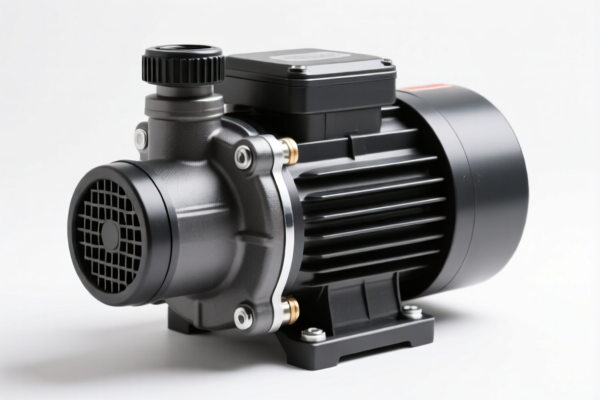
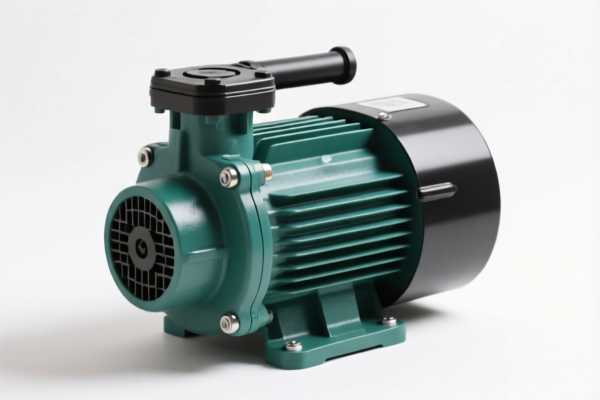
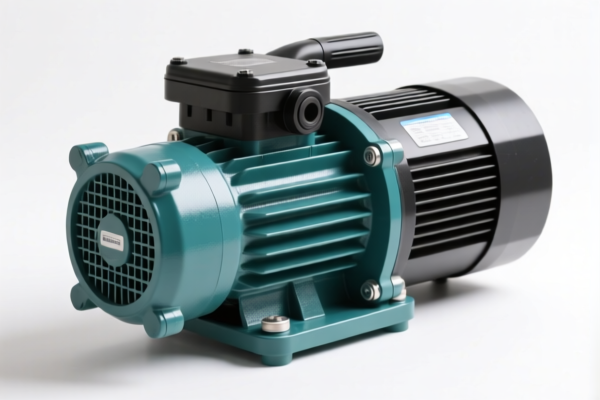
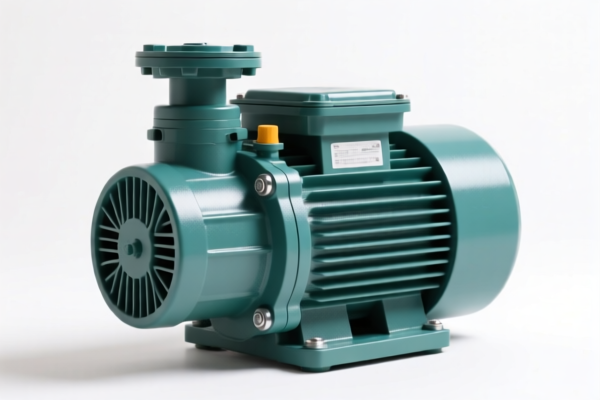
AI Analysis
🚰 Circulation Pump (Pumps for Liquids)
🌐 HS Code Reference & Customs Clearance Guide | 2026 Latest Tariff Analysis | Professional Clearance Strategy
📌 Part I: Product Definition & Classification: Do You Really Understand "Circulation Pump"?
The Circulation Pump is a critical fluid handling device used to maintain continuous flow in heating, cooling, and industrial systems. In international trade, it is primarily classified under Chapter 84 (Nuclear reactors, boilers, machinery and mechanical appliances).
Core Functionality:
Unlike general-purpose pumps that might move bulk fluids for storage or transport, circulation pumps are designed for closed-loop systems. They ensure the continuous movement of liquids (water, glycol, oil, etc.) through pipes, radiators, heat exchangers, or industrial processing units.
⚠️ Key Distinction Point:
- If the pump is designed specifically for liquid circulation (e.g., in HVAC, boiler systems, or industrial loops), it falls under 8413.20.00.00.
- If it is a Vacuum Pump (removing gas from a closed vessel), it falls under 8414.10.00.00.
- If it is a general Air Pump or Gas Pump, it falls under 8414.20.00.00 or 8413.81.00.30.
📦 Part II. HS Code Classification Details (2026 Latest Tariff Authority Cross-Reference)
Based on the provided data, here are the applicable HS Codes and their tax structures for US imports from China:
| HS Code | Product Description | Application Scenario | Tax Rate (Total) | Basis for Classification |
|---|---|---|---|---|
8413.20.00.00 |
Pumps for liquids (including circulation pumps) | HVAC systems, boiler circulation, industrial liquid loops | 35.0% | Primary classification for "Pump for Liquids". Circulation pumps are explicitly treated as liquid pumps. |
8413.81.00.30 |
Other pumps for liquids (Catch-all/Fallback) | Liquid lifting machines, specialized liquid pumps not covered elsewhere | 35.0% | Used if the pump doesn't fit standard "liquid pump" subheads but is still for liquids. |
8414.10.00.00 |
Vacuum pumps | Vacuum systems, gas extraction, vacuum packaging | 37.5% | Includes vacuum pumps. If the "circulation pump" is actually for gas/vacuum, it goes here. |
8414.20.00.00 |
Air or other gas compressors (with vacuum pump function) | Air compressors, gas pumps, pneumatic systems | 38.7% | If the pump handles gas/air instead of liquid, this code applies. |
🔍 Critical Clarification:
- Liquid vs. Gas: If your pump moves water/liquid, use 8413.xxxx. If it moves air/gas, use 8414.xxxx.
- Circulation Specifics: For standard liquid circulation (e.g., in a home heating system),8413.20.00.00is the most accurate and direct classification.
💰 Part III. 2026 Latest Tariff Rate Breakdown (Including Additional Taxes & Policy Surcharges)
✅ Applicable Country: United States (US)
✅ Origin: China (CN)
✅ Effective Time: Post-2025 tariffs (Current active rates)
🎯 1. 8413.20.00.00 —— Liquid Pumps (Including Circulation Pumps)
This is the primary code for circulation pumps handling liquids.
| Item | Content |
|---|---|
| Base Tariff | 0.0% |
| Section 301 Additional Tariff | +25.0% |
| Section 122 Tariff (IEEPA) | +10.0% |
| Total Effective Tax Rate | 35.0% |
| Tax Calculation | CIF Value × 35% |
| De Minimis Exemption | ❌ Not Eligible (High risk of seizure/confiscation for low-value shipments) |
| Legal Basis Path | Section 301 → Section 122 (IEEPA) → USITC:8413.20.00.00 |
📌 Explanation:
- Base Rate (0%): Liquid pumps generally have no base MFN duty.
- 301 Tariff (25%): Applied to Chinese-origin machinery and electrical equipment.
- 122 Clause (10%): Additional surcharge under IEEPA for Chinese goods.
- Total (35%): This is the mandatory landed cost for liquid circulation pumps from China.
🎯 2. 8413.81.00.30 —— Other Liquid Pumps (Fallback Category)
| Item | Content |
|---|---|
| Base Tariff | 0.0% |
| Section 301 Additional Tariff | +25.0% |
| Section 122 Tariff (IEEPA) | +10.0% |
| Total Effective Tax Rate | 35.0% |
| Tax Calculation | CIF Value × 35% |
| De Minimis Exemption | ❌ Not Eligible |
📌 Note:
- Same tax structure as8413.20.00.00.
- Use this only if the pump does not fit the standard "liquid pump" definition but is still for liquids.
🎯 3. 8414.10.00.00 —— Vacuum Pumps (If Misclassified as Gas Pump)
| Item | Content |
|---|---|
| Base Tariff | 2.5% |
| Section 301 Additional Tariff | +25.0% |
| Section 122 Tariff (IEEPA) | +10.0% |
| Total Effective Tax Rate | 37.5% |
| Tax Calculation | CIF Value × 37.5% |
| De Minimis Exemption | ❌ Not Eligible |
📌 Warning:
- If your "circulation pump" is actually a vacuum pump (for gas), the base tariff is 2.5%, making the total 37.5%.
- Do not misclassify a liquid pump as a vacuum pump to avoid customs audits.
🎯 4. 8414.20.00.00 —— Air/Gas Pumps (If Misclassified as Air Compressor)
| Item | Content |
|---|---|
| Base Tariff | 3.7% |
| Section 301 Additional Tariff | +25.0% |
| Section 122 Tariff (IEEPA) | +10.0% |
| Total Effective Tax Rate | 38.7% |
| Tax Calculation | CIF Value × 38.7% |
| De Minimis Exemption | ❌ Not Eligible |
📌 Warning:
- If the pump is for air/gas, the base tariff is 3.7%, making the total 38.7%.
- This is the highest tax rate among the options. Ensure correct classification to avoid overpayment or underpayment penalties.
🛠️ Part IV. Customs Clearance Practical Advice (Real-World Pitfall Guide)
✅ 1. Required Documentation Checklist (Non-Negotiable)
| Document | Mandatory? | Description |
|---|---|---|
| ✅ Product Specification Sheet | ✔️ | Must specify: Flow rate, head, power, medium handled (liquid vs. gas), and material. |
| ✅ Commercial Invoice | ✔️ | Must clearly state: "Circulation Pump for Liquids" or "Vacuum Pump for Gases". Avoid vague terms like "Fluid Mover". |
| ✅ Packing List | ✔️ | Detail all components. If shipped as a set, ensure no split billing. |
| ✅ Proof of Origin | ✔️ | If not from China, may reduce 301/122 tariffs. |
| ✅ CE/RoHS Certificates | ✔️ | For market compliance in US/EU. |
| ✅ User Manual | ✔️ | Often requested by customs to verify use case (e.g., "for water circulation in HVAC"). |
✅ 2. Declaration Strategy (Key Mnemonic)
🔥 “Liquid Circulation = 8413.20.00.00 | Gas/Vacuum = 8414.xxxx”
| Scenario | Correct HS Code | Incorrect Code | Consequence |
|---|---|---|---|
| Water/Glycol Circulation Pump | 8413.20.00.00 |
8414.10.00.00 |
Overpayment (37.5% vs 35%) + Risk of audit for misclassification. |
| Vacuum Pump (for gas) | 8414.10.00.00 |
8413.20.00.00 |
Underpayment → Customs will assess 37.5% + penalties. |
| Air Compressor | 8414.20.00.00 |
8413.20.00.00 |
Underpayment → Customs will assess 38.7% + penalties. |
| Split Shipment (Pump + Motor) | Declare as One Unit | Split into Pump (8413) + Motor (8501) | Higher total tax + Increased inspection risk. |
✅ 3. Special Cases & Solutions
| Case | Handling Advice |
|---|---|
| OEM Custom Pumps | Provide customer order + design drawings. Ensure description matches the primary function (liquid vs. gas). |
| Heat Transfer Oil Pump | Still classified under 8413.20.00.00 (liquid pump). Tax: 35%. |
| Pump with Integrated Control Box | Declare as one unit under the pump HS code. Do not split control box into electronics. |
| Samples for Testing | Even for samples, De Minimis (Section 321) does NOT apply for Chinese goods subject to 301/122 tariffs. Full duty applies. |
🌍 Part V. Global Market Customs Comparison (2026 Latest)
| Country/Region | Recommended HS Code | Tariff (China Origin) | Certification | Notes |
|---|---|---|---|---|
| 🇺🇸 USA | 8413.20.00.00 |
35% (301 + 122) | UL, CE, RoHS | High tariff barrier. No de minimis. |
| 🇨🇳 China | 8413.20.00.00 |
0% - 8% (Import Duty) | CCC (if applicable) | No 301/122 tariffs. |
| 🇪🇺 EU | 8413.20.00.00 |
0% (Most Favored Nation) | CE, RoHS, ErP | No additional US-style surcharges. |
| 🇯🇵 Japan | 8413.20.00.00 |
0% (JSEPA) | PSE | Zero tariff under Japan-Singapore/ASEAN agreements if certified. |
| 🇲🇽 Mexico | 8413.20.00.00 |
0% (USMCA) | NOM | Check local certification. |
📌 Conclusion:
- USA is the most expensive market due to the 35% total tariff.
- EU and Japan offer zero or low tariffs, making them more attractive for high-volume exports from China.
- Diversify supply chain: Consider shipping to Vietnam/Mexico for assembly to mitigate US tariffs (subject to USMCA/ASEAN rules).
📌 Part VI. Common Mistakes & Pitfall Guide (Lessons Learned)
❌ Mistake 1: Declaring "Circulation Pump" as "Parts of Machinery" to avoid 301 tariffs.
👉 Consequence: Customs will reject, classify as 8413.20.00.00, and apply 35% + penalties.
❌ Mistake 2: Confusing "Liquid Pump" with "Gas Compressor".
👉 Consequence: If liquid, but declared as gas (8414.20.00.00), you pay 38.7% unnecessarily. If gas, but declared as liquid, you risk underpayment and audit.
❌ Mistake 3: Assuming "De Minimis" applies for low-value shipments.
👉 Consequence: Section 321 exemption is VOID for Chinese goods under 301/122 tariffs. Even a $50 pump will be taxed at 35%.
❌ Mistake 4: Using vague descriptions like "Fluid Pump" without specifying liquid/gas.
👉 Consequence: Customs may assign the highest default tariff (38.7%) or hold the shipment for further inspection.
✅ Correct Approach:
"Circulation Pump, Centrifugal, for Water/Glycol, 120V, Model XYZ, for HVAC System"
🎯 Part VII. Conclusion: Precise Classification Saves Money!
🎯 Remember the Mnemonic:
🔹 “Liquid Circulation = 8413.20.00.00 (35%)”
🔹 “Gas/Vacuum = 8414.xxxx (37.5%-38.7%)”
🔹 “No De Minimis for China → All shipments taxed!”
🔹 “HS Code determines the cost: 3% difference = Huge savings!”
📌 Pro Tip:
If your Circulation Pump is not from China (e.g., from Vietnam, Malaysia, or Mexico), you may avoid the 25% Section 301 and 10% IEEPA 122 tariffs.
- Vietnam Origin: Potentially 0% - 5% total.
- Mexico Origin (USMCA): 0% if compliant with rules of origin.
📣 Immediate Action:
📞 Contact a licensed customs broker.
📸 Provide photos of the nameplate and flow direction.
📄 Apply for a Pre-Ruling (Advance Ruling) from US CBP if the product is complex.
✨ Professional Customs Clearance Starts with Accurate Classification!
💼 Every Percentage Point Matters in Your Profit Margin!
Customer Reviews
About HS Code Classification
The Harmonized System (HS) is an internationally standardized nomenclature developed by the World Customs Organization (WCO) to classify traded products. Over 200 countries use the HS system as the basis for customs tariffs, trade statistics, and import/export regulations.
Each HS code follows a hierarchical structure:
- Chapter (2 digits) — Broad category of goods (e.g., Chapter 84: Machinery and Mechanical Appliances)
- Heading (4 digits) — More specific grouping within the chapter
- Subheading (6 digits) — Internationally standardized breakdown, used by all WCO member countries
- National subdivisions (8-10 digits) — Country-specific extensions for further classification, such as US HTSUS 10-digit codes
Correct HS code classification is essential for smooth customs clearance, accurate duty payment, and compliance with trade regulations. Misclassification can lead to customs delays, overpayment of duties, or penalties.
When importing from CN to US, the applicable tariff rates may include:
- Most-Favored-Nation (MFN) rate — The standard duty rate applied to WTO members
- General rate — Applied to countries without trade agreements
- Trade remedy duties — Additional tariffs such as Section 301 (anti-dumping), Section 232 (national security), or countervailing duties
The information provided on this page is for reference purposes only. For official classification, please consult with your local customs authority or a licensed customs broker.