City Bicycle Cable Sheath
CN → US| HS Code | Tariff Rate | Origin | Destination | Doc |
|---|---|---|---|---|
| 3917390050 | 38.1% | CN | US | Official Doc |
| 8714995000 | 17.5% | CN | US | Official Doc |
| 8714998000 | 27.5% | CN | US | Official Doc |
| 8307106000 | 38.8% | CN | US | Official Doc |
| 3917390010 | 38.1% | CN | US | Official Doc |
Product Images
AI Analysis
🚲 City Bicycle Cable Sheath (Line Pipe/Housing)
🌐 HS Code Reference & Customs Clearance Guide | 2026 Latest Tariff Analysis | Professional Compliance Strategy
📌 I. Product Definition & Classification: What is a "Cable Sheath"?
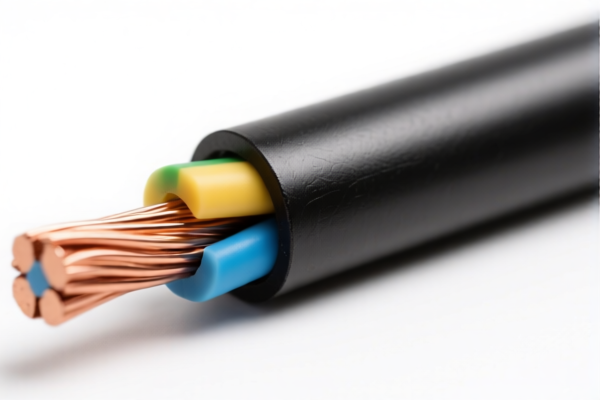
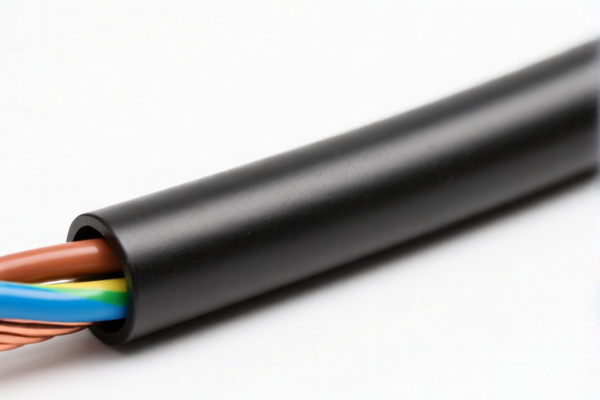
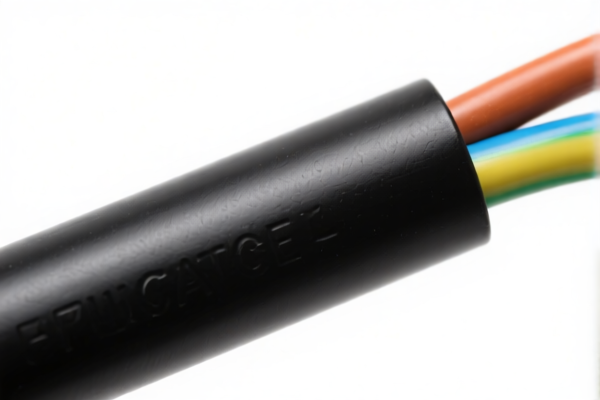
A City Bicycle Cable Sheath (often referred to as a "line pipe" or "housing") is a critical component of a bicycle's control system. It serves as the protective outer casing for the inner cables ( Bowden cables) that transmit mechanical force from the brake levers or gear shifters to the brakes and derailleurs.
In international trade, these are classified based on their material composition and physical form. The most common types are: * Plastic Sheaths: Most common for standard city bikes. Made of PVC or polyethylene. * Metal-Clad/Reinforced Sheaths: Used for performance or heavy-duty applications. Features a steel braid or aluminum coil inside a plastic outer jacket to reduce friction and prevent stretching. * All-Metal Sheaths: Less common for city bikes, typically found in industrial or high-performance racing contexts, made entirely of steel.
⚠️ Key Distinction Point:
- If the product is primarily plastic (with or without internal metal reinforcement/braid), it falls under Chapter 39 (Plastics).
- If the product is primarily metal (e.g., steel hose), it falls under Chapter 83 (Base Metals).
- Crucial Note: Even if used for bicycles, they are generally not classified under Chapter 87 (Vehicles) unless they are integral, non-separable parts of a complete assembly (which cable sheaths are not). They are considered accessories or separate parts.
📦 II. HS Code Classification Details (2026 Latest Tariff Mapping)
Based on the provided data, here are the five possible HS Codes, categorized by material and structure:
| HS Code | Product Description | Material/Structure | Key Classification Logic |
|---|---|---|---|
3917.39.00.50 |
Plastic Line Pipes/Hoses | Plastic (with or without metal braid) | Primary Match: Form is "tube," material is plastic. No conflict with plastic classification. |
3917.39.00.10 |
Plastic Line Pipes with Metal Reinforcement | Plastic + Metal Braid/Coil | Secondary Match: Form is "tube," material is plastic with metal enhancement. Matches "plastic" category priority. |
8307.10.60.00 |
Steel Flexible Conduits/Hoses | All-Metal (Steel) | Alternative: If the sheath is fully metallic (steel braid without significant plastic outer layer), it falls under base metals. |
8714.99.50.00 |
Bicycle Derailleur Parts | Metal/Plastic Composite | Specific Use: Classified as a part of a derailleur system. Material inferred as metal braided or plastic shell. |
8714.99.80.00 |
Bicycle Parts (Other) | Any Material | General Catch-all: Classified as a general bicycle accessory. No specific material conflict. |
🔍 Prioritization Logic:
- Most Accurate:3917.39.00.50and3917.39.00.10are the most precise for standard plastic sheaths because they describe the physical form (tubes/hoses) and material (plastic) accurately, which is preferred over generic "parts" codes.
- Metal Only:8307.10.60.00applies only if the product is fundamentally a metal hose, not a plastic one with a thin metal liner.
- Bicycle Parts:8714.99.50.00and8714.99.80.00are valid but often result in higher or less specific tariff treatments compared to the material-specific plastic codes.
💰 III. 2026 Tariff Rate Breakdown (USA Import from China)
✅ Applicable Country: USA (US)
✅ Origin: China (CN)
✅ Effective Date: Post-November 10, 2025 (including subsequent imports)
🎯 1. 3917.39.00.50 & 3917.39.00.10 —— Plastic Line Pipes (Most Common for City Bikes)
These two codes share the same tariff structure in the provided data.
| Item | Detail |
|---|---|
| Base Duty Rate | 3.1% (ad valorem) |
| Section 301 Duty (Added Tariff) | +25.0% (From USITC Footnote 9903.88.01) |
| IEEPA Duty (122 Clause) | +10.0% (On Chinese products) |
| Total Tax Rate | 38.1% |
| Tax Calculation | CIF Value × 38.1% |
| De Minimis Exemption | ❌ Not Eligible (denied) |
| Legal Basis Path | IEEPA:9903.01.25 → USITC:3917.39.00.50 → FOOTNOTE:9903.88.01 |
📌 Explanation:
- The base duty is low (3.1%), but the 25% Section 301 tariff is the dominant cost driver for Chinese plastics.
- The 10% IEEPA tariff adds an additional layer of cost for Chinese origin goods.
- Total 38.1% is a significant cost factor. Proper documentation of "Plastic" origin and material composition is critical to avoid misclassification into higher-metal tariffs.
🎯 2. 8307.10.60.00 —— Steel Flexible Conduits (All-Metal)
| Item | Detail |
|---|---|
| Base Duty Rate | 3.8% (ad valorem) |
| Section 301 Duty | +25.0% |
| IEEPA Duty | +10.0% |
| Total Tax Rate | 38.8% |
| Tax Calculation | CIF Value × 38.8% |
| De Minimis Exemption | ❌ Not Eligible |
| Legal Basis Path | IEEPA:9903.01.25 → USITC:8307.10.60.00 → FOOTNOTE:9903.88.01 |
📌 Note:
- Only use this code if the sheath is primarily metal. Misclassifying plastic sheaths here could lead to penalties.
- The rate is slightly higher (38.8%) due to the slightly higher base duty (3.8% vs 3.1%).
🎯 3. 8714.99.50.00 —— Bicycle Derailleur Parts (Specific)
| Item | Detail |
|---|---|
| Base Duty Rate | 0.0% |
| Section 301 Duty | +7.5% |
| IEEPA Duty | +10.0% |
| Total Tax Rate | 17.5% |
| Tax Calculation | CIF Value × 17.5% |
| De Minimis Exemption | ❌ Not Eligible |
| Legal Basis Path | IEEPA:9903.01.24 → USITC:8714.99.50.00 |
📌 Explanation:
- This code offers the lowest total tariff (17.5%).
- Risk: To use this, you must prove the item is specifically a part of a derailleur system (e.g., "Derailleur Cable Housing"). If it's a general "brake cable sheath," customs may reject this code.
- Strategy: If the sheaths are sold specifically as "Derailleur Replacement Parts" with matching technical specs, this is the most cost-effective option.
🎯 4. 8714.99.80.00 —— Bicycle Parts (Other)
| Item | Detail |
|---|---|
| Base Duty Rate | 10.0% |
| Section 301 Duty | +7.5% |
| IEEPA Duty | +10.0% |
| Total Tax Rate | 27.5% |
| Tax Calculation | CIF Value × 27.5% |
| De Minimis Exemption | ❌ Not Eligible |
| Legal Basis Path | IEEPA:9903.01.24 → USITC:8714.99.80.00 |
📌 Explanation:
- A "catch-all" for bicycle parts not otherwise specified.
- Higher than derailleur-specific code but lower than plastic/metal tubes.
- Useful if the product doesn't fit neatly into "derailleur parts" but is clearly for bicycles.
🛠️ IV. Customs Clearance Practical Advice (Real-World Pitfall Guide)
✅ 1. Preparation Checklist (Mandatory Documents)
| Document | Required | Description |
|---|---|---|
| ✅ Product Specification Sheet | ✔️ | Must clearly state: Material (Plastic vs. Steel), Inner Diameter (ID), Outer Diameter (OD), Length, and Application (Brake/Gear). |
| ✅ Photos (Clear & Detailed) | ✔️ | Show the cut section to prove if there is a metal braid inside. Show the end caps/connectors. |
| ✅ Commercial Invoice | ✔️ | Description should be precise: "Plastic Cable Sheath for City Bicycles, Model XYZ" or "Steel Braided Derailleur Housing." Avoid vague terms like "Bike Part." |
| ✅ Bill of Lading / Packing List | ✔️ | Ensure quantity matches invoice. |
| ✅ Origin Certificate | ✔️ | If claiming any potential exemptions or for statistical purposes. |
✅ 2. Declaration Strategy (Key Tips)
🔥 "Material First, Use Second. Be Specific, Avoid Vague."
| Scenario | Recommended HS Code | Declaration Text Example | Risk |
|---|---|---|---|
| Standard Plastic Sheath | 3917.39.00.50 |
"Plastic Line Pipe for Bicycle Control Cables" | Low. Most accurate for mass-market items. |
| Plastic with Metal Braid | 3917.39.00.10 |
"Reinforced Plastic Cable Housing for Derailleur" | Low. Clearly states reinforcement. |
| All-Metal Steel Hose | 8307.10.60.00 |
"Steel Flexible Conduit for Bicycle" | Medium. Must prove no significant plastic content. |
| Sold as Derailleur Part | 8714.99.50.00 |
"Derailleur Cable Housing Assembly" | High Risk. Only if specifically marketed/sold as a derailleur component. If misused, customs may reclassify to Chapter 39 with penalties. |
| General Bike Accessory | 8714.99.80.00 |
"Bicycle Brake Cable Housing" | Medium. Safer than 8714.99.50 if not derailleur-specific. |
✅ 3. Special Handling Tips
| Situation | Advice |
|---|---|
| Mixed Materials | If the sheath is plastic with a tiny metal liner, still use Chapter 39. The plastic defines the character. |
| Pre-cut Lengths | Declare as "Cut to Size." Ensure the description matches the HS Code definition of "hoses/tubes." |
| Brake vs. Gear | If selling both, ensure the invoice specifies the use. Using 8714.99.50 only for gear parts and 3917... for brake parts is acceptable if justified. |
| Avoid "Bicycle Part" Vague Descriptions | Customs may reject 8714.99.80.00 if the product is clearly a plastic tube, forcing a reclassification to 3917... and potentially causing delays. |
🌍 V. Global Market Comparison (2026)
| Country/Region | Recommended HS Code | Tariff (China Origin) | Key Requirement | Notes |
|---|---|---|---|---|
| 🇺🇸 USA | 3917.39.00.50 |
38.1% | FCC/RoHS (if electronic, but here just plastic) | High duty due to 301/IEEPA. |
| 🇺🇸 USA | 8714.99.50.00 |
17.5% | Proof of derailleur use | Lowest cost option if justified. |
| 🇪🇺 EU | 3917.39.00 |
~4-6% | CE, REACH | No Section 301/IEEPA. Much cheaper. |
| 🇨🇳 China | 3917.39.00 |
~2-3% | CCC (if applicable) | Domestic import duty low. |
📌 Conclusion for USA Market:
- The 38.1% rate on plastic sheaths is substantial.
- If your product is strictly for derailleurs, attempting to justify8714.99.50.00(17.5%) can save you 20.6% in tariffs. However, this requires strong documentation proving it is a "derailleur part" and not a general "brake/cable part."
- For general city bike cable sheaths (brakes and gears mixed),3917.39.00.50is the safest and most accurate classification.
📌 VI. Common Mistakes & Pitfalls (Lessons Learned)
❌ Mistake 1: Declaring all cable sheaths as 8714.99.80.00 (Bicycle Parts)
👉 Consequence: Customs may reject this because Chapter 39 (Plastics) is more specific for the material. Risk of reclassification, delay, and potential penalties.
❌ Mistake 2: Using 8714.99.50.00 for Brake Cables
👉 Consequence: This code is for derailleurs. Brake cables are not derailleurs. Customs will deny this, potentially leading to higher duties or disputes.
❌ Mistake 3: Ignoring the Metal Braid
👉 Consequence: If the sheath has a significant metal braid, declaring it as pure plastic (3917...) without noting it might be seen as incomplete. However, if the outer shell is plastic, Chapter 39 is still usually correct. Just be accurate in description.
✅ Correct Practice:
"Plastic Cable Sheath, 4.0mm ID, Black, PVC Material, for City Bicycle Brake/Gear Systems"
For Derailleur-specific items:
"Derailleur Cable Housing, Metal-Braided Reinforcement, Plastic Outer Jacket, for 7/8-Speed Derailleurs"
🎯 VII. Conclusion: Professional Classification Saves Money
🎯 Key Takeaway:
🔹 Plastic Sheaths =
3917.39.00.50/10(38.1%)
🔹 Derailleur-Specific =8714.99.50.00(17.5%)
🔹 General Bike Parts =8714.99.80.00(27.5%)
🔹 Strategy:
If you are importing high volumes, consider marketing and packaging your gear shift sheaths separately from brake sheaths to justify the lower 17.5% tariff for derailleurs. For brake sheaths, stick to the accurate plastic classification.
📌 Pro Tip:
Always request a Binding Ruling or Pre-Decision from US Customs (CBP) if your product is on the borderline between plastic tubes and bicycle parts. This protects you from retroactive penalties.
📣 Immediate Action:
📞 Consult with your freight forwarder or customs broker.
📄 Provide clear photos and specifications.
🚀 Classify accurately to optimize your landed cost!
✨ Precision in Classification, Profit in Clearance!
💼 Your supply chain efficiency depends on the first 8 digits!
Customer Reviews
About HS Code Classification
The Harmonized System (HS) is an internationally standardized nomenclature developed by the World Customs Organization (WCO) to classify traded products. Over 200 countries use the HS system as the basis for customs tariffs, trade statistics, and import/export regulations.
Each HS code follows a hierarchical structure:
- Chapter (2 digits) — Broad category of goods (e.g., Chapter 84: Machinery and Mechanical Appliances)
- Heading (4 digits) — More specific grouping within the chapter
- Subheading (6 digits) — Internationally standardized breakdown, used by all WCO member countries
- National subdivisions (8-10 digits) — Country-specific extensions for further classification, such as US HTSUS 10-digit codes
Correct HS code classification is essential for smooth customs clearance, accurate duty payment, and compliance with trade regulations. Misclassification can lead to customs delays, overpayment of duties, or penalties.
When importing from CN to US, the applicable tariff rates may include:
- Most-Favored-Nation (MFN) rate — The standard duty rate applied to WTO members
- General rate — Applied to countries without trade agreements
- Trade remedy duties — Additional tariffs such as Section 301 (anti-dumping), Section 232 (national security), or countervailing duties
The information provided on this page is for reference purposes only. For official classification, please consult with your local customs authority or a licensed customs broker.