Claw Hammer
CN → US| HS Code | Tariff Rate | Origin | Destination | Doc |
|---|---|---|---|---|
| 7326190080 | 87.9% | CN | US | Official Doc |
| 7326908688 | 87.9% | CN | US | Official Doc |
| 8205203000 | 41.2% | CN | US | Official Doc |
| 8205206000 | 35.0% | CN | US | Official Doc |
Product Images
AI Analysis
🔨 Claw Hammer (Stainless Steel) – HS Code Classification & US Customs Clearance Guide
🌐 HS Code Reference & Clearance Strategy | 2026 Latest Tariff Analysis | Professional Compliance Guide
📌 I. Product Definition & Classification: What is a "Claw Hammer"?
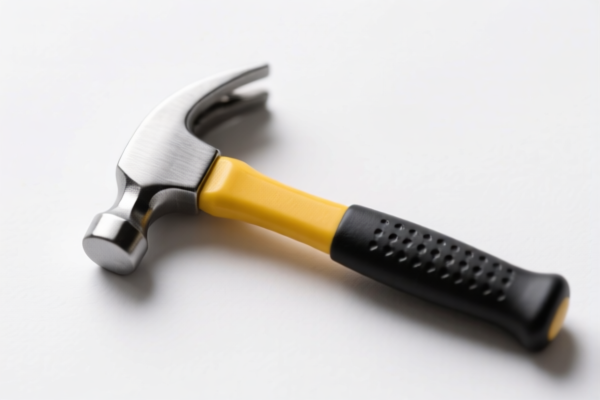
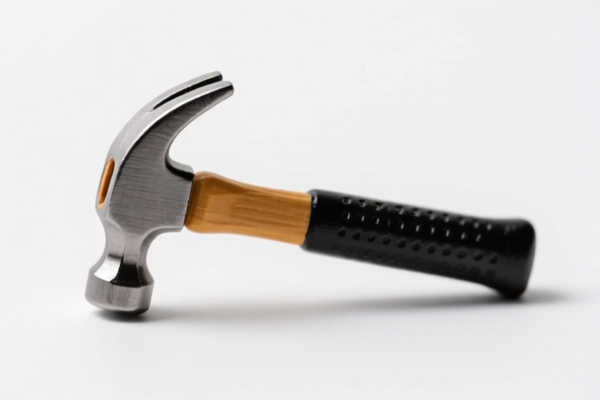
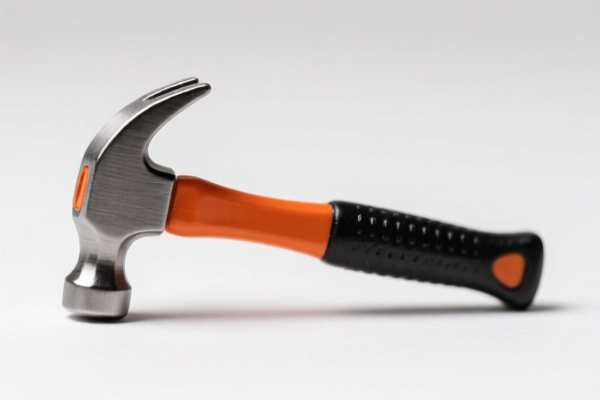
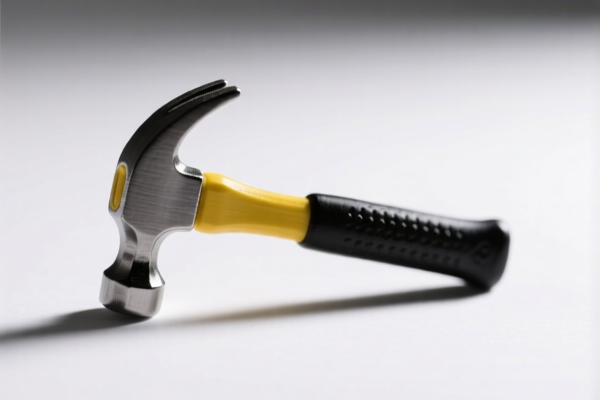
A Claw Hammer is a handheld tool consisting of a head made of metal (typically steel) with one flat striking face and a curved, forked end (the "claw") used for extracting nails.
In international trade, the classification depends heavily on the material composition and the specific heading of the Harmonized System (HS):
- Heading 73 (Articles of Iron or Steel): If the hammer is primarily classified as a general article of iron or steel.
- Heading 82 (Tools, Implements, Cutlery): If the hammer is classified specifically under "Hand Tools" (e.g., hammers, mallets).
⚠️ Key Distinction Point:
- Stainless Steel can fall under either Chapter 73 (as an article of steel) or Chapter 82 (as a tool), depending on the specific description and customs interpretation.
- Chapter 82 typically offers more specific subheadings for "Hand Tools," which may result in different tax rates compared to the general "Articles of Steel" in Chapter 73.
📦 II. HS Code Classification Details (Based on Provided Data)
| HS Code | Product Summary | Applicability | Material/Type |
|---|---|---|---|
7326.19.00.80 |
Other articles of iron or steel | General Steel Articles | Stainless Steel Claw Hammer |
7326.90.86.88 |
Other articles of iron or steel | General Steel Articles | Stainless Steel Claw Hammer |
8205.20.30.00 |
Hammers, hand-held, with handles | Hand Tools (Hammers) | Stainless Steel Claw Hammer |
8205.20.60.00 |
Other hand tools (Hammers) | Hand Tools (Hammers) | Stainless Steel Claw Hammer |
🔍 Important Note:
- HS 73xx: Classifies the hammer as a generic "Article of Steel".
- HS 8205: Classifies the hammer specifically as a "Hand Tool" (Hammer).
- Customs often prefers specific classification (Ch 82) over general classification (Ch 73) if the item fits the definition of a tool. However, both classifications are presented here with their respective tax implications.
💰 III. 2026 US Tariff Rate Breakdown (Detailed)
✅ Country of Origin: China (CN)
✅ Destination: United States (US)
✅ Applicable Taxes: Base Duty + Section 301 Tariff + Section 232 Tariff (if applicable) + IEEPA Tariff
🎯 1. 7326.19.00.80 & 7326.90.86.88 – Articles of Iron or Steel
| Item | Detail |
|---|---|
| Base Duty Rate | 2.9% |
| Section 301 Tariff (China) | +25.0% |
| Section 122 Tariff | +10.0% |
| Section 232 Tariff (Steel/Aluminum/Copper) | +50.0% |
| Total Effective Tax Rate | 87.9% |
| Calculation | CIF Value × 87.9% |
| De Minimis Eligibility | ❌ Not Eligible (High duty threshold) |
| Legal Basis Path | Base Tariff → Section 301 → Section 122 → Section 232 |
📌 Explanation:
- Section 232 (50%): Applies to steel articles imported from certain countries. Since the hammer is made of stainless steel, it is subject to the 50% Section 232 tariff.
- Section 301 (25%): Standard additional duty on Chinese goods.
- Section 122 (10%): Additional duty for specific steel/aluminum/copper products.
- Result: This classification results in an extremely high total tax of 87.9%.
🎯 2. 8205.20.30.00 – Hammers, Hand-Held (Specific Tool Classification)
| Item | Detail |
|---|---|
| Base Duty Rate | 6.2% |
| Section 301 Tariff (China) | +25.0% |
| Section 122 Tariff | +10.0% |
| Section 232 Tariff | Not Applicable (Usually tools are excluded or treated differently) |
| Total Effective Tax Rate | 41.2% |
| Calculation | CIF Value × 41.2% |
| De Minimis Eligibility | ❌ Not Eligible |
| Legal Basis Path | Base Tariff → Section 301 → Section 122 |
📌 Explanation:
- By classifying as a Hand Tool (HS 8205), the hammer may avoid the 50% Section 232 Steel Tariff, significantly reducing the total tax from 87.9% to 41.2%.
- Base Duty (6.2%) is higher than the 2.9% in Chapter 73, but the avoidance of Section 232 makes this classification much more favorable.
🎯 3. 8205.20.60.00 – Other Hand Tools (Hammers)
| Item | Detail |
|---|---|
| Base Duty Rate | 0.0% |
| Section 301 Tariff (China) | +25.0% |
| Section 122 Tariff | +10.0% |
| Section 232 Tariff | Not Applicable |
| Total Effective Tax Rate | 35.0% |
| Calculation | CIF Value × 35.0% |
| De Minimis Eligibility | ❌ Not Eligible |
| Legal Basis Path | Base Tariff → Section 301 → Section 122 |
📌 Explanation:
- This is the most cost-effective classification for a stainless steel claw hammer from China.
- Base Duty is 0%, and it avoids the high Section 232 tariff.
- Total Tax: 35.0%, which is nearly half of the tax under Chapter 73.
🛠️ IV. Customs Clearance Practical Advice
✅ 1. Documentation Checklist
| Document | Requirement | Description |
|---|---|---|
| Commercial Invoice | ✔️ Must Provide | Must clearly state "Stainless Steel Claw Hammer" and HS Code. |
| Product Description | ✔️ Must Provide | Detailed description: Material (Stainless Steel), Type (Claw Hammer), Handle Material (if any). |
| Photos | ✔️ Recommended | Clear photos of the hammer head and claw to prove it is a tool, not a generic steel article. |
| Bill of Lading/Air Waybill | ✔️ Must Provide | Standard shipping documents. |
| Certificate of Origin | ✔️ If Applicable | May help verify country of origin for Section 301 applicability. |
✅ 2. Classification Strategy & Cost Saving
| Scenario | Recommended HS Code | Total Tax | Reason |
|---|---|---|---|
| Best Cost Option | 8205.20.60.00 |
35.0% | Classify as "Other Hand Tools" to avoid Section 232 Steel Tariff. |
| Alternative Tool Option | 8205.20.30.00 |
41.2% | Classify as "Hammers" specifically. Slightly higher base duty. |
| Generic Steel Article | 7326.19.00.80 / 7326.90.86.88 |
87.9% | Avoid if possible. High tax due to Section 232 Steel Tariff. |
🔥 Golden Rule:
"Classify as Hand Tool (Ch 82), Not Generic Steel (Ch 73), to Save 50% Tax!"
✅ 3. Common Mistakes to Avoid
| Mistake | Consequence |
|---|---|
| Declaring as "Steel Hammer" without specifying "Hand Tool" | Risk of being classified under Ch 73 → 87.9% Tax |
| Using "Tool" but with vague description | Customs may reclassify to Ch 73 → Audit & Penalties |
| Not paying attention to Section 232 | Assuming no extra tax → Unexpected 50% Surcharge |
✅ 4. Special Considerations
- Section 232 Exemptions: Some stainless steel products may have exclusions. Check if your specific stainless steel grade is excluded from Section 232 tariffs. If excluded, the Ch 73 tax may drop significantly.
- Pre-Ruling: Apply for an Advance Ruling from US Customs (CBP) to confirm that the product should be classified under HS 8205.20.60.00 to secure the 35.0% tax rate.
🌍 V. Global Market Comparison (2026)
| Country/Region | Recommended HS Code | Est. Tariff (China Origin) | Key Certification |
|---|---|---|---|
| 🇺🇸 USA | 8205.20.60.00 |
35.0% (Best Option) | None specific for hammers |
| 🇪🇺 EU | 8205.01.00 |
~2.7% (Base) + Anti-dumping? | CE (if power-assisted, not applicable) |
| 🇨🇳 China | 8205.20.00 |
~5-10% (Import Duty) | CCC (if applicable) |
| 🇬🇧 UK | 8205.20.00 |
~2.5% - 5% | UKCA (if applicable) |
📌 Conclusion:
- USA has the highest complexity due to Section 301 and Section 232 tariffs.
- Correct classification is critical to avoid paying 87.9% instead of 35.0%.
- EU and other markets generally have lower tariffs for hand tools.
📌 VI. Common Errors & Pitfalls (Lessons Learned)
❌ Error 1: Classifying as "Steel Hammer" under Ch 73
👉 Consequence: Pay 87.9% tax instead of 35.0%. Loss of 52.9% in cost.
❌ Error 2: Ignoring Section 232 Tariff
👉 Consequence: Unexpected 50% additional tax on steel articles.
❌ Error 3: Inaccurate Product Description
👉 Consequence: Customs delays, reclassification, or penalties.
✅ Correct Practice:
"Stainless Steel Claw Hammer, Hand Tool, For Use in Construction, Model XYZ"
HS Code: 8205.20.60.00
🎯 VII. Conclusion: Professional Declaration for Cost Efficiency
🎯 Remember the Key Takeaway:
🔹 "Hand Tool (Ch 82) is Cheaper Than Steel Article (Ch 73)"
🔹 35.0% vs 87.9% – The Difference is 52.9% in Savings!
📌 Pro Tip:
If your stainless steel hammer is made from a specific alloy that is excluded from Section 232 tariffs, you may even achieve a lower tax rate under Ch 73. However, HS 8205.20.60.00 remains the safest and most common low-tax option for stainless steel claw hammers from China.
📣 Immediate Action Required:
📞 Contact your customs broker to verify the HS Code
8205.20.60.00with CBP.
📄 Provide detailed product photos and material specs to support the "Hand Tool" classification.
🚀 Declare accurately to avoid 50%+ in unexpected penalties.
✨ Precise Classification Saves Money!
💼 Don't let a wrong HS Code cost you half your profit margin!
Customer Reviews
About HS Code Classification
The Harmonized System (HS) is an internationally standardized nomenclature developed by the World Customs Organization (WCO) to classify traded products. Over 200 countries use the HS system as the basis for customs tariffs, trade statistics, and import/export regulations.
Each HS code follows a hierarchical structure:
- Chapter (2 digits) — Broad category of goods (e.g., Chapter 84: Machinery and Mechanical Appliances)
- Heading (4 digits) — More specific grouping within the chapter
- Subheading (6 digits) — Internationally standardized breakdown, used by all WCO member countries
- National subdivisions (8-10 digits) — Country-specific extensions for further classification, such as US HTSUS 10-digit codes
Correct HS code classification is essential for smooth customs clearance, accurate duty payment, and compliance with trade regulations. Misclassification can lead to customs delays, overpayment of duties, or penalties.
When importing from CN to US, the applicable tariff rates may include:
- Most-Favored-Nation (MFN) rate — The standard duty rate applied to WTO members
- General rate — Applied to countries without trade agreements
- Trade remedy duties — Additional tariffs such as Section 301 (anti-dumping), Section 232 (national security), or countervailing duties
The information provided on this page is for reference purposes only. For official classification, please consult with your local customs authority or a licensed customs broker.