Clay Machine
CN → US| HS Code | Tariff Rate | Origin | Destination | Doc |
|---|---|---|---|---|
| 8474800010 | 35.0% | CN | US | Official Doc |
| 8474800015 | 35.0% | CN | US | Official Doc |
Product Images
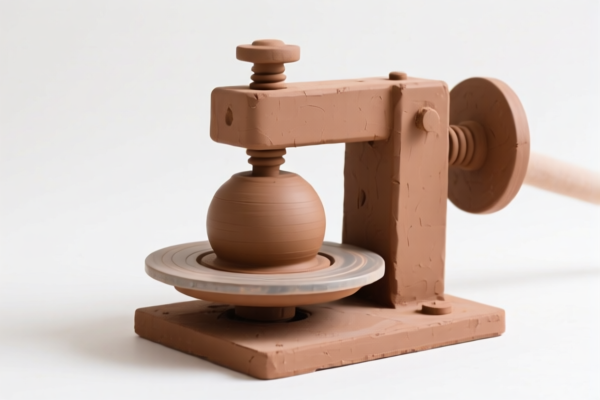
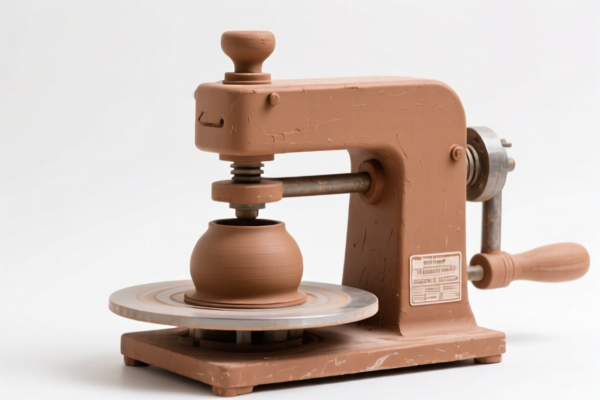
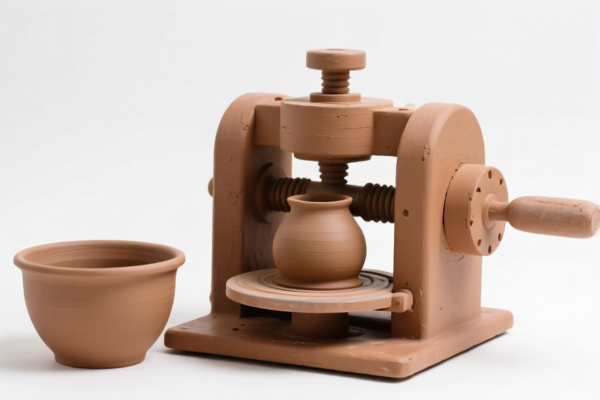
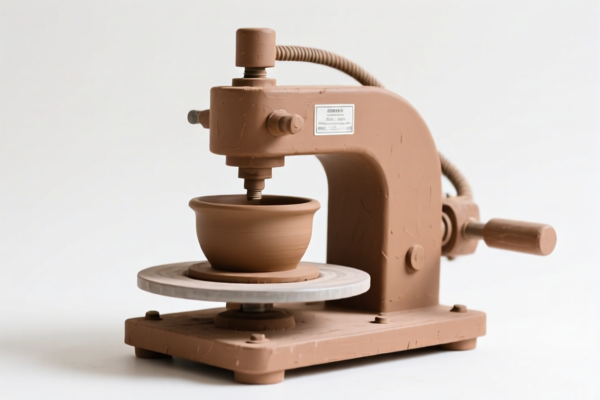
AI Analysis
🏭 Clay Processing Machinery (Machinery for Shaping Ceramic Paste)
🌐 HS Code Reference & Customs Clearance Guide | 2026 Latest Tariff Analysis | Professional Compliance Strategy
📌 Part I: Product Definition & Classification: Do You Really Understand "Clay Machines"?
"Clay Machine" is a broad industrial term referring to equipment used in the ceramic, building materials, and foundry industries. In international trade, these machines are strictly defined under Chapter 84 of the Harmonized System. They are primarily categorized by their specific function: agglomerating, shaping, or molding solid mineral products like ceramic paste, unhardened cement, or plaster.
The key distinction lies in the material and the process: * Ceramic Paste Machinery: Specifically designed for forming shapes from wet clay, slip, or plastic ceramic masses. * General Mineral Machinery: Machinery for other mineral products (e.g., sand casting molds, general powder agglomeration).
⚠️ Critical Distinction:
- If the machine is specifically designed for ceramic paste, unhardened cement, or plastering materials, it falls under specific sub-headings requiring precise classification.
- If the machine is for other mineral products (like general sand molding or non-ceramic pastes) or is a general-purpose agglomerator not fitting the specific "ceramic/cement/plaster" definition, it falls under the "Other" category.
📦 Part II: HS Code Classification Details (2026 Latest Tariff Authority Cross-Reference)
Based on the provided data, the classification is split into two primary HS Codes depending on the specific application scope defined in the product description.
| HS Code | Product Description | Specific Application Scope | Key Differentiator |
|---|---|---|---|
8474.80.00.10 |
Machinery for agglomerating, shaping, or molding solid mineral fuels, ceramic paste, unhardened cements, plastering materials, or other mineral products in powder or paste form. | Specifically designed for use with ceramic paste, unhardened cements, and plastering materials. | ✅ Specialized: Explicitly targets ceramics, cement, and plaster. |
8474.80.00.15 |
Machinery for agglomerating, shaping, or molding solid mineral fuels, ceramic paste, unhardened cements, plastering materials, or other mineral products in powder or paste form. | Other (Includes machines not specifically designed for the above, or general-purpose shaping machines for other mineral substances). | ❌ General/Other: Covers remaining mineral product shaping machinery not fitting the specific "ceramic/cement/plaster" designation or general agglomeration. |
🔍 Key Reminder:
- Both codes fall under HS 8474 (Machinery for sorting, screening, separating, washing, crushing, grinding, mixing or kneading earth, stone, ores or other mineral substances).
- The difference between.10and.15is purely descriptive based on the specific intended use declared in the product specification.
- If your machine can handle multiple materials but is primarily or specifically designed for clay/ceramics,.10may be more appropriate if the documentation supports this specific design intent. If it is a general-purpose press for various minerals,.15might be safer.
💰 Part III: 2026 Latest Tariff Rate Details (Including Additional Taxes)
✅ Applicable Country: United States (US)
✅ Country of Origin: China (CN)
✅ Effective Time: Current 2026 Tariff Structure
🎯 1. 8474.80.00.10 —— Machinery for Ceramic Paste, Unhardened Cement, Plastering Materials
| Item | Content |
|---|---|
| Base Tariff | 0.0% (ad valorem) |
| Additional Tariff (Section 301 / China-specific) | +25.0% |
| Total Tax Rate | 25.0% |
| Tax Calculation | CIF Value × 25% |
| De Minimis Exemption | ❌ Not Applicable (Value exceeds $800 de minimis threshold for industrial machinery; plus, Section 301 duties often apply regardless of de minimis for certain entities, but standard commercial imports definitely pay this). |
| Legal Basis Path | HTSUS: 8474.80.00.10 → USITC: 301 Footnote |
📌 Explanation:
- The base duty for this type of mineral processing machinery is 0%, which is attractive.
- However, due to ongoing trade policies between the US and China, an additional 25% tariff is applied.
- Total Effective Rate: 25%. This is a significant cost factor that must be included in your landed cost calculation.
🎯 2. 8474.80.00.15 —— Other Machinery for Shaping Mineral Products
| Item | Content |
|---|---|
| Base Tariff | 0.0% (ad valorem) |
| Additional Tariff (Section 301 / China-specific) | +25.0% |
| Total Tax Rate | 25.0% |
| Tax Calculation | CIF Value × 25% |
| De Minimis Exemption | ❌ Not Applicable |
| Legal Basis Path | HTSUS: 8474.80.00.15 → USITC: 301 Footnote |
📌 Note:
- The tariff rate is identical to8474.80.00.10.
- Whether you classify as "Specific for Ceramics/Cement" (.10) or "Other" (.15), the 25% total tax burden remains the same.
- Therefore, the primary goal of classification accuracy here is compliance and avoiding misclassification penalties, not necessarily tax savings between these two specific codes.
🛠️ Part IV: Customs Clearance Practical Advice (Battle-Tested Pitfall Guide)
✅ 1. Documentation Checklist (Non-Negotiable)
| Document | Required? | Explanation |
|---|---|---|
| ✅ Product Brochure / Catalog | ✔️ | Must clearly state the machine's function: "Shaping Clay/Ceramic Paste" or "General Mineral Agglomeration". |
| ✅ Technical Specifications | ✔️ | Detail the power source, capacity, and specific materials processed. |
| ✅ Commercial Invoice | ✔️ | Must accurately describe the goods. Avoid vague terms like "Machine". Use "Clay Shaping Machine" or "Ceramic Press". |
| ✅ Bill of Lading / Air Waybill | ✔️ | Ensure weight and dimensions match the invoice. |
| ✅ Certificate of Origin | ✔️ | Essential for verifying China origin to apply the correct 25% additional duty (and avoid errors). |
| ✅ Parts List | ✔️ | If shipped disassembled, list all parts to ensure proper valuation and classification of components. |
✅ 2. Declaration Tips (Key Mnemonics)
🔥 "Be Specific, Avoid Vague, Match Description, Prevent Seizure!"
| Scenario | Correct Declaration | Incorrect Practice |
|---|---|---|
| Machine shapes clay/ceramics | Describe as: "Machinery for shaping ceramic paste, model XYZ" → 8474.80.00.10 | Calling it "Industrial Mixer" → Risk of misclassification. |
| Machine shapes sand for molds | Describe as: "Sand molding machine" → 8474.80.00.15 | Calling it "Ceramic Machine" → Contradicts function. |
| Machine does both | Declare based on primary design intent. Provide engineering drawings to support. | Ambiguous description → Customs may select the higher tax code or hold goods. |
| General grinding/kneading | If it only grinds (doesn't shape/mold), it might fall under 8474.20 or 8474.30, NOT 8474.80. | Assuming all mineral machines are 8474.80 → Wrong heading. |
⚠️ Important:
- 8474.80 is for "Other machinery for agglomerating, shaping or molding".
- If the machine is purely for crushing or grinding, it may belong to 8474.10 or 8474.20.
- If the machine is for mixing/kneading but not shaping/molding the final product, it may still fall under 8474, but check sub-headings carefully. The provided data is specifically for 8474.80 (Other machinery for agglomerating, shaping, or molding). Ensure your machine actually shapes or molds the paste.
✅ 3. Special Circumstances Handling
| Situation | Handling Advice |
|---|---|
| Multi-function Machine | If it mixes AND shapes, and shaping is a key function, 8474.80 is likely correct. Provide a flowchart of the process. |
| Used Machinery | Declare as "Used". Some ports require additional inspection for used industrial equipment. Condition reports are helpful. |
| High Value for Tax Audit | With a 25% duty, the absolute tax amount is high. Ensure the Customs Value (CIF) is accurate. Under-declaring risks penalties. |
| Exemptions/Free Trade Agreements | Check if any Free Trade Agreements (FTAs) apply. However, Section 301 tariffs (25%) generally override most FTA preferences for Chinese-origin goods unless specific exclusions are active. |
🌍 Part V: Global Market Comparison (2026 Latest)
| Country/Region | Recommended HS Code | Tariff Rate (China Origin) | Certification Requirements | Notes |
|---|---|---|---|---|
| 🇺🇸 USA | 8474.80.00.10 or .15 |
25% (Total: 0% Base + 25% Add.) | None specific, but safety standards (OSHA/NRTL) may apply for electrical components. | High duty burden. |
| 🇨🇳 China | 8474.80.00 |
0% (Import Duty) | CCC (if electrical), CE (if applicable). | No additional tariffs for domestic trade. |
| 🇪🇺 EU | 8474.80 |
Varies (usually 0-4.5%) | CE Marking, RoHS, GDPR (if connected). | No Section 301 equivalent. Much lower cost. |
| 🇬🇧 UK | 8474.80 |
0-4.5% | UKCA Marking. | Post-Brexit, aligned with EU trends but distinct rules. |
| 🇦🇺 Australia | 8474.80 |
5% | RCM (Electrical), Work Health & Safety compliance. | Moderate duty. |
📌 Conclusion:
- The US market is the most expensive for importing these machines from China due to the 25% additional tariff.
- EU and UK offer significantly better duty rates, making them more attractive if supply chains allow diversion.
- China Domestic trade has no import duty, benefiting local manufacturers.
📌 Part VI: Common Errors & Pitfall Guide (Lessons Learned)
❌ Error 1: Classifying a Grinder as a Shaper
👉 Consequence: Misclassification penalty. Grinders fall under 8474.20, not 8474.80. If declared as 8474.80, it might be accepted, but if audited and found to be purely a grinder, it could lead to discrepancies in duty calculation if rates differ (though in this case, both are often similar, the legal classification matters).
❌ Error 2: Vague Description "Industrial Machine"
👉 Consequence: Customs may assign a penalty rate or hold the goods for manual inspection, causing delays. Always specify "Clay Shaping Machine" or "Ceramic Press".
❌ Error 3: Ignoring the "Shaping/Molding" Requirement
👉 Consequence: If the machine only mixes clay but does not shape it into a form, it might not fit 8474.80 as well as 8474.40 (Mixing/kneading machinery). Ensure the primary function aligns with the HS code description.
❌ Error 4: Assuming 0% Base Means 0% Total
👉 Consequence: Unexpected bill for the 25% Additional Tariff. Buyers often quote FOB prices not realizing the 25% duty adds significant cost. Always calculate Landed Cost including 25%.
✅ Correct Approach:
"Ceramic Paste Shaping Machine, Model XYZ, Designed for forming clay bricks/tiles, Voltage 380V, Made in China."
🎯 Part VII: Conclusion: Precision Classification, Cost Efficiency
🎯 Key Takeaways:
🔹 "Shaping/Molding = 8474.80"
🔹 "China Origin = +25% Duty"
🔹 "Total Tax = 25%"
🔹 "Be Specific in Description to Avoid Delays"
📌 Pro Tip:
If you are importing these machines for research or educational use, check if you qualify for any institutional exemptions (rare for industrial machinery).
For high-volume imports, consider duty drawback programs if the machinery is used in manufacturing goods for re-export.
📣 Immediate Action:
📞 Verify the Exact Function: Is it shaping/molding?
📄 Prepare Accurate Docs: Clear product descriptions.
💰 Calculate Landed Cost: Include 25% duty + shipping + insurance.
🚀 Avoid Surprises: Plan for the 25% tariff in your budget.
✨ Professional Clearance Starts with Accurate Classification!
💼 Your Profit Margin Depends on Your Duty Cost!
Customer Reviews
About HS Code Classification
The Harmonized System (HS) is an internationally standardized nomenclature developed by the World Customs Organization (WCO) to classify traded products. Over 200 countries use the HS system as the basis for customs tariffs, trade statistics, and import/export regulations.
Each HS code follows a hierarchical structure:
- Chapter (2 digits) — Broad category of goods (e.g., Chapter 84: Machinery and Mechanical Appliances)
- Heading (4 digits) — More specific grouping within the chapter
- Subheading (6 digits) — Internationally standardized breakdown, used by all WCO member countries
- National subdivisions (8-10 digits) — Country-specific extensions for further classification, such as US HTSUS 10-digit codes
Correct HS code classification is essential for smooth customs clearance, accurate duty payment, and compliance with trade regulations. Misclassification can lead to customs delays, overpayment of duties, or penalties.
When importing from CN to US, the applicable tariff rates may include:
- Most-Favored-Nation (MFN) rate — The standard duty rate applied to WTO members
- General rate — Applied to countries without trade agreements
- Trade remedy duties — Additional tariffs such as Section 301 (anti-dumping), Section 232 (national security), or countervailing duties
The information provided on this page is for reference purposes only. For official classification, please consult with your local customs authority or a licensed customs broker.