Cleaning Accessories
CN → US| HS Code | Tariff Rate | Origin | Destination | Doc |
|---|---|---|---|---|
| 8509905500 | 39.2% | CN | US | Official Doc |
| 8421990180 | 35.0% | CN | US | Official Doc |
| 8509904500 | 39.2% | CN | US | Official Doc |
| 8421990140 | 35.0% | CN | US | Official Doc |
| 9010909500 | 37.9% | CN | US | Official Doc |
Product Images
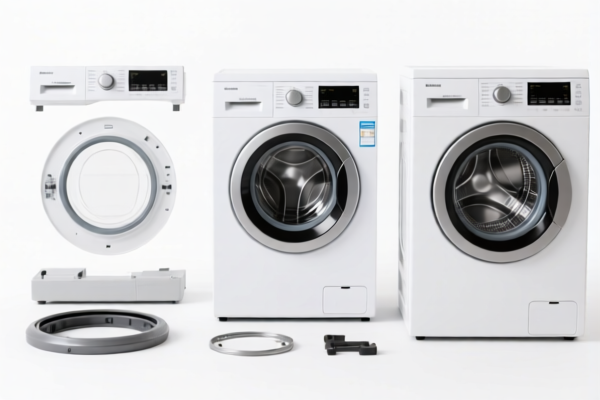
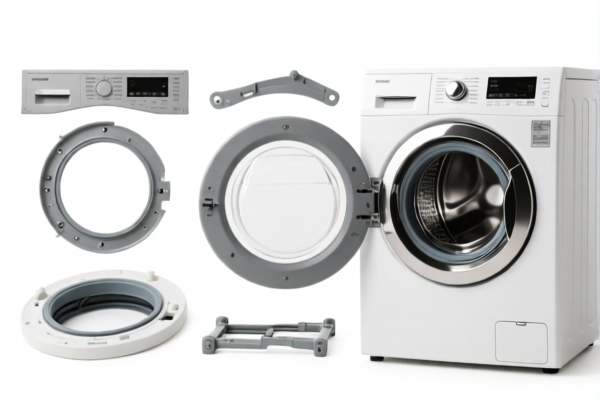
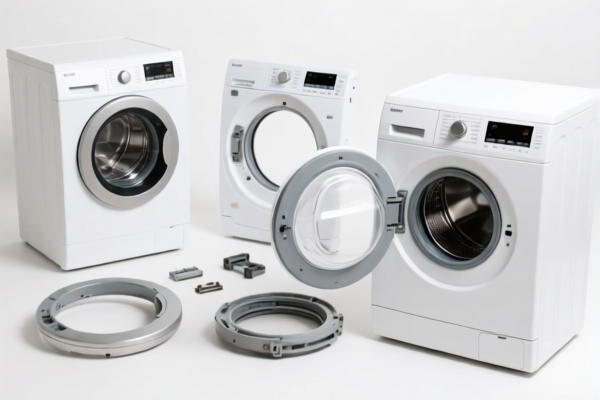
AI Analysis
🧼 Cleaning Accessories (Parts for Household Appliances & Specialized Equipment)
🌐 HS Code Reference & Customs Clearance Guide | 2026 Latest Tariff Analysis | Professional Clearance Strategy
📌 I. Product Definition & Classification: Do You Truly Understand "Cleaning Accessories"?
"Cleaning Accessories" is a broad commercial term that lacks specific technical definition in international trade. In customs classification, these items are categorized based on specific application, functional integration, and component morphology. Misclassification leads to severe tariff penalties due to the high "Section 301" and "122 Clause" surcharges on Chinese-origin goods.
Broadly, these accessories fall into two distinct categories in the provided data: 1. Household Appliance Parts: Components for dishwashers, washing machines, etc. (Heading 8509). 2. General Mechanical Parts: Generic cleaning components without a specific named use (Heading 8421). 3. Specialized Optical Equipment Parts: Components for film cleaning devices (Heading 9010).
⚠️ Key Distinction Point:
- If the part is explicitly designed for a household appliance (like a dishwasher door seal or washing machine drum agitator) → It falls under 8509.90.
- If it is a generic mechanical part (like a filter housing or pump casing) with no specific named use → It falls under the "Other" basket 8421.99.
- If it is for photographic/chemical processing equipment (like a film wiper) → It falls under 9010.90.
📦 II. HS Code Classification Details (Based on Provided Data)
| HS Code | Product Description | Applicable Scenario | Tax Rate |
|---|---|---|---|
8509.90.55.00 |
Household Appliance Parts: Specifically classified parts for electromechanical household appliances such as dishwashers and washing machines. | Dishwasher brushes, washing machine drums, appliance casings. | 39.2% |
8421.99.01.80 |
Generic Mechanical Parts: Parts defined by morphology, applicable as a "fallback" category when the specific material or usage is not explicitly defined. | Generic filters, pump housings, unbranded cleaning mechanism parts. | 35.0% |
8509.90.45.00 |
Appliance Functional Parts: Parts matched to the function/casing of household appliances. | Functional modules for home cleaning devices. | 39.2% |
8421.99.01.40 |
Generic Structural Parts: Parts defined by structure, applicable as a "fallback" when usage is unclear. | Structural components for general cleaning machinery. | 35.0% |
9010.90.95.00 |
Photographic Equipment Parts: Accessories for film cleaning equipment, falling under photographic laboratory equipment parts/attachments. | Film wipers, optical lens cleaning tools for lab equipment. | 37.9% |
🔍 Critical Reminder:
- The difference between 39.2% (8509) and 35.0% (8421) seems small (4.2%), but it changes the Base Tariff from 4.2% to 0.0%. This affects the duty-paid value for calculating surcharges.
- All items in this list are subject to heavy US trade remedy tariffs. There are no duty-free options for Chinese origin.
💰 III. 2026 Latest Tariff Rate Breakdown (Including Surcharges & Policy Add-ons)
✅ Applicable Country: USA (US)
✅ Country of Origin: China (CN)
✅ Effective Time: Current tariffs include Section 301 and 122 Clause surcharges.
🎯 1. 8509.90.55.00 & 8509.90.45.00 —— Household Appliance Parts
Scenario: Cleaning accessories specifically for washing machines, dishwashers, etc.
| Item | Content |
|---|---|
| Base Tariff | 4.2% (Ad valorem) |
| Section 301 Surcharge | +25.0% (Trade Remedy on Chinese Goods) |
| Section 122 Surcharge | +10.0% (Specific Clause on Certain Goods) |
| Total Effective Rate | 39.2% |
| Tax Calculation | CIF Value × 39.2% |
| De Minimis Eligibility | ❌ Not Eligible (Section 301/122 duties generally do not apply to de minimis, but high-value commercial shipments will be hit; however, for clearance purposes, these rates apply to standard imports). |
| Legal Basis | HTSUS 8509.90 → USITC Footnotes 301 (25%) + 122 (10%) |
📌 Explanation:
- These goods are classified as "Parts of Electromechanical Household Appliances."
- They attract the standard 301 tariff (25%) because they are not excluded from this list.
- The 122 Clause (10%) applies to specific lists of Chinese imports, often covering certain industrial or household parts.
- Total: 39.2%. This is a high-cost item.
🎯 2. 8421.99.01.80 & 8421.99.01.40 —— Generic Mechanical Parts (Fallback Category)
Scenario: Cleaning accessories that are generic components (e.g., pumps, filters, casings) not specifically named elsewhere.
| Item | Content |
|---|---|
| Base Tariff | 0.0% (Ad valorem) |
| Section 301 Surcharge | +25.0% (Trade Remedy on Chinese Goods) |
| Section 122 Surcharge | +10.0% (Specific Clause on Certain Goods) |
| Total Effective Rate | 35.0% |
| Tax Calculation | CIF Value × 35.0% |
| De Minimis Eligibility | ❌ Not Eligible (Same as above). |
| Legal Basis | HTSUS 8421.99 → USITC Footnotes 301 (25%) + 122 (10%) |
📌 Explanation:
- These fall under "Centrifuges; Filtering or Purifying Machinery and Apparatus, Parts."
- The Base Tariff is 0%, which makes them slightly cheaper than appliance parts.
- However, the Surcharges (25% + 10%) are identical to the appliance parts.
- Total: 35.0%. This is a moderate-high cost item, saving 4.2% compared to appliance parts.
🎯 3. 9010.90.95.00 —— Photographic/Film Cleaning Equipment Parts
Scenario: Accessories for film cleaning devices, optical lab equipment.
| Item | Content |
|---|---|
| Base Tariff | 2.9% (Ad valorem) |
| Section 301 Surcharge | +25.0% (Trade Remedy on Chinese Goods) |
| Section 122 Surcharge | +10.0% (Specific Clause on Certain Goods) |
| Total Effective Rate | 37.9% |
| Tax Calculation | CIF Value × 37.9% |
| De Minimis Eligibility | ❌ Not Eligible. |
| Legal Basis | HTSUS 9010.90 → USITC Footnotes 301 (25%) + 122 (10%) |
📌 Explanation:
- These are classified as "Parts and Accessories for Photo/Video Equipment."
- The Base Tariff is 2.9%, lower than household appliances but higher than generic mechanical parts.
- Total: 37.9%. This is a high-cost item, sitting between the two main categories.
🛠️ IV. Customs Clearance Practical Advice (Avoid Pitfalls)
✅ 1. Preparation Checklist (Essential)
| Document | Mandatory | Explanation |
|---|---|---|
| ✅ Product Specifications | ✔️ | Must detail: Material, Function, Target Appliance/Device. |
| ✅ Structural Diagrams | ✔️ | Crucial for distinguishing between "Appliance Part" (8509) and "Generic Part" (8421). |
| ✅ Product Photos | ✔️ | Clear images of labels, models, and interfaces. |
| ✅ Commercial Invoice | ✔️ | Description must match HS Code logic (e.g., "Part for Dishwasher" vs. "Generic Pump"). |
| ✅ Packing List | ✔️ | Ensure no mixed shipments that confuse the classification. |
✅ 2. Declaration Strategy (Key Mantras)
🔥 “Define Use, Choose Code, Avoid Fallback Errors!”
| Situation | Correct Declaration | Wrong Practice |
|---|---|---|
| Part for Washing Machine | Use 8509.90.xx (e.g., .55 or .45). Explicitly state "Part for [Appliance Model]". |
Declare as "Generic Part" to save money → Risk of Audit & Penalty. |
| Generic Filter/Pump | Use 8421.99.01.xx. State "Part for Filtering Machine" or "Unspecified Cleaning Component". |
Declare as "Appliance Part" → Higher Duty (39.2% vs 35.0%). |
| Film Cleaning Tool | Use 9010.90.95.00. State "Accessory for Photographic Lab Equipment". |
Declare as "Household Appliance Part" → Wrong Classification. |
⚠️ Warning:
Do not simply declare "Cleaning Accessories." This is too vague and will lead to Customs asking for clarification (RFD - Request for Information), causing delays. You must specify what it cleans and where it is used.
✅ 3. Special Scenarios
| Scenario | Handling Advice |
|---|---|
| OEM Parts | Provide the End-User's Purchase Order and Part Number. This proves it is a specific "part" for a named appliance, supporting 8509 classification if accurate. |
| Mixed Materials | If the part has plastic and metal, the classification depends on the primary function and essential character, not just material. |
| High Value Shipments | Given the 35-39% total tax rate, ensure your CIF value is accurate. Over-valuation leads to higher duties; under-valuation triggers audits. |
🌍 V. Global Market Comparison (2026 Latest)
| Country/Region | Recommended HS Code | Total Tariff (China Origin) | Certification | Notes |
|---|---|---|---|---|
| 🇺🇸 USA | 8509.90 or 8421.99 |
35.0% - 39.2% | None Specific | Highest Duty. 301 + 122 Clauses apply. |
| 🇨🇳 China | 8509.90 or 8421.99 |
1% - 8% (Varies) | CCC (if applicable) | Low duty, no surcharges. |
| 🇪🇺 EU | 8509.90 or 8421.99 |
0% - 6% (Varies) | CE Mark | No Section 301 equivalent. |
| 🇬🇧 UK | 8509.90 or 8421.99 |
0% - 6% (Varies) | UKCA | Post-Brexit, standard rates apply. |
| 🇯🇵 Japan | 8509.90 or 8421.99 |
0% - 5% (Varies) | PSE | Low duty, high compliance standards. |
📌 Conclusion:
- The USA is the most expensive market for cleaning accessories due to the 35-39% effective tariff rate.
- Competitors in EU/Asia do not face these surcharges.
- Strategy: If possible, consider sourcing from or assembling in a non-China country (e.g., Vietnam, Mexico) to avoid Section 301/122 tariffs, if the rules of origin are met.
📌 VI. Common Errors & Pitfalls (Blood Lessons)
❌ Error 1: Declaring "Cleaning Accessories" without specifying the host device.
👉 Consequence: Customs issues a Red Box inspection, delaying cargo by 7-14 days.
👉 Fix: Always specify "Part for Dishwasher" or "Part for Film Processor."
❌ Error 2: Misclassifying "Generic Parts" as "Appliance Parts" to avoid scrutiny.
👉 Consequence: Incorrect duty payment (39.2% instead of 35.0%). While you pay more, the risk of audit is higher if the description doesn't match the code.
👉 Fix: Accurately classify. If it's a generic pump housing, use 8421.99.
❌ Error 3: Ignoring the "122 Clause" (10%).
👉 Consequence: Underpaying duties. Customs will demand back-taxes + interest.
👉 Fix: Always calculate Base + 25% + 10%.
✅ Correct Approach:
"Dishwasher Door Seal Assembly, Part #12345, for Model X. Material: Silicone/Plastic."
HS Code:8509.90.55.00
Rate: 39.2%
🎯 VII. Conclusion: Precision in Classification, Profit in Clearance
🎯 Remember the Mantra:
🔹 "Appliance Parts = 39.2%, Generic Parts = 35.0%, Optical Parts = 37.9%."
🔹 "Base Duty + 25% (301) + 10% (122) = Total Cost."
🔹 "Vague Description = Delay; Precise Description = Smooth Clearance."
📌 Pro Tip:
Given the high tariffs, consult a licensed customs broker for a Pre-Ruling if the product's application is ambiguous. A small investment in classification advice can save thousands in duties and avoid customs penalties.
📣 Immediate Action:
📞 Contact your broker with detailed product specs.
📊 Calculate the landed cost including the 35-39% tariff to ensure margin viability.
🚀 Optimize your supply chain to handle the high duty burden efficiently!
✨ Professional Clearance Starts with Accurate Classification!
💼 Every percent of duty counts!
Customer Reviews
About HS Code Classification
The Harmonized System (HS) is an internationally standardized nomenclature developed by the World Customs Organization (WCO) to classify traded products. Over 200 countries use the HS system as the basis for customs tariffs, trade statistics, and import/export regulations.
Each HS code follows a hierarchical structure:
- Chapter (2 digits) — Broad category of goods (e.g., Chapter 84: Machinery and Mechanical Appliances)
- Heading (4 digits) — More specific grouping within the chapter
- Subheading (6 digits) — Internationally standardized breakdown, used by all WCO member countries
- National subdivisions (8-10 digits) — Country-specific extensions for further classification, such as US HTSUS 10-digit codes
Correct HS code classification is essential for smooth customs clearance, accurate duty payment, and compliance with trade regulations. Misclassification can lead to customs delays, overpayment of duties, or penalties.
When importing from CN to US, the applicable tariff rates may include:
- Most-Favored-Nation (MFN) rate — The standard duty rate applied to WTO members
- General rate — Applied to countries without trade agreements
- Trade remedy duties — Additional tariffs such as Section 301 (anti-dumping), Section 232 (national security), or countervailing duties
The information provided on this page is for reference purposes only. For official classification, please consult with your local customs authority or a licensed customs broker.