Cleaning Cotton
CN → US| HS Code | Tariff Rate | Origin | Destination | Doc |
|---|---|---|---|---|
| 5601210090 | 38.6% | CN | US | Official Doc |
| 6307101090 | 21.6% | CN | US | Official Doc |
| 6307102027 | 22.8% | CN | US | Official Doc |
| 5601210010 | 38.6% | CN | US | Official Doc |
| 6307102028 | 22.8% | CN | US | Official Doc |
Product Images
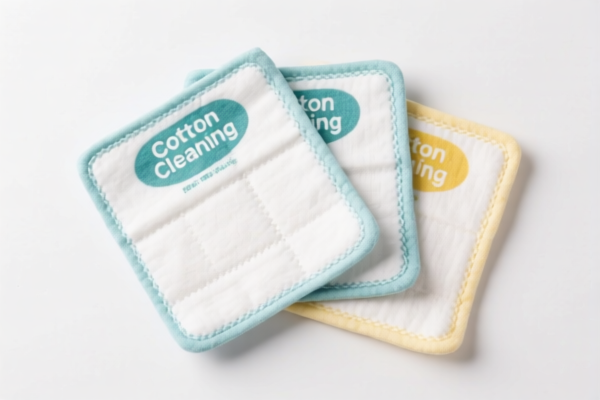
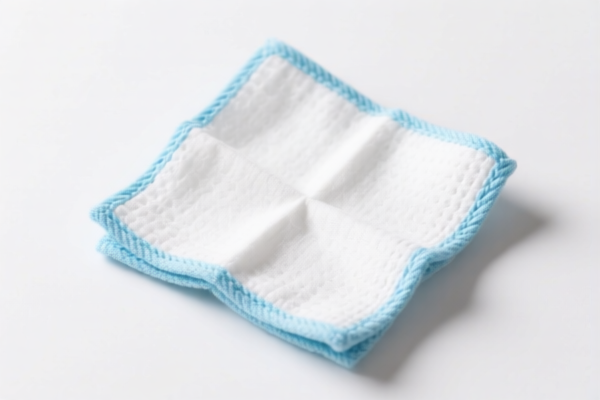
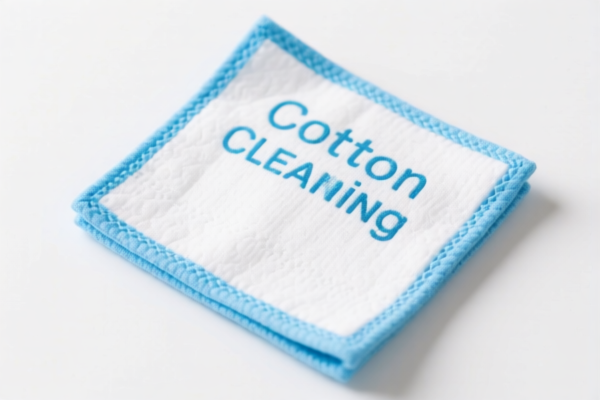
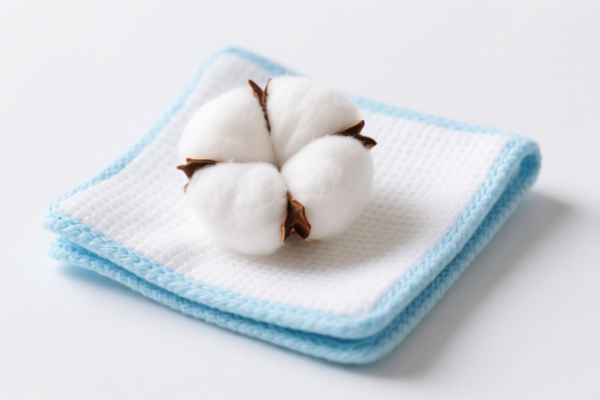
AI Analysis
🧼 Cleaning Cotton: Precision Classification & Duty Optimization for US Imports
🌐 HS Code Reference & Customs Clearance Guide | 2026 Latest Tariff Analysis | Professional Clearance Strategy
📌 I. Product Definition & Classification: Do You Really Understand "Cleaning Cotton"?
"Cleaning Cotton" is a generic term often used in international trade for textile-based cleaning products. In the context of US customs and tariff schedules (HTSUS), this term is ambiguous and must be broken down based on material composition, physical form, and specific use.
Generally, these products fall into two main categories: 1. Cotton Cleaning Wipes/Mops/Pads: Specifically made of cotton (woven or non-woven) for household or industrial cleaning. 2. Cotton Cleaning Accessories: Such as cotton buds, cotton pads, or cleaning cloths where cotton is the primary material.
⚠️ Key Distinction Point:
- If the product is a woven or non-woven cloth/pad primarily for wiping surfaces → It likely falls under Heading 6307 (Other Made Up Articles).
- If the product is a batting or wadding used as a liner or backing for cleaning tools → It may fall under Heading 5601 (Wadding and Articles Thereof).
- Misclassification Risk: Declaring all "Cotton Cleaning Products" under one code without specifying the exact physical form (woven vs. non-woven vs. wadding) can lead to severe penalties and duty underpayments.
📦 II. HS Code Classification Details (2026 Latest Tariff Authority Comparison)
Based on the provided data for "Cleaning Cotton", here are the five most relevant HS Codes, sorted by total tax burden and logical fit:
| HS Code | Product Description | Application Scenario | Material/Form | Total Tax Rate |
|---|---|---|---|---|
6307.10.10.90 |
Cotton Cleaning Wipes/Mops | Household cleaning, dusting cloths, mops made of cotton | ✅ Woven/Non-woven Cloth | 21.6% |
6307.10.20.27 |
Cotton Cleaning Pads/Sponges | Industrial or household cleaning pads, scrubbers made of cotton | ✅ Woven/Non-woven Pad | 22.8% |
6307.10.20.28 |
Cleaning Balls (Non-Cotton Inferred) | Steel wool, synthetic scrubbing balls, not primarily cotton | ❌ Non-Cotton/Synthetic | 22.8% |
5601.21.00.10 |
Cotton Wadding/Pads (Liners) | Cotton batting used as backing for cleaning tools, not the cleaning surface itself | ✅ Wadding/Felt-like | 38.6% |
5601.21.00.90 |
Other Cotton Wadding Articles | Misc. cotton wadding articles, generic "cleaning cotton" if no specific wipe form | ✅ Wadding/Felt-like | 38.6% |
🔍 Key Insight:
- Lowest Tax Option:6307.10.10.90(21.6%) is the most favorable for standard cotton cleaning cloths/wipes.
- High Tax Risk:5601.21.00.10/90(38.6%) applies if the product is classified as wadding (e.g., thick cotton batting) rather than a finished cloth/pad.
- Ambiguity Alert:6307.10.20.28is for Cleaning Balls, often misclassified when the material is actually non-cotton (e.g., synthetic or metal). Ensure material accuracy.
💰 III. 2026 Latest Tariff Rate Breakdown (Including Additional Duties & Policy Surcharges)
✅ Applicable Country: United States (US)
✅ Origin: China (CN)
✅ Effective Date: November 10, 2025 (Including subsequent imports)
🎯 1. 6307.10.10.90 — Cotton Cleaning Wipes/Mops (Lowest Duty)
| Item | Detail |
|---|---|
| Base Duty Rate | 4.1% (ad valorem) |
| USITC Additional Duty | +7.5% (Section 301/Trade Act) |
| IEEPA Surcharge | +10% (China-specific surcharge, effective Nov 10, 2025) |
| Total Duty Rate | 21.6% |
| Duty Calculation | CIF Value × 21.6% |
| De Minimis Exemption | ❌ Not Applicable (Deny De Minimis for Chinese goods under Section 301) |
| Legal Basis Path | IEEPA:9903.01.24 → USITC:6307.10.10.90 → FOOTNOTE:9903.75.01 |
📌 Explanation:
- This is the most cost-effective classification for cotton cleaning cloths.
- The 7.5% USITC and 10% IEEPA are mandatory for Chinese-origin goods.
- Total 21.6% is significantly lower than the 38.6% rate for wadding.
🎯 2. 6307.10.20.27 — Cotton Cleaning Pads (Moderate Duty)
| Item | Detail |
|---|---|
| Base Duty Rate | 5.3% (ad valorem) |
| USITC Additional Duty | +7.5% |
| IEEPA Surcharge | +10% |
| Total Duty Rate | 22.8% |
| Duty Calculation | CIF Value × 22.8% |
| De Minimis Exemption | ❌ Not Applicable |
| Legal Basis Path | IEEPA:9903.01.24 → USITC:6307.10.20.27 → FOOTNOTE:9903.75.01 |
📌 Note:
- Slightly higher base rate (5.3%) due to specific subheading for "pads" vs. "wipes."
- Still far more favorable than the wading category.
🎯 3. 6307.10.20.28 — Cleaning Balls (Assumed Non-Cotton)
| Item | Detail |
|---|---|
| Base Duty Rate | 5.3% (ad valorem) |
| USITC Additional Duty | +7.5% |
| IEEPA Surcharge | +10% |
| Total Duty Rate | 22.8% |
| Duty Calculation | CIF Value × 22.8% |
| De Minimis Exemption | ❌ Not Applicable |
| Legal Basis Path | IEEPA:9903.01.24 → USITC:6307.10.20.28 → FOOTNOTE:9903.75.01 |
📌 Warning:
- Summary states "Inferred Non-Cotton." If you ship cotton cleaning balls under this code, you risk misdeclaration penalties.
- Use only if the product is not primarily cotton (e.g., synthetic or metal).
🎯 4. 5601.21.00.10 & 5601.21.00.90 — Cotton Wadding (High Duty)
| Item | Detail |
|---|---|
| Base Duty Rate | 3.6% (ad valorem) |
| USITC Additional Duty | +25.0% (Higher Section 301 rate) |
| IEEPA Surcharge | +10% |
| Total Duty Rate | 38.6% |
| Duty Calculation | CIF Value × 38.6% |
| De Minimis Exemption | ❌ Not Applicable |
| Legal Basis Path | IEEPA:9903.01.25 → USITC:5601.21.00.10/90 → FOOTNOTE:9903.25.01 |
📌 Critical Risk:
- The USITC additional duty is 25%, not 7.5%, for wadding articles.
- This results in a total duty of 38.6%, which is nearly double the rate for cleaning cloths.
- Do NOT use this code for cleaning cloths unless they are literally cotton batting/linings, not finished wiping products.
🛠️ IV. Customs Clearance Practical Advice (Avoiding Pitfalls)
✅ 1. Essential Documentation Checklist (No Exceptions)
| Document | Required | Description |
|---|---|---|
| ✅ Product Specification Sheet | ✔️ | Must specify: Material (100% Cotton?), Form (Woven/Non-woven?), Use (Wiping/Cleaning?) |
| ✅ Product Photos | ✔️ | Clear images of the product, label, and packaging. Must show if it’s a cloth, pad, or ball. |
| ✅ Commercial Invoice | ✔️ | Accurate description: e.g., "100% Cotton Cleaning Wipe" vs. "Cotton Cleaning Cotton" |
| ✅ Packing List | ✔️ | Details net/gross weight, dimensions, and number of pieces |
| ✅ Certificate of Origin (CO) | ✔️ | If not China-origin, may qualify for lower duties (but IEEPA may still apply) |
| ✅ Third-Party Test Report | ✔️ | Optional but recommended: Material composition test to prove "100% Cotton" |
✅ 2. Declaration Tips (Critical Keywords)
🔥 "Be Specific: Cloth vs. Wadding = 17% Difference!"
| Scenario | Correct Declaration | Incorrect Declaration | Consequence |
|---|---|---|---|
| Cotton Cleaning Cloth | "Cotton Cleaning Wipe, Woven, 100% Cotton" | "Cleaning Cotton" | ❌ Misclassification → 38.6% Duty |
| Cotton Cleaning Pad | "Cotton Cleaning Pad, Non-woven" | "Cotton Wadding" | ❌ Misclassification → 38.6% Duty |
| Non-Cotton Cleaning Ball | "Synthetic Cleaning Ball, Steel Wool" | "Cleaning Cotton" | ❌ Material Mismatch → Penalty |
| Cotton Batting/Lining | "Cotton Wadding for Liner" | "Cleaning Cloth" | ❌ Use Case Mismatch → Penalty |
✅ 3. Special Cases Handling
| Scenario | Recommendation |
|---|---|
| Mixed Material (Cotton + Polyester) | Declare based on principal material. If >50% cotton, may still qualify for 6307, but verify with customs broker. |
| Pre-Moistened Cleaning Wipes | May fall under Heading 3401 or 3402, not 6307. Check if "medicated" or "cosmetic." |
| OEM Branded Products | Ensure invoice matches branding. Misleading labels can cause delays. |
| Small Samples (De Minimis) | ❌ Not Exempt for China-origin goods under Section 301/IEEPA. Duty applies even for samples. |
🌍 V. Global Market Comparison (2026 Latest)
| Country/Region | Recommended HS Code | Duty Rate (China Origin) | Key Certification | Notes |
|---|---|---|---|---|
| 🇺🇸 USA | 6307.10.10.90 |
21.6% | None Required | Highest priority: Avoid 5601 (38.6%) |
| 🇨🇳 China | 6307.10.10.90 |
5% | None | No additional tariffs |
| 🇪🇺 EU | 6307.10.90 |
4% | CE (if applicable) | Lower base rate, no Section 301 |
| 🇬🇧 UK | 6307.10.90 |
4% | UKCA | Post-Brexit rules apply |
| 🇯🇵 Japan | 6307.10.90 |
0-5% | PSE (if applicable) | Favorable for textiles |
📌 Conclusion:
- USA is the highest cost market due to Section 301 + IEEPA tariffs.
- Proper classification is critical:6307.10.10.90(21.6%) vs.5601.21.00.10(38.6%) saves 17% duty.
- Always declare material and form clearly.
📌 VI. Common Mistakes & Pitfalls (Lessons Learned)
❌ Mistake 1: Declaring "Cotton Cleaning Cotton" under 5601.21.00.90
👉 Result: 38.6% Duty → Lose 17% savings if it was actually a cleaning cloth.
❌ Mistake 2: Using "Cleaning Cotton" as the product name without specifying material
👉 Result: Customs may default to highest duty or flag for inspection → Delay + Penalties.
❌ Mistake 3: Assuming De Minimis exemption applies
👉 Result: No exemption for Chinese goods. Duty applies from $1.
❌ Mistake 4: Mislabeling non-cotton items as cotton
👉 Result: Material test fails → Penalty + Rejection.
✅ Correct Approach:
"100% Cotton Cleaning Wipe, Woven, For Household Use, Model XYZ, Made in China"
🎯 VII. Conclusion: Precision Saves Money!
🎯 Remember the Key Rules:
🔹 "Cloth = 21.6%, Wadding = 38.6% → Choose Wisely!"
🔹 "Specify Material & Form → Avoid 17% Penalty!"
🔹 "No De Minimis for China → Plan Ahead!"
📌 Pro Tip:
If your cleaning cotton products are sourced from Vietnam, Mexico, or Thailand, you may qualify for IEEPA Exemptions, reducing duties to 0-5%.
Recommend Advance Ruling from US Customs to confirm HS Code before shipment.
📣 Take Action Now:
📞 Contact a Licensed Customs Broker + Provide Product Photos + Apply for HS Code Advance Ruling
🚀 Clear Smoother, Pay Less, Ship Faster!
✨ Professional Clearance Starts with Accurate Classification!
💼 Every Cent Saved is Pure Profit!
Customer Reviews
About HS Code Classification
The Harmonized System (HS) is an internationally standardized nomenclature developed by the World Customs Organization (WCO) to classify traded products. Over 200 countries use the HS system as the basis for customs tariffs, trade statistics, and import/export regulations.
Each HS code follows a hierarchical structure:
- Chapter (2 digits) — Broad category of goods (e.g., Chapter 84: Machinery and Mechanical Appliances)
- Heading (4 digits) — More specific grouping within the chapter
- Subheading (6 digits) — Internationally standardized breakdown, used by all WCO member countries
- National subdivisions (8-10 digits) — Country-specific extensions for further classification, such as US HTSUS 10-digit codes
Correct HS code classification is essential for smooth customs clearance, accurate duty payment, and compliance with trade regulations. Misclassification can lead to customs delays, overpayment of duties, or penalties.
When importing from CN to US, the applicable tariff rates may include:
- Most-Favored-Nation (MFN) rate — The standard duty rate applied to WTO members
- General rate — Applied to countries without trade agreements
- Trade remedy duties — Additional tariffs such as Section 301 (anti-dumping), Section 232 (national security), or countervailing duties
The information provided on this page is for reference purposes only. For official classification, please consult with your local customs authority or a licensed customs broker.