Cleanroom Shoe Covers
CN → US| HS Code | Tariff Rate | Origin | Destination | Doc |
|---|---|---|---|---|
| 6307909891 | 24.5% | CN | US | Official Doc |
| 6115999000 | 27.4% | CN | US | Official Doc |
| 6115298040 | 26.0% | CN | US | Official Doc |
| 6115999000 | 27.4% | CN | US | Official Doc |
| 6307906090 | 17.5% | CN | US | Official Doc |
Product Images
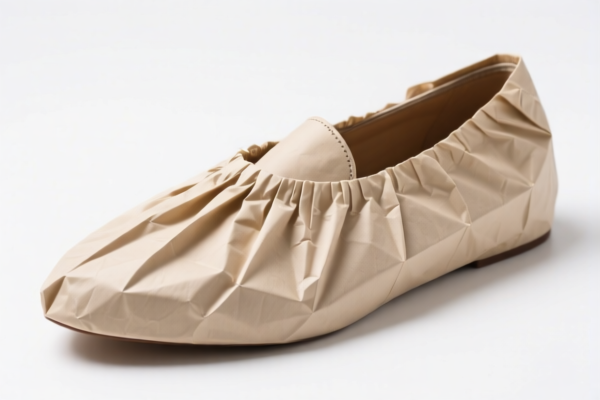
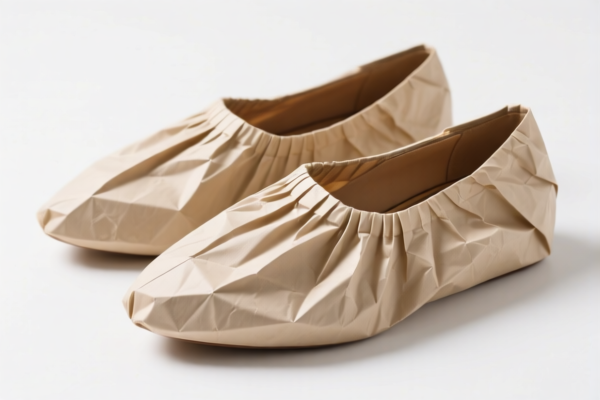
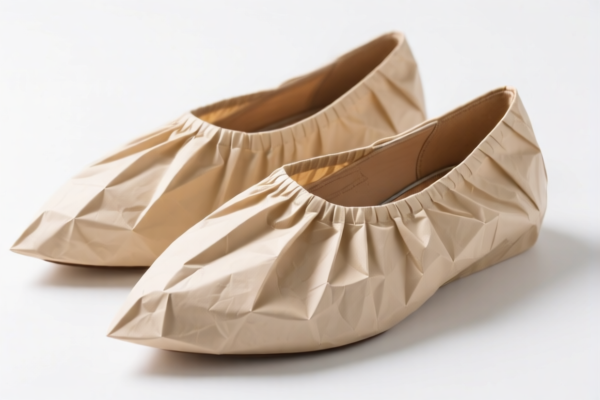
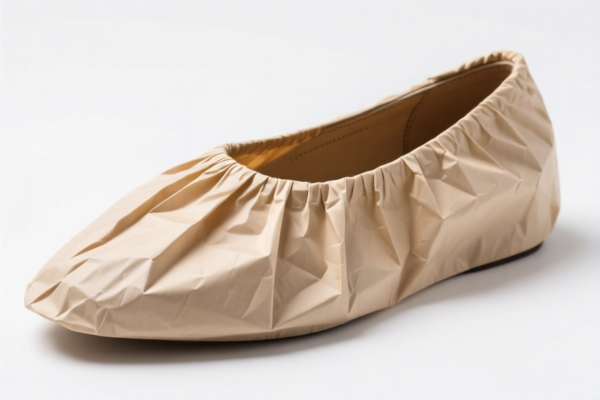
AI Analysis
👟 Cleanroom Shoe Covers (Non-woven Shoe Gaiters)
🌐 HS Code Reference & Customs Clearance Guide | 2026 Latest Tariff Analysis | Professional Level Compliance Strategy
📌 I. Product Definition & Classification: Do You Really Understand "Shoe Covers"?
Cleanroom shoe covers are critical personal protective equipment (PPE) used in semiconductor manufacturing, pharmaceuticals, biotechnology, and food processing. They serve as a barrier to prevent contamination from footwear entering sterile environments.
In international trade, they are classified based on material composition (Non-woven vs. Woven/Knitted) and functionality (Accessories vs. Finished Goods).
⚠️ Key Distinction Point:
- If made from non-woven fabric (the most common type) and treated as a general finished good →归入 6307 (Other Made-up Articles).
- If considered a knitted/hook-knitted item or an accessory to footwear →归入 6115 (Hosiery & Footwear Accessories).
- Critical Warning: The specific sub-heading determines whether the "Section 122" tariffs apply and the base duty rate.
📦 II. HS Code Classification Details (2026 Latest Tariff Authority Cross-Reference)
| HS Code | Product Description | Application Scenario | Material/Form |
|---|---|---|---|
6307.90.98.91 |
Other made-up articles; other | General cleanroom use, non-specific textile finish | Non-woven, Finished |
6115.99.90.00 |
Other hosiery and footgear | Classified as knitted/hook-knitted foot coverings | Textile, Footwear Cover |
6115.29.80.40 |
Other footgear, other textile materials | Accessory made of non-cotton/non-wool textile | Non-cotton, Accessory |
6307.90.60.90 |
Other made-up articles; other (兜底/Residual) | Non-woven shoe covers falling under residual category | Non-woven, Finished |
🔍 Key Insight:
- 6307 codes generally treat the item as a "made-up article" (like a bag or cover), which often offers a lower base duty (0%).
- 6115 codes treat the item as "footwear" or "hosiery," triggering a higher base duty (up to 16%).
- 122 Section Tariffs (often related to labor/trade enforcement) apply to all these categories for Chinese origin, adding significant cost.
💰 III. 2026 Latest Tariff Rate Breakdown (Including Surtaxes & Policy Add-ons)
✅ Applicable Country: United States (US)
✅ Origin: China (CN)
✅ Effective Date: Current enforcement periods
🎯 1. 6307.90.98.91 —— Other Made-up Articles (Non-woven)
| Item | Content |
|---|---|
| Base Duty | 7.0% |
| Section 301 Surcharge | 7.5% |
| Section 122 Surcharge | 10% |
| Total Duty Rate | 24.5% |
| Calculation | CIF Value × 24.5% |
| De Minimis Eligibility | ❌ No (High duty rate usually disqualifies from 80/175 exemption thresholds depending on specific rule updates) |
| Legal Basis Path | HTSUS:6307.90.98.91 → Section 301 → Section 122 |
📌 Explanation:
- This is a "general" classification for non-woven covers.
- While the base duty is moderate (7%), the addition of Section 301 and 122 tariffs pushes the total to 24.5%.
🎯 2. 6115.99.90.00 —— Other Knitted/Hook-knitted Footgear
| Item | Content |
|---|---|
| Base Duty | 9.9% |
| Section 301 Surcharge | 7.5% |
| Section 122 Surcharge | 10% |
| Total Duty Rate | 27.4% |
| Calculation | CIF Value × 27.4% |
| De Minimis Eligibility | ❌ No |
| Legal Basis Path | HTSUS:6115.99.90.00 → Section 301 → Section 122 |
📌 Note:
- Classified as "footwear," which carries a higher base duty (9.9%) than the "made-up article" classification.
- Useful if the product is technically knitted rather than just non-woven laid-up.
🎯 3. 6115.29.80.40 —— Other Footgear (Non-Cotton/Non-Wool)
| Item | Content |
|---|---|
| Base Duty | 16.0% |
| Section 301 Surcharge | 0.0% |
| Section 122 Surcharge | 10% |
| Total Duty Rate | 26.0% |
| Calculation | CIF Value × 26.0% |
| De Minimis Eligibility | ❌ No |
| Legal Basis Path | HTSUS:6115.29.80.40 → Section 122 |
📌 Warning:
- This has the highest base duty (16%) but avoids the 7.5% Section 301 tariff.
- However, the total (26.0%) is still higher than the 6307.90.60.90 option.
- Often applied when materials are specifically defined as "other textile materials" excluding cotton/wool.
🎯 4. 6307.90.60.90 —— Other Made-up Articles (Residual/兜底)
| Item | Content |
|---|---|
| Base Duty | 0.0% |
| Section 301 Surcharge | 7.5% |
| Section 122 Surcharge | 10% |
| Total Duty Rate | 17.5% |
| Calculation | CIF Value × 17.5% |
| De Minimis Eligibility | ❌ No |
| Legal Basis Path | HTSUS:6307.90.60.90 → Section 301 → Section 122 |
📌 Strategic Advantage:
- Lowest Total Duty (17.5%) among all options!
- Base duty is 0%, meaning you only pay the surcharges (17.5% total).
- Suitable for non-woven shoe covers that fit the "other made-up articles" residual category.
- Recommendation: Prioritize this HS code if the product description allows it.
🛠️ IV. Customs Clearance Practical Advice (Battle-Tested Pitfall Avoidance)
✅ 1. Document Checklist (Mandatory)
| Document | Required | Description |
|---|---|---|
| ✅ Product Specification Sheet | ✔️ | Must specify: Material (e.g., PP Non-woven), Weight, Type (Disposable/Reusable), Sterility Status. |
| ✅ Product Photos | ✔️ | Clear shots of the shoe cover, packaging, and labels (SKU, Size, Material). |
| ✅ Commercial Invoice | ✔️ | Must clearly state: "Non-woven Cleanroom Shoe Covers, For Use in Cleanroom Environments." Avoid vague terms like "Plastic Cover." |
| ✅ Packing List | ✔️ | Detail unit counts, gross weight, and net weight. |
| ✅ Material Safety Data Sheet (MSDS) | ✔️ | If treated with antimicrobial agents or sterility treatments. |
| ✅ Certificate of Origin (CO) | ✔️ | Critical for verifying Chinese origin to apply/avoid specific surcharges. |
✅ 2. Declaration Tips (Key Mantra)
🔥 "Material Matters, Use Defines Class! Non-woven = 6307, Knitted = 6115!"
| Scenario | Correct Declaration | Common Error |
|---|---|---|
| PP Non-woven, Disposable | 6307.90.60.90 (0% Base + Surcharges) |
Misdeclaring as 6115 → Higher Base Duty |
| Knitted Fabric, Reusable | 6115.99.90.00 |
Misdeclaring as 6307 → Potential Misclassification Penalty |
| Cotton Blend (Rare) | Check 6115.29 or 6307 based on weave |
Assume Non-woven always → 6307 |
| Sterile vs. Non-Sterile | State clearly in invoice | Omitting status → FDA/Customs Query |
✅ 3. Special Case Handling
| Situation | Handling Advice |
|---|---|
| Sterile Shoe Covers | May require FDA 510(k) registration if marketed as medical devices. Ensure compliance. |
| High-Value Reusable Covers | Ensure they are not classified as "footwear" in a way that triggers higher duties; use 6307 if they are accessories/covers. |
| Bulk vs. Retail | Bulk packaging may be viewed differently; ensure commercial invoice reflects actual transaction value. |
| Section 122 Impact | Be aware that Section 122 (often related to forced labor or specific trade remedies) adds 10% on top. This is unavoidable for CN origin in most textile cases. |
🌍 V. Global Market Comparison (2026 Latest)
| Country/Region | Recommended HS Code | Estimated Duty | Certification Requirements | Notes |
|---|---|---|---|---|
| 🇺🇸 USA | 6307.90.60.90 |
17.5% (Lowest) | No special certs for basic PPE | High duty load due to surcharges. |
| 🇨🇳 China | 6307.90.98.91 |
~7-10% | N/A | Import duties lower. |
| 🇪🇺 EU | 6307.90 |
0-4% | CE Marking (if medical), REACH | No Section 301/122 equivalents. |
| 🇯🇵 Japan | 6307.90 |
0-3% | PSE (if electronic components, rare here) | Low tariffs. |
📌 Conclusion:
- The US market is the most expensive due to Section 301 and 122 tariffs.
- European and Asian markets offer significantly lower duty costs (0-4%).
- For US imports, optimizing HS Code to6307.90.60.90is crucial to minimize the 17.5% effective rate.
📌 VI. Common Errors & Pitfall Guide (Lessons Learned)
❌ Error 1: Misclassifying Non-woven as "Plastic" (HS Code 39 or 6119)
👉 Consequence: Incorrect duty rate, potential FDA regulatory issues if used in cleanrooms.
👉 Fix: Always specify "Non-woven Polypropylene (PP)" or "Textile Material."
❌ Error 2: Using "Shoe Covers" without specifying "Cleanroom" or "Disposable"
👉 Consequence: Customs may classify as generic footwear accessories (6115), leading to higher base duties.
👉 Fix: Use precise descriptions: "Disposable Non-woven Cleanroom Shoe Covers."
❌ Error 3: Ignoring Section 122 Tariffs
👉 Consequence: Unexpected 10% charge at customs.
👉 Fix: Budget for Total Duty = Base + 7.5% + 10%. Plan cash flow accordingly.
❌ Error 4: Confusing "Sterile" with "Medical Device"
👉 Consequence: FDA detention if intended for surgical use without proper registration.
👉 Fix: Clarify usage: "For Cleanroom/Industrial Use" vs. "Surgical Use."
✅ Correct Practice:
"Non-woven Polypropylene Cleanroom Shoe Covers, Disposable, Sterile/Non-Sterile, Box of 100, HS Code: 6307.90.60.90"
🎯 VII. Conclusion: Precise Classification Saves Money!
🎯 Remember the Mantra:
🔹 "Non-woven goes to 6307, Knitted goes to 6115!"
🔹 "Base 0%, Surcharges 17.5% = Total 17.5% for 6307.90.60.90!"
🔹 "Always account for Section 122 (10%) in your US landing cost!"
📌 Pro Tip:
If you are importing large volumes, consider applying for an HTS Code Exclusion (if applicable under specific trade remedy exclusions) or seek an Advance Ruling from CBP to confirm the 6307.90.60.90 classification and secure the 0% base duty.
📣 Immediate Action:
📞 Consult a licensed customs broker + Provide Product Specs + Apply for Pre-ruling
🚀 Ensure your cleanroom shoe covers clear customs smoothly, avoid penalties, and maximize profit margins!
✨ Professional Clearance Starts with Accurate Classification!
💼 Every cent of duty saved is pure profit earned!
Customer Reviews
About HS Code Classification
The Harmonized System (HS) is an internationally standardized nomenclature developed by the World Customs Organization (WCO) to classify traded products. Over 200 countries use the HS system as the basis for customs tariffs, trade statistics, and import/export regulations.
Each HS code follows a hierarchical structure:
- Chapter (2 digits) — Broad category of goods (e.g., Chapter 84: Machinery and Mechanical Appliances)
- Heading (4 digits) — More specific grouping within the chapter
- Subheading (6 digits) — Internationally standardized breakdown, used by all WCO member countries
- National subdivisions (8-10 digits) — Country-specific extensions for further classification, such as US HTSUS 10-digit codes
Correct HS code classification is essential for smooth customs clearance, accurate duty payment, and compliance with trade regulations. Misclassification can lead to customs delays, overpayment of duties, or penalties.
When importing from CN to US, the applicable tariff rates may include:
- Most-Favored-Nation (MFN) rate — The standard duty rate applied to WTO members
- General rate — Applied to countries without trade agreements
- Trade remedy duties — Additional tariffs such as Section 301 (anti-dumping), Section 232 (national security), or countervailing duties
The information provided on this page is for reference purposes only. For official classification, please consult with your local customs authority or a licensed customs broker.