Clinical Diagnostic Reagents
CN → US| HS Code | Tariff Rate | Origin | Destination | Doc |
|---|---|---|---|---|
| 3822190080 | 10.0% | CN | US | Official Doc |
| 3822190030 | 10.0% | CN | US | Official Doc |
| 3002140090 | 10.0% | CN | US | Official Doc |
| 3006305000 | 10.0% | CN | US | Official Doc |
| 3006301000 | 10.0% | CN | US | Official Doc |
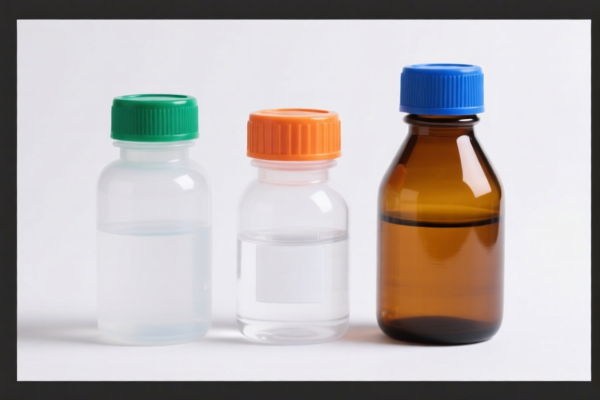
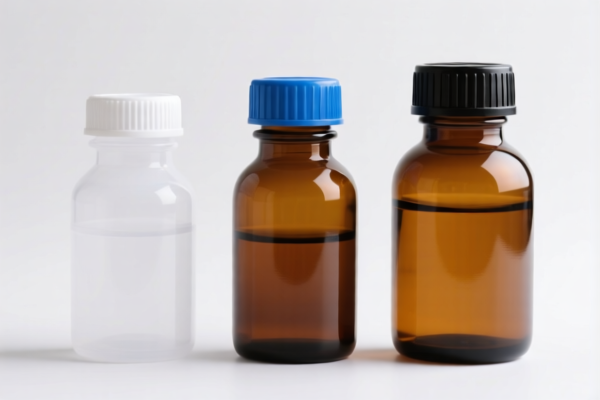
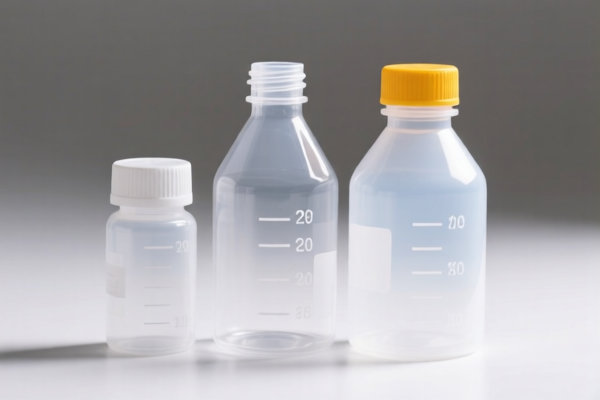
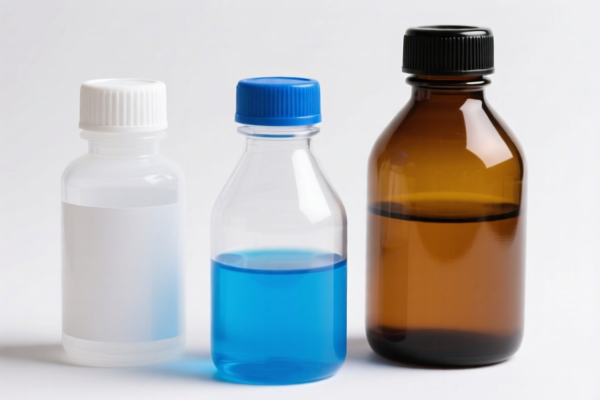
Product Images
AI Analysis
🧪 Clinical Diagnostic Reagents (Diagnostics & Laboratory Reagents)
🌐 HS Code Reference & Customs Clearance Guide | 2026 Latest Tariff Analysis | Professional Clearance Strategy
📌 Part I: Product Definition & Classification: Do You Understand "Diagnostic Reagents"?
Clinical Diagnostic Reagents are chemical, biological, or immunological substances used in medical laboratories or clinical settings to aid in the diagnosis, monitoring, or treatment of diseases. In international trade, they are strictly regulated as medical/laboratory articles, not general consumer goods.
Key Classification Logic: * Laboratory Reagents (Heading 3822): Reagents designed for laboratory testing (diagnostic or otherwise) that do not fit into specific medical product headings (like vaccines or blood components). * Medical Products (Heading 3002/3006): Reagents specifically formulated as immunological products, blood fractions, or prepared diagnostic kits intended for direct patient use or specific therapeutic/diagnostic functions.
⚠️ Critical Distinction:
- If the reagent is a general "diagnostic or laboratory reagent" without a specific medical formulation (like an antibody or vaccine) → Heading 3822.
- If the reagent is an immunological product (e.g., antiserum, vaccines) or a prepared blood fraction → Heading 3002.
- If the reagent is a prepared diagnostic kit intended for direct patient use (e.g., pregnancy tests, glucose monitors) → Heading 3006.
📦 Part II: HS Code Classification Details (2026 Latest Tariff Authority Comparison)
| HS Code | Product Description | Applicable Scenario | Material/Use Conflict? |
|---|---|---|---|
3822.19.00.80 |
Diagnostic Reagents; Other | General diagnostic or laboratory reagents; no specific material conflict | ✅ No Conflict |
3822.19.00.30 |
Other Reagents; Other | Fallback category for unspecified components; "Other" classification if no specific material match | ✅ No Conflict (Fallback) |
3002.14.00.90 |
Immunological Products; Other | Clinical use inferred as immunological or biochemical products (non-monoclonal antibodies) | ✅ No Conflict |
3006.30.50.00 |
Prepared Diagnostic Kits | Kits intended for patient use (e.g., home tests); "Other" category | ✅ No Conflict |
3006.30.10.00 |
Other Prepared Diagnostic Kits | Includes kits with antigens/antiserum or for X-ray; fallback if details missing | ✅ No Conflict (Fallback) |
🔍 Key Reminder:
- All classifications above are based on clinical/laboratory diagnostic use.
- If the product is a simple chemical without diagnostic purpose, it may fall under different headings (e.g., 29xx).
- "No Material Conflict" means the classification assumes the chemical nature of the reagent does not contradict the heading (e.g., a protein-based reagent fits 3002 better than 3822 if it’s an immunological product).
💰 Part III: 2026 Latest Tariff Rate Breakdown (Including Surtaxes & Policy Add-ons)
✅ Applicable Country: United States (US)
✅ Origin: China (CN)
✅ Effective Time: 2025 November 10 onwards (including subsequent imports)
🎯 1. 3822.19.00.80 & 3822.19.00.30 —— General Diagnostic Reagents
| Item | Detail |
|---|---|
| Basic Tariff | 0.0% (ad valorem) |
| Section 301 Surcharge | 0.0% (No additional 301 tariff for these subheadings) |
| Section 122 Tariff | +10.0% (Specific to certain chemical/laboratory goods from China) |
| Total Tariff | 10.0% |
| Tax Calculation | CIF Value × 10% |
| De Minimis Eligible | ❌ No (Deny de minimis for these HS codes) |
| Legal Basis Path | Section 122: 19 U.S.C. § 2903 → USITC: 3822.19.00.80 |
📌 Explanation:
- These reagents are classified under Heading 3822 (Diagnostic or Laboratory Reagents).
- The 10% tariff is imposed under Section 122 (not Section 301), which targets specific industrial and chemical inputs.
- No base tariff applies, so the total is exactly 10%.
🎯 2. 3002.14.00.90 —— Immunological Products (Other)
| Item | Detail |
|---|---|
| Basic Tariff | 0.0% |
| Section 301 Surcharge | 0.0% |
| Section 122 Tariff | +10.0% |
| Total Tariff | 10.0% |
| Tax Calculation | CIF Value × 10% |
| De Minimis Eligible | ❌ No |
| Legal Basis Path | Section 122: 19 U.S.C. § 2903 → USITC: 3002.14.00.90 |
📌 Explanation:
- Classified as Immunological Products (e.g., antiserums, vaccines, blood fractions).
- Same 10% Section 122 tariff applies.
- Requires proof of immunological nature (e.g., antibody composition) for accurate clearance.
🎯 3. 3006.30.50.00 & 3006.30.10.00 —— Prepared Diagnostic Kits
| Item | Detail |
|---|---|
| Basic Tariff | 0.0% |
| Section 301 Surcharge | 0.0% |
| Section 122 Tariff | +10.0% |
| Total Tariff | 10.0% |
| Tax Calculation | CIF Value × 10% |
| De Minimis Eligible | ❌ No |
| Legal Basis Path | Section 122: 19 U.S.C. § 2903 → USITC: 3006.30.x0.00 |
📌 Explanation:
- Classified as Prepared Diagnostic Kits (e.g., home pregnancy tests, HIV self-tests).
- Same 10% Section 122 tariff applies.
- Must be clearly identified as a "kit" intended for patient use.
🛠️ Part IV: Customs Clearance Practical Advice (Battlefield Pit Avoidance Guide)
✅ 1. Documentation Checklist (All Required)
| Document | Mandatory? | Note |
|---|---|---|
| ✅ Product Specification | ✔️ | Must detail: Active ingredients, intended use (diagnostic/lab), storage conditions |
| ✅ Formula/Composition | ✔️ | Critical for distinguishing between 3822 (chemical) and 3002/3006 (medical) |
| ✅ Product Photos (Label/Packaging) | ✔️ | Show "Diagnostic Use" or "Laboratory Reagent" clearly |
| ✅ Commercial Invoice | ✔️ | Must state: "Clinical Diagnostic Reagents" + HS Code + Origin |
| ✅ Certificate of Origin (CO) | ✔️ | Required for Section 122 assessment |
| ✅ Packing List | ✔️ | Detail contents to avoid "misdeclaration" penalties |
| ✅ FDA Registration (if applicable) | ✔️ | Many diagnostic reagents require FDA 510(k) clearance for import |
🚨 Critical Note:
- Do NOT declare as "Chemical Reagents" without specifying diagnostic purpose.
- Do NOT under-declare value to avoid tariffs; customs audits are frequent for medical supplies.
✅ 2. Declaration Tips (Key Mantra)
🔥 "Purpose Defined, Component Clear, Section 122 Pays 10%, De Minimis Denies!"
| Scenario | Correct Declaration | Wrong Practice |
|---|---|---|
| General Lab Reagent | 3822.19.00.80 |
Misdeclare as 29xx chemical → Higher scrutiny |
| Immunological Reagent | 3002.14.00.90 |
Misdeclare as 3822 → Risk of penalty for misclassification |
| Home Test Kit | 3006.30.50.00 |
Misdeclare as 3822 → May miss FDA requirements |
| Small Sample (< $800) | NOT De Minimis | Assume $800 exemption → Seizure! |
✅ 3. Special Cases Handling
| Case | Handling Advice |
|---|---|
| FDA-Regulated Items | Ensure FDA prior notice and registration. Customs may hold shipment without FDA clearance. |
| Cold Chain Reagents | Provide temperature control logs. Damaged goods may be rejected as "non-diagnostic." |
| Bulk vs. Kit | Bulk liquids → 3822; Pre-packaged kits → 3006. Do not mix declarations. |
| Research vs. Clinical | If for "Research Use Only" (RUO), still declare accurately. Misuse can lead to fines. |
🌍 Part V: Global Market Comparison (2026 Latest)
| Country/Region | Recommended HS Code | Tariff (China Origin) | Certification Required | Notes |
|---|---|---|---|---|
| 🇺🇸 USA | 3822.19.00.80 / 3002.14.00.90 / 3006.30.50.00 |
10% (Section 122) | FDA 510(k) / CLIA Waiver | No de minimis exemption |
| 🇨🇳 China | 3822.90.00 / 3002.90.00 |
0% - 5% | NMPA Registration | Lower entry barrier |
| 🇪🇺 EU | 3822.00.00 / 3002.90.00 |
0% (if CE marked) | CE IVDR / ISO 13485 | IVDR regulations apply |
| 🇯🇵 Japan | 3822.00.00 |
0% - 5% | PMDA Approval | Strict quality control |
| 🇬🇧 UK | 3822.00.00 |
0% - 5% | MHRA Approval | Post-Brexit rules apply |
📌 Conclusion:
- USA imposes a 10% Section 122 tariff on most diagnostic reagents from China.
- No de minimis exemption means even small shipments are subject to duty.
- FDA clearance is mandatory for most clinical diagnostic products in the US.
📌 Part VI: Common Errors & Pitfalls (Blood & Tears Lessons)
❌ Error 1: Declaring "Diagnostic Reagents" under 29xx Chemicals
👉 Consequence: Misclassification → Penalties + Back Duties + FDA Hold
❌ Error 2: Assuming De Minimis ($800) applies
👉 Consequence: Seizure because Section 122 goods are excluded from de minimis.
❌ Error 3: Mixing "Lab Reagents" with "Medical Kits" in one shipment
👉 Consequence: Customs Audit → Delays, potential return of goods.
❌ Error 4: Omitting "Intended Use" on Invoice
👉 Consequence: Customs cannot verify classification → 30-day hold for additional info.
✅ Correct Practice:
"Clinical Diagnostic Reagent, Anti-HBs Antibody, for Laboratory Use, HS Code: 3002.14.00.90, Origin: China, FDA Registered, Cold Chain Required"
🎯 Part VII: Conclusion: Professional Declaration, Save Time, Reduce Costs!
🎯 Remember the Mantra:
🔹 "Section 122 is 10%, No De Minimis, FDA is Key, Classify Right or Pay!"
🔹 "Reagent Purpose Matters, Code Differs, Tax is 10%, Don't Risk It!"
📌 Tips:
- If your reagents are originating from Vietnam, Mexico, or Malaysia, you may qualify for FTAA/USMCA benefits (lower or 0% tariffs).
- Always apply for an Advance Ruling from CBP if uncertain about classification.
- For high-value shipments, consider bonded warehouse entry to defer duty payment.
📣 Immediate Action:
📞 Contact a licensed customs broker + Provide FDA docs + Apply for CBP Advance Ruling
🚀 Let your diagnostic reagents pass customs smoothly, efficiently, and profitably!
✨ Professional Customs Clearance Starts with Accurate Classification!
💼 Every Dollar of Duty Counts!
Customer Reviews
About HS Code Classification
The Harmonized System (HS) is an internationally standardized nomenclature developed by the World Customs Organization (WCO) to classify traded products. Over 200 countries use the HS system as the basis for customs tariffs, trade statistics, and import/export regulations.
Each HS code follows a hierarchical structure:
- Chapter (2 digits) — Broad category of goods (e.g., Chapter 84: Machinery and Mechanical Appliances)
- Heading (4 digits) — More specific grouping within the chapter
- Subheading (6 digits) — Internationally standardized breakdown, used by all WCO member countries
- National subdivisions (8-10 digits) — Country-specific extensions for further classification, such as US HTSUS 10-digit codes
Correct HS code classification is essential for smooth customs clearance, accurate duty payment, and compliance with trade regulations. Misclassification can lead to customs delays, overpayment of duties, or penalties.
When importing from CN to US, the applicable tariff rates may include:
- Most-Favored-Nation (MFN) rate — The standard duty rate applied to WTO members
- General rate — Applied to countries without trade agreements
- Trade remedy duties — Additional tariffs such as Section 301 (anti-dumping), Section 232 (national security), or countervailing duties
The information provided on this page is for reference purposes only. For official classification, please consult with your local customs authority or a licensed customs broker.