Clinical Laboratory Analyzer
CN → US| HS Code | Tariff Rate | Origin | Destination | Doc |
|---|---|---|---|---|
| 9027504015 | 35.0% | CN | US | Official Doc |
| 9027205050 | 35.0% | CN | US | Official Doc |
| 9031808085 | 35.0% | CN | US | Official Doc |
| 9022190000 | 35.0% | CN | US | Official Doc |
| 9031499000 | 35.0% | CN | US | Official Doc |
Product Images
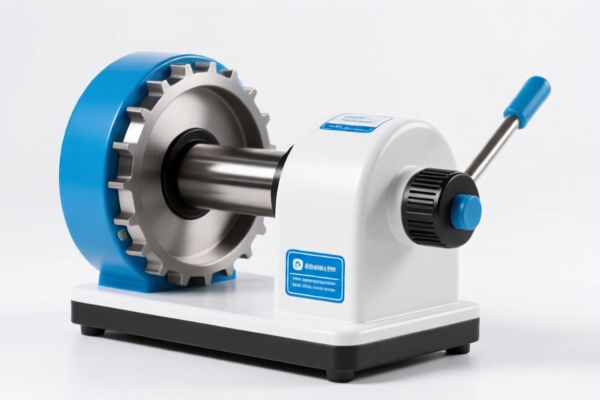
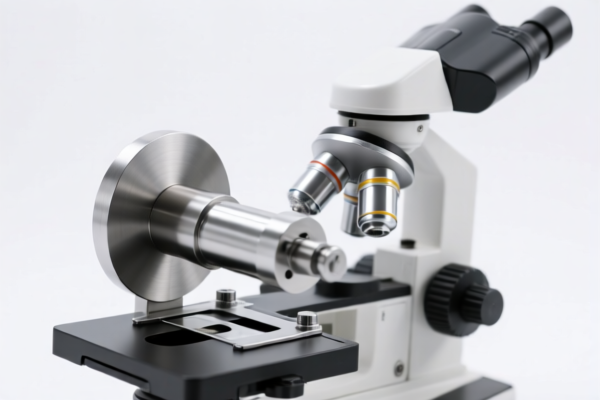
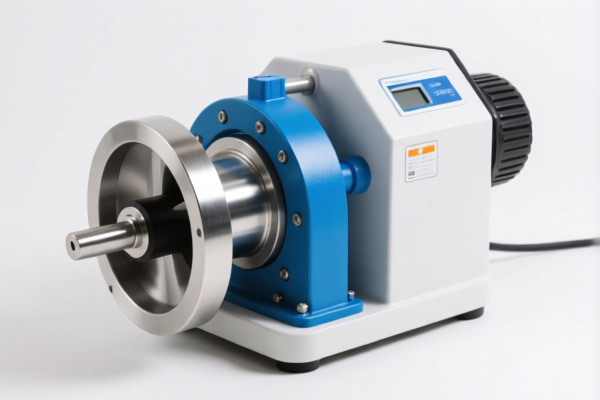
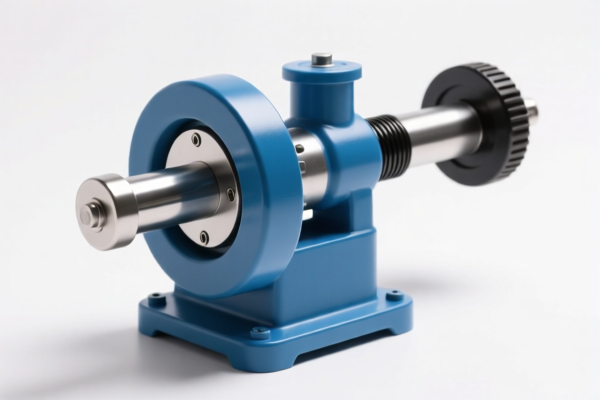
AI Analysis
🧪 Clinical Laboratory Analyzer: HS Code Classification & US Customs Clearance Guide
🌐 HS Code Reference & Customs Clearance Strategy | 2026 Latest Tariff Analysis | Professional Compliance Guide
📌 1. Product Definition: What is a "Clinical Laboratory Analyzer"?
A Clinical Laboratory Analyzer is an electronic instrument used in medical, pharmaceutical, or biological labs to determine the composition of blood, urine, or other bodily fluids. It typically uses chemical, physical, or optical methods (such as spectrophotometry, electrochemistry, or X-ray fluorescence) to analyze samples.
In international trade, these devices are primarily classified under Chapter 90 (Optical, Photographic, Cinematographic, Measuring or Checking Instruments). The exact HS Code depends on the primary working principle (Chemical vs. Physical vs. Other Measuring).
⚠️ Key Distinction:
- Chemical Analysis (e.g., measuring glucose, enzymes, electrolytes via chemical reactions) → HS 9027
- Physical Analysis (e.g., counting cells, viscosity, refractive index) → HS 9027 (still 9027, but different subheadings)
- General Purpose Measurement (if it doesn't fit specific analytical categories) → HS 9031
📦 2. HS Code Classification Details (Based on Provided Data)
According to the provided data, the following HS Codes are matched for "Clinical Laboratory Analyzer." All listed codes have a Total Tax Rate of 35.0% when imported from China to the US.
| HS Code | Classification Summary | Working Principle / Category |
|---|---|---|
| 9027.50.40.15 | Chemical Analysis Instrument | Matches Chemical Analysis Instruments. Used for analyzing the chemical composition of substances (e.g., clinical chemistry analyzers measuring blood components). |
| 9027.20.50.50 | Physical or Chemical Analysis Instrument | Matches Physical or Chemical Analysis Instruments. Broad category covering instruments that analyze physical properties (like viscosity) or chemical properties. |
| 9031.80.80.85 | Measuring or Checking Instrument | Falls under Measuring and Checking Instruments. Used if the device is categorized broadly as a general measuring tool rather than a specific chemical/physical analyzer. |
| 9022.19.00.00 | X-ray Imaging/Detection Device | Matches X-ray Based Equipment. Note: This is only applicable if the analyzer uses X-ray technology for detection (e.g., X-ray fluorescence spectrometers for elemental analysis). For standard wet-chemistry analyzers, this is likely incorrect. |
| 9031.49.90.00 | Measuring or Testing Instrument | Falls under Measuring or Testing Instruments. A general fallback for instruments not specifically classified in 9027, often used for specific testing parameters. |
🔍 Critical Note on 9022.19.00.00:
- Most "Clinical Laboratory Analyzers" do NOT use X-rays.
- If your device is a standard biochemical or hematology analyzer, 9022.19.00.00 is likely misclassified.
- Recommendation: Prioritize 9027.xxxx codes unless the device explicitly uses X-ray technology for analysis.
💰 3. Detailed Tariff Structure (2026 US Import from China)
✅ Applicable Country: United States (US)
✅ Origin: China (CN)
✅ Effective Date: Current rates as of 2025/2026
🎯 Unified Tax Breakdown for All Listed HS Codes
| Tax Component | Rate | Legal Basis / Description |
|---|---|---|
| Basic Tariff (MFN) | 0.0% | Most clinical/lab instruments under HS 9027/9031 have a 0% base tariff under the Harmonized Tariff Schedule (HTS). |
| Section 301 Tariff (USITC) | +25.0% | Imposed on Chinese goods under the US Trade Representative (USTR) actions. Applies to Chapter 90 analytical instruments. |
| Section 122 / IEEPA Tariff | +10.0% | Imposed under the International Emergency Economic Powers Act (IEEPA) or related provisions targeting specific Chinese imports. |
| Total Tax Rate | 35.0% | Base (0%) + Sec. 301 (25%) + IEEPA (10%) = 35% |
📌 Tax Calculation Example:
For a shipment of Clinical Laboratory Analyzers valued at $100,000 (CIF):
- Duty Payable: $100,000 × 35% = $35,000
- No De Minimis Exemption: These items are not eligible for the $800 de minimis exemption (Section 321) due to the high-value and specific trade restrictions on Chinese medical/lab equipment.
🛠️ 4. Customs Clearance Practical Advice
✅ 1. Essential Documentation for Clearance
| Document | Requirement | Purpose |
|---|---|---|
| Product Description | Must specify: "Clinical Chemistry Analyzer," "Hematology Analyzer," etc. | To distinguish between Chemical (9027) and X-ray (9022) classification. |
| Technical Manual / Spec Sheet | Include working principle (e.g., "Spectrophotometric," "Electrochemical"). | Proves the device is NOT an X-ray device (avoiding 9022 misclassification). |
| Commercial Invoice | List CIF value clearly. | For duty calculation (35%). |
| Bill of Lading / Air Waybill | Standard shipping documents. | Proof of origin and transport. |
| FDA Registration (if applicable) | May be required for medical devices. | CBP may request FDA confirmation if the device is classified as a medical device. |
✅ 2. Classification Strategy & Risk Mitigation
| Scenario | Recommended HS Code | Reason |
|---|---|---|
| Standard Biochemical Analyzer (blood/urine tests) | 9027.50.40.15 | Clearly falls under "Chemical Analysis." |
| Cell Counter / Hematology Analyzer | 9027.20.50.50 | Falls under "Physical Analysis" (counting cells). |
| X-ray Fluorescence Analyzer (elemental analysis) | 9022.19.00.00 | Only if it uses X-rays for elemental analysis. High Risk: Verify if it truly uses X-rays. |
| General Purpose Lab Instrument (unclear function) | 9031.80.80.85 or 9031.49.90.00 | Use as fallback if it doesn't fit 9027. |
⚠️ Warning:
- Do not use 9022.19.00.00 unless the device explicitly uses X-ray technology. Misclassification can lead to penalties, delays, and retroactive duties.
- All listed codes carry a 35% total duty. There is no tariff advantage between these codes in terms of rate, but correct classification is crucial for FDA compliance and customs audits.
✅ 3. Common Pitfalls to Avoid
❌ Pitfall 1: Classifying a chemical analyzer under 9022 (X-ray).
👉 Consequence: Customs may reject the classification, leading to delays and potential penalties.
✅ Fix: Provide technical docs proving the working principle is chemical/physical, not X-ray.
❌ Pitfall 2: Assuming "Medical Device" automatically means a different HS Code.
👉 Consequence: Many medical devices are still classified under 9027 or 9031 based on their function, not their end-use.
✅ Fix: Focus on the analytical method (chemical vs. physical) for HS classification.
❌ Pitfall 3: Ignoring the 35% Total Duty.
👉 Consequence: Underestimating landed cost.
✅ Fix: Budget for 35% duty on all shipments from China to the US for these HS Codes.
🌍 5. Global Market Comparison (2026)
| Market | Typical HS Code | Base Duty | Additional Duties (China) | Total Duty | Notes |
|---|---|---|---|---|---|
| 🇺🇸 USA | 9027.xxxx / 9031.xxxx | 0% | +35% (301 + IEEPA) | 35% | High compliance barrier (FDA/CBP). |
| 🇨🇳 China (Import) | 9027.xxxx | 0-5% | None | 0-5% | Low duty, but import license may be needed. |
| 🇪🇺 EU | 9027.xxxx | 0% | None | 0% | No additional tariffs for lab equipment. |
| 🇬🇧 UK | 9027.xxxx | 0% | None | 0% | Post-Brexit, still favorable for lab gear. |
📌 Conclusion:
- USA is the most expensive market for importing Chinese Clinical Laboratory Analyzers due to the 35% combined tariff.
- EU/UK/China are more favorable with 0-5% duties.
- Strategy: If targeting the US market, consider supply chain diversification (e.g., assembling in Vietnam/Mexico) to mitigate the 35% duty, or factor this cost into pricing.
📌 6. Final Recommendations
- Verify Working Principle: Ensure the device is classified under 9027 (Chemical/Physical) unless it is explicitly an X-ray device (9022).
- Budget for 35% Duty: All provided HS Codes carry a 35% total tax rate for US imports from China.
- Prepare Technical Documentation: Have spec sheets ready to prove the analytical method to CBP.
- Consult FDA: If the device is for clinical use, ensure FDA registration is complete before shipment.
- Consider Pre-Ruling: Apply for an Advance Ruling from CBP to confirm the HS Code and avoid post-import audits.
🎯 Key Takeaway:
"Clinical Analyzer = 9027 (Chemical/Physical) or 9031 (General). Avoid 9022 unless X-ray. Expect 35% Duty in US. Document everything."
📣 Next Steps:
📞 Contact a licensed customs broker.
📄 Gather technical manuals specifying the analytical method.
💰 Calculate landed cost including 35% duty.
🚀 Ensure FDA compliance for smooth US market entry.
✨ Compliance is Key: Accurate Classification Saves Time and Money!
💼 Professional Customs Clearance Ensures Your Lab Equipment Reaches Its Destination Efficiently.
Customer Reviews
About HS Code Classification
The Harmonized System (HS) is an internationally standardized nomenclature developed by the World Customs Organization (WCO) to classify traded products. Over 200 countries use the HS system as the basis for customs tariffs, trade statistics, and import/export regulations.
Each HS code follows a hierarchical structure:
- Chapter (2 digits) — Broad category of goods (e.g., Chapter 84: Machinery and Mechanical Appliances)
- Heading (4 digits) — More specific grouping within the chapter
- Subheading (6 digits) — Internationally standardized breakdown, used by all WCO member countries
- National subdivisions (8-10 digits) — Country-specific extensions for further classification, such as US HTSUS 10-digit codes
Correct HS code classification is essential for smooth customs clearance, accurate duty payment, and compliance with trade regulations. Misclassification can lead to customs delays, overpayment of duties, or penalties.
When importing from CN to US, the applicable tariff rates may include:
- Most-Favored-Nation (MFN) rate — The standard duty rate applied to WTO members
- General rate — Applied to countries without trade agreements
- Trade remedy duties — Additional tariffs such as Section 301 (anti-dumping), Section 232 (national security), or countervailing duties
The information provided on this page is for reference purposes only. For official classification, please consult with your local customs authority or a licensed customs broker.