Clocks
CN → US| HS Code | Tariff Rate | Origin | Destination | Doc |
|---|---|---|---|---|
| 9106908500 | 0.0% | CN | US | Official Doc |
| 9105295000 | 0.0% | CN | US | Official Doc |
| 9105294000 | 0.0% | CN | US | Official Doc |
| 9105195000 | 0.0% | CN | US | Official Doc |
| 9105194000 | 0.0% | CN | US | Official Doc |
| 9104002000 | 0.0% | CN | US | Official Doc |
Product Images
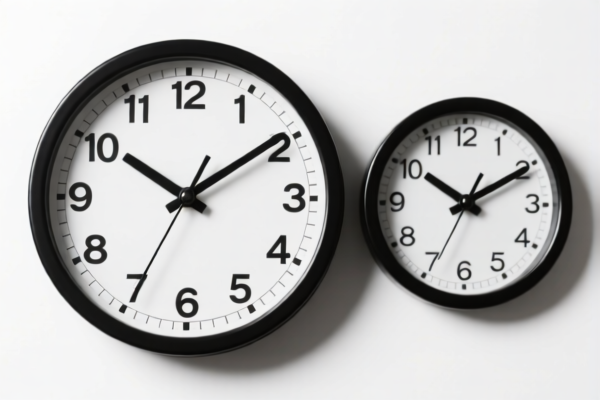
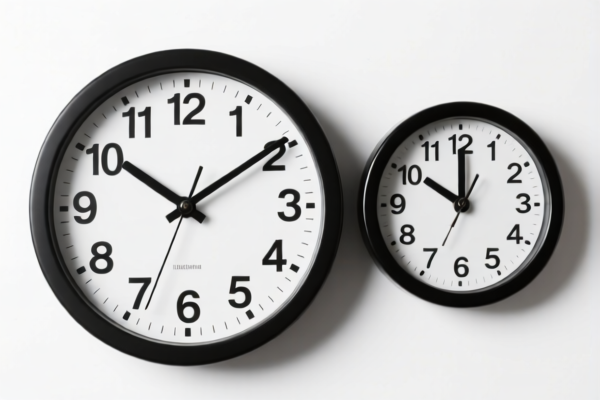
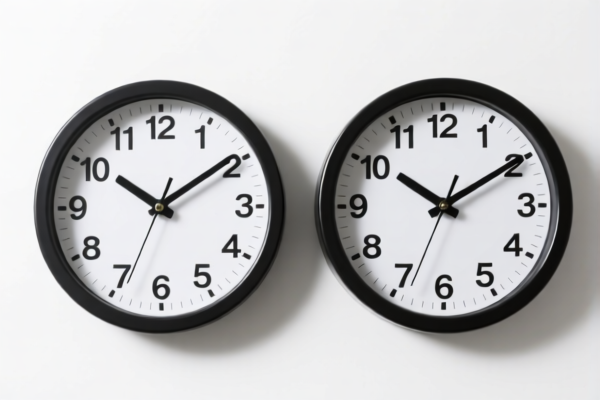
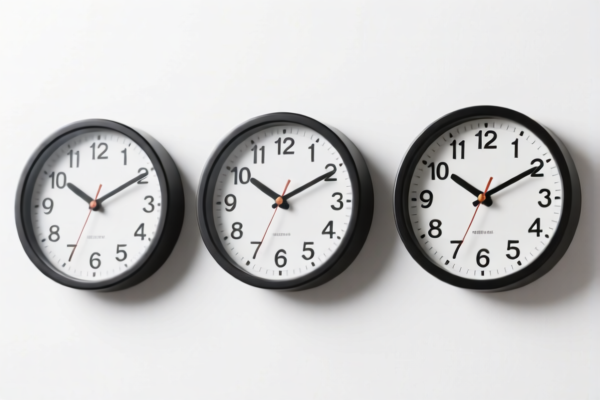
AI Analysis
🕰️ Clocks & Timepieces (Office, Wall, Alarm, Automotive)
🌐 HS Code Reference & Customs Clearance Guide | 2026 Latest Tariff Analysis | Professional Clearance Strategy
📌 I. Product Definition & Classification: Do You Really Understand "Clocks"?
In international trade, "clocks" are not a single monolithic category. They are segmented by function, form factor, and application. Misclassification leads to severe penalty risks, especially given the high additional tariffs on Chinese-origin goods entering the US market.
Key Categories: * Office/Stationary Clocks: Desktop or wall-mounted clocks for general office use. * Alarm Clocks: Clocks with a mechanical or electronic alarm function. * Automotive Instrument Clocks: Clocks specifically integrated into vehicle dashboards or instrument clusters.
⚠️ Critical Distinction Point:
- General Purpose vs. Specific Use: A "wall clock" in an office falls under different tariff lines than a "clock" embedded in a car dashboard.
- Mechanism Complexity: Some classifications consider "jewels" (bearings) in the movement, affecting ad-valorem taxes.
- China Origin Impact: Most general clocks face significant Section 301 (25%) and Section 122 (10%) additional tariffs, totaling up to 35-45% on top of base duties.
📦 II. HS Code Classification Details (2026 Latest Tariff Authority对照)
Based on the provided data, here are the specific HS Codes, their logic, and associated tax structures.
| HS Code | Product Description & Summary | Tax Structure (Total Effective Rate) | Tax Detail Breakdown |
|---|---|---|---|
| 9106.90.85.00 | Office Clocks (Chronographs/General Instruments): Classified under "Instruments for recording or indicating time," with built-in clock mechanisms. | 15¢/each + 2.3% + 0.8¢/jewel + 35.0% | Base: 15¢/ea + 2.3% + 0.8¢/jewel Add-on 1: 25.0% (Section 301) Add-on 2: 10.0% (Section 122) |
| 9105.29.50.00 | Wall/Desk Clocks (Other Timepieces): Wall clocks or desktop clocks falling under "Other clocks." | 30¢/each + 4.3% + 17.5% | Base: 30¢/ea + 4.3% Add-on 1: 7.5% Add-on 2: 10.0% (Section 122) |
| 9105.29.40.00 | Other Clocks (Finished Goods, "Other" Category): Finished clocks with no specific conflicting use/material. | 15¢/each + 6.4% + 10.0% | Base: 15¢/ea + 6.4% Add-on 1: 0.0% Add-on 2: 10.0% (Section 122) |
| 9105.19.50.00 | Alarm Clocks (Other): Other alarm clocks matching usage and form. | 23¢/each + 3.2% + 17.5% | Base: 23¢/ea + 3.2% Add-on 1: 7.5% Add-on 2: 10.0% (Section 122) |
| 9105.19.40.00 | Alarm Clocks ("Other" Bottom-line): Alarm clocks with no material/form conflicts. | 15¢/each + 6.4% + 10.0% | Base: 15¢/ea + 6.4% Add-on 1: 0.0% Add-on 2: 10.0% (Section 122) |
| 9104.00.20.00 | Automotive Instrument Clocks: Clocks for automotive instruments, falling under "Other." | 30¢/each + 6.4% + 35.0% | Base: 30¢/ea + 6.4% Add-on 1: 25.0% (Section 301) Add-on 2: 10.0% (Section 122) |
🔍 Key Insight:
- 9106.90.85.00 is unique because it includes a per-unit fee (15¢) AND a per-jewel fee (0.8¢) in the base tax, making complex mechanical clocks significantly more expensive to import than simple quartz ones.
- 9104.00.20.00 (Automotive) faces the highest total additional tariffs (35%), similar to 9106.90.85.00, due to Section 301 applicability.
- 9105.29.40.00 and 9105.19.40.00 offer the lowest tax burden if your products can be classified under these "Other" categories with no Section 301 add-on.
💰 III. 2026 Latest Tariff Rate Detailed Explanation (Including Additional Taxes)
✅ Applicable Country: USA (US)
✅ Origin: China (CN)
✅ Effective Date: 2025/2026 (Check specific enactment dates for Section 122)
🎯 1. 9106.90.85.00 – Office Clocks (Instruments for Time Indication)
| Item | Content |
|---|---|
| Base Duty | 15¢ per unit + 2.3% (Ad Valorem) + 0.8¢ per jewel |
| Section 301 Add-on | +25.0% (High Risk Category) |
| Section 122 Add-on | +10.0% |
| Total Effective Tax | Complex Calculation: (Base Duty + 2.3%) × 1.25 + 10% |
| De Minimis Eligibility | ❌ NO (Valued goods subject to Section 301 are excluded from $800 de minimis) |
| Legal Path | HTSUS:9106.90.85 → USITC:301Footnote → IEEPA:Section122 |
📌 Explanation:
- The 0.8¢/jewel clause applies if the clock contains a mechanical movement with jewel bearings. Quartz clocks may avoid this part.
- The 25% Section 301 is critical here. This is a standard high-tariff category for Chinese clocks.
- Section 122 (10%) is an additional national security/customs enforcement tax.
🎯 2. 9105.29.50.00 – Wall/Desk Clocks (Other)
| Item | Content |
|---|---|
| Base Duty | 30¢ per unit + 4.3% |
| Add-on 1 | +7.5% |
| Add-on 2 (Sec 122) | +10.0% |
| Total Effective Tax | ~21.8% + Per Unit Fee |
| De Minimis Eligibility | ❌ NO |
📌 Note:
- Lower additional tariffs compared to 9106.90.85.00, but the 30¢ per unit base fee is higher.
- Suitable for simple, non-mechanical wall clocks.
🎯 3. 9105.29.40.00 & 9105.19.40.00 – The "Low Tax" Options ("Other" Categories)
| Item | Content |
|---|---|
| Base Duty | 15¢ per unit + 6.4% |
| Add-on 1 | 0.0% (No Section 301 or low-rate add-on) |
| Add-on 2 (Sec 122) | +10.0% |
| Total Effective Tax | ~16.4% + Per Unit Fee |
| De Minimis Eligibility | ❌ NO |
📌 Strategic Advantage:
- If your clock is a generic office clock or alarm clock without specific "instrument" or "automotive" designation, it may qualify for these subheadings.
- Savings: Up to 18-25% less in additional tariffs compared to 9106.90.85.00 or 9104.00.20.00.
- Risk: Must ensure no physical features (like automotive dash mounts) contradict this classification.
🎯 4. 9104.00.20.00 – Automotive Instrument Clocks
| Item | Content |
|---|---|
| Base Duty | 30¢ per unit + 6.4% |
| Add-on 1 | +25.0% (Section 301) |
| Add-on 2 (Sec 122) | +10.0% |
| Total Effective Tax | ~41.4% + Per Unit Fee |
| De Minimis Eligibility | ❌ NO |
📌 Warning:
- Highest Combined Rate. Automotive parts and related instruments are heavily scrutinized.
- If you are shipping spare clock units for cars, this is the correct code but the cost is prohibitive for low-value items.
🛠️ IV. Customs Clearance Practical Advice (Pitfall Avoidance Guide)
✅ 1. Required Documentation Checklist (Mandatory)
| Document | Must Provide? | Description |
|---|---|---|
| ✅ Product Specification Sheet | ✔️ | Must detail: Movement type (Quartz/Mechanical), Jewel count (if mechanical), Power source. |
| ✅ Component Diagram | ✔️ | To prove it is NOT an automotive part (for 9105 codes) or NOT a complex chronograph (for 9106). |
| ✅ Product Photos | ✔️ | Clear images of the face, back mechanism, and any branding. |
| ✅ Commercial Invoice | ✔️ | Must specify "Clock, Office Type" or "Alarm Clock" precisely. Avoid vague terms like "Time Device." |
| ✅ Origin Certificate (CO) | ✔️ | Essential for proving China origin to apply correct Section 301/122 rates. |
✅ 2. Declaration Tips (Key Mantra)
🔥 "Define Form, Define Function, Avoid Automotive!"
| Scenario | Correct Declaration | Wrong Practice |
|---|---|---|
| Office Wall Clock | 9105.29.50.00 or 9105.29.40.00 |
Calling it "Instrument" → 35% Add-on |
| Simple Alarm Clock | 9105.19.40.00 (If eligible) |
Calling it "Electronic Instrument" → Higher Base |
| Car Dashboard Clock | 9104.00.20.00 |
Hiding automotive nature → Fraud Risk/Seizure |
| Complex Mechanical Clock | 9106.90.85.00 |
Omitting "Jewel" info → Misdeclaration |
✅ 3. Special Cases Handling
| Case | Handling Advice |
|---|---|
| Quartz vs. Mechanical | If Quartz, emphasize "No Jewels" to avoid the 0.8¢/jewel fee in 9106.90.85.00. |
| Multi-function Devices | If it's a clock + USB charger + Bluetooth speaker, it might NOT be a clock. It could fall under 8517 or 8543, with different tariffs. Consult experts. |
| Samples | Even for samples, if value > $800 or subject to Section 301, de minimis does not apply. Pay taxes upfront. |
| Kit Imports | If shipped as "Clock Kit," customs may assess duty on assembled value or parts separately. Declare as finished goods if possible. |
🌍 V. Global Market Comparison (2026 Latest)
| Country/Region | Recommended HS Code | Tariff Estimate | Certification | Note |
|---|---|---|---|---|
| 🇺🇸 USA | 9105.29.40.00 (Optimal) |
~16.4% + fees | FCC (if electronic), RoHS | Avoid 9106/9104 if possible due to 35% add-ons. |
| 🇨🇳 China | 9105.29 |
5-10% | N/A | Low duty for domestic trade. |
| 🇪🇺 EU | 9105 |
0-4.5% | CE | No Section 301 equivalent. Much cheaper than US. |
| 🇯🇵 Japan | 9105 |
0-10% | PSE (if electric) | Stable tariffs. |
| 🇬🇧 UK | 9105 |
0-4.5% | UKCA | Post-Brexit rules apply. |
📌 Conclusion:
- The USA is the most expensive market for Chinese clocks due to the Section 301 (25%) and Section 122 (10%)叠加.
- Strategy: If possible, market office/alarm clocks under 9105.29.40.00 or 9105.19.40.00 to avoid the 25% surcharge.
- Automotive clocks (9104) are rarely cost-effective for import due to high combined rates. Consider local assembly or sourcing from non-China origins if targeting the US auto aftermarket.
📌 VI. Common Errors & Pitfalls (Lessons Learned)
❌ Error 1: Classifying a Wall Clock as an "Instrument" (9106)
👉 Result: You pay 0.8¢/jewel + 25% Add-on.
✅ Fix: If it's a simple quartz wall clock, use 9105.29.40.00 (0% Add-on).
❌ Error 2: Hiding Automotive Features in General Clocks
👉 Result: Customs audit reveals 12V power input or dashboard mount → Re-classified to 9104.00.20.00 → Penalties + Back Taxes.
✅ Fix: Be honest. If it's for cars, use 9104.00.20.00.
❌ Error 3: Ignoring Section 122 (10%)
👉 Result: Underestimating landed cost by 10%.
✅ Fix: Always add 10% to your tax calculation for China-origin goods, regardless of Section 301 status.
❌ Error 4: Assuming De Minimis ($800) Applies
👉 Result: Shipment held at border, forced to pay full duty + storage fees.
✅ Fix: Section 301 goods from China are EXCLUDED from de minimis. Pay duty even for samples > $800.
🎯 VII. Conclusion: Smart Classification, Lower Costs!
🎯 Remember the Mantra:
🔹 "Office Clocks? Avoid 9106, Aim for 9105.40 (No 301). Automotive? Pay Up (9104). Always Add 10% for Sec 122."
🔹 "HS Code is King. Wrong Code = 35% Penalty. Right Code = 16% Cost."
📌 Pro Tip:
- For Quartz Clocks, emphasize "Electronic Movement" to potentially qualify for lower base duties in 9105.
- For Mechanical Clocks, disclose Jewel Count accurately to avoid fines on the 0.8¢/jewel component.
- Pre-Ruling: If shipping large volumes, apply for a Customs Ruling from CBP to confirm if your specific clock design qualifies for the lower-tax
9105.29.40.00category.
📣 Immediate Action:
📞 Consult a Customs Broker before shipping your first container.
📄 Prepare Detailed Specs showing movement type and intended use.
🚀 Optimize Your HS Code to save 25% in tariffs. Don't let a 2-digit code difference cost you thousands!
✨ Professional Clearance Starts with Precise Classification!
💼 Every Penny Saved on Tariffs is Pure Profit!
Customer Reviews
About HS Code Classification
The Harmonized System (HS) is an internationally standardized nomenclature developed by the World Customs Organization (WCO) to classify traded products. Over 200 countries use the HS system as the basis for customs tariffs, trade statistics, and import/export regulations.
Each HS code follows a hierarchical structure:
- Chapter (2 digits) — Broad category of goods (e.g., Chapter 84: Machinery and Mechanical Appliances)
- Heading (4 digits) — More specific grouping within the chapter
- Subheading (6 digits) — Internationally standardized breakdown, used by all WCO member countries
- National subdivisions (8-10 digits) — Country-specific extensions for further classification, such as US HTSUS 10-digit codes
Correct HS code classification is essential for smooth customs clearance, accurate duty payment, and compliance with trade regulations. Misclassification can lead to customs delays, overpayment of duties, or penalties.
When importing from CN to US, the applicable tariff rates may include:
- Most-Favored-Nation (MFN) rate — The standard duty rate applied to WTO members
- General rate — Applied to countries without trade agreements
- Trade remedy duties — Additional tariffs such as Section 301 (anti-dumping), Section 232 (national security), or countervailing duties
The information provided on this page is for reference purposes only. For official classification, please consult with your local customs authority or a licensed customs broker.