Clothes
CN → US| HS Code | Tariff Rate | Origin | Destination | Doc |
|---|---|---|---|---|
| 6109100004 | 34.0% | CN | US | Official Doc |
| 6109100027 | 34.0% | CN | US | Official Doc |
| 6217108500 | 24.6% | CN | US | Official Doc |
| 7117196000 | 17.5% | CN | US | Official Doc |
| 6109100027 | 34.0% | CN | US | Official Doc |
Product Images


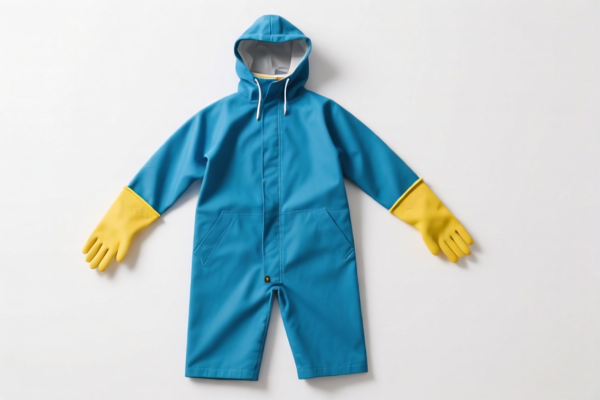

AI Analysis
👕👗 Clothes: The Ultimate Global Trade & Customs Guide 2026
🌐 HS Code Decoded & Tariff Breakdown | Professional Clearance Strategy
📌 I. Product Definition: What Exactly Are "Clothes"?
"Clothes" is a broad category in international trade, covering everything from everyday wearables to specialized accessories. In customs classification, the distinction often lies in material composition (knitted vs. woven), garment type (T-shirts, vests, costumes), and accessory function.
⚠️ Critical Distinction for Customs:
- Knitted Garments (e.g., T-shirts, Vests): Typically fall under Chapter 61.
- Woven Garments: Typically fall under Chapter 62.
- Costume/Accessory Parts: May fall under 6217 or 7117 depending on material and function.
📦 II. Detailed HS Code Analysis (Based on Provided Data)
Below is the authoritative breakdown of the specific HS Codes identified for your textile shipments, including tax structures and classification logic.
1. 🧶 6109.10.00.04 & 6109.10.00.27 — Knitted T-Shirts & Vests
Category: Knitted or Crocheted Clothing (Finished Consumer Goods).
Logic: These codes apply to garments similar to T-shirts and vests. They are classified as "Clothes" in the broad sense, with no material conflicts (e.g., cotton, synthetic blends).
* 6109.10.00.04: General T-shirt/Vest category.
* 6109.10.00.27: Specifically for Knitted/Crocheted varieties (e.g., men's/children's).
📊 Tax Structure (Total: 34.0%) * Base Duty: 16.5% * Additional Duty (Section 301): 7.5% * Section 122 Duty: 10.0% * Total Tax Rate: 34.0%
2. 🎭 6217.10.85.00 — Costume & Garment Accessories
Category: Clothing Accessories (Made-up Clothing Accessories).
Logic: Fits the "Finished Garment Accessories" definition. Includes items like belts, suspenders, or costume parts that complement the main garment. No material conflicts.
* Usage: Matching the classification explanation for "Garment Accessories."
📊 Tax Structure (Total: 24.6%) * Base Duty: 14.6% * Additional Duty (Section 301): 0.0% * Section 122 Duty: 10.0% * Total Tax Rate: 24.6%
3. 💎 7117.19.60.00 — Costume Jewelry & Accessories
Category: Imitation Jewelry / Toy Jewelry.
Logic: Based on the "Toy Jewelry" or "Costume Accessory" function. Falls under the "catch-all" principle for "Other" items when specific material definitions don't match standard metal/gemstone categories.
* Usage: Decorative items, costume jewelry, toy accessories.
📊 Tax Structure (Total: 17.5%) * Base Duty: 0.0% * Additional Duty (Section 301): 7.5% * Section 122 Duty: 10.0% * Total Tax Rate: 17.5%
💰 III. Deep Dive: 2026 Tax Policy & Tariff Breakdown
✅ Context: These rates reflect China (CN) origin imports into the US (US), incorporating Section 301 and Section 122 measures.
🎯 High-Tax Scenario: Knitted Garments (6109.10.00)
- Why so high? (34.0%)
- Base (16.5%): Standard Most-Favored-Nation (MFN) rate for knitted cotton/synthetic shirts.
- Section 301 (7.5%): Additional tariffs imposed on Chinese textiles.
- Section 122 (10.0%): Crucial! This is a specific, high-rate penalty often applied to Chinese apparel to curb unfair trade practices or market disruption.
- ⚠️ Warning: These are non-negotiable tariffs. No de minimis exemption applies for standard commercial shipments.
🎯 Medium-Tax Scenario: Accessories (6217.10.85)
- Why lower? (24.6%)
- Base (14.6%): Slightly lower MFN rate for accessories.
- Section 301 (0.0%): No additional 301 tax applied here (often an exemption for certain accessory types).
- Section 122 (10.0%): Still subject to the 122 penalty.
- 💡 Advantage: The absence of the 301 tariff makes this a more cost-effective clearance path compared to full garments.
🎯 Low-Tax Scenario: Costume Jewelry (7117.19.60)
- Why lowest? (17.5%)
- Base (0.0%): Often duty-free for low-value imitation jewelry.
- Section 301 (7.5%): Standard 301 surcharge applies.
- Section 122 (10.0%): 122 penalty applies.
- 💡 Advantage: Zero base duty makes this the most tax-efficient option for non-garment accessories.
🛠️ IV. Clearance Practical Guide: How to Clear "Clothes" Smoothly
✅ 1. Documentation Checklist (Must-Have)
| Document | Why It Matters |
|---|---|
| Detailed Commercial Invoice | Must explicitly state "Knitted T-Shirt" or "Costume Accessory" to match HS Code logic. |
| Material Composition List | Crucial for 6109 (knitted) vs. 62xx (woven). If 100% cotton vs. polyester, tax rates can shift. |
| Product Photos (Front/Back/Detail) | Proof of "Finished Garment" status vs. "Raw Fabric." |
| Origin Certificate (CO) | Mandatory to prove origin is China (CN) to trigger correct Section 122/301 calculation. |
| Packing List | Differentiate between "Garments" (6109) and "Accessories" (6217) to avoid misclassification. |
✅ 2. Declaration Strategy (The "Golden Rules")
🔥 Rule 1: Don't Lump Them! * Mistake: Declaring "T-shirts + Belts" under a single code. * Correction: Split shipments! Declare 6109.10.00 for shirts and 6217.10.85 for belts. Mixing them can lead to penalties.
🔥 Rule 2: Be Specific About "Knitted" vs. "Woven" * If it's a T-shirt, it's almost certainly 6109 (Knitted). * If it's a Formal Shirt, it might be 6205 (Woven). * Data Note: Our data specifically supports 6109 (Knitted/T-shirt) and 6217 (Accessories).
🔥 Rule 3: Define "Costume" vs. "Jewelry" * For 7117, ensure the item is clearly "Imitation" or "Toy" jewelry, not real metal. If it looks like real gold/silver, it will be reclassified and taxed heavily.
✅ 3. Risk Mitigation: Section 122 & 301
- Section 122 (10%): This is the biggest hidden cost.
- Action: If you have goods from Vietnam or Mexico, check if they qualify for exemption from Section 122.
- Section 301 (7.5%):
- Action: This applies to almost all Chinese textiles. Plan your pricing to absorb this 7.5% on top of the base duty.
🌍 V. Quick Comparison: Where Does Your "Clothes" Ship From?
| Origin | 6109 (T-Shirt) | 6217 (Accessory) | 7117 (Jewelry) | Strategy |
|---|---|---|---|---|
| 🇨🇳 China | 34.0% (Heavy) | 24.6% (Medium) | 17.5% (Low) | High Risk: High Section 122/301 fees. |
| 🇻🇳 Vietnam | Likely 0% (If proven) | Likely 0% | Likely 0% | Strategy: Re-route manufacturing to avoid Section 122. |
| 🇺🇸 USA | 0% (MFN) | 0% | 0% | Strategy: Domestic sourcing eliminates all extra tariffs. |
📌 VI. Common Pitfalls & Solutions
| ❌ Pitfall | ✅ Solution |
|---|---|
| "T-Shirt" vs. "Vest" Confusion | Use 6109.10.00.27 for knitted vests/shirts. Ensure the fabric weight and knit structure are documented. |
| Accessory Misclassification | Don't call a "Clothing Fastener" a "Garment." If it's a belt or suspenders, use 6217. |
| Toy Jewelry vs. Real Jewelry | If declaring 7117, ensure the item is clearly "Costume" or "Imitation." Real silver/gold falls under different codes (e.g., 7113/7114) with different tax rules. |
| Ignoring Section 122 | Always check if your specific HS Code is under the Section 122 list. For 6109 and 6217, it is active. |
🎯 VII. Conclusion: Clear, Compliant, Cost-Effective
🎯 Key Takeaway:
Knitted Garments (6109) are your highest cost item (34%). Accessories (6217) offer a mid-range solution (24.6%) with no Section 301 tax. Jewelry (7117) is your lowest cost entry point (17.5%) if defined correctly as "Imitation."
🚀 Action Plan: 1. Audit your current inventory: Are you shipping 6109 (high tax) or 6217 (mid tax)? 2. Repackage: Separate garments from accessories to declare different HS Codes. 3. Verify: Ensure your "Costume Jewelry" is truly "Imitation" to qualify for 7117.
📌 Pro Tip: If you are a high-volume importer, consider pre-arranging a Binding Tariff Information (BTI) ruling with Customs to lock in the 6109.10.00 classification and avoid future audits.
✨ Your Clothes, Your Profit. Don't let 34% tariffs eat your margin!
💼 Get your HS Code right, get your clearance smooth!
Customer Reviews
About HS Code Classification
The Harmonized System (HS) is an internationally standardized nomenclature developed by the World Customs Organization (WCO) to classify traded products. Over 200 countries use the HS system as the basis for customs tariffs, trade statistics, and import/export regulations.
Each HS code follows a hierarchical structure:
- Chapter (2 digits) — Broad category of goods (e.g., Chapter 84: Machinery and Mechanical Appliances)
- Heading (4 digits) — More specific grouping within the chapter
- Subheading (6 digits) — Internationally standardized breakdown, used by all WCO member countries
- National subdivisions (8-10 digits) — Country-specific extensions for further classification, such as US HTSUS 10-digit codes
Correct HS code classification is essential for smooth customs clearance, accurate duty payment, and compliance with trade regulations. Misclassification can lead to customs delays, overpayment of duties, or penalties.
When importing from CN to US, the applicable tariff rates may include:
- Most-Favored-Nation (MFN) rate — The standard duty rate applied to WTO members
- General rate — Applied to countries without trade agreements
- Trade remedy duties — Additional tariffs such as Section 301 (anti-dumping), Section 232 (national security), or countervailing duties
The information provided on this page is for reference purposes only. For official classification, please consult with your local customs authority or a licensed customs broker.