Clothing Rack
CN → US| HS Code | Tariff Rate | Origin | Destination | Doc |
|---|---|---|---|---|
| 3926909989 | 22.8% | CN | US | Official Doc |
| 3926902500 | 24.0% | CN | US | Official Doc |
| 7326200020 | 88.9% | CN | US | Official Doc |
Product Images


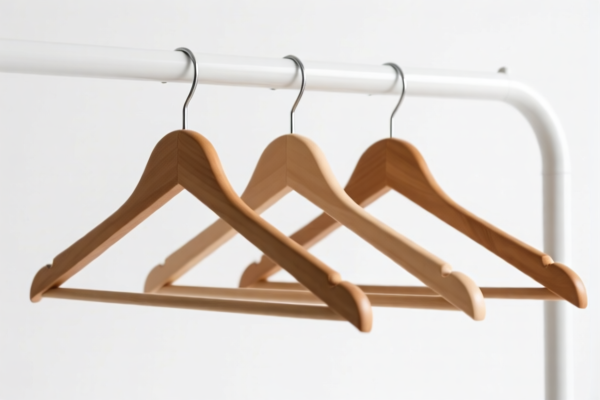

AI Analysis
🏷️ Clothing Rack (Hangers/Clothes Hangers)
🌐 HS Code Reference & Customs Clearance Guide | 2026 Latest Tariff Analysis | Professional Clearance Strategy
📌 I. Product Definition & Classification: What Exactly Is a "Clothing Rack"?
In international trade, the term "Clothing Rack" is ambiguous and directly impacts tariff rates, especially for imports into the United States from China. The classification depends entirely on the primary material and structural design:
- Plastic Hangers/Racks: Lightweight, injection-molded, or thermoformed. These fall under Chapter 39.
- Metal Hangers/Racks: Iron, steel, or aluminum constructions. These typically fall under Chapter 73 (Articles of Iron or Steel) or Chapter 76 (Aluminum), but often default to 7326 (Other articles of iron or steel) for general hardware-like racks.
⚠️ Key Distinction:
- If the product is Plastic: It is classified as "Other articles of plastics" → HS 3926.90.
- If the product is Metal (Iron/Steel): It is classified as "Other articles of iron or steel" → HS 7326.20.
- Note: The specific HS codes below are derived from detailed US HTSUS interpretations for goods originating in China, subject to significant Section 301 and IEEPA tariffs.
📦 II. HS Code Classification Details (2026 Latest Tariff Authority Comparison)
| HS Code | Product Description | Material | Application Scenario | Tariff Impact |
|---|---|---|---|---|
3926.90.99.89 |
Other articles of plastic, not elsewhere specified | Plastic | Basic plastic hangers, plastic wall-mounted racks, cheap bulk hangers | 🟡 High (22.8%) |
3926.90.25.00 |
Other articles of plastic, for specific plastic uses | Plastic | Engineered plastic racks, commercial-grade plastic storage systems | 🟠 Higher (24.0%) |
7326.20.00.20 |
Other articles of iron or steel | Iron/Steel | Metal clothing racks, industrial steel hangers, metal garment stands | 🔴 Very High (88.9%) |
🔍 Critical Insight:
- Plastic vs. Metal: Metal racks face drastically higher tariffs (nearly 90%) due to specific add-on duties for steel/aluminum products, whereas plastic racks face moderate rates (~23-24%). - Sub-heading Nuance:3926.90.25.00is often used for more specific plastic applications, while3926.90.99.89is the "catch-all" for general plastic articles like standard hangers.
💰 III. 2026 Latest Tariff Rate Breakdown (Including Surcharges & Policy Add-ons)
✅ Applicable Country: United States (US)
✅ Origin: China (CN)
✅ Effective Date: Post-2025 policies (Current active rates)
🎯 1. 3926.90.99.89 – Other Plastic Articles (Standard Plastic Hangers/Racks)
| Item | Content |
|---|---|
| Base Duty Rate | 5.3% (Ad Valorem) |
| Section 301 Surcharge | +7.5% |
| Section 122 Duty | +10.0% |
| Total Tariff Rate | 22.8% |
| Tax Calculation | CIF Value × 22.8% |
| De Minimis Exemption | ❌ Not Applicable (Section 321 de minimis does not apply to Section 301/122 goods) |
| Legal Basis Path | USITC:3926.90.99.89 → Section 301: Footnote 9903.01.01 → Section 122 |
📌 Explanation:
- This is the most common code for plastic hangers.
- The 22.8% rate is a composite of the base tariff and political trade war surcharges.
- While lower than metal racks, it is still significant for low-margin plastic goods.
🎯 2. 3926.90.25.00 – Other Plastic Articles (Specific Plastic Uses)
| Item | Content |
|---|---|
| Base Duty Rate | 6.5% (Ad Valorem) |
| Section 301 Surcharge | +7.5% |
| Section 122 Duty | +10.0% |
| Total Tariff Rate | 24.0% |
| Tax Calculation | CIF Value × 24.0% |
| De Minimis Exemption | ❌ Not Applicable |
| Legal Basis Path | USITC:3926.90.25.00 → Section 301: Footnote 9903.01.01 → Section 122 |
📌 Explanation:
- Slightly higher than3926.90.99.89due to a higher base duty (6.5% vs 5.3%).
- Use this code only if the plastic item fits a specific sub-category definition (e.g., specialized industrial plastic containers/racks) rather than general consumer hangers.
🎯 3. 7326.20.00.20 – Other Articles of Iron or Steel (Metal Racks/Hangers)
| Item | Content |
|---|---|
| Base Duty Rate | 3.9% (Ad Valorem) |
| Section 301 Surcharge | +25.0% |
| Section 122 Duty | +10.0% |
| Steel/Aluminum Add-on | +50.0% |
| Total Tariff Rate | 88.9% |
| Tax Calculation | CIF Value × 88.9% |
| De Minimis Exemption | ❌ Not Applicable |
| Legal Basis Path | USITC:7326.20.00.20 → Section 301 → Section 122 → USITC Steel/Aluminum Footnote |
📌 Explanation:
- WARNING: This tariff rate is extremely high (88.9%).
- The +50% steel/aluminum add-on is critical. Even though the base duty is low (3.9%), the combination of Section 301 (25%), Section 122 (10%), and the specific Steel/Aluminum penalty (50%) creates a prohibitive tax barrier.
- Conclusion: Importing metal clothing racks from China to the US is economically unviable unless the product value is extremely high or exemptions apply.
🛠️ IV. Customs Clearance Practical Advice (Real-World Pitfall Guide)
✅ 1. Preparation Checklist (Essential Documents)
| Document | Required? | Purpose |
|---|---|---|
| ✅ Product Specification Sheet | ✔️ | Must clearly state material (e.g., "100% Polypropylene Plastic" or "Steel Alloy"). Vague descriptions like "Clothing Rack" lead to misclassification. |
| ✅ Material Declaration | ✔️ | Explicitly declare if components are mixed. If it has a plastic hook but steel wire frame, it may still be classified as metal. |
| ✅ Commercial Invoice | ✔️ | Must match the HS Code. Do not list "Home Decor" if it is clearly "Clothing Hanger." |
| ✅ Proof of Origin | ✔️ | Critical for proving China origin (triggers tariffs) or other origins (may avoid tariffs). |
| ✅ Photos of Product | ✔️ | Show the entire product, including any tags or molds that indicate material type. |
✅ 2. Declaration Tips (Key Mantras)
🔥 "Material is King, Don't Guess, Declare Clear!"
| Scenario | Correct Declaration | Wrong Practice |
|---|---|---|
| Plastic Hanger | 3926.90.99.89 – "Plastic Clothing Hangers" |
Misdeclaring as "Home Accessory" → 0% (Risk of Penalty) |
| Metal Rack | 7326.20.00.20 – "Steel Clothing Rack" |
Avoiding declaration → Seizure & Heavy Fines |
| Mixed Materials | Analyze principal material. If >50% weight/functional value is steel, use 7326. |
Splitting shipment into "Plastic Hook" + "Steel Wire" → Customs Rejection for Splitting |
✅ 3. Special Circumstances Handling
| Situation | Handling Advice |
|---|---|
| Plastic with Metal Parts | If the metal part is minor (e.g., a small hook insert), argue for Plastic (3926) classification based on "Essential Character." Provide engineering drawings. |
| Origin Diversification | If importing from Vietnam, Thailand, or Mexico, tariffs may be significantly lower or exempt. Check FTAs (USMCA for Mexico). |
| Section 301 Exclusions | Check the USTR exclusion list. Some plastic hangers may have had exclusions in the past, but most have expired. Verify current status. |
| De Minimis Risk | Do NOT use $800 de minimis (Section 321) for these items if they are subject to Section 301/122 duties. CBP is actively blocking this for Chinese-origin goods under these codes. |
🌍 V. Global Market Comparison (2026 Latest)
| Country/Region | Recommended HS Code | Estimated Duty (China Origin) | Certification | Notes |
|---|---|---|---|---|
| 🇺🇸 USA | 3926.90.99.89 (Plastic)7326.20.00.20 (Metal) |
22.8% (Plastic) 88.9% (Metal) |
FCC (if electronic), CA Prop 65 | Metal racks are practically banned due to cost. |
| 🇨🇳 China | 3926.90.99.89 |
5.3% | CCC (if applicable) | Low export barrier. |
| 🇪🇺 EU | 3926.90.97 (Plastic) |
1.7% (Plastic) | CE, REACH | No Section 301 equivalent. Much cheaper than US. |
| 🇬🇧 UK | 3926.90.97 (Plastic) |
2.0% (Plastic) | UKCA | Post-Brexit alignment with EU. |
| 🇯🇵 Japan | 3926.90.90 (Plastic) |
3.0% (Plastic) | PSE (if electronic) | Moderate duty, no major political surcharges. |
📌 Conclusion:
- The US market is hostile to Chinese-made clothing racks, especially metal ones.
- Plastic racks face a manageable but significant 22.8% tax.
- Metal racks face a prohibitive 88.9% tax.
- Strategy: Consider sourcing plastic racks from non-China origins (e.g., Vietnam) to avoid Section 301/122 duties, or restructure supply chain.
📌 VI. Common Mistakes & Pitfall Guide (Lessons Learned)
❌ Mistake 1: Declaring Metal Racks as "Plastic" to avoid 88.9% tariff
👉 Consequence: Customs audit reveals steel content → 100% Duty + 200% Penalty + Criminal Investigation.
❌ Mistake 2: Using De Minimis ($800) for Section 301 Goods
👉 Consequence: CBP rejects entry, seizes goods, and blacklists the importer for "circumvention."
❌ Mistake 3: Ambiguous Description "Clothing Organizer"
👉 Consequence: Customs officer chooses the worst-case HS code (often Metal/Hardware) → Unexpected 88.9% bill.
❌ Mistake 4: Ignoring Section 122 Duties
👉 Consequence: Underestimating total landed cost. Section 122 adds 10% on top of everything.
✅ Correct Approach:
"Polypropylene Plastic Clothing Hanger, 50 Count, Model XYZ, Made in China, HS 3926.90.99.89"
🎯 VII. Conclusion: Professional Declaration, Save Money, Ensure Smooth Clearance
🎯 Remember the Mantra:
🔹 "Plastic is Cheap (22.8%), Metal is Expensive (88.9%)."
🔹 "Don't Split Shipments. Don't Lie About Material."
🔹 "Check Origin. Check Tariffs. Calculate Landed Cost Before Shipping."
📌 Pro Tip:
If your business relies on low-cost clothing racks, diversify your supply chain. Consider sourcing from Vietnam or Indonesia where plastic goods may have lower or zero Section 301/122 tariffs. For metal goods, local sourcing or third-country assembly may be the only viable option.
📣 Immediate Action:
📞 Contact a licensed Customs Broker + Provide Product Material Data Sheet + Apply for Pre-Ruling (If Available)
🚀 Make your supply chain Tariff-Resilient, Compliant, and Profitable!
✨ Professional Clearance Starts with Precise Classification!
💼 Your Cost Savings Are Calculated in Every Digit of the HS Code!
Customer Reviews
About HS Code Classification
The Harmonized System (HS) is an internationally standardized nomenclature developed by the World Customs Organization (WCO) to classify traded products. Over 200 countries use the HS system as the basis for customs tariffs, trade statistics, and import/export regulations.
Each HS code follows a hierarchical structure:
- Chapter (2 digits) — Broad category of goods (e.g., Chapter 84: Machinery and Mechanical Appliances)
- Heading (4 digits) — More specific grouping within the chapter
- Subheading (6 digits) — Internationally standardized breakdown, used by all WCO member countries
- National subdivisions (8-10 digits) — Country-specific extensions for further classification, such as US HTSUS 10-digit codes
Correct HS code classification is essential for smooth customs clearance, accurate duty payment, and compliance with trade regulations. Misclassification can lead to customs delays, overpayment of duties, or penalties.
When importing from CN to US, the applicable tariff rates may include:
- Most-Favored-Nation (MFN) rate — The standard duty rate applied to WTO members
- General rate — Applied to countries without trade agreements
- Trade remedy duties — Additional tariffs such as Section 301 (anti-dumping), Section 232 (national security), or countervailing duties
The information provided on this page is for reference purposes only. For official classification, please consult with your local customs authority or a licensed customs broker.