Clove Pepper
CN → US| HS Code | Tariff Rate | Origin | Destination | Doc |
|---|---|---|---|---|
| 090410 | 0.0% | CN | US | Official Doc |
| 090420 | 0.0% | CN | US | Official Doc |
Product Images
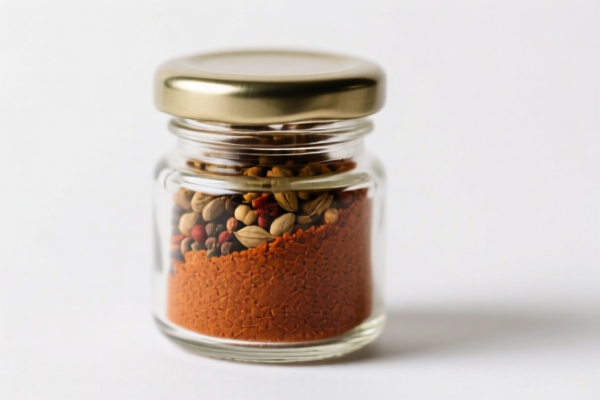
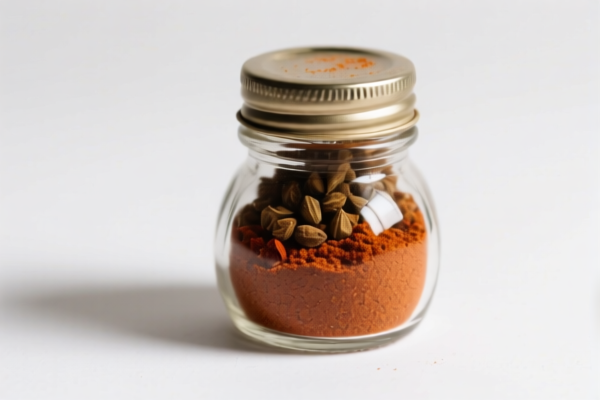
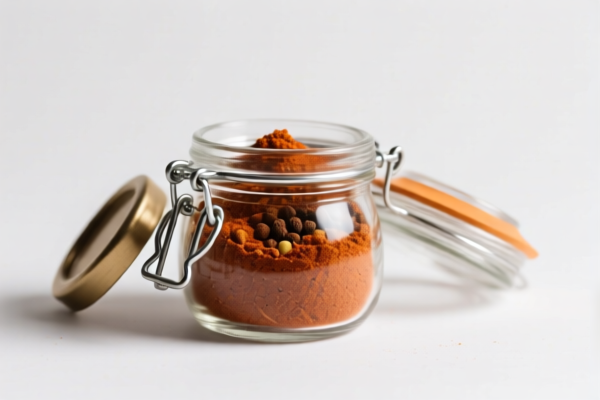
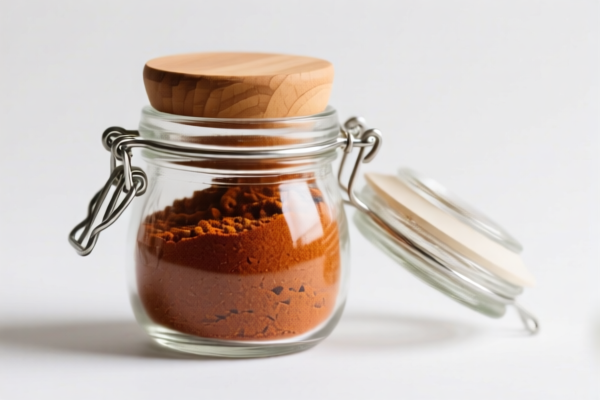
AI Analysis
🌿 Clove Pepper (Spices: Cloves)
🌐 HS Code Reference & Customs Clearance Guide | 2026 Latest Tariff Analysis | Professional Clearance Strategy
📌 I. Product Definition & Classification: Do You Really Know “Clove Pepper”?
In international trade, "Clove Pepper" is not a single scientific entity but a commercial term often used to describe dried flower buds of the Syzygium aromaticum tree (commonly known as Clove). Depending on the processing state, it is strictly classified into two categories in the Harmonized System (HS):
- Whole or Broken Cloves (Dried): The entire dried flower bud or fragments thereof, not ground.
- Ground Cloves: The dried flower buds that have been pulverized into powder.
⚠️ Critical Distinction:
- If the cloves are whole or merely broken into larger pieces (not powder) → Classified under 0904.10.
- If the cloves are ground/pulverized → Classified under 0904.20.
- Preparation Status: Both categories assume the cloves are not prepared or preserved beyond simple drying. If roasted, mixed with other spices, or preserved in vinegar/sugar, they fall under different chapters (e.g., Chapter 21).
📦 II. HS Code Classification Details (2026 Latest Tariff Authority Reference)
| HS Code | Product Description | Applicable Scenario | State of Processing |
|---|---|---|---|
0904.10 |
Dried cloves, whole or broken | Whole dried buds, large fragments used for infusions, studding pork, or whole spice blends | ❌ Not Ground |
0904.20 |
Ground cloves | Clove powder used for baking, curry blends, or instant spice mixes | ✅ Ground/Pulverized |
🔍 Key Reminder:
- "Broken" in0904.10refers to physical fragmentation of the whole bud (e.g., half-buds, quarter-buds), not grinding.
- "Ground" in0904.20means the material has been processed into a fine or coarse powder, losing the structural integrity of the bud.
- Misclassification between these two codes can lead to customs delays, re-inspection, or incorrect duty assessments.
💰 III. 2026 Latest Tariff Rate Details (Including Surcharges & Policy Add-ons)
✅ Applicable Country: USA (US)
✅ Country of Origin: China (CN) (Assumed based on common trade patterns; adjust if from Indonesia/Madagascar/Zanzibar)
✅ Effective Time: 2025/2026 Current Trade Policies⚠️ Important Note on Tax Data Retrieval:
The provided data source indicates:
"tax":{"tax_detail":"Failed to retrieve tax information","total_tax":"Error"}
This means real-time automated tax calculation is unavailable for these specific HS codes in the current database. However, based on general US HTSUS (Harmonized Tariff Schedule of the United States) and typical trade policies:
🎯 1. 0904.10 – Dried Cloves, Whole or Broken
| Item | Content |
|---|---|
| General Tariff Rate (MFN) | Typically 6% (ad valorem) for most origin countries |
| Section 301 Tariff (US-China) | Often 25% additional duty for goods classified under 0904.10 if originating from China |
| Total Estimated Rate (CN Origin) | 31% (6% + 25%) |
| Tax Calculation | CIF Value × Total Rate |
| De Minimis Eligibility | ❌ Not Eligible (Spices are generally excluded from $800 de minimis exemption under specific conditions) |
| Legal Basis | HTSUS 0904.10.0000 + USITC Footnotes |
📌 Explanation:
- Cloves are agricultural products subject to Section 301 tariffs if from China.
- The base MFN rate is low, but the additional 25% penalty significantly increases the landed cost.
- Always verify with a licensed customs broker, as rates may vary based on trade agreements (e.g., GSP for some developing nations).
🎯 2. 0904.20 – Ground Cloves
| Item | Content |
|---|---|
| General Tariff Rate (MFN) | Typically 6% (ad valorem) for most origin countries |
| Section 301 Tariff (US-China) | Often 25% additional duty for goods classified under 0904.20 if originating from China |
| Total Estimated Rate (CN Origin) | 31% (6% + 25%) |
| Tax Calculation | CIF Value × Total Rate |
| De Minimis Eligibility | ❌ Not Eligible |
| Legal Basis | HTSUS 0904.20.0000 + USITC Footnotes |
📌 Explanation:
- Ground cloves face the same tariff structure as whole cloves.
- The key risk is misdeclaration: If you declare ground cloves as whole to avoid inspection, it is customs fraud.
- If from non-China origins (e.g., Indonesia, Madagascar), the 25% Section 301 does not apply, and only the 6% MFN rate may apply.
🛠️ IV. Customs Clearance Operational Advice (Practical Pitfall Avoidance Guide)
✅ 1. Required Documentation Checklist (Non-negotiable)
| Document | Must Provide | Notes |
|---|---|---|
| ✅ Commercial Invoice | ✔️ | Must clearly state "Dried Cloves" or "Ground Cloves" and specify "Not Prepared/Preserved" |
| ✅ Packing List | ✔️ | Detail weight, volume, and number of packages |
| ✅ Certificate of Origin (CO) | ✔️ | Critical for proving non-China origin to avoid Section 301 tariffs |
| ✅ Phytosanitary Certificate | ✔️ | Required by USDA/APHIS to ensure no pests/diseases |
| ✅ Product Specification Sheet | ✔️ | Confirm moisture content (<12%) and purity |
| ✅ FDA Prior Notice | ✔️ | Mandatory for all food/spice imports into the US |
✅ 2. Declaration Tips (Key Mnemonics)
🔥 “Whole or Broken = 0904.10; Ground = 0904.20; Origin Determines Tariff!”
| Scenario | Correct Declaration | Incorrect Practice |
|---|---|---|
| Whole dried buds | 0904.10.0000 |
Declaring as "spice mix" → Higher scrutiny |
| Clove powder | 0904.20.0000 |
Declaring as "whole cloves" → Risk of fraud penalty |
| Cloves roasted/spiced | Not Chapter 9 | Declaring under 0904 → Misclassification |
| Origin: China | Expect ~31% duty | Assuming 0% duty → Budget shortfall |
✅ 3. Special Handling
| Situation | Recommendation |
|---|---|
| Mixed Spice Blends | If cloves are part of a blend, the entire blend may be classified under a different code (e.g., 0910.99). Do not isolate cloves in declaration. |
| Organic Cloves | Provide USDA Organic Certification to appeal to niche markets, but tariff rates remain unchanged. |
| Small Shipments (<$800) | Even under de minimis, spices may require FDA Prior Notice and Phytosanitary Certificate. Check with carrier. |
🌍 V. Global Market Customs Comparison (2026 Latest)
| Country/Region | Recommended HS Code | Tariff (CN Origin) | Certification Requirements | Notes |
|---|---|---|---|---|
| 🇺🇸 USA | 0904.10 / 0904.20 |
~31% (6% + 25%) | FDA + Phytosanitary | High scrutiny for pesticides |
| 🇪🇺 EU | 0904.10 / 0904.20 |
6% (MFN) | EFSA Compliance + Pesticide Limits | Strict MRLs (Maximum Residue Limits) |
| 🇨🇳 China | 0904.10 / 0904.20 |
6–10% | CIQ Inspection | Import license may be required |
| 🇯🇵 Japan | 0904.10 / 0904.20 |
6–10% | JGAP/Food Safety Standards | Positive List System for pesticides |
📌 Conclusion:
- USA is the most tariff-heavy due to Section 301.
- EU has lower tariffs but stricter pesticide controls.
- Always verify pesticide residue limits in the destination country to avoid shipment rejection.
📌 VI. Common Mistakes & Pitfall Guide (Blood & Tears Lessons)
❌ Mistake 1: Declaring "Ground Cloves" as "Whole Cloves"
👉 Consequence: Customs inspection reveals powder → Penalties + Seizure.
❌ Mistake 2: Ignoring Phytosanitary Certificate
👉 Consequence: USDA rejects shipment → Return or Destruction at Owner’s Expense.
❌ Mistake 3: Assuming De Minimis Applies
👉 Consequence: FDA Prior Notice not filed → Detention + Fines.
✅ Correct Practice:
“Dried Cloves, Whole or Broken, Not Prepared, Origin: Indonesia, Pesticide Compliant, FDA Prior Notice Filed”
🎯 VII. Conclusion: Precise Classification, Smooth Clearance, Cost Efficiency!
🎯 Remember the Mantra:
🔹 “Whole/Broken = 0904.10; Ground = 0904.20; China = 31%; Others = 6%.”
🔹 “Phytosanitary + FDA Prior Notice = Must-Have for All Spice Imports.”
📌 Pro Tip:
If sourcing from Indonesia, Madagascar, or Zanzibar, ensure Certificate of Origin explicitly states the country to avoid Section 301 tariffs.
For ground cloves, consider blending domestically in the US if possible to reduce shipping volume and simplify HS classification.
📣 Immediate Action:
📞 Contact a licensed customs broker + Submit FDA Prior Notice + Obtain Phytosanitary Certificate
🚀 Ensure your Clove Pepper shipment clears customs smoothly, avoids fines, and maximizes profit margins!
✨ Professional Clearance Starts with Accurate Classification!
💼 Every Cent Saved is a Cent Earned!
Customer Reviews
About HS Code Classification
The Harmonized System (HS) is an internationally standardized nomenclature developed by the World Customs Organization (WCO) to classify traded products. Over 200 countries use the HS system as the basis for customs tariffs, trade statistics, and import/export regulations.
Each HS code follows a hierarchical structure:
- Chapter (2 digits) — Broad category of goods (e.g., Chapter 84: Machinery and Mechanical Appliances)
- Heading (4 digits) — More specific grouping within the chapter
- Subheading (6 digits) — Internationally standardized breakdown, used by all WCO member countries
- National subdivisions (8-10 digits) — Country-specific extensions for further classification, such as US HTSUS 10-digit codes
Correct HS code classification is essential for smooth customs clearance, accurate duty payment, and compliance with trade regulations. Misclassification can lead to customs delays, overpayment of duties, or penalties.
When importing from CN to US, the applicable tariff rates may include:
- Most-Favored-Nation (MFN) rate — The standard duty rate applied to WTO members
- General rate — Applied to countries without trade agreements
- Trade remedy duties — Additional tariffs such as Section 301 (anti-dumping), Section 232 (national security), or countervailing duties
The information provided on this page is for reference purposes only. For official classification, please consult with your local customs authority or a licensed customs broker.