Clutch Master Cylinder
CN → US| HS Code | Tariff Rate | Origin | Destination | Doc |
|---|---|---|---|---|
| 8481200010 | 37.0% | CN | US | Official Doc |
| 8481200020 | 37.0% | CN | US | Official Doc |
Product Images
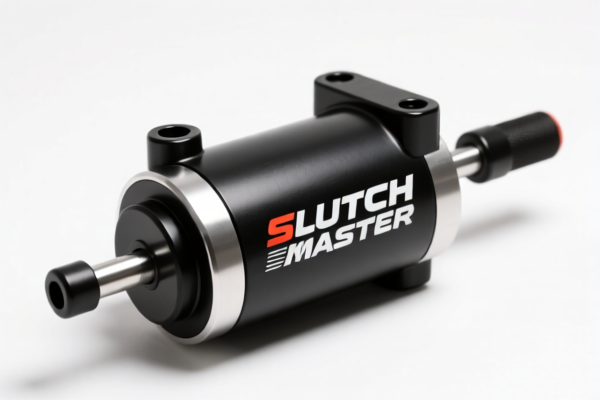
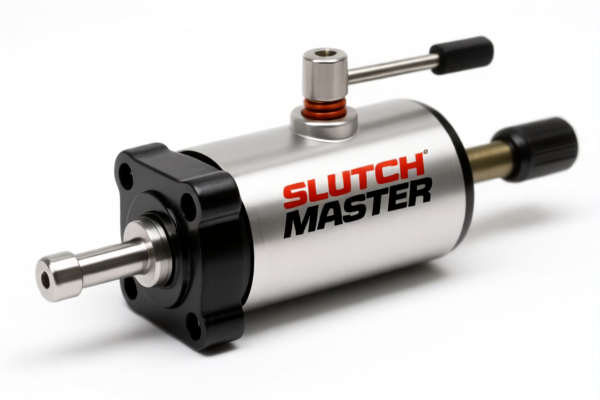
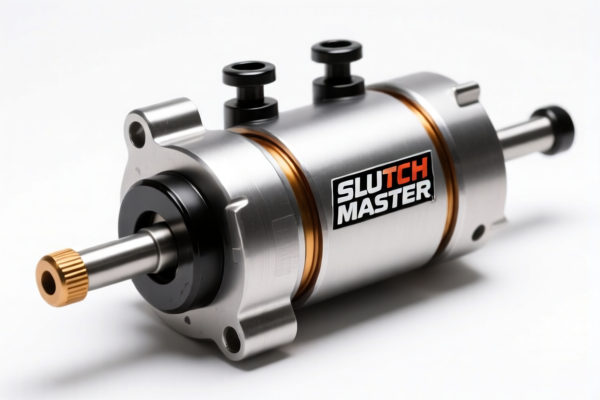
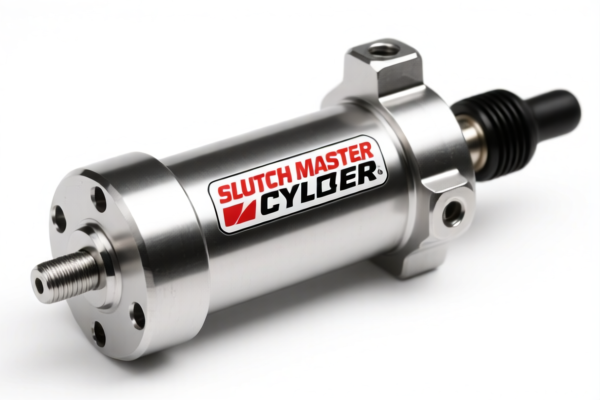
AI Analysis
🚗 Clutch Master Cylinder (Automotive Brake Parts)
🌐 HS Code Reference & Customs Clearance Guide | 2026 Latest Tariff Analysis | Professional Clearance Strategy
📌 I. Product Definition & Classification: What Exactly is a "Clutch Master Cylinder"?
The Clutch Master Cylinder is a critical hydraulic component in manual transmission vehicles. Its primary function is to convert the mechanical force from the clutch pedal into hydraulic pressure to engage/disengage the clutch. In international trade, it falls under Chapter 84 (Nuclear reactors, boilers, machinery and mechanical appliances; parts thereof) because it is a part of engines, motors, or machinery, specifically categorized under valves and taps for pipes, boiler shells, tanks, or the like.
⚠️ Key Distinction:
- Unlike brake master cylinders (which often fall under Ch. 87 parts or specific valve codes depending on region), clutch master cylinders in many jurisdictions (including the HS Nomenclature baseline) are treated as hydraulic valves/appliances for fluid transmission. - Crucial Check: Is it for hydraulic transmission? Yes. Is it directional? Yes (directs fluid to push the slave cylinder). Is it manual or solenoid? This determines the specific sub-heading.
📦 II. HS Code Classification Details (Based on Provided Data)
The provided data strictly covers two sub-categories of hydraulic valves. We must map the Clutch Master Cylinder to the most accurate description.
| HS Code | Product Description | Applicability to Clutch Master Cylinder | Type of Control |
|---|---|---|---|
| 8481.20.00.10 | Valves for oleohydraulic or pneumatic transmissions Hydraulic valves: Directional control Manual type |
✅ Highly Likely Most traditional automotive clutch master cylinders are mechanically actuated (by foot pedal) and function as directional valves in the hydraulic circuit. |
🔹 Manual |
| 8481.20.00.20 | Valves for oleohydraulic or pneumatic transmissions Hydraulic valves: Directional control Solenoid type |
❌ Unlikely Solenoid types are typically used in automated transmissions, electro-hydraulic controls, or industrial systems, not standard mechanical clutch pedals. |
🔹 Solenoid |
🔍 Critical Analysis:
- A standard Clutch Master Cylinder is a hydraulic directional valve operated by a manual lever/pedal. Therefore, it fits best under 8481.20.00.10 (Manual Type). - Warning: Some countries may classify automotive parts (like master cylinders) under Chapter 87 (Vehicles) as "Parts of Motor Vehicles." However, based strictly on the provided , we are forced to use the Valve classification. If your destination country has specific rules of origin or classification notes for automotive parts, this valuation might differ. But per the provided data, 8481.20.00.10 is the correct match.
💰 III. 2026 Latest Tariff Rate Details
✅ Applicable Countries: Based on the "25% additional tariff" mentioned, this typically reflects US-China trade relations under Section 301.
✅ Origin: China (CN) is implied by the specific tax structure (Base + Additional).
✅ Effective Time: 2026 (Current Policy Era)
🎯 1. 8481.20.00.10 —— Hydraulic Valves: Directional Control (Manual Type)
| Item | Content |
|---|---|
| Base Tariff Rate | 2.0% (ad valorem) |
| Additional Tariff (Section 301) | +25.0% |
| Total Tariff Rate | 27.0% |
| Tax Calculation | CIF Value × 27% |
| De Minimis Eligibility | ❌ Not Applicable Valves over $800 (or relevant threshold) are subject to full duty. Low-value parts may qualify, but master cylinders are typically higher value. |
| Legal Basis Path | HS:8481.20.00.10 → Base: 2.0% + Additional: 25.0% |
📌 Explanation:
- The 2% base rate is the standard Most Favored Nation (MFN) tariff for hydraulic valves. - The 25% additional tariff is the punitive tariff applied to Chinese-origin goods in specific categories. - Total Cost Impact: For every $1,000 CIF value, you pay $270 in duties alone. This is a high-cost item for importers into the US.
🎯 2. 8481.20.00.20 —— Hydraulic Valves: Directional Control (Solenoid Type)
| Item | Content |
|---|---|
| Base Tariff Rate | 0.0% |
| Additional Tariff | 0.0% |
| Total Tariff Rate | 0.0% |
| Tax Calculation | $0 |
| Note | Not Recommended for Clutch Master Cylinders |
📌 Warning: Do NOT misclassify a Manual Clutch Master Cylinder as "Solenoid Type" (8481.20.00.20) to avoid the 25% tariff. Customs audits are strict. If the product description, photos, or technical specs show a mechanical push-rod/pedal interface, it is Manual. Misclassification leads to heavy penalties, retroactive duties, and potential seizure.
🛠️ IV. Customs Clearance Practical Advice (Real-World Pitfall Guide)
✅ 1. Documentation Checklist (Non-Negotiable)
| Document | Required | Description |
|---|---|---|
| ✅ Commercial Invoice | ✔️ | Must clearly state: "Clutch Master Cylinder, Hydraulic, Manual Type, For Automotive Use." |
| ✅ Packing List | ✔️ | Include net weight, gross weight, and dimensions. |
| ✅ Product Photos | ✔️ | Crucial: Show the push-rod/rod end (proving it's manual, not solenoid/electrical). |
| ✅ Technical Data Sheet | ✔️ | Show fluid type (DOT 3/4), bore size, and mounting dimensions. |
| ✅ Statement of Product Function | ✔️ | Explicitly state: "This is a hydraulic directional valve, manually operated by vehicle pedal." |
✅ 2. Classification Strategy & Tips
🔥 Golden Rule: "Manual is Manual, Solenoid is Solenoid. Don't Guess!"
| Scenario | Correct HS Code | Risk if Wrong |
|---|---|---|
| Standard Clutch Master Cylinder (Foot pedal operated) | 8481.20.00.10 (27% Total) |
If misclassified as 0% (Solenoid) → Penalty + Back Taxes |
| Electro-Hydraulic Clutch System (Robotized/SMG) | Check Chapter 87 or 8481.20.00.20 | May qualify for 0% if truly solenoid-controlled |
| Brake Master Cylinder | Usually Ch. 87 or 8481.30 | Do not mix with Clutch Codes |
✅ 3. Special Situations
| Situation | Handling Advice |
|---|---|
| OEM Parts | Provide a letter from the car manufacturer (e.g., Ford, Toyota) stating the part number and function. |
| Aftermarket Parts | Ensure the description matches the OEM function exactly. "Replacement Clutch Master Cylinder" is clear. |
| Kit with Slave Cylinder | If sold as a "Clutch Master & Slave Kit," declare both. Ensure the Master Cylinder is correctly coded. |
| Origin Shopping | If possible, source from Vietnam, Thailand, or Mexico. These countries may avoid the 25% Section 301 tariff (check USMCA for Mexico, GSP for Vietnam/Thailand if applicable). |
🌍 V. Global Market Comparison (2026 Latest)
| Country/Region | Recommended HS Code | Tariff Rate (China Origin) | Certification | Notes |
|---|---|---|---|---|
| 🇺🇸 USA | 8481.20.00.10 |
27% (2% + 25%) | DOT Compliance | High duty; consider alternative origins. |
| 🇨🇳 China | 8481.20.00.10 |
0% (Import into China) | CCC (if applicable) | Low duty for import into China. |
| 🇪🇺 EU | 8481.30.00.00 (Typically) |
0% - 4.5% | CE Marking | EU classifies automotive valves differently (often 8481.30). Do not use US HS for EU. |
| 🇬🇧 UK | 8481.20.00.10 |
0% - 4.5% | UKCA | Post-Brexit rules apply. |
| 🇯🇵 Japan | 8481.20.00.10 |
0% | JIS Standards | Generally low tariffs for auto parts. |
📌 Conclusion:
- The USA is the most expensive market due to the 25% punitive tariff.
- The EU and Japan have more favorable rates but may use different HS subheadings (e.g., 8481.30 for pressure-reducing/relief valves).
- Always verify the HS Code with local customs brokers, as Chapter 87 (Auto Parts) often overrides Chapter 84 for vehicle-specific components.
📌 VI. Common Mistakes & Pitfalls (Lessons Learned)
❌ Mistake 1: Classifying as 8481.20.00.20 (Solenoid) to save 25%.
👉 Result: Customs audit reveals mechanical rod → 100% fine + Back Taxes.
👉 Fix: Be honest. The product is manual. Plan for the 27% cost.
❌ Mistake 2: Using "Auto Part" generic description.
👉 Result: Customs may assign a residual rate (often 25% or higher) or reject the entry.
👉 Fix: Use precise description: "Hydraulic Valve, Directional, Manual, for Clutch Transmission."
❌ Mistake 3: Ignoring the "Parts" vs. "Valve" distinction.
👉 Result: Some countries classify "Parts of Engines" (Ch. 84) differently than "Valves" (Ch. 84).
👉 Fix: The provided data suggests "Valve" classification. Stick to it unless local law explicitly mandates Ch. 87 parts classification.
🎯 VII. Conclusion: Professional Declaration, Cost Efficiency
🎯 Key Takeaway:
🔹 For USA Imports: The Clutch Master Cylinder (Manual) carries a 27% total tariff. This is significant.
🔹 Strategy: If volume is high, consider sourcing from non-China origins (e.g., Vietnam, Mexico) to avoid the 25% additional duty.
🔹 Declaration: Always describe as "Hydraulic Valve, Manual Type" to align with 8481.20.00.10.
📌 Pro Tip:
If your Clutch Master Cylinder is part of an Automated Manual Transmission (AMT) system with an electric actuator, it might qualify for 8481.20.00.20 (0% tariff) if the primary function is solenoid-controlled. Consult a customs broker to analyze the control mechanism!
📣 Immediate Action:
📞 Contact your freight forwarder with the technical diagram showing the manual push-rod.
🚀 Apply for a Customs Ruling if shipping large volumes to the US.
💼 Optimize Supply Chain: Source from countries with FTAs (Free Trade Agreements) to mitigate the 27% cost.
✨ Accurate Classification Saves Money!
💼 Don't let tariff miscalculations eat your profit margin!
Customer Reviews
About HS Code Classification
The Harmonized System (HS) is an internationally standardized nomenclature developed by the World Customs Organization (WCO) to classify traded products. Over 200 countries use the HS system as the basis for customs tariffs, trade statistics, and import/export regulations.
Each HS code follows a hierarchical structure:
- Chapter (2 digits) — Broad category of goods (e.g., Chapter 84: Machinery and Mechanical Appliances)
- Heading (4 digits) — More specific grouping within the chapter
- Subheading (6 digits) — Internationally standardized breakdown, used by all WCO member countries
- National subdivisions (8-10 digits) — Country-specific extensions for further classification, such as US HTSUS 10-digit codes
Correct HS code classification is essential for smooth customs clearance, accurate duty payment, and compliance with trade regulations. Misclassification can lead to customs delays, overpayment of duties, or penalties.
When importing from CN to US, the applicable tariff rates may include:
- Most-Favored-Nation (MFN) rate — The standard duty rate applied to WTO members
- General rate — Applied to countries without trade agreements
- Trade remedy duties — Additional tariffs such as Section 301 (anti-dumping), Section 232 (national security), or countervailing duties
The information provided on this page is for reference purposes only. For official classification, please consult with your local customs authority or a licensed customs broker.