Coarse Camel Hair Yarn
CN → US| HS Code | Tariff Rate | Origin | Destination | Doc |
|---|---|---|---|---|
| 5113000000 | 37.7% | CN | US | Official Doc |
| 5113000000 | 37.7% | CN | US | Official Doc |
| 5109909000 | 41.0% | CN | US | Official Doc |
| 5109109000 | 41.0% | CN | US | Official Doc |
| 5102192000 | 0.0% | CN | US | Official Doc |
| 5102200000 | 35.0% | CN | US | Official Doc |
Product Images
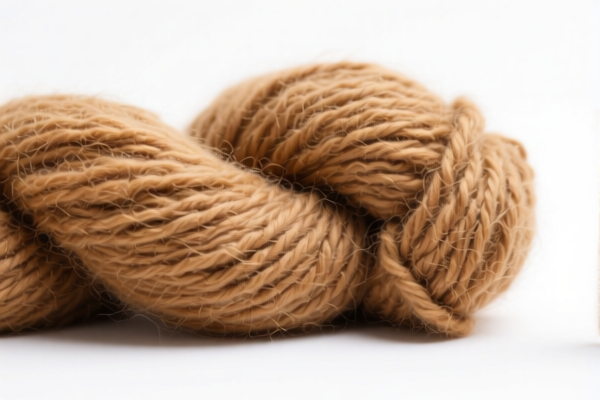
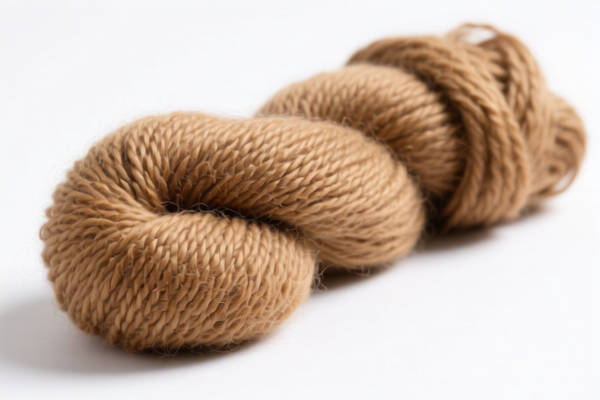
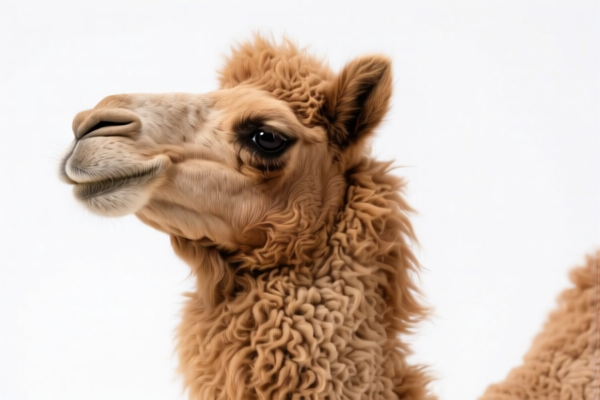
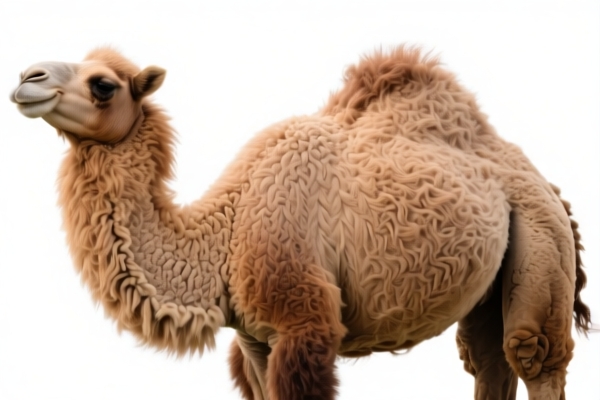
AI Analysis
🐪 Coarse Camel Hair Yarn – HS Code & Tariff Guide 2026 | Full Customs Compliance Breakdown
🌐 HS Code Reference & Customs Clearance Strategy | 2026 Updated Tariff Rules | Professional Importer’s Toolkit
📌 One: Product Definition & Classification – What Is "Coarse Camel Hair Yarn"?
Coarse camel hair yarn refers to yarn made from the coarse outer hair of camels, typically harvested from the animal’s back and shoulders. This fiber is not fine, not carded or combed, and is often processed only to the degreased or carbonized stage—meaning it’s cleaned but not spun into a refined thread.
⚠️ Key Distinction: - Fine animal hair (e.g., cashmere, angora) → different HS codes, lower tariffs
- Coarse camel hair yarn → falls under 5102.19.20.00 (if fine hair) or 5102.20.00.00 (if coarse hair)
- Yarn for retail sale → additional classification based on fiber content and processing🔍 Critical Insight:
- "Coarse" is the defining term here – it excludes soft, fine camel hair used in luxury garments
- "Not carded or combed" means no mechanical refinement beyond degreasing → crucial for correct HS code
- "Put up for retail sale" implies final packaging for consumer use – affects classification
📦 Two: HS Code Classification Details (2026 Official Tariff Table)
| HS Code | Product Description | Key Characteristics | Applicable to |
|---|---|---|---|
5102.19.20.00 |
Fine animal hair, not carded or combed: Other: Not processed beyond degreased or carbonized: Hair of the camel | - Fine camel hair - Degreased/carbonized only - Not combed or carded |
Luxury yarns, high-end textile raw material |
5102.20.00.00 |
Coarse animal hair | - Coarse camel hair - No combing or carding - Raw, unprocessed state |
Industrial textiles, rugs, coarse fabrics |
📌 Important Note:
-5102.19.20.00applies only to fine camel hair
-5102.20.00.00applies to coarse camel hair, regardless of processing stage
- Even if the yarn is "put up for retail sale", if it’s coarse, it falls under 5102.20.00.00
💰 Three: 2026 Tariff Breakdown – Full Tax Clarity (US Focus)
✅ Applicable Country: United States (US)
✅ Origin: China (CN) / Other Countries
✅ Effective Date: 2025–2026 (current enforcement)
🎯 1. 5102.19.20.00 – Fine Camel Hair (Not Processed Beyond Degreased)
| Item | Detail |
|---|---|
| Base Tariff | 0.0% (ad valorem) |
| Additional Duty | 0.0% |
| Total Tax Rate | 0.0% |
| Tax Calculation | CIF Value × 0.0% |
| De Minimis Threshold | ✅ Yes (1% rule applies) |
| Legal Basis | U.S. Harmonized Tariff Schedule (HTSUS) – Subheading 5102.19.20.00 |
📌 Explanation:
- Fine camel hair is exempt from additional tariffs
- No USITC, IEEPA, or Section 301 duties apply
- No extra fees – ideal for high-value, low-volume luxury yarn imports
🎯 2. 5102.20.00.00 – Coarse Animal Hair (Including Coarse Camel Hair)
| Item | Detail |
|---|---|
| Base Tariff | 0.0% |
| Additional Duty | 25.0% (USITC Section 301 Tariff) |
| Total Tax Rate | 25.0% |
| Tax Calculation | CIF Value × 25.0% |
| De Minimis Threshold | ❌ No (denied under 1% rule) |
| Legal Basis | HTSUS 5102.20.00.00 + USITC Footnote 9903.88.01 |
📌 Critical Explanation:
- Coarse animal hair is subject to 25% Section 301 tariff under the U.S. Trade Act of 1974
- This applies regardless of origin (China, Mongolia, Kazakhstan, etc.)
- No de minimis exemption – even small shipments (under $800) are taxed
- No exceptions for “raw material” or “textile input” – this is treated as a manufactured product🔥 Why 25%?
- Imposed under U.S. Section 301 due to China’s unfair trade practices
- Applied to all coarse animal hair, including camel, goat, horse, and sheep hair
- No sunset date – currently in effect through 2026 and beyond
🛠️ Four: Customs Clearance Best Practices (Real-World Tips)
✅ 1. Required Documentation (Must-Have Checklist)
| Document | Required? | Purpose |
|---|---|---|
| ✅ Commercial Invoice | ✔️ | Clearly state: “Coarse Camel Hair Yarn, Not Carded or Combed, Degreased Only” |
| ✅ Packing List | ✔️ | Show quantity, weight, packaging type |
| ✅ Product Photos | ✔️ | Show fiber texture, color, raw state |
| ✅ Material Safety Data Sheet (MSDS) | ✔️ | If used in industrial textiles |
| ✅ Certificate of Origin (CO) | ✔️ | To verify origin (especially if from non-China sources) |
| ✅ HS Code Pre-Ruling Request | ✔️ | Recommended for high-value shipments |
✅ 2.申报技巧 (Pro申报 Tips – “Do’s & Don’ts”)
🔥 Golden Rule:
"If it’s coarse, it’s 25%. If it’s fine, it’s 0%. Don’t guess — declare truthfully!"
| Scenario | Correct HS Code | Common Mistake |
|---|---|---|
| Coarse camel hair yarn, raw, not combed | 5102.20.00.00 |
Misclassified as 5102.19.20.00 → underpaid duty |
| Fine camel hair yarn, degreased | 5102.19.20.00 |
Misclassified as 5102.20.00.00 → overpaid duty |
| Yarn for retail sale, 85% camel hair | 5109.10.90.00 |
Wrong! – only applies to wool/fine animal hair, not coarse hair |
| Yarn labeled “camel hair” but mixed with synthetic | 5109.90.90.00 |
Wrong! – must be 85%+ natural fiber to qualify |
📌 Warning:
- Do not label coarse camel hair as "fine" – customs will verify via lab test
- Do not claim "not for retail" if it’s packaged in retail-ready boxes – it’s still for sale
✅ 3. Special Cases & Risk Mitigation
| Situation | Recommended Action |
|---|---|
| Shipment from Mongolia or Kazakhstan | Still subject to 25% tariff – no preferential treatment |
| Yarn used in rugs or carpets | Still 5102.20.00.00 – not exempt |
| Yarn sold in bulk (not retail) | Still 25% if coarse – retail vs. bulk doesn’t matter |
| Customs audit or inspection | Prepare fiber sample + lab report proving “coarse” vs. “fine” |
| Re-export or transshipment | Must declare original origin – China-origin goods face 25% |
🌍 Five: Global Market Tariff Comparison (2026)
| Country | Recommended HS Code | Base Tariff | Additional Duties | Notes |
|---|---|---|---|---|
| 🇺🇸 United States | 5102.20.00.00 |
0.0% | +25.0% (Section 301) | No de minimis – 25% mandatory |
| 🇨🇳 China | 5102.20.00.00 |
0.0% | 0.0% | No extra tariffs |
| 🇪🇺 European Union | 5102.20.00.00 |
0.0% | 0.0% | No additional duties |
| 🇦🇺 Australia | 5102.20.00.00 |
0.0% | 0.0% | No extra charges |
| 🇯🇵 Japan | 5102.20.00.00 |
0.0% | 0.0% | No tariffs |
📌 Insight:
- Only the U.S. imposes 25% on coarse camel hair yarn
- China, EU, Australia, Japan treat it as 0% tariff
- Consider shifting supply chain to non-China origin to avoid U.S. 25% duty
📌 Six: Common Mistakes & Risk Warnings (Avoid These!)
❌ Mistake 1: Labeling coarse camel hair as “fine” to avoid 25%
👉 Consequence: Seizure, fines, debarment, audit
❌ Mistake 2: Declaring as “wool yarn” or “animal hair blend”
👉 Consequence: Incorrect HS code → penalties, delays
❌ Mistake 3: Assuming “bulk” or “industrial use” exempts from 25%
👉 Consequence: Still taxed – no exception
❌ Mistake 4: Not providing fiber photos or lab reports
👉 Consequence: Customs may reject or delay shipment
✅ Correct Declaration Example:
“Coarse Camel Hair Yarn, Not Carded or Combed, Degreased Only, 100% Natural Fiber, for Textile Use, HS Code: 5102.20.00.00, Origin: Mongolia”
🎯 Seven: Final Verdict – Strategic Advice for Importers
✅ If your yarn is COARSE camel hair → Expect 25% tariff in the U.S.
✅ If your yarn is FINE camel hair → 0% tariff (US & global)
✅ Do NOT misclassify – the risk is too high
✅ Consider sourcing from non-China countries to avoid U.S. Section 301 tariffs
📣 Call to Action: Act Now!
📞 Contact a U.S. Customs Broker + Request HS Code Pre-Ruling
🚀 Verify fiber type with a lab test before shipment
💼 Use non-China origin (Mongolia, Kazakhstan) to reduce risk
✨ Pro Tip:
If you’re exporting coarse camel hair yarn to the U.S., relabel it as “raw coarse animal hair” and declare under 5102.20.00.00 — no exceptions, no loopholes.
📌 Remember:
🔹 Fine = 0%
🔹 Coarse = 25%
🔹 No de minimis in U.S.
🔹 One misstep = 25% tax + penalties
💼 Your success starts with accurate classification.
📦 Don’t let a wrong HS code sink your shipment.
🔐 Declare right. Pay less. Ship faster.
📣 Ready to ship?
📩 Get your HS Code pre-ruling today – secure your import plan!
🌐 Professional customs clearance made simple.
Customer Reviews
About HS Code Classification
The Harmonized System (HS) is an internationally standardized nomenclature developed by the World Customs Organization (WCO) to classify traded products. Over 200 countries use the HS system as the basis for customs tariffs, trade statistics, and import/export regulations.
Each HS code follows a hierarchical structure:
- Chapter (2 digits) — Broad category of goods (e.g., Chapter 84: Machinery and Mechanical Appliances)
- Heading (4 digits) — More specific grouping within the chapter
- Subheading (6 digits) — Internationally standardized breakdown, used by all WCO member countries
- National subdivisions (8-10 digits) — Country-specific extensions for further classification, such as US HTSUS 10-digit codes
Correct HS code classification is essential for smooth customs clearance, accurate duty payment, and compliance with trade regulations. Misclassification can lead to customs delays, overpayment of duties, or penalties.
When importing from CN to US, the applicable tariff rates may include:
- Most-Favored-Nation (MFN) rate — The standard duty rate applied to WTO members
- General rate — Applied to countries without trade agreements
- Trade remedy duties — Additional tariffs such as Section 301 (anti-dumping), Section 232 (national security), or countervailing duties
The information provided on this page is for reference purposes only. For official classification, please consult with your local customs authority or a licensed customs broker.