Coarse Parboiled Wheat
CN → US| HS Code | Tariff Rate | Origin | Destination | Doc |
|---|---|---|---|---|
| 1104299000 | 37.7% | CN | US | Official Doc |
| 1103110020 | 0.0% | CN | US | Official Doc |
| 1103110040 | 0.0% | CN | US | Official Doc |
| 1001190051 | 0.0% | CN | US | Official Doc |
| 1104291000 | 36.2% | CN | US | Official Doc |
Product Images


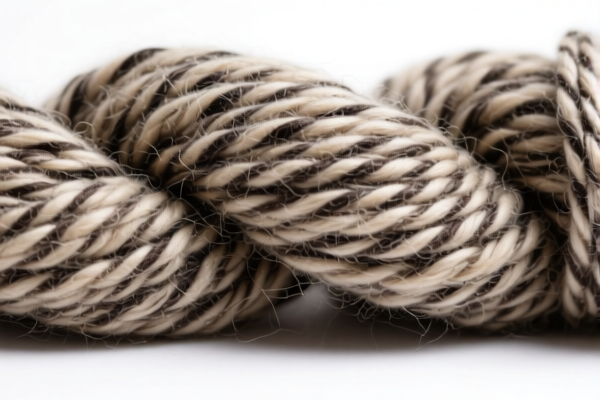

AI Analysis
🌾 Coarse Parboiled Wheat (粗粒小麦)
🌐 HS Code Reference & Customs Clearance Guide | 2026 Latest Tariff Analysis | Professional Clearance Strategy
📌 I. Product Definition & Classification: What is "Coarse Parboiled Wheat"?
Coarse Parboiled Wheat refers to wheat grains that have undergone a parboiling (steaming/boiling) process to stabilize the bran and germ, followed by milling or cracking into coarse granules (larger than flour, smaller than whole grain). It is distinct from standard wheat because of its processed state.
In international trade and customs classification, the key question is: Has the physical structure been altered enough to move it from "Whole Wheat" to "Processed Wheat/Flour"?
⚠️ Critical Distinction Point:
- If the wheat retains its whole kernel shape but is parboiled/dried → It may still be considered Wheat (Chapter 10).
- If the wheat is cracked, rolled, or ground into coarse granules → It is considered a Processed Grain/Flour (Chapter 11).
📦 II. HS Code Classification Details (Based on Provided Data)
The provided data suggests five potential HS Codes depending on the exact physical form and processing depth. Here is the breakdown:
| HS Code | Product Description | Key Criteria | Total Tax Rate (China Origin) |
|---|---|---|---|
1001.19.00.51 |
Hard Red Wheat (Parboiled Whole) | Grain structure intact; Parboiling is a preparation method, not a structural change. | 0.65¢/kg + 17.5% |
1104.29.90.00 |
Other Processed Grains | Coarse granules fall under "processed/modified" grains. | 37.7% |
1104.29.10.00 |
Other Rolled or Flaked Grains | Physical form change (cracking/coarse grinding) similar to flakes. | 36.2% |
1103.11.00.20 |
Wheat Groats, Crushed or Grits | Fits "Crushed Grits" definition. | 0.5¢/kg + 35.0% |
1103.11.00.40 |
Wheat Groats, Other | Other forms of wheat groats not specifically listed above. | 0.5¢/kg + 35.0% |
🔍 Important Note on Data Discrepancy:
The provided data shows two main clusters:
1. Lower Tax (~17.5%): If classified as Whole Wheat (1001.19.00.51).
2. Higher Tax (35%-37.7%): If classified as Processed/Cracked Wheat (1104.xxor1103.11).
Risk: Misclassifying coarse granules as "Whole Wheat" can lead to severe penalties for underpayment.
💰 III. 2026 Latest Tariff Rate Breakdown (US Customs)
✅ Applicable Country: United States (US)
✅ Country of Origin: China (CN)
✅ Effective Date: November 10, 2025 (and subsequent imports)
The total tax burden consists of three layers: Base Duty, Section 301 Tariff (25%), and Section 122 Tariff (10%).
🎯 1. 1001.19.00.51 – Hard Red Wheat (Lowest Risk if Structurally Intact)
| Item | Content |
|---|---|
| Base Duty | 0.65¢/kg (Specific Duty) |
| Section 301 Tariff | +7.5% (Ad Valorem) |
| Section 122 Tariff | +10% (Ad Valorem) |
| Total Effective Rate | 17.5% + 0.65¢/kg |
| Calculation | (CIF Value × 17.5%) + (Weight in kg × 0.0065 USD) |
| De Minimis Eligibility | ❌ No (Deemed ineligible for small package exemption due to agricultural nature) |
| Legal Path | USITC:1001.19.00.51 → SECT301:17.5% → SECT122:10% |
📌 Explanation:
- This code applies only if the parboiled wheat has NOT been cracked, rolled, or ground into granules.
- Parboiling is considered a "preparation" that doesn't change the fundamental nature of the grain from "Whole Wheat."
- Caution: If the product is "coarse," customs may argue it is "processed."
🎯 2. 1104.29.90.00 & 1104.29.10.00 – Processed Grains (High Tax)
| Item | Content |
|---|---|
| Base Duty | 2.7% (1104.29.90.00) or 1.2% (1104.29.10.00) |
| Section 301 Tariff | +25.0% (Ad Valorem) |
| Section 122 Tariff | +10% (Ad Valorem) |
| Total Effective Rate | 37.7% (for .90) or 36.2% (for .10) |
| Calculation | CIF Value × 37.7% (or 36.2%) |
| De Minimis Eligibility | ❌ No |
| Legal Path | USITC:1104.29.xx.xx → SECT301:25% → SECT122:10% |
📌 Explanation:
- "Coarse" implies a physical alteration (cracking/grinding).
- Section 301 tariffs on agricultural products are often higher.
- The 25% + 10% add-ons make this significantly more expensive than whole wheat.
🎯 3. 1103.11.00.20 & 1103.11.00.40 – Wheat Grits/Groats (Medium-High Tax)
| Item | Content |
|---|---|
| Base Duty | 0.5¢/kg (Specific Duty) |
| Section 301 Tariff | +25.0% (Ad Valorem) |
| Section 122 Tariff | +10% (Ad Valorem) |
| Total Effective Rate | 35.0% + 0.5¢/kg |
| Calculation | (CIF Value × 35.0%) + (Weight in kg × 0.005 USD) |
| De Minimis Eligibility | ❌ No |
| Legal Path | USITC:1103.11.xx.xx → SECT301:25% → SECT122:10% |
📌 Explanation:
- This classification is for "Wheat Grits, Crushed or Grits."
- If your "Coarse Parboiled Wheat" is clearly defined as Grits (uniform coarse granules), this is the most technically accurate code.
- Tax is slightly lower than Chapter 1104 but still high due to Section 301.
🛠️ IV. Customs Clearance Practical Advice (Risk Avoidance Guide)
✅ 1. Preparation Checklist (Must-Have Documents)
| Document | Required? | Purpose |
|---|---|---|
| Product Spec Sheet | ✔️ | Must specify particle size (mesh size), moisture content, and processing method (parboiled vs. raw). |
| Process Flow Chart | ✔️ | To prove if the product is "Whole Kernel" or "Cracked/Granulated." |
| Commercial Invoice | ✔️ | Must clearly describe: "Parboiled Wheat, Coarse Granules" (or "Whole Grain"). Avoid vague terms like "Wheat." |
| Certificate of Origin | ✔️ | To confirm Country of Origin (China) and apply correct Section 301/122 tariffs. |
| Labeling | ✔️ | Must include net weight, country of origin, and product name matching the invoice. |
✅ 2. Classification Strategy (Key Decision Matrix)
| Scenario | Recommended HS Code | Why? | Risk Level |
|---|---|---|---|
| Parboiled, Dried, BUT Whole Kernels | 1001.19.00.51 |
No structural change; only preparation. Lowest tax. | ⚠️ Medium (Customs may challenge if "coarse" implies damage) |
| Parboiled & Cracked into Large Granules | 1103.11.00.40 or .20 |
Fits "Grits/Groats" definition. | ✅ Low (Technically accurate) |
| Parboiled & Rolled/Flaked | 1104.29.10.00 |
Fits "Processed Grains" definition. | ✅ Low |
| Ambiguous "Coarse" Form | 1104.29.90.00 |
Catch-all for processed grains. | ⚠️ High (Highest tax) |
🔥 Golden Rule:
"Define the Particle Size! If it's <2mm, it's flour. If it's >2mm but <Whole Kernel, it's Grits. If it's Whole Kernel, it's Wheat."
✅ 3. Special Cases & Pitfalls
| Pitfall | Consequence | Solution |
|---|---|---|
| Under-declaring as Whole Wheat | 20%+ tax refund demand + Penalty | Provide particle size analysis to prove it's cracked. |
| Over-declaring as Processed | Paying 37% when 17.5% is possible | If kernels are intact, argue for 1001.19.00.51. |
| Ignoring Section 122 | 10% penalty underpayment | Ensure invoice reflects China Origin clearly. |
| Vague Description | Custom Hold at Border | Use precise terms: "Parboiled Wheat, Coarse Grits, Mesh Size 10-20" |
🌍 V. Global Market Comparison (2026)
| Region | HS Code Trend | Tax Burden (China Origin) | Notes |
|---|---|---|---|
| 🇺🇸 USA | 1001.19.00.51 (if whole) or 1103.11 (if grits) |
17.5% - 37.7% | High Section 301 & 122 tariffs. Critical to classify correctly. |
| 🇨🇳 China (Export) | 1001 or 1103 |
Varies | Export duties may apply. Check local Chinese customs rules. |
| 🇪🇺 EU | 1001 or 1103 |
0% - 12.5% | No Section 301 equivalent. Tariffs are lower but anti-dumping may apply. |
| 🇬🇧 UK | 1001 or 1103 |
0% - 12% | Post-Brexit tariffs apply. |
📌 Conclusion:
The US market is the most challenging due to叠加 tariffs (Section 301 + Section 122). Accurate classification is not just compliance—it's a cost-saving imperative.
📌 VI. Common Errors & Blood Lessons
❌ Error 1: Calling it "Whole Wheat" when it's actually cracked granules.
👉 Result: Customs audits, back-tariffs of ~20%, and potential detention.
❌ Error 2: Not specifying "Parboiled" in the description.
👉 Result: May be misclassified as "Raw Wheat" and subject to different phytosanitary rules (though tax might be similar, biosecurity risks arise).
❌ Error 3: Assuming "Coarse" means "Flour."
👉 Result: Wrong HS Code (1102 vs 1103/1104). Flour has different tariffs and regulations.
✅ Correct Practice:
"Parboiled Wheat, Coarse Granules, Mesh Size 10-16, Net Weight 25kg, Origin: China"
🎯 VII. Conclusion: Precision Saves Money!
🎯 Remember the Mantra:
🔹 "Whole Kernel = 17.5%. Coarse Granules = 35-37%. Don't Guess, Measure!"
🔹 "Section 301 + 122 = 35%+ Burden. Classification is Key!"
📌 Pro Tip:
If you are importing large volumes, consider applying for an Advance Ruling from US Customs and Border Protection (CBP) to lock in the HS Code and tax rate before shipment. This avoids disputes at the port.
📣 Take Action Now:
📞 Contact Your Customs Broker + Provide Particle Size Data + Verify Origin Documentation
🚀 Ensure Smooth Clearance, Minimize Tax Liability, and Profit Safely!
✨ Professional Customs Clearance Starts with Accurate Classification!
💼 Every Percent of Tax Saved is Pure Profit!
Customer Reviews
About HS Code Classification
The Harmonized System (HS) is an internationally standardized nomenclature developed by the World Customs Organization (WCO) to classify traded products. Over 200 countries use the HS system as the basis for customs tariffs, trade statistics, and import/export regulations.
Each HS code follows a hierarchical structure:
- Chapter (2 digits) — Broad category of goods (e.g., Chapter 84: Machinery and Mechanical Appliances)
- Heading (4 digits) — More specific grouping within the chapter
- Subheading (6 digits) — Internationally standardized breakdown, used by all WCO member countries
- National subdivisions (8-10 digits) — Country-specific extensions for further classification, such as US HTSUS 10-digit codes
Correct HS code classification is essential for smooth customs clearance, accurate duty payment, and compliance with trade regulations. Misclassification can lead to customs delays, overpayment of duties, or penalties.
When importing from CN to US, the applicable tariff rates may include:
- Most-Favored-Nation (MFN) rate — The standard duty rate applied to WTO members
- General rate — Applied to countries without trade agreements
- Trade remedy duties — Additional tariffs such as Section 301 (anti-dumping), Section 232 (national security), or countervailing duties
The information provided on this page is for reference purposes only. For official classification, please consult with your local customs authority or a licensed customs broker.