Coarse Spun Twisted Yarn
CN → US| HS Code | Tariff Rate | Origin | Destination | Doc |
|---|---|---|---|---|
| 5109909000 | 41.0% | CN | US | Official Doc |
| 5109109000 | 41.0% | CN | US | Official Doc |
| 5106100090 | 41.0% | CN | US | Official Doc |
Product Images
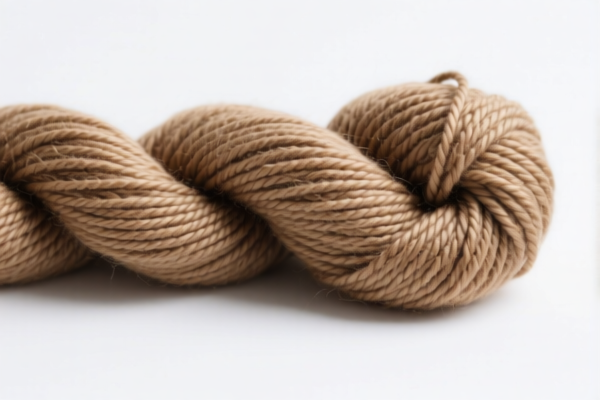
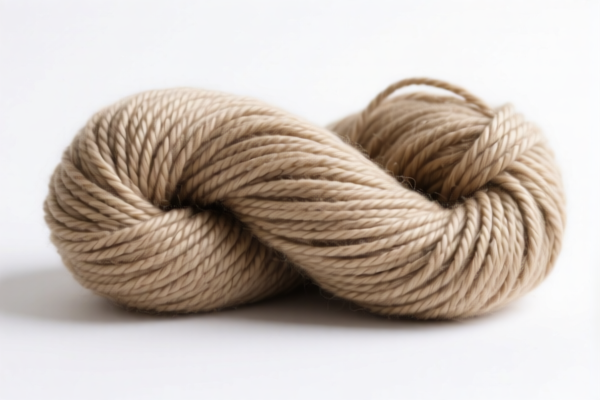
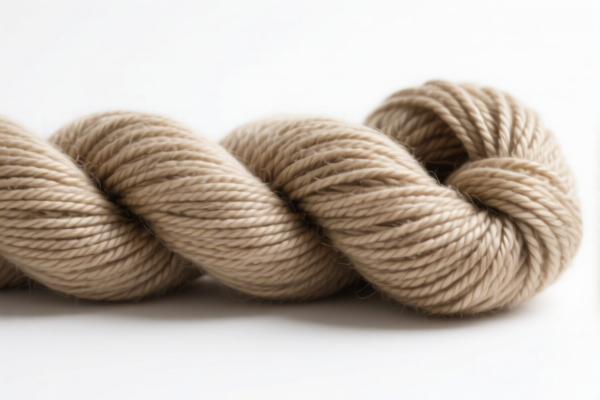
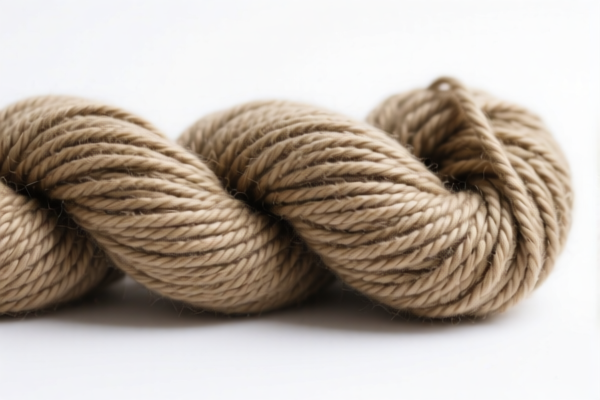
AI Analysis
🧵 Coarse Spun Twisted Yarn (Wool/Fine Animal Hair)
🌐 HS Code Reference & Customs Clearance Guide | 2026 Latest Tariff Analysis | Professional Compliance Strategy
📌 I. Product Definition & Classification: What Exactly is "Coarse Spun Twisted Yarn"?
Coarse Spun Twisted Yarn refers to textile yarns produced from wool or fine animal hair (e.g., cashmere, mohair) that undergo a combed (worsted-style preparation but coarse output) or carding process followed by twisting for strength and cohesion. It is distinct from fine carded yarns and is primarily used in heavy-duty textiles, carpets, blankets, and industrial fabrics.
⚠️ Key Distinction Criteria:
- Material: Must be Wool or Fine Animal Hair.
- Processing: Coarse spun (not fine/combed to high standard) + Twisted.
- Packaging: Typically not for retail sale (bulk cones/bobbins).
- Classification Logic: Based on the "residual category" principle if specific sub-headings don’t match perfectly.
📦 II. HS Code Classification Matrix (2026 Latest Tariff Authority)
| HS Code | Product Description | Application Scenario | Tax Implication (China→US) |
|---|---|---|---|
5109.90.90.00 |
Twisted yarn, Wool/Fine Animal Hair, other categories | Coarse wool/tweed yarns, non-retail bulk | 41% |
5109.10.90.00 |
Twisted yarn, Wool/Fine Animal Hair, form: Yarn, residual category | Generic coarse wool yarns not specified elsewhere | 41% |
5106.10.00.90 |
Carded Wool Yarn, Not for Retail, other categories | Bulk carded wool yarn (if twist is minimal or considered part of carding) | 41% |
🔍 Critical Note:
- All three codes result in the same total tax rate of 41% due to identical tariff structures.
-5109is preferred for twisted yarns.
-5106is used if the yarn is carded (not combed) and not for retail.
- Misclassification (e.g., labeling as "cotton" or "synthetic") will lead to severe penalties or rejection.
💰 III. 2026 Tariff Rate Breakdown (Including Additional Duties & Policy Levies)
✅ Applicable Country: United States (US)
✅ Origin: China (CN)
✅ Effective Date: Ongoing (Section 301 & IEEPA)
🎯 1. All Three HS Codes (5109.90.90.00, 5109.10.90.00, 5106.10.00.90)
| Item | Detail |
|---|---|
| Basic Tariff Rate | 6.0% (Standard MFN rate for wool/tweed yarn) |
| Section 301 Additional Duty | +25.0% (List 4B – Textiles & Apparel) |
| Section 122 IEEPA Duty | +10.0% (Targeted Chinese imports, effective Nov 2025) |
| Total Tax Rate | 41.0% |
| Tax Calculation | CIF Value × 41% |
| De Minimis Exemption | ❌ Not Eligible (Section 301 & IEEPA duties exceed de minimis thresholds) |
| Legal Basis Chain | USITC:5109.90.90.00 → Footnote: Section 301 (List 4B) → IEEPA: Section 122 |
📌 Explanation:
- The 6% base rate is standard for wool yarns under Chapter 51.
- The +25% Section 301 duty applies to all Chinese-origin textiles in this category.
- The +10% Section 122 duty is a new/additional levy targeting Chinese goods, further increasing costs.
- Total 41% is a high-cost barrier, requiring precise documentation to avoid misclassification penalties.
🛠️ IV. Customs Clearance Operational Advice (Practical Pitfall Avoidance)
✅ 1. Required Documentation Checklist
| Document | Mandatory? | Notes |
|---|---|---|
| ✅ Product Specification Sheet | ✔️ | Must specify Wool/Fine Animal Hair, Coarse Spun, Twisted, Not for Retail. |
| ✅ Bill of Lading/Packing List | ✔️ | Must show bulk packaging (cones/bobbins), not retail spools. |
| ✅ Certificate of Origin (CO) | ✔️ | Must confirm Chinese Origin to apply correct duties. |
| ✅ Commercial Invoice | ✔️ | Clearly state: "Coarse Spun Twisted Yarn, Wool, Not for Retail" |
| ✅ Third-Party Test Report | ✔️ | Fiber content analysis (ISO 1833) proving ≥85% Wool/Fine Animal Hair. |
| ✅ HS Code Pre-Ruling | ✔️ | Highly recommended to lock in 5109.90.90.00 vs. 5106.10.00.90. |
✅ 2. Declaration Tips (Key Mantra)
🔥 "Wool Content, Coarse Spin, Bulk Pack, 41% Tax!"
| Scenario | Correct Declaration | Incorrect Declaration |
|---|---|---|
| Bulk Yarn Cones | 5109.90.90.00 – "Coarse Spun Twisted Wool Yarn, Not for Retail" |
"Wool Yarn" (Vague → Audit Risk) |
| Retail-Sized Spools | Not eligible for these codes; may be classified as finished goods | Force 5109 → Penalty |
| Cotton Blended Yarn | Must declare blend %; if >50% wool, still 5109, else 5205 |
Declare as 100% Wool → Fraud |
| Synthetic Fiber | Use Chapter 54/55 codes | Use Chapter 51 → Reject |
✅ 3. Special Cases & Handling
| Case | Handling Advice |
|---|---|
| Mixed Fiber Yarn | If wool content <85%, may shift to 5205 or 5508. Verify test reports. |
| OEM Custom Yarn | Provide customer design specs to prove "not for retail" status. |
| Transshipment via Vietnam | Warning: Section 301 & IEEPA apply if Chinese-origin inputs are substantially transformed. Must prove rules of origin. |
| Anti-Dumping Duty (ADD) | Check if wool yarn from China is subject to ADD. If yes, additional 50-100% may apply. |
🌍 V. Global Market Comparison (2026 Latest)
| Country/Region | Recommended HS Code | Tariff (China Origin) | Certification | Notes |
|---|---|---|---|---|
| 🇺🇸 USA | 5109.90.90.00 |
41% (6% + 25% + 10%) | None specific | High duty due to Section 301 & 122 |
| 🇨🇳 China | 5109.90.90.00 |
6% (Import) | CCC (if applicable) | Low import duty, high export supply |
| 🇪🇺 EU | 5109.90 |
4-6% (Most Favored Nation) | REACH, Oeko-Tex | No Section 301 equivalent |
| 🇬🇧 UK | 5109.90 |
4-6% | UKCA | Post-Brexit tariffs aligned with EU |
| 🇦🇺 Australia | 5109.90 |
5% | WTO Rate | No major附加税 |
📌 Conclusion:
- USA is the most expensive market for Chinese wool yarn due to 41% effective tariff.
- EU/UK/AU remain competitive with ~5-6% rates.
- Supply Chain Diversification (e.g., sourcing from New Zealand, Australia, or Vietnam) can reduce costs by 35%+.
📌 VI. Common Mistakes & Pitfall Guide (Lessons Learned)
❌ Mistake 1: Declaring "Wool Yarn" without specifying "Coarse Spun" or "Not for Retail"
👉 Consequence: Customs may classify as retail yarn (higher duty) or require additional data → Delays.
❌ Mistake 2: Ignoring Section 122 IEEPA Duty (+10%)
👉 Consequence: Underpayment of duties → Fines & Penalties.
❌ Mistake 3: Using "Cotton Yarn" code for Wool Yarn
👉 Consequence: Misclassification Fraud → Severe penalties, seizure of goods.
❌ Mistake 4: Assuming De Minimis Exemption Applies
👉 Consequence: Section 301 & IEEPA duties do not apply to de minimis shipments → Back Taxes + Interest.
✅ Correct Declaration Example:
"Coarse Spun Twisted Yarn, 100% Merino Wool, Carded, Not for Retail, Bulk Cones, HS Code 5109.90.90.00"
🎯 VII. Conclusion: Precision Classification Saves Costs!
🎯 Remember the Mantra:
🔹 "Wool + Coarse + Bulk = 5109.90.90.00"
🔹 "41% Tax is Real – Plan for It!"
🔹 "Documentation is King – Audit-Proof Your Shipment!"
📌 Pro Tip:
If your wool yarn is originally sourced from New Zealand, Australia, or the UK, you may qualify for lower or zero tariffs under free trade agreements. Consider supply chain optimization to bypass US duties.
📣 Immediate Action:
📞 Contact a licensed customs broker
📄 Submit HS Code Pre-Ruling Application to US CBP
📊 Update Cost Models to include 41% tariff burden
✨ Professional Clearance Starts with Accurate Classification!
💼 Every Percent of Tariff Matters – Optimize Your Supply Chain Today!
Customer Reviews
About HS Code Classification
The Harmonized System (HS) is an internationally standardized nomenclature developed by the World Customs Organization (WCO) to classify traded products. Over 200 countries use the HS system as the basis for customs tariffs, trade statistics, and import/export regulations.
Each HS code follows a hierarchical structure:
- Chapter (2 digits) — Broad category of goods (e.g., Chapter 84: Machinery and Mechanical Appliances)
- Heading (4 digits) — More specific grouping within the chapter
- Subheading (6 digits) — Internationally standardized breakdown, used by all WCO member countries
- National subdivisions (8-10 digits) — Country-specific extensions for further classification, such as US HTSUS 10-digit codes
Correct HS code classification is essential for smooth customs clearance, accurate duty payment, and compliance with trade regulations. Misclassification can lead to customs delays, overpayment of duties, or penalties.
When importing from CN to US, the applicable tariff rates may include:
- Most-Favored-Nation (MFN) rate — The standard duty rate applied to WTO members
- General rate — Applied to countries without trade agreements
- Trade remedy duties — Additional tariffs such as Section 301 (anti-dumping), Section 232 (national security), or countervailing duties
The information provided on this page is for reference purposes only. For official classification, please consult with your local customs authority or a licensed customs broker.