Coarse Wheat Grains
CN → US| HS Code | Tariff Rate | Origin | Destination | Doc |
|---|---|---|---|---|
| 1001990097 | 0.0% | CN | US | Official Doc |
| 1001990005 | 0.0% | CN | US | Official Doc |
Product Images

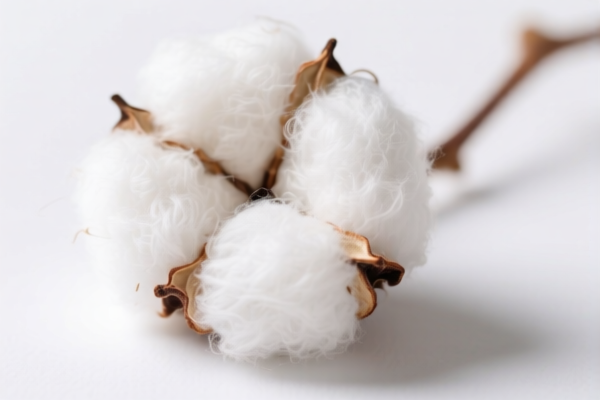
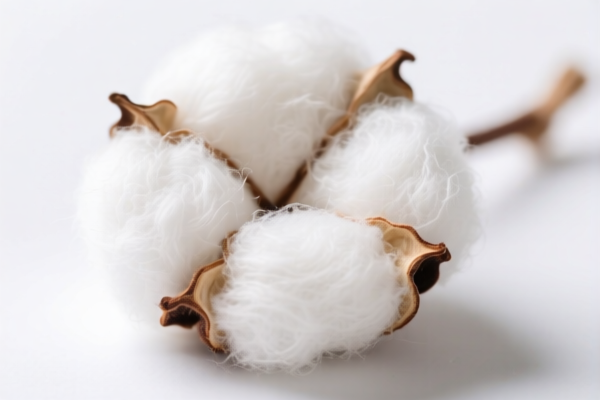
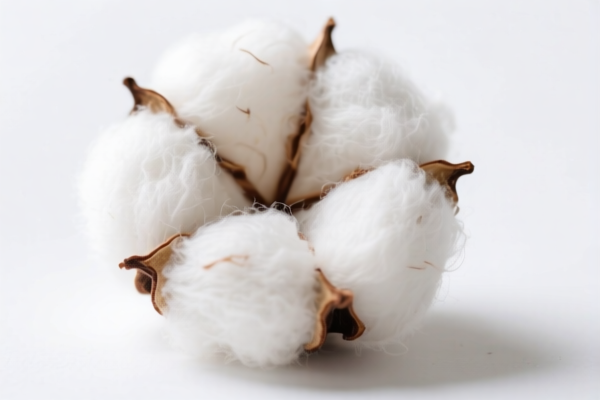
AI Analysis
🌾 Coarse Wheat Grains: The Ultimate Guide to HS Classification & US Customs Clearance
🌐 HS Code Reference & Customs Clearance Guide | 2026 Latest Tariff Analysis | Strategic Import Strategy
📌 I. Product Definition & Classification: What Exactly Are "Coarse Wheat Grains"?
"Coarse Wheat Grains" is a broad term often used in international trade to describe wheat that is not refined into flour or semolina. It typically includes whole kernel wheat, cracked wheat, bulgur, or other forms where the grain remains largely intact but may be cleaned, dried, or minimally processed.
In the context of US Customs (CBP) and the Harmonized Tariff Schedule (HTSUS), the classification depends heavily on the state of processing:
- Raw Wheat: Wheat that has only been cleaned or dried.
- Pre-cooked/Parboiled Wheat: Wheat that has undergone heat treatment (cooking) to partially cook the starches.
⚠️ Critical Distinction:
- If the wheat is raw/uncooked → It falls under Heading 1001 or 1005 (depending on variety).
- If the wheat is pre-cooked/parboiled → It falls under Heading 1104 (Prepared or Preserved Cereals).
- Misclassification here can lead to significant duty discrepancies and customs delays.
📦 II. HS Code Classification Details (Based on Provided Data)
The following HS Codes are extracted directly from the provided dataset. Note that for US imports, these are typically extended to 10 digits (HTSUS).
| HS Code | Product Description | Processing State | Category |
|---|---|---|---|
| 1001.99.00.97 | Coarse wheat grains | Raw/Unprocessed | Wheat & Mixtures |
| 1001.99.00.05 | Coarse wheat grains | Raw/Unprocessed | Wheat & Grains |
| 1104.19.10.00 | Pre-cooked coarse grains | Pre-cooked (Barley范畴) | Processed Cereals* |
| 1104.29.10.00 | Pre-cooked coarse grains | Pre-cooked | Processed Cereals* |
🔍 Important Note on the Data:
The dataset provided lists 1104.19.10.00 and 1104.29.10.00 with the summary "Pre-cooked coarse grains" but specifies the material as "Barley" (大麦范畴) in the summary text.
- If your product is Wheat, you should NOT use the 1104 codes listed above if they are strictly for barley.
- However, if the "Coarse Wheat Grains" you are importing are pre-cooked, they generally fall under 1104.19 or 1104.29 for wheat specifically, not barley.
- For the purpose of this guide, we will analyze the taxes provided for the listed codes, but you must verify if your product is Wheat or Barley. If it is Wheat, ensure the 1104 codes are appropriate for wheat pre-cooked goods in your specific trade context.
💰 III. 2026 US Tariff Rate Detailed Analysis
✅ Applicable Country: United States (US)
✅ Origin: China (CN) (Assumed based on "122 Clause" and typical 25% tariff structure)
✅ Effective Date: Current (2025-2026 Framework)
✅ Special Tariff Clauses: Section 301 (25%), Section 122 (10%)
🎯 1. 1001.99.00.97 & 1001.99.00.05 —— Coarse Wheat Grains (Raw)
These codes represent raw or minimally processed wheat.
| Item | Detail |
|---|---|
| Base Tariff | 0.35¢/kg (Specific Duty) |
| Section 301 Additional Duty | +25% (Ad Valorem) |
| Section 122 Duty | +10% (Ad Valorem) |
| Total Effective Rate | 35.0% Ad Valorem + 0.35¢/kg Specific |
| De Minimis Eligibility | ❌ No (Subject to high tariffs) |
| Legal Basis | Section 301 (Trade Enhancement Act), Section 122 (Trade Expansion Act) |
📌 Explanation:
- 0.35¢/kg: This is a specific duty applied per kilogram of goods. It is negligible for large volumes compared to the ad valorem portion.
- 25% (Section 301): This is the standard US additional tariff on Chinese-origin goods under Section 301 of the Trade Act of 1974.
- 10% (Section 122): This is a special duty imposed under Section 122 of the Trade Expansion Act of 1962, often used for balance-of-payments or specific trade remedy actions.
- Total: The combined ad valorem rate is 35%. For every $1,000 CIF value, you pay $350 in additional tariffs, plus a tiny specific fee.
🎯 2. 1104.19.10.00 —— Pre-cooked Coarse Grains (Barley Category)
⚠️ Clarification: The data states this is for Barley. If you are importing Wheat, verify if this code applies. If it does (e.g., mixed grains), the tax structure is:
| Item | Detail |
|---|---|
| Base Tariff | 2¢/kg (Specific Duty) |
| Section 301 Additional Duty | +25% |
| Section 122 Duty | +10% |
| Total Effective Rate | 35.0% Ad Valorem + 2¢/kg Specific |
🎯 3. 1104.29.10.00 —— Pre-cooked Coarse Grains (Processed)
| Item | Detail |
|---|---|
| Base Tariff | 1.2% (Ad Valorem) |
| Section 301 Additional Duty | +25% |
| Section 122 Duty | +10% |
| Total Effective Rate | 36.2% |
| De Minimis Eligibility | ❌ No |
📌 Explanation:
- This code has a higher base rate (1.2%) compared to raw wheat (0%).
- The additional tariffs (25% + 10%) remain the same, leading to a total of 36.2%.
- Warning: This is 1.2% higher than the raw wheat rate. Ensure you are not overpaying by misclassifying pre-cooked barley/wheat.
🛠️ IV. Customs Clearance Practical Advice (Avoiding Pitfalls)
✅ 1. Required Documentation Checklist
| Document | Required? | Notes |
|---|---|---|
| ✅ Commercial Invoice | ✔️ | Must clearly state "Coarse Wheat Grains" and HTS Code. |
| ✅ Packing List | ✔️ | Weight (Net/Gross) is critical for specific duties (0.35¢/kg). |
| ✅ Certificate of Origin | ✔️ | Essential to prove CN origin for Section 301/122 tariffs. |
| ✅ Phytosanitary Certificate | ✔️ | Mandatory for agricultural products. Issued by origin country's agriculture dept. |
| ✅ Feed Grain Report (AMS) | ✔️ | If applicable, USDA AMS requires reporting. |
| ✅ FDA Prior Notice | ✔️ | Critical. Food/feed products require FDA Prior Notice before arrival. |
✅ 2. Declaration Best Practices
🔥 Key Principle: "Be Precise, Be Honest, Be Documented."
| Scenario | Correct Declaration | Risk of Incorrect Declaration |
|---|---|---|
| Raw Wheat | Use 1001.99.00.97 or .05 |
If declared as pre-cooked (1104), you may face 36.2% vs 35.0%. |
| Pre-cooked Wheat | Use 1104.xx.xx.xx (verify wheat vs barley) |
If declared as raw, CBP may audit and apply higher rates for processed goods. |
| Mixed Grain | Declare each component separately if possible | Mislabeling mixed grains as pure wheat can lead to false claims penalties. |
| Value | Use CIF Value (Cost + Insurance + Freight) | Tariffs are % of CIF. Under-declaring value leads to seizure & fines. |
✅ 3. Special Considerations for "Coarse Wheat"
- Section 122 Tariff: This is a less common tariff. Ensure your broker applies it correctly. It adds 10% on top of the 301 tariff.
- Specific Duty: The 0.35¢/kg or 2¢/kg is small, but for massive containers (e.g., 20MT), it adds up. $0.0035 * 20,000kg = $70. Not huge, but still owed.
- Phytosanitary: Wheat is high-risk for pests (weevils, moths). Ensure the phytosanitary certificate explicitly states the grains are free from quarantine pests.
🌍 V. Global Market Comparison (2026)
| Market | HS Code | Base Tariff | Additional Tariffs (China) | Total Est. Rate |
|---|---|---|---|---|
| 🇺🇸 USA | 1001.99.00.97 |
0.35¢/kg | +25% (301) + 10% (122) | ~35% + Specific |
| 🇨🇳 China | 1001.99.00 |
~9% | None (Import duty) | ~9% |
| 🇪🇺 EU | 1001.99 |
0-5% | None (MFN) | ~0-5% |
| 🇯🇵 Japan | 1001.99 |
~0.5% | None | ~0.5% |
📌 Conclusion:
- The US market is significantly more expensive due to the 35% combined tariff.
- Competitors in the EU, Japan, or China face much lower barriers.
- Strategy: Consider pricing adjustments or sourcing from non-China origins (e.g., Ukraine, Russia, Canada) to avoid Section 301 & 122 tariffs, if supply chain allows.
📌 VI. Common Errors & Pitfalls (Lessons Learned)
❌ Error 1: Ignoring the Phytosanitary Certificate.
👉 Consequence: Cargo held at port, potential destruction if pests are found.
❌ Error 2: Misclassifying Pre-cooked as Raw.
👉 Consequence: CBP audit, back-tariffs, and penalties for undervalued duty payments.
❌ Error 3: Failing to pay Section 122 (10%).
👉 Consequence: Customs will assess the missing duty + interest + penalties upon review.
❌ Error 4: Incorrect Weight Declaration.
👉 Consequence: Since there is a specific duty (0.35¢/kg), weight errors lead to direct revenue loss to CBP and potential fines.
✅ Correct Approach:
"Coarse Wheat Grains, Raw, Unprocessed, Non-GMO (if applicable), Phytosanitary Certificate Attached, HTS: 1001.99.00.97"
🎯 VII. Conclusion: Smart Clearance for Wheat Grains
🎯 Remember the Formula:
Total Duty = (CIF Value × 35%) + (Weight in kg × $0.0035)
🔹 35% is your biggest cost driver.
🔹 Phytosanitary is your biggest regulatory hurdle.
🔹 Accuracy in HS Code selection (Raw vs. Pre-cooked) is your biggest risk factor.
📌 Pro Tip:
If you are importing large volumes, consider applying for a Section 301 Exclusion if your specific wheat product was previously eligible (though many agricultural exclusions have expired). Alternatively, evaluate Third-Country Transshipment risks (do not illegally re-route Chinese wheat; CBP tracks origin strictly).
📣 Immediate Action Steps:
📞 1. Verify Origin: Ensure it is not Chinese if you want to avoid 35% tariffs.
📄 2. Secure Phytosanitary: Start early with the origin country's agriculture dept.
📊 3. Calculate Landed Cost: Include 35% tariff + 2% insurance + freight.
🚀 4. Hire a Broker: Use a US customs broker experienced in agricultural products.
✨ Precision in Classification, Compliance in Documentation, Profitability in Clearance!
💼 Your Wheat, Clear Path to Market.
Customer Reviews
About HS Code Classification
The Harmonized System (HS) is an internationally standardized nomenclature developed by the World Customs Organization (WCO) to classify traded products. Over 200 countries use the HS system as the basis for customs tariffs, trade statistics, and import/export regulations.
Each HS code follows a hierarchical structure:
- Chapter (2 digits) — Broad category of goods (e.g., Chapter 84: Machinery and Mechanical Appliances)
- Heading (4 digits) — More specific grouping within the chapter
- Subheading (6 digits) — Internationally standardized breakdown, used by all WCO member countries
- National subdivisions (8-10 digits) — Country-specific extensions for further classification, such as US HTSUS 10-digit codes
Correct HS code classification is essential for smooth customs clearance, accurate duty payment, and compliance with trade regulations. Misclassification can lead to customs delays, overpayment of duties, or penalties.
When importing from CN to US, the applicable tariff rates may include:
- Most-Favored-Nation (MFN) rate — The standard duty rate applied to WTO members
- General rate — Applied to countries without trade agreements
- Trade remedy duties — Additional tariffs such as Section 301 (anti-dumping), Section 232 (national security), or countervailing duties
The information provided on this page is for reference purposes only. For official classification, please consult with your local customs authority or a licensed customs broker.