Coarse Wheat Grits
CN → US| HS Code | Tariff Rate | Origin | Destination | Doc |
|---|---|---|---|---|
| 1104299000 | 37.7% | CN | US | Official Doc |
| 1104291000 | 36.2% | CN | US | Official Doc |
Product Images
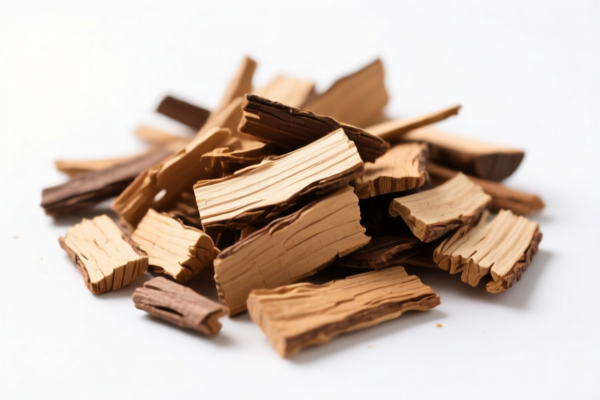
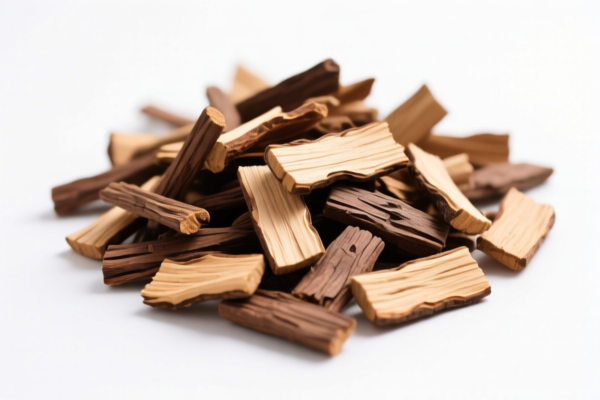
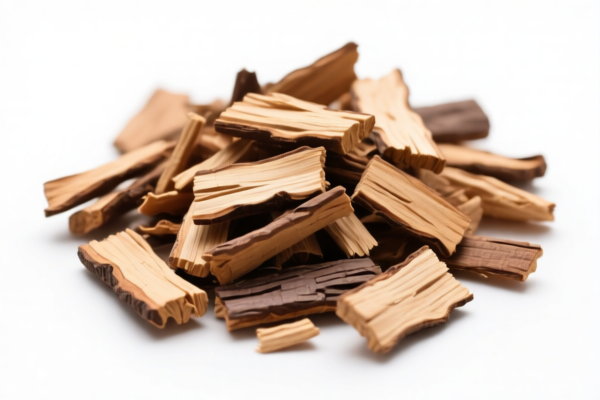
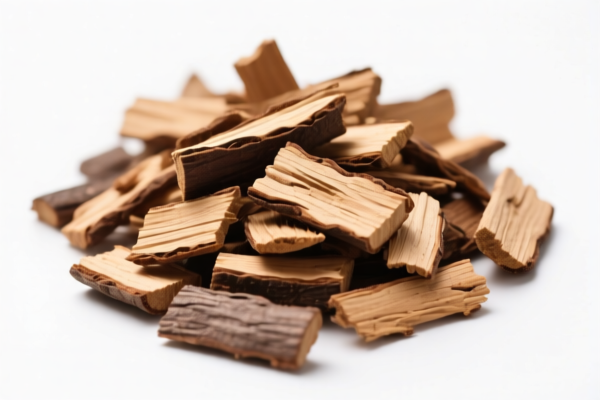
AI Analysis
🌾 Coarse Wheat Grits (Bulgur or Cracked Wheat)
🌐 HS Code Reference & Customs Clearance Guide | 2026 Latest Tariff Analysis | Professional Clearance Strategy
📌 I. Product Definition & Classification: Do You Really Understand "Coarse Wheat Grits"?
Coarse wheat grits, often known as bulgur (parboiled, dried, and cracked wheat) or cracked wheat, are cereal grains that have undergone mechanical processing beyond simple cleaning, husking, or polishing. In international trade, they fall under Chapter 11 (Products of the Milling Industry), specifically under heading 1104.
The key distinction lies in the origin of the wheat and the specific processing method: 1. Barley-based grits: If the grits are made from barley, they are classified under subheading 1104.29.10.00. 2. Other cereal grits (e.g., Wheat): If the grits are made from wheat (or other cereals like rye, oats, etc., but not rice or barley), they are classified under subheading 1104.29.90.00.
⚠️ Key Distinction:
- If the product is wheat-based (e.g., wheat bulgur, coarse cracked wheat) →归入 1104.29.90.00
- If the product is barley-based (e.g., barley grits) → 归入 1104.29.10.00
📦 II. HS Code Classification Details (2026 Latest Tariff Authority Comparison)
| HS Code | Product Description | Applicable Scenario | Tax Rate (Total) |
|---|---|---|---|
1104.29.90.00 |
Other worked grains (hulled, pearled, sliced, kibbled), of other cereals | Wheat grits, bulgur, rye grits, oat grits (not barley) | 0.0% |
1104.29.10.00 |
Other worked grains (hulled, pearled, sliced, kibbled), of barley | Barley grits, pearl barley (if processed further), barley flakes | 26.2% |
🔍 Important Note:
- Wheat is NOT barley. If your product is labeled "Coarse Wheat Grits" or "Bulgur," it falls under 1104.29.90.00.
- Barley has a significantly higher tariff due to trade restrictions (Section 301 tariffs). Misclassifying wheat as barley can lead to overpayment of 26.2%; misclassifying barley as wheat can lead to severe penalties for underpayment.
💰 III. 2026 Latest Tariff Rate Details (Including Additional Duties & Policy Add-ons)
✅ Applicable Country: United States (US)
✅ Origin: China (CN)
✅ Effective Time: 2025-11-10 onwards (including subsequent imports)
🎯 1. 1104.29.90.00 —— Coarse Wheat Grits (Wheat-based)
| Item | Content |
|---|---|
| Base Tariff Rate | 0.0% (ad valorem) |
| USITC Additional Tariff | 0.0% |
| IEEPA Additional Tariff | 0.0% |
| Total Tax Rate | 0.0% |
| Tax Calculation | CIF Value × 0.0% = $0 |
| De Minimis Exemption Eligible | ✅ Yes (if eligible under other rules) |
| Legal Basis Path | HTSUS:1104.29.90.00 → No Section 301 or IEEPA surcharge applies to this specific subheading |
📌 Explanation:
- Wheat-based processed grains (like bulgur or coarse cracked wheat) are exempt from the 25% Section 301 tariff and the 10% IEEPA tariff.
- This makes 1104.29.90.00 a highly favorable classification for cost efficiency.
- Total Cost Impact: Zero additional duty.
🎯 2. 1104.29.10.00 —— Coarse Barley Grits (Barley-based)
| Item | Content |
|---|---|
| Base Tariff Rate | 1.2% (ad valorem) |
| USITC Additional Tariff | +25.0% (Section 301) |
| IEEPA Additional Tariff | 0.0% (Note: Barley is not subject to the 10% IEEPA rate in this specific combination, but the 25% Section 301 applies) |
| Total Tax Rate | 26.2% |
| Tax Calculation | CIF Value × 26.2% |
| De Minimis Exemption Eligible | ❌ No (due to Section 301 tariffs) |
| Legal Basis Path | HTSUS:1104.29.10.00 → Section 301: Footnote 9903.88.01 |
📌 Explanation:
- Barley-based products are subject to the 25% Section 301 tariff.
- The base rate is 1.2%, leading to a total of 26.2%.
- This is a significant cost increase compared to wheat grits.
🛠️ IV. Customs Clearance Practical Advice (Avoiding Pitfalls)
✅ 1. Document Preparation Checklist (Non-negotiable)
| Document | Must Provide | Description |
|---|---|---|
| ✅ Product Specification Sheet | ✔️ | Clearly state: Raw Material (Wheat vs. Barley), Processing Method (Parboiled? Cracked? Hulled?) |
| ✅ Ingredient List | ✔️ | Must specify 100% Wheat or 100% Barley. No ambiguous terms like "cereal mix" without breakdown. |
| ✅ Product Photos | ✔️ | Clear images showing texture, color, and packaging. Wheat grits are typically golden-brown; barley grits are lighter. |
| ✅ Commercial Invoice | ✔️ | Description must read: "Coarse Wheat Grits, HS Code 1104.29.90.00" |
| ✅ Packing List | ✔️ | Net weight, gross weight, packaging type |
| ✅ Certificate of Origin | ✔️ | To prove origin (China) and ensure correct tariff application |
✅ 2. Declaration Tips (Key Mantra)
🔥 "Wheat is 0%, Barley is 26.2%! Specify the grain!"
| Scenario | Correct Declaration | Wrong Practice |
|---|---|---|
| Wheat Bulgur | 1104.29.90.00 - "Coarse Wheat Grits" |
Mislabel as "Barley Grits" → Pay 26.2% unnecessarily |
| Barley Grits | 1104.29.10.00 - "Coarse Barley Grits" |
Mislabel as "Wheat Grits" → Penalties + Back Taxes |
| Mixed Cereal Grits | Breakdown by weight | Declare as single HS Code → Customs Rejection |
✅ 3. Special Cases
| Case | Handling Advice |
|---|---|
| Parboiled Wheat (Bulgur) | Still classified under 1104.29.90.00 if made from wheat. Parboiling is considered "other work." |
| Importing from Non-China Origin | If origin is Vietnam, India, etc., check FTAs. US wheat barley tariffs may differ. |
| Samples for Testing | Even small samples must be declared correctly. Misclassification can lead to audit flags. |
🌍 V. Global Market Customs Comparison (2026 Latest)
| Country/Region | Recommended HS Code | Tariff (China Origin) | Certification Requirements | Notes |
|---|---|---|---|---|
| 🇺🇸 United States | 1104.29.90.00 (Wheat) 1104.29.10.00 (Barley) |
0.0% (Wheat) 26.2% (Barley) |
FDA Registration, FSMA Compliance | Wheat is duty-free! |
| 🇨🇳 China | 1104.29.90.00 |
0.0% | No additional duties | Import of wheat grits is encouraged |
| 🇪🇺 European Union | 1104.29.90.00 |
1.7% | EU Food Safety Standards | Lower tariffs than US for barley |
| 🇬🇧 United Kingdom | 1104.29.90.00 |
1.7% | UK Food Standards Agency | Post-Brexit rules apply |
📌 Conclusion:
- USA is the most lucrative market for wheat grits (0% duty) but harsh for barley (26.2%).
- EU and UK have moderate tariffs for both but no punitive Section 301 tariffs.
- Always verify raw material: One word ("Wheat" vs. "Barley") changes the tax by 26.2 percentage points.
📌 VI. Common Mistakes & Pitfalls (Lessons from Experience)
❌ Mistake 1: Labeling "Wheat Grits" but importing Barley
👉 Consequence: Underpayment of 26.2% → Heavy fines and potential seizure
❌ Mistake 2: Using "Cereal Grits" as a generic description
👉 Consequence: Customs requires clarification → Delay in clearance, storage fees
❌ Mistake 3: Assuming all processed grains are 0%
👉 Consequence: Barley grits are NOT 0%. If you import barley and declare as wheat, you face 26.2% back taxes + penalties
❌ Mistake 4: Not specifying "Parboiled" status
👉 Consequence: While both parboiled and non-parboiled wheat grits fall under 1104.29.90.00, inaccurate descriptions can trigger FDA inspections for food safety.
✅ Correct Practice:
"Coarse Wheat Grits (Bulgur), 100% Wheat, Parboiled, Hulled, Cracked, HS Code 1104.29.90.00, Country of Origin: China"
🎯 VII. Conclusion: Precise Classification Saves Money!
🎯 Remember the Mantra:
🔹 "Wheat = 0%, Barley = 26.2%!"
🔹 "One grain matters, duty bill changes!"
🔹 "Be specific, avoid disputes, clear fast!"
📌 Pro Tip:
If your product is wheat-based, you enjoy duty-free entry into the US.
If it is barley-based, factor in the 26.2% tariff in your pricing strategy.
Consider pre-ruling with US Customs and Border Protection (CBP) if there is any ambiguity about the raw material.
📣 Immediate Action:
📞 Verify raw material source → Wheat or Barley?
📦 Update product labels → Clear and Accurate
📄 Submit correct HS Code → 1104.29.90.00 for Wheat
🚀 Smooth clearance, zero duty, maximum profit!
✨ Professional Customs Clearance Starts with Accurate Classification!
💼 Your Bottom Line Depends on the Grain!
Customer Reviews
About HS Code Classification
The Harmonized System (HS) is an internationally standardized nomenclature developed by the World Customs Organization (WCO) to classify traded products. Over 200 countries use the HS system as the basis for customs tariffs, trade statistics, and import/export regulations.
Each HS code follows a hierarchical structure:
- Chapter (2 digits) — Broad category of goods (e.g., Chapter 84: Machinery and Mechanical Appliances)
- Heading (4 digits) — More specific grouping within the chapter
- Subheading (6 digits) — Internationally standardized breakdown, used by all WCO member countries
- National subdivisions (8-10 digits) — Country-specific extensions for further classification, such as US HTSUS 10-digit codes
Correct HS code classification is essential for smooth customs clearance, accurate duty payment, and compliance with trade regulations. Misclassification can lead to customs delays, overpayment of duties, or penalties.
When importing from CN to US, the applicable tariff rates may include:
- Most-Favored-Nation (MFN) rate — The standard duty rate applied to WTO members
- General rate — Applied to countries without trade agreements
- Trade remedy duties — Additional tariffs such as Section 301 (anti-dumping), Section 232 (national security), or countervailing duties
The information provided on this page is for reference purposes only. For official classification, please consult with your local customs authority or a licensed customs broker.