Coarse Wool Fiber
CN → US| HS Code | Tariff Rate | Origin | Destination | Doc |
|---|---|---|---|---|
| 5101112000 | 35.0% | CN | US | Official Doc |
| 5101192000 | 35.0% | CN | US | Official Doc |
| 5106100090 | 41.0% | CN | US | Official Doc |
| 5602210000 | 0.0% | CN | US | Official Doc |
| 5602109010 | 45.6% | CN | US | Official Doc |
Product Images
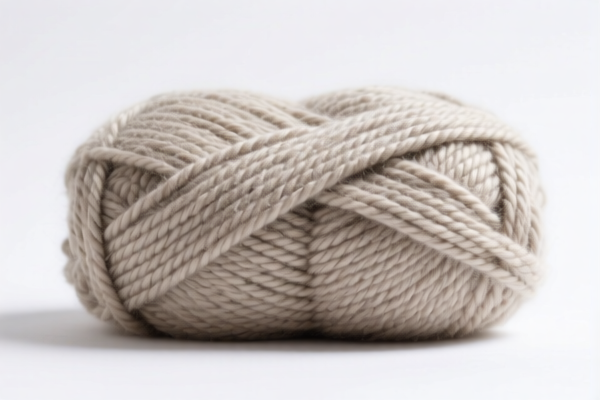
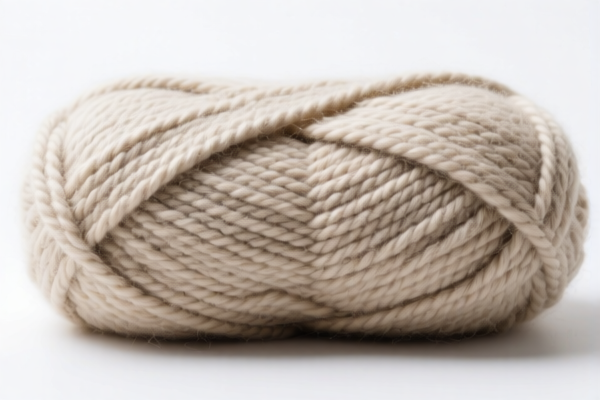
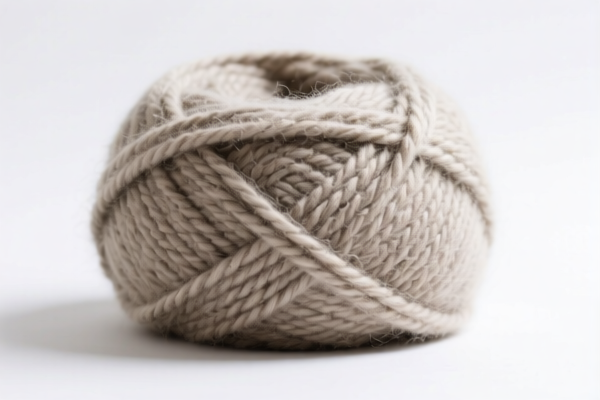
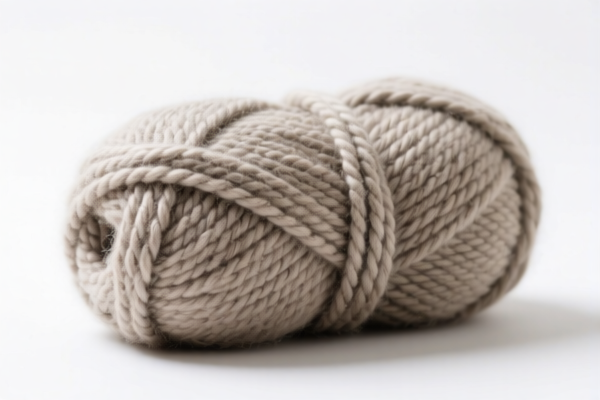
AI Analysis
🐑 Coarse Wool Fiber (Raw & Processed)
🌐 HS Code Reference & Customs Clearance Guide | 2026 Latest Tariff Analysis | Professional Clearance Strategy
📌 I. Product Definition & Classification: Do You Really Know "Coarse Wool"?
Coarse wool fibers are the primary raw materials for the textile industry, specifically intended for carding, spinning, or felting processes that involve rougher handling than fine merino wool. In international trade, they are categorized by their physical state and degree of processing:
- Raw/Scoured Coarse Wool: Wool in its natural state (greasy) or scoured (cleaned), but not carded or combed. It remains in fiber form.
- Carded/Combed Sliver: Wool that has undergone initial mechanical processing (carding) but is not yet spun into yarn.
- Wool Tops & Slivers: Continuous strands of fiber prepared for spinning.
- Non-woven Wool Felt: Wool fibers matted together into fabric without weaving or knitting.
⚠️ Key Distinction:
- If the wool is in fiber form (clips, locks, or loose fibers) and not spun into yarn → It falls under Chapter 51 (Raw/Prepared Wool).
- If the wool is spun into yarn → It falls under HS 5106–5110 (Yarn).
- If the wool is felted (matted) → It falls under Chapter 56 (Felt).
- Misclassification Risk: Declaring raw wool as "yarn" or "fabric" can lead to severe penalties, as tariffs and regulatory requirements differ significantly between Chapters 51, 5106, and 56.
📦 II. HS Code Classification Details (2026 Latest Tariff Authority Cross-Reference)
Based on the provided data, here is the precise classification for Coarse Wool Fiber products:
| HS Code | Product Description | Application Scenario | Processing State |
|---|---|---|---|
5101.11.20.00 |
Coarse wool fiber, not carded or combed | Raw wool clips, greasy wool, scoured wool | ✅ Fiber (Unprocessed/初级) |
5101.19.20.00 |
Other coarse wool fiber, not carded or combed | Wool tops for further processing, non-standard coarse wool | ✅ Fiber (Unprocessed/初级) |
5106.10.00.90 |
Wool or coarse animal hair yarn (not combed) | Wool roving, carded sliver, coarse yarn for knitting | ✅ Semi-finished/Yarn (粗纺纱线) |
5602.21.00.00 |
Wool felt, not impregnated, coated, covered or laminated | Non-woven wool mats, industrial felt, basic felt sheets | ✅ Felt (毡布) |
5602.10.90.10 |
Knitted or tufted wool felt | Textile felts, needle-punch felt, stitched fiber fabrics | ✅ Felt (针织/缝合毡) |
🔍 Important Reminder:
- Raw Fiber vs. Yarn: If the wool has been carded (mechanically aligned into slivers/roving), it is no longer just "fiber" but "yarn" or "sliver" under5106.
- Felt vs. Fabric: Felt is made by matting fibers together, not weaving. If you are importing wool fabric (woven), it would fall under Chapter 51 or 60, not Chapter 56.
- Tariff Complexity: Wool products are subject to complex tariff structures including base rates, Section 301 (USITC) penalties, and Section 122 (IEEPA) surcharges for Chinese origin.
💰 III. 2026 Latest Tariff Rate Breakdown (Including Surcharges & Policy Add-ons)
✅ Applicable Country: USA (US)
✅ Origin: China (CN)
✅ Effective Date: Post-2025 policies (Current as of 2026)
🎯 1. 5101.11.20.00 & 5101.19.20.00 —— Raw Coarse Wool Fiber (Unprocessed)
| Item | Content |
|---|---|
| Base Tariff | 0% (Ad Valorem) |
| USITC Additional Tariff | +25% (Under USITC Footnote for Section 301) |
| Section 122 Tariff | +10% (Specific policy surcharge for certain raw materials) |
| Total Effective Rate | 35% |
| Tax Calculation | CIF Value × 35% |
| De Minimis Eligibility | ❌ Not Eligible (Raw agricultural/textile materials are generally excluded from $800 de minimis) |
| Legal Basis Path | HTSUS:5101.11/19 → USITC:Section 301 → Section 122 Policy |
📌 Explanation:
- While the base MFN tariff for raw wool is often low or zero, the 25% Section 301 tariff applies to many Chinese-origin textile raw materials.
- The 10% Section 122 tariff is a specific administrative surcharge applied to certain imports.
- Total 35% is a significant cost factor for raw wool imports.
🎯 2. 5106.10.00.90 —— Wool Coarse Spun Yarn (Carded/Roving)
| Item | Content |
|---|---|
| Base Tariff | 6.0% (Ad Valorem) |
| USITC Additional Tariff | +25% |
| Section 122 Tariff | +10% |
| Total Effective Rate | 41% |
| Tax Calculation | CIF Value × 41% |
| De Minimis Eligibility | ❌ Not Eligible |
| Legal Basis Path | HTSUS:5106.10 → USITC:Section 301 → Section 122 Policy |
📌 Note:
- Yarn is considered a "semi-finished" good, so the base tariff (6%) is higher than raw fiber (0%).
- The surcharges remain the same, pushing the total to 41%.
🎯 3. 5602.21.00.00 —— Wool Felt (Non-impregnated)
| Item | Content |
|---|---|
| Base Tariff | 49.5¢/kg + 7.5% (Ad Valorem) |
| USITC Additional Tariff | +25% |
| Section 122 Tariff | +10% |
| Total Effective Rate | 49.5¢/kg + 7.5% + 35% Surcharge |
| Tax Calculation | (49.5¢/kg × Weight) + (CIF × 7.5%) + (CIF × 35%) |
| De Minimis Eligibility | ❌ Not Eligible |
| Legal Basis Path | HTSUS:5602.21 → USITC:Section 301 → Section 122 Policy |
📌 Complexity Alert:
- This HS Code has a compound tariff (specific duty per kg + ad valorem percentage).
- The 35% surcharge (25% + 10%) applies to the ad valorem portion.
- Total Effective Cost: High due to the specific duty per kilogram, which discourages small shipments.
🎯 4. 5602.10.90.10 —— Knitted/Tufted Wool Felt
| Item | Content |
|---|---|
| Base Tariff | 10.6% (Ad Valorem) |
| USITC Additional Tariff | +25% |
| Section 122 Tariff | +10% |
| Total Effective Rate | 45.6% |
| Tax Calculation | CIF Value × 45.6% |
| De Minimis Eligibility | ❌ Not Eligible |
| Legal Basis Path | HTSUS:5602.10 → USITC:Section 301 → Section 122 Policy |
📌 Note:
- Knitted felt is classified differently from non-impregnated felt (5602.21), resulting in a pure ad valorem rate.
- 45.6% is one of the highest effective rates for wool products.
🛠️ IV. Customs Clearance Practical Advice (Battle-Tested Pitfall Guide)
✅ 1. Documentation Checklist (Non-Negotiable)
| Document | Required | Notes |
|---|---|---|
| ✅ Commercial Invoice | ✔️ | Must clearly state "Coarse Wool Fiber," not generic "Textile Material." |
| ✅ Packing List | ✔️ | Include gross/net weight, number of bales, and fiber type (e.g., "Sheep's Wool, Coarse"). |
| ✅ Certificate of Origin | ✔️ | Critical for determining if Section 301/122 tariffs apply. |
| ✅ Treatment Certificate | ✔️ | Proof of scouring (if scoured wool) or grease content (if raw). |
| ✅ Fiber Content Declaration | ✔️ | Specify % wool, % other fibers, and micron count (if applicable). |
| ✅ Bill of Lading/Air Waybill | ✔️ | Match descriptions exactly with Invoice. |
✅ 2. Declaration Tips (Key Mnemonics)
🔥 "Raw is Fiber, Carded is Yarn, Felt is Mat, Never Mix!"
| Scenario | Correct Declaration | Incorrect Declaration | Consequence |
|---|---|---|---|
| Raw wool clips | 5101.11.20.00 (Coarse Wool Fiber) |
"Wool Yarn" | Penalty + Retax (Rate 0% → 41%) |
| Carded sliver/roving | 5106.10.00.90 (Wool Yarn) |
"Raw Wool Fiber" | Penalty + Retax (Rate 35% → 41%) |
| Wool felt mats | 5602.21.00.00 (Felt) |
"Wool Fabric" | Penalty + Retax (Complex calculation errors) |
| Knitted felt | 5602.10.90.10 (Knitted Felt) |
"Non-woven Felt" | Misclassification Risk |
✅ 3. Special Cases Handling
| Situation | Handling Advice |
|---|---|
| Mixed Fibers (e.g., Wool + Polyester) | Declare as "Composite Fiber." If wool >50%, still subject to wool tariffs. If <50%, may fall under synthetic categories. |
| Wool Waste/Shoddy | Falls under 5110 or 5111, not 5101. Different tariff rates apply. Ensure "Waste" is explicitly stated. |
| Sample Shipments | Even small samples are subject to full tariffs (No De Minimis). Factor 35–45% into sample costs. |
| Pre-Clearance Ruling | Highly recommended for large volumes. Request an Advance Ruling from CBP to lock in HS Code and tariff rate. |
🌍 V. Global Market Comparison (2026 Latest)
| Country/Region | Recommended HS Code | Base Tariff | Additional Surcharges | Notes |
|---|---|---|---|---|
| 🇺🇸 USA | 5101.11.20.00 |
0% | +35% (Total 35%) | Highest effective cost for raw wool. |
| 🇨🇳 China | 5101.11.00.00 |
0–5% | None | Low tariff for raw material import. |
| 🇪🇺 EU | 5101.11.00 |
0–2.5% | None | Generally favorable for raw wool. |
| 🇬🇧 UK | 5101.11.00 |
0–3% | None | Post-Brexit rates similar to EU. |
| 🇯🇵 Japan | 5101.11.00 |
0–3% | None | Low tariff for raw wool. |
📌 Conclusion:
- USA is the most expensive market for Chinese-origin coarse wool due to Section 301 and Section 122 surcharges.
- EU, UK, Japan, and China offer significantly lower tariff burdens for raw wool imports.
- Strategy: Consider sourcing wool from non-Chinese origins (e.g., Australia, New Zealand, Argentina) for US imports to avoid surcharges.
📌 VI. Common Errors & Pitfall Guide (Lessons Learned)
❌ Mistake 1: Declaring "Wool Roving" as "Raw Wool Fiber"
👉 Result: Under-declaration of tariff (35% vs. 41%). CBP will audit and demand back payments + penalties.
❌ Mistake 2: Missing "Coarse" Specification
👉 Result: If "fine" wool is declared as "coarse," it may fall under different subheadings with different rates. Always specify micron count or wool type.
❌ Mistake 3: Ignoring Section 122 Tariff
👉 Result: Filing with only 25% (Section 301) and missing the 10% (Section 122) leads to underpayment. Always calculate 35% total surcharge for Chinese wool.
❌ Mistake 4: Confusing Felt with Fabric
👉 Result: Felt (5602) and woven wool fabric (5111/5112) have different HS codes and tariff structures. Misclassification leads to delays.
✅ Correct Practice:
"Coarse Wool Fiber, Not Carded, Greasy, 100% Sheep Wool, Origin: China, HS: 5101.11.20.00"
🎯 VII. Conclusion: Precision in Classification Saves Money!
🎯 Key Takeaways:
🔹 "Raw Wool is 35%, Yarn is 41%, Felt is Compound!"
🔹 "No De Minimis for Wool – Every Dollar Counts!"
🔹 "Always Verify Section 122 and Section 301 Applicability!"
📌 Pro Tip:
If you are importing large volumes of coarse wool into the US, consider supply chain diversification. Sourcing from Australia or New Zealand can reduce tariffs to 0–2.5% (MFN rates) without Section 301/122 surcharges, saving 35–45% in taxes.
📣 Immediate Action:
📞 Contact a licensed customs broker.
📤 Provide detailed product specs (fiber type, processing state, origin).
📋 Request an Advance Ruling for large shipments.
🚀 Ensure compliance, avoid delays, and maximize profit margins!
✨ Professional Customs Clearance Starts with Accurate Classification!
💼 Your Cost Efficiency Depends on Your HS Code Accuracy!
Customer Reviews
About HS Code Classification
The Harmonized System (HS) is an internationally standardized nomenclature developed by the World Customs Organization (WCO) to classify traded products. Over 200 countries use the HS system as the basis for customs tariffs, trade statistics, and import/export regulations.
Each HS code follows a hierarchical structure:
- Chapter (2 digits) — Broad category of goods (e.g., Chapter 84: Machinery and Mechanical Appliances)
- Heading (4 digits) — More specific grouping within the chapter
- Subheading (6 digits) — Internationally standardized breakdown, used by all WCO member countries
- National subdivisions (8-10 digits) — Country-specific extensions for further classification, such as US HTSUS 10-digit codes
Correct HS code classification is essential for smooth customs clearance, accurate duty payment, and compliance with trade regulations. Misclassification can lead to customs delays, overpayment of duties, or penalties.
When importing from CN to US, the applicable tariff rates may include:
- Most-Favored-Nation (MFN) rate — The standard duty rate applied to WTO members
- General rate — Applied to countries without trade agreements
- Trade remedy duties — Additional tariffs such as Section 301 (anti-dumping), Section 232 (national security), or countervailing duties
The information provided on this page is for reference purposes only. For official classification, please consult with your local customs authority or a licensed customs broker.