Coarse Wool Fiber (for sorting)
CN → US| HS Code | Tariff Rate | Origin | Destination | Doc |
|---|---|---|---|---|
| 5101192000 | 35.0% | CN | US | Official Doc |
| 5101112000 | 35.0% | CN | US | Official Doc |
| 5102200000 | 35.0% | CN | US | Official Doc |
| 5102196060 | 35.4% | CN | US | Official Doc |
| 5101192000 | 35.0% | CN | US | Official Doc |
Product Images
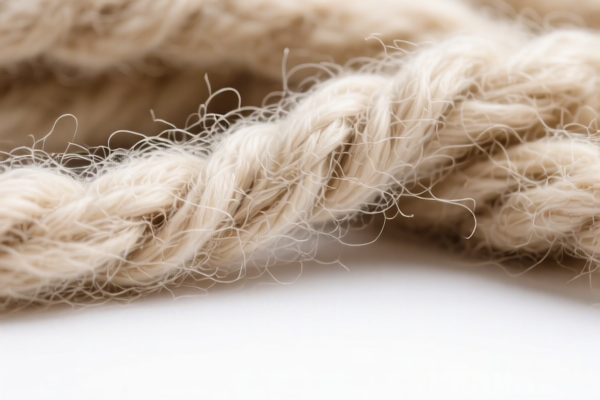
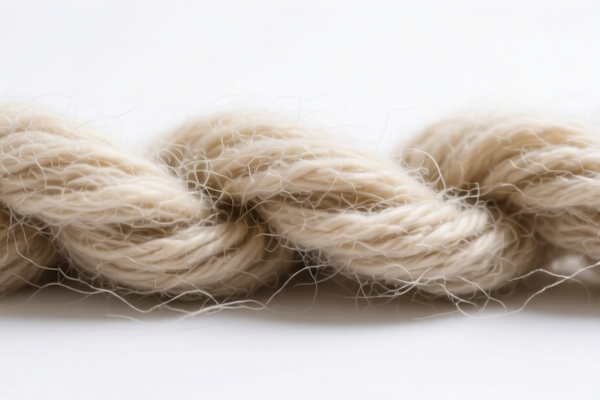
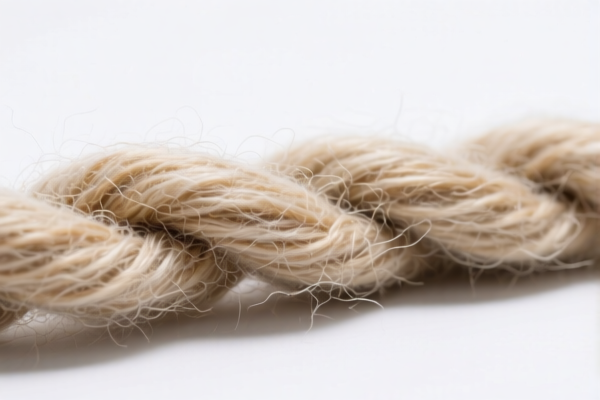
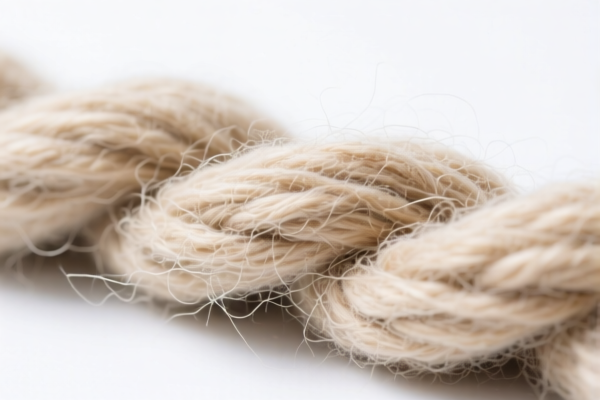
AI Analysis
🐑 Coarse Wool Fiber (For Sorting / Unimproved Greasy Wool)
🌐 HS Code Reference & Customs Clearance Guide | 2026 Latest Tariff Analysis | Professional Clearance Strategy
📌 I. Product Definition & Classification: Understanding "Greasy, Unimproved Wool"
Coarse Wool Fiber (for sorting) refers to raw sheep's wool that has not been subjected to carding or combing, nor significant chemical or mechanical processing (other than cleaning/washing). In the context of international trade and the provided data, this product falls under Chapter 51: Animal Hair and Horsehair; Yarn and Woven Fabric of Animal Hair or Horsehair.
Specifically, it is classified as "Greasy, including fleece-washed wool". The key distinction lies in the fineness of the wool fibers, measured in "S" count (a metric where higher numbers indicate finer fibers). * "Not finer than 46s": The coarsest category. * "Not finer than 40s": A slightly finer, but still coarse, category.
⚠️ Critical Distinction:
- If the wool is not finer than 46s (very coarse), it likely falls under 5101.11.20.00.
- If the wool is not finer than 40s but finer than 46s (medium-coarse), it falls under 5101.19.20.00.
- "Unimproved" means it has not been carbonized, dyed, or blended with synthetic fibers. It is in its natural, raw state (greasy or fleece-washed).
📦 II. HS Code Classification Details (2026 Latest Tariff Authority对照)
Based strictly on the provided <DATA>, here are the two relevant HS Codes for greasy, unimproved coarse wool.
| HS Code | Product Description | Fineness Standard | Application Scenario |
|---|---|---|---|
5101.11.20.00 |
Greasy wool: Shorn wool; Unimproved; Other; Not finer than 46s | ≥ 46s (Coarsest) | Raw shorn wool from coarse sheep breeds, intended for sorting or further processing. |
5101.19.20.00 |
Greasy wool: Other; Unimproved; Other; Not finer than 40s | ≥ 40s (Medium-Coarse) | Raw wool that is finer than the "46s" category but still ≤ 40s, intended for sorting. |
🔍 Key Clarification:
- "Shorn wool" (5101.11): Wool sheared from the sheep.
- "Other" (5101.19): Typically includes pullet wool (first shearing) or other non-sheared greasy wool, but in many contexts, if the fineness is between 40s and 46s, it may fall here depending on specific national tariff interpretations.
- "Unimproved": Confirms no carbonization, bleaching, or synthetic blending.
- "For Sorting": This usage note implies the wool is raw and requires further processing, supporting its classification under raw wool headings (5101).
💰 III. 2026 Latest Tariff Rate Breakdown (Including Additional Taxes)
✅ Applicable Country: United States (US)
✅ Origin: China (CN) [Assumed based on typical tariff structures and the provided tax details]
✅ Effective Date: Current rates as per provided data
🎯 1. 5101.11.20.00 —— Greasy Shorn Wool, Not Finer than 46s
| Item | Content |
|---|---|
| Base Tariff | 0.0% |
| Additional Tariff (Section 301) | 0.0% |
| Total Tax Rate | 0.0% |
| Tax Calculation | CIF Value × 0.0% = $0 |
| Legal Basis | Harmonized Tariff Schedule (HTS) 5101.11.20.00 |
📌 Explanation:
- This category of very coarse wool enjoys a zero tariff rate.
- There are no additional duties (Section 301) applied to this specific subheading in the provided data.
- This makes it highly competitive for importers, provided the wool is correctly declared as "not finer than 46s."
🎯 2. 5101.19.20.00 —— Greasy Wool, Other, Not Finer than 40s
| Item | Content |
|---|---|
| Base Tariff | 0.0% |
| Additional Tariff (Section 301) | 25.0% |
| Total Tax Rate | 25.0% |
| Tax Calculation | CIF Value × 25.0% |
| Legal Basis | Harmonized Tariff Schedule (HTS) 5101.19.20.00 + USITC Footnote for China |
📌 Explanation:
- While the base tariff is 0%, an additional 25% duty is applied.
- This is likely due to Section 301 tariffs targeting Chinese-origin goods.
- Total Cost Impact: For every $10,000 CIF value, you pay $2,500 in additional duties.
- Critical Risk: Misclassifying this wool as5101.11.20.00(to save 25%) when it is actually finer than 46s constitutes customs fraud, leading to severe penalties, back taxes, and potential shipment seizure.
🛠️ IV. Customs Clearance Practical Advice (Actionable Pitfall Avoidance)
✅ 1. Preparation Checklist (Must-Have Documents)
| Document | Mandatory | Description |
|---|---|---|
| ✅ Technical Data Sheet | ✔️ | Must specify fiber diameter (microns) and S count. Crucial for proving fineness level. |
| ✅ Certificate of Origin | ✔️ | To confirm country of origin (e.g., China, Australia, NZ). |
| ✅ Commercial Invoice | ✔️ | Clearly state: "Greasy, Unimproved Wool, Shorn/Other, For Sorting." Avoid vague terms like "Raw Material." |
| ✅ Packing List | ✔️ | Detail weight, bale numbers, and cleanliness status (greasy vs. fleece-washed). |
| ✅ Lab Test Report | ✔️ | Highly Recommended. Independent lab analysis of fiber diameter (micron count) to justify the HS Code (46s vs. 40s). |
| ✅ Phytosanitary Certificate | ✔️ | Required for animal products to prove freedom from diseases. |
✅ 2. Declaration Strategy (Key Mnemonics)
🔥 "Measure the Micron, Check the S Count, Declare Honestly, Avoid the 25% Hit!"
| Scenario | Correct Declaration | Incorrect Declaration | Consequence |
|---|---|---|---|
| Wool fiber ≥ 40 microns (Very Coarse) | 5101.11.20.00 |
Declare as 5101.19.20.00 |
Overpay 25% unnecessarily. |
| Wool fiber < 40 microns (Finer than 40s) | NOT IN DATA | Declare as 5101.11.20.00 |
Underpay Tax: Risk of 25% penalty + back duties. |
| Carbonized or Dyed Wool | NOT IN DATA | Declare as 5101.11.20.00 |
Wrong Classification: May fall under 5102 or 5105, with different taxes. |
| Wool Blended with Synthetics | NOT IN DATA | Declare as 5101.11.20.00 |
Wrong Classification: May fall under Chapter 55, with different rules. |
⚠️ Warning:
- "Unimproved" is a key legal term. If the wool has been carbonized (acid-treated to remove vegetative matter), it is no longer "unimproved" and may fall under a different heading.
- "Greasy" vs. "Fleece-Washed": Both are covered under5101.11and5101.19, but ensure your invoice matches the actual state. Washed wool may have slightly different handling requirements but similar tariff treatment in this data.
✅ 3. Special Considerations
| Situation | Handling Advice |
|---|---|
| OEM/Custom Sorting | Provide sorting specifications to show the wool is for further processing, not direct consumer use. |
| Mixed Lots | If a shipment contains both coarse (<46s) and finer (>40s) wool, split the declaration or declare the highest tax rate for the entire lot if not separable. |
| Origin Verification | Ensure the Certificate of Origin matches the port of loading. Transshipment may alter tariff eligibility. |
| Lab Certification | For high-value shipments, pre-shipment lab tests for micron count are the best defense against customs audits. |
🌍 V. Global Market Comparison (2026 Latest)
| Country/Region | Recommended HS Code | Tariff (China Origin) | Notes |
|---|---|---|---|
| 🇺🇸 United States | 5101.11.20.00 / 5101.19.20.00 |
0% / 25% | Critical: The 25% difference hinges entirely on fiber fineness. |
| 🇨🇳 China (Import) | 5101.11 / 5101.19 | Low (5-9%) | Generally low tariffs for raw wool imports. |
| 🇪🇺 European Union | 5101.11 / 5101.19 | 1.2% - 2.4% | No Section 301-style tariffs, but anti-dumping may apply in rare cases. |
| 🇬🇧 United Kingdom | 5101.11 / 5101.19 | 1.2% - 2.4% | Post-Brexit tariff schedules similar to EU. |
| 🇯🇵 Japan | 5101.11 / 5101.19 | 0% - 3.2% | Often duty-free for agricultural raw materials. |
📌 Conclusion:
- The United States is the only market in this dataset with significant tariff divergence (0% vs. 25%) based on fineness.
- Accuracy is paramount. A misclassification of just a few microns can cost you 25% of the cargo value.
📌 VI. Common Mistakes & Pitfall Guide (Lessons Learned)
❌ Mistake 1: Assuming all "raw wool" is taxed at 0%.
👉 Consequence: If your wool is finer than 46s but coarser than 40s, it falls under 5101.19.20.00 and incurs a 25% duty. Missing this leads to back taxes + penalties.
❌ Mistake 2: Declaring "Carbonized Wool" as "Unimproved Wool."
👉 Consequence: Carbonized wool is chemically treated. It may not qualify as "unimproved," leading to rejection or reclassification under a different, potentially higher-tariff heading.
❌ Mistake 3: Using vague descriptions like "Sheep Wool" or "Raw Fiber."
👉 Consequence: Customs officers will make a worst-case assumption, potentially applying the higher tax rate (25%) to the entire shipment if fineness cannot be proven.
✅ Correct Practice:
"Greasy, Unimproved Shorn Wool, Not Finer than 46s, Micron Count: 40+, For Industrial Sorting, Origin: China"
🎯 VII. Conclusion: Precision Classification Saves Millions!
🎯 Remember the Mantra:
🔹 "Coarse is 0%, Fine-ish is 25%, Prove the Micron, Avoid the Hit!"
🔹 "Unimproved means Raw, Carbonized is a No, Greasy is Key, Washed is OK!"
📌 Pro Tip:
- If your wool is finer than 40s (e.g., 36s, 48s), it is NOT covered in this specific data snippet and will likely have a different tax rate (often higher).
- Always request a lab test before shipping to confirm the micron count.
- For shipments to the US, consider pre-clearance services to get a binding ruling on your HS Code.
📣 Immediate Action:
📞 Consult a licensed customs broker.
📄 Get a micron test report.
🚀 Ensure your invoice matches the HS Code description word-for-word.
✨ Professional Clearance Starts with Accurate Classification!
💼 Your Cost Efficiency Depends on the Micron!
Customer Reviews
About HS Code Classification
The Harmonized System (HS) is an internationally standardized nomenclature developed by the World Customs Organization (WCO) to classify traded products. Over 200 countries use the HS system as the basis for customs tariffs, trade statistics, and import/export regulations.
Each HS code follows a hierarchical structure:
- Chapter (2 digits) — Broad category of goods (e.g., Chapter 84: Machinery and Mechanical Appliances)
- Heading (4 digits) — More specific grouping within the chapter
- Subheading (6 digits) — Internationally standardized breakdown, used by all WCO member countries
- National subdivisions (8-10 digits) — Country-specific extensions for further classification, such as US HTSUS 10-digit codes
Correct HS code classification is essential for smooth customs clearance, accurate duty payment, and compliance with trade regulations. Misclassification can lead to customs delays, overpayment of duties, or penalties.
When importing from CN to US, the applicable tariff rates may include:
- Most-Favored-Nation (MFN) rate — The standard duty rate applied to WTO members
- General rate — Applied to countries without trade agreements
- Trade remedy duties — Additional tariffs such as Section 301 (anti-dumping), Section 232 (national security), or countervailing duties
The information provided on this page is for reference purposes only. For official classification, please consult with your local customs authority or a licensed customs broker.