Coarse cut Poplar Wood
CN → US| HS Code | Tariff Rate | Origin | Destination | Doc |
|---|---|---|---|---|
| 4403970022 | 35.0% | CN | US | Official Doc |
| 4403970067 | 35.0% | CN | US | Official Doc |
| 9403910080 | 35.0% | CN | US | Official Doc |
| 4407970079 | 35.0% | CN | US | Official Doc |
| 9403910010 | 35.0% | CN | US | Official Doc |
Product Images
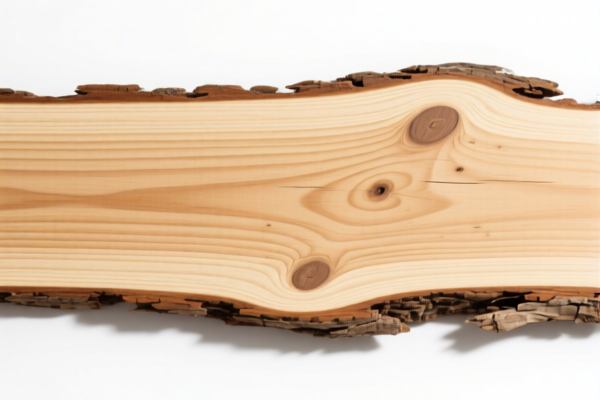
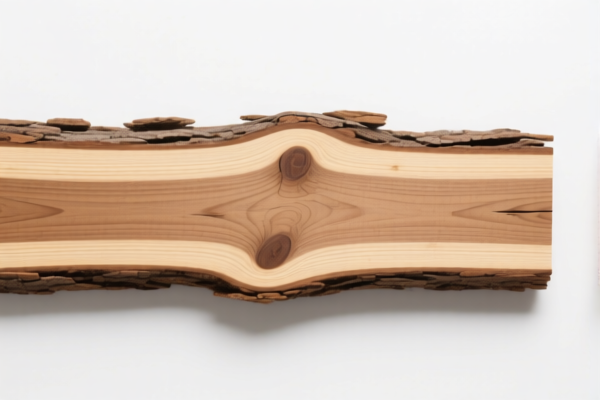
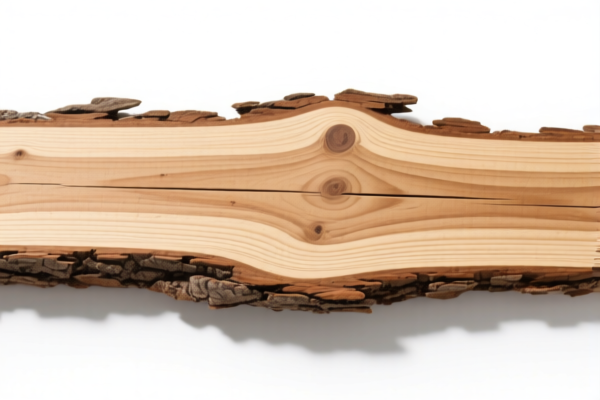
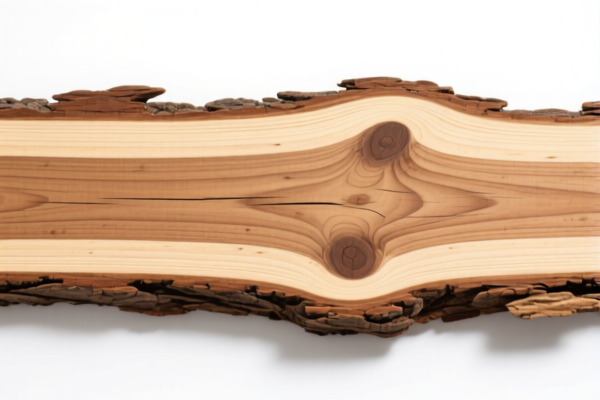
AI Analysis
🌲 Coarse Cut Poplar Wood (Poplar Logs & Rough Sawn Lumber)
🌐 HS Code Reference & Customs Clearance Guide | 2024 Latest Tariff Schedule | Professional Entry Strategy
📌 I. Product Definition & Classification: Do You Really Understand "Poplar Wood"?
Coarse Cut Poplar Wood refers to timber derived from the Poplar tree genus (Populus), processed through primary sawing or peeling, without further planing, sanding, or manufacturing into finished furniture or structural components. In international trade, it is strictly categorized based on its state of processing (log vs. rough-sawn) and intended use (furniture parts vs. general timber).
Key Distinctions:
- Logs/Rough Shapes: Unprocessed or minimally processed trunks/branches → Chapter 4403
- Roughly Sawn Planks/Beams: Longitudinally cut but not planed/sanded → Chapter 4407
- Furniture Parts/Components: Cut to shape but unfinished → Chapter 9403
⚠️ Critical Classification Point:
- If it is a raw log or rough chunk → Use 4403.xxxx
- If it is sawn longitudinally (planks, beams) → Use 4407.xxxx
- If it is a partial furniture component (e.g., cut but not assembled) → Use 9403.91
📦 II. HS Code Classification Details (2024 Latest Tariff Authority Match)
| HS Code | Product Description | Application Scenario | Processing State |
|---|---|---|---|
4403.97.00.22 |
Coarse Poplar Logs: Poplar material + coarse sawn form | Raw logs, rough-cut blocks, industrial raw material | ✅ Raw/Coarse |
4403.97.00.67 |
Coarse Poplar Logs: Poplar material + log form | Unprocessed or minimally debarked logs | ✅ Raw/Log |
9403.91.00.80 |
Roughly Cut White Poplar: Matches wood furniture part material | Partially cut components for furniture assembly | ⚠️ Semi-finished |
4407.97.00.79 |
Roughly Cut White Poplar: Poplar species + longitudinal sawn form | Sawn planks/beams, not planed or sanded | ✅ Rough-sawn |
9403.91.00.10 |
Roughly Cut White Poplar: Matches wood parts + semi-finished state | Cut pieces ready for further machining into furniture | ⚠️ Semi-finished |
🔍 Key Reminder:
- All listed HS codes carry a total tax rate of 35.0% (see Section III).
- Do not confuse "rough-sawn" (4407) with "finished furniture" (9403.01). If it’s just cut to size but not assembled, it often falls under 9403.91 (parts) if intended for furniture.
- "White Poplar" and "Poplar" are treated similarly under these subheadings unless specific botanical distinctions are required by customs.
💰 III. 2024 Latest Tariff Rate Breakdown (Including Additional Duties & Policy Surcharges)
✅ Applicable Country: United States (US)
✅ Country of Origin: China (CN)
✅ Effective Date: All duties applicable under current IEEPA and USITC rulings.
🎯 1. 4403.97.00.22 & 4403.97.00.67 — Poplar Logs (Coarse/Log Form)
| Item | Detail |
|---|---|
| Base Tariff | 0.0% (ad valorem) |
| USITC Additional Duty (Section 301) | +25.0% |
| IEEPA Additional Duty (Section 122 Clause) | +10.0% |
| Total Tax Rate | 35.0% |
| Tax Calculation | CIF Value × 35% |
| De Minimis Exemption? | ❌ NOT ALLOWED (deny_de_minimis) |
| Legal Path | USITC:4403.97.00.22 → FOOTNOTE:301 → IEEPA:122 |
📌 Explanation:
- "Base 0%": General MFN rate for certain timber imports is low or zero.
- "USITC +25%": Standard Section 301 tariff on Chinese wood products.
- "IEEPA +10%": Additional levy under the International Emergency Economic Powers Act for specific strategic goods.
- Total 35% is a high tariff, significantly impacting cost competitiveness.
🎯 2. 4407.97.00.79 — Roughly Sawn White Poplar
| Item | Detail |
|---|---|
| Base Tariff | 0.0% |
| USITC Additional Duty | +25.0% |
| IEEPA Additional Duty | +10.0% |
| Total Tax Rate | 35.0% |
| Tax Calculation | CIF × 35% |
| De Minimis Exemption? | ❌ Not Allowed |
| Legal Path | USITC:4407.97.00.79 → FOOTNOTE:301 → IEEPA:122 |
📌 Note:
- Sawn timber (planks/beams) is taxed identically to logs under these punitive tariffs.
- Ensure the declaration specifies "Roughly Sawn" and "Not Planed" to avoid misclassification as finished lumber (which may have different rates).
🎯 3. 9403.91.00.10 & 9403.91.00.80 — Furniture Parts (Rough Cut)
| Item | Detail |
|---|---|
| Base Tariff | 0.0% |
| USITC Additional Duty | +25.0% |
| IEEPA Additional Duty | +10.0% |
| Total Tax Rate | 35.0% |
| Tax Calculation | CIF × 35% |
| De Minimis Exemption? | ❌ Not Allowed |
| Legal Path | USITC:9403.91.00.x0 → FOOTNOTE:301 → IEEPA:122 |
📌 Caution:
- Even though these are "parts," they are not exempt because they are made from Chinese-origin wood.
- If the furniture is assembled, it may fall under a different HS code with potentially different rates, but rough-cut parts remain heavily taxed.
🛠️ IV. Customs Clearance Practical Advice (Actionable Pitfall Avoidance)
✅ 1. Required Documentation Checklist (Non-Negotiable)
| Document | Mandatory? | Notes |
|---|---|---|
| ✅ Phytosanitary Certificate | ✔️ | Must be issued by origin country; confirms no pests/diseases. |
| ✅ Commercial Invoice | ✔️ | Must specify: Species (Poplar), Form (Log/Rough-sawn/Part), Value, HS Code. |
| ✅ Packing List | ✔️ | Detail weight, dimensions, and packaging type. |
| ✅ Bill of Lading/Air Waybill | ✔️ | Standard shipping documents. |
| ✅ Fumigation Certificate | ✔️ | Often required alongside Phytosanitary; proves ISPM 15 compliance. |
| ✅ Product Photos | ✔️ | Clear images showing wood grain, cut ends, and labels. |
✅ 2. Declaration Tips (Key Rules of Thumb)
🔥 "Accurate Species, Clear State, Full Disclosure!"
| Scenario | Correct Declaration | Incorrect Practice |
|---|---|---|
| Raw logs | Poplar Logs, Coarse Cut, Unprocessed |
"Wood" or "Timber" (too vague) |
| Sawn planks | White Poplar, Rough Sawn, Not Planed |
"Finished Lumber" (misclassification) |
| Furniture parts | Poplar Wood Parts for Furniture, Rough Cut |
"Furniture" (if not assembled) |
⚠️ Warning:
- If you declare "Furniture" but send rough-cut parts, customs may reclassify and impose penalties.
- If you declare "Raw Logs" but send sawn planks, you may face inspection delays for inaccurate HS code.
✅ 3. Special Case Handling
| Situation | Recommendation |
|---|---|
| ISPM 15 Compliance | Ensure all wood packaging (pallets, crates) is heat-treated and marked. Non-compliant packaging can lead to refusal of entry. |
| Mixed Species | If Poplar is mixed with other woods, declare the primary species and provide a detailed breakdown. Misdeclaration can result in heavy fines. |
| Value Declaration | Ensure the CIF value is accurate. Tariffs are calculated on CIF. Under-invoicing is a serious offense. |
| Origin Verification | Provide proof of origin to confirm it is indeed from China (or another origin) to apply the correct IEEPA/USITC duties. |
🌍 V. Global Market Comparison (2024 Snapshot)
| Country/Region | Recommended HS Code | Tariff (China Origin) | Certification Required | Remarks |
|---|---|---|---|---|
| 🇺🇸 USA | 4403.97.00.22 etc. |
35% (0+25+10) | Phytosanitary + ISPM 15 | High tariff due to trade policies. |
| 🇨🇳 China | 4403.97 |
Varies (Import duty) | Phytosanitary | Lower import duties if importing into China. |
| 🇪🇺 EU | 4403.97 |
~0% (Most Favored Nation) | Phytosanitary | No Section 301 or IEEPA tariffs. |
| 🇨🇦 Canada | 4403.97 |
~0% (CETA/FTA if applicable) | Phytosanitary | Check for free trade agreements. |
| 🇬🇧 UK | 4403.97 |
~0% | Phytosanitary | Post-Brexit rules apply. |
📌 Conclusion:
- The USA is the most costly market for Chinese Poplar wood due to 35% cumulative tariffs.
- For EU/UK/Canada, the base tariff is often 0%, making these markets more competitive for wood exports.
- Strategic Advice: If targeting the US, consider tariff engineering (e.g., exporting semi-finished goods from a third country) or absorbing the cost if volume is high.
📌 VI. Common Mistakes & Pitfalls (Lessons Learned)
❌ Mistake 1: Declaring "Poplar" as "Oak" or "Pine" to avoid tariffs
👉 Consequence: Severe penalties, seizure of goods, and blacklisting.
❌ Mistake 2: Ignoring Phytosanitary Requirements
👉 Consequence: Goods rejected at port; demurrage fees accumulate daily.
❌ Mistake 3: Misclassifying "Rough-Sawn" as "Finished Lumber"
👉 Consequence: HS code mismatch; customs inspection delays and potential reclassification fines.
❌ Mistake 4: Not specifying "Unprocessed" or "Rough"
👉 Consequence: Customs may assume it’s value-added wood, leading to incorrect duty assessment.
✅ Correct Approach:
"Rough Sawn White Poplar Lumber, UNPLANED, for furniture parts, HS 4407.97.00.79, Origin: China, Phytosanitary Cert Attached."
🎯 VII. Final Thoughts: Precision Saves Money!
🎯 Remember:
🔹 "Rough Cut, High Tax: 35% is the Price of Poplar in the US."
🔹 "Phytosanitary is Non-Negotiable: No Cert, No Entry."
🔹 "HS Code Precision: One Digit Change Can Save Thousands."
📌 Pro Tip:
- If you are exporting to the USA, consider pre-clearance services to ensure all documents are in order before shipment.
- For EU/UK exports, focus on quality and phytosanitary compliance to maintain smooth trade flows.
- Consult a licensed customs broker for your specific shipment to verify the latest tariff updates.
📣 Take Action Now:
📞 Contact a Customs Broker + Prepare Phytosanitary Cert + Verify HS Code
🚀 Ensure Your Poplar Wood Clears Customs Smoothly, Avoids Delays, and Maximizes Profit!
✨ Professional Customs Clearance Starts with Accurate Classification!
💼 Every Percent of Tariff Counts – Know Your Duties Before You Ship!
Customer Reviews
About HS Code Classification
The Harmonized System (HS) is an internationally standardized nomenclature developed by the World Customs Organization (WCO) to classify traded products. Over 200 countries use the HS system as the basis for customs tariffs, trade statistics, and import/export regulations.
Each HS code follows a hierarchical structure:
- Chapter (2 digits) — Broad category of goods (e.g., Chapter 84: Machinery and Mechanical Appliances)
- Heading (4 digits) — More specific grouping within the chapter
- Subheading (6 digits) — Internationally standardized breakdown, used by all WCO member countries
- National subdivisions (8-10 digits) — Country-specific extensions for further classification, such as US HTSUS 10-digit codes
Correct HS code classification is essential for smooth customs clearance, accurate duty payment, and compliance with trade regulations. Misclassification can lead to customs delays, overpayment of duties, or penalties.
When importing from CN to US, the applicable tariff rates may include:
- Most-Favored-Nation (MFN) rate — The standard duty rate applied to WTO members
- General rate — Applied to countries without trade agreements
- Trade remedy duties — Additional tariffs such as Section 301 (anti-dumping), Section 232 (national security), or countervailing duties
The information provided on this page is for reference purposes only. For official classification, please consult with your local customs authority or a licensed customs broker.