Coated, Impregnated, Covered, Printed or Embossed Paper and Paperboard
CN → US| HS Code | Tariff Rate | Origin | Destination | Doc |
|---|---|---|---|---|
| 4823906000 | 35.0% | CN | US | Official Doc |
| 4823906700 | 35.0% | CN | US | Official Doc |
Product Images
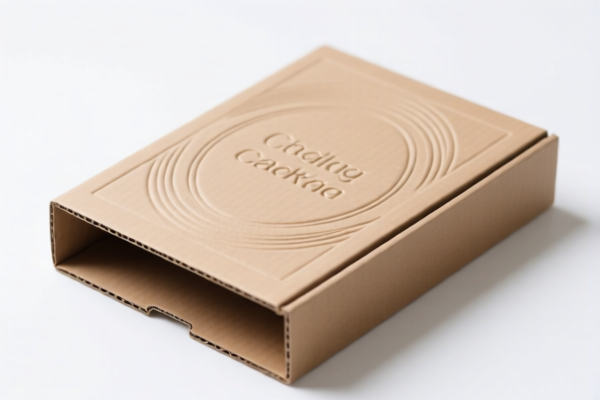
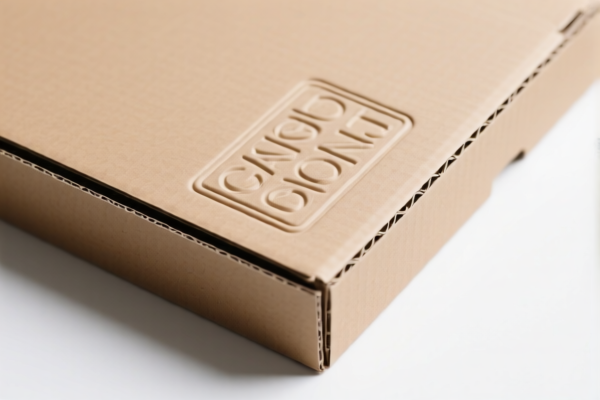
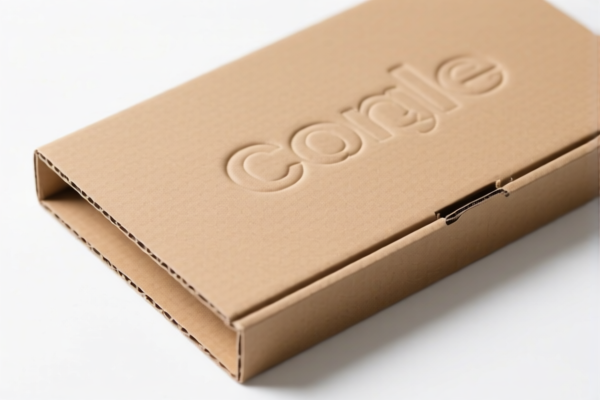

AI Analysis
📄 Coated, Impregnated, Covered, Printed or Embossed Paper and Paperboard
🌐 HS Code Reference & Customs Clearance Guide | 2026 Latest Tariff Analysis | Professional Entry Strategy
📌 Part I: Product Definition & Classification: Do You Really Understand "Paper and Paperboard"?
Paper, paperboard, and cellulose-based products are ubiquitous in global trade, used in packaging, industrial sealing, and consumer goods. In international trade, these items are broadly categorized by their material composition, finish (coated/printed), and specific utility (e.g., gaskets vs. general articles).
Coated/Impregnated Paper & Paperboard: Paper or paperboard that has been surface-treated (coated) with substances like clay, latex, or polymers to enhance printability, moisture resistance, or gloss. Cut-to-Shape Articles: Finished goods made from paper/paperboard that have been die-cut or shaped for specific functions, such as gaskets, washers, seals, or decorative items.
⚠️ Key Distinction Point:
- If the item is a specific functional component like a gasket, washer, or seal made from coated paper →归入 4823.90.60.00
- If the item is a general article made from coated paper/paperboard (e.g., labels, cards, cutouts) that does not fit specific sub-categories →归入 4823.90.67.00
📦 Part II: HS Code Classification Details (2026 Latest Tariff Authority Comparison)
| HS Code | Product Description | Applicable Scenario | Specific Type |
|---|---|---|---|
4823.90.60.00 |
Gaskets, washers, and other seals | Industrial seals, automotive gaskets, pipe seals, flat washer shapes | ✅ Specific Function |
4823.90.67.00 |
Other | General coated paper articles, custom cut shapes, decorative paper items, non-seal applications | ✅ General Article |
🔍 Key Reminder:
- Both codes specifically apply to "Of coated paper or paperboard". If the paper is uncoated, different HS codes under Chapter 48 apply. -4823.90.60.00is reserved for items whose primary function is sealing or isolation (gaskets/washers). -4823.90.67.00is the "catch-all" for other coated paper articles cut to size or shape, excluding the specific gasket/seal category.
💰 Part III: 2026 Latest Tariff Rate Details (Including Additional Taxes, Policy Add-ons)
✅ Applicable Country: United States (US)
✅ Country of Origin: China (CN)
✅ Effective Time: As per current USITC and USTR regulations (Section 301 / IEEPA)
🎯 1. 4823.90.60.00 —— Gaskets, Washers, and Other Seals (Coated)
| Item | Content |
|---|---|
| Base Tariff Rate | 0% (ad valorem) |
| Additional Tariff (Section 301) | +25.0% |
| Total Tax Rate | 25.0% |
| Tax Calculation | CIF Value × 25% |
| De Minimis Exemption | ❌ Not Applicable (For Section 301 goods, de minimis relief is generally not available for direct shipments from China under current enforcement) |
| Legal Basis Path | HTSUS: 4823.90.60.00 → USITC Footnote: Section 301 |
📌 Explanation:
- The "Base Tariff" for this specific sub-heading is 0%, meaning the standard MFN duty is free. - However, due to geopolitical trade measures, a 25% additional tariff is imposed on goods originating from China. - Total Cost Impact: Importers must budget for a 25% surcharge on the landed cost (CIF) of these coated paper gaskets/seals.
🎯 2. 4823.90.67.00 —— Other Coated Paper/Paperboard Articles
| Item | Content |
|---|---|
| Base Tariff Rate | 0% (ad valorem) |
| Additional Tariff (Section 301) | +25.0% |
| Total Tax Rate | 25.0% |
| Tax Calculation | CIF Value × 25% |
| De Minimis Exemption | ❌ Not Applicable |
| Legal Basis Path | HTSUS: 4823.90.67.00 → USITC Footnote: Section 301 |
📌 Note:
- This code shares the exact same tax structure as4823.90.60.00. - Whether it is a coated paper label, a cut-out decorative piece, or another general article, the 25% total tax rate applies for Chinese origin. - Misclassification from4823.90.60.00to4823.90.67.00(or vice versa) does not change the tax rate, but it can lead to customs penalties for incorrect declaration.
🛠️ Part IV: Customs Clearance Operational Advice (Practical Pitfall Avoidance Guide)
✅ 1. Required Documentation Checklist (All are mandatory)
| Document | Must Provide | Description |
|---|---|---|
| ✅ Product Specification Sheet | ✔️ | Details on coating material (e.g., clay, polymer), paper weight (GSM), and final dimensions. |
| ✅ Product Photos (Labeled) | ✔️ | Clear images showing the cross-section, surface finish, and any embossing/printing. |
| ✅ Commercial Invoice | ✔️ | Must explicitly state: "Coated Paper Gaskets/Washers" or "Coated Paper Articles". Avoid vague terms like "Paper Products." |
| ✅ Packing List | ✔️ | Detailing quantity, net/gross weight, and package dimensions. |
| ✅ Certificate of Origin (CO) | ✔️ | Essential to prove Chinese origin (triggering the 25% tax). If shipped from Vietnam/Malaysia, ensure valid origin rules apply. |
| ✅ Declaration of Non-Asbestos | ✔️ | Many paper gaskets are asbestos-free; providing this can expedite processing for industrial seals. |
✅ 2. Declaration Tips (Key Mantra)
🔥 "Be Specific, Don't Generalize! Coated Paper Seals Are 'Gaskets', Not Just 'Paper'."
| Scenario | Correct Declaration | Wrong Practice |
|---|---|---|
| Paper Gaskets/Washers | 4823.90.60.00 "Gaskets, washers and other seals" |
Reporting as "Paper Parts" → Risk of audit/reclassification |
| Coated Paper Cards/Labels | 4823.90.67.00 "Other" |
Reporting as "Gaskets" → Incorrect HS Code, potential penalty |
| Uncoated Paper Articles | Check other Chapter 48 codes | Using 4823.90.6x codes for uncoated paper → 100% Rejection |
| Mixed Shipments | Separate line items for coated vs. uncoated | Mixing types on one line → Delays, duty underpayment |
✅ 3. Special Case Handling
| Situation | Handling Advice |
|---|---|
| Multi-Layer Paper Products | If the product has a paper base but a significant functional layer (e.g., rubber-coated), it may move to Chapter 40 (Rubber). Ensure the primary material is paper. |
| Embossed Paper Seals | Still classified under 4823.90.60.00 if function is a seal. Embossing is a surface feature, not a material change. |
| Import from Third Countries | If shipped from Vietnam but made in China, the 25% tax still applies. Ensure "Origin" is declared correctly, not just "Ship From." |
| Low-Value Samples | Even under $800, if explicitly identified as Section 301 goods, CBP may still assess duties or require formal entry. |
🌍 Part V: Global Market Comparison for Paper Products (2026 Latest)
| Country/Region | Recommended HS Code | Tariff (China Origin) | Certification Requirements | Notes |
|---|---|---|---|---|
| 🇺🇸 USA | 4823.90.60.00 / 67.00 |
25% (Total) | None specific for paper, but FDA if food-contact | High tariff burden |
| 🇨🇳 China | 4823.90.60.00 / 67.00 |
0% - 5% | GB Standards | No additional tariffs |
| 🇪🇺 EU | 4823.90.60.00 / 67.00 |
0% - 6% | REACH (chemicals in coating) | No Section 301 equivalent |
| 🇨🇦 Canada | 4823.90.60.00 / 67.00 |
0% (if under CUSMA) | Canadian Standards | Free trade if qualifying |
| 🇦🇺 Australia | 4823.90.60.00 / 67.00 |
5% | Australian Standards | Moderate tariff |
📌 Conclusion:
- The US market is significantly more expensive for Chinese-origin coated paper products due to the flat 25% surcharge. - For non-US markets, tariffs are generally lower or negotiable via FTAs (e.g., CUSMA for Canada, RCEP for Asia-Pacific).
📌 Part VI: Common Errors & Pitfall Guide (Lessons from Real Cases)
❌ Error 1: Declaring "Gaskets" as "Paper Rolls" or "Unspecified Paper Goods"
👉 Consequence: HS Code misclassification, leading to 25% duty underpayment and potential penalties.
❌ Error 2: Using "Uncoated Paper" codes for "Coated Paper" products
👉 Consequence: Customs inspection reveals surface coating → Reclassification + Late Fees.
❌ Error 3: Ignoring the "Section 301" status on the Commercial Invoice
👉 Consequence: CBP audit finds origin misrepresentation → Goods held or seized.
❌ Error 4: Mixing "Gaskets" (4823.90.60) with "General Paper Articles" (4823.90.67) on a single line item
👉 Consequence: Confusion for customs brokers, leading to clearance delays.
✅ Correct Practice:
"Coated Paper Gaskets, Cut to Shape, Asbestos-Free, Model XYZ, HS Code 4823.90.60.00"
🎯 Part VII: Conclusion: Precision in Classification, Savings in Clearance
🎯 Remember the Mantra:
🔹 "Seals are 'Gaskets' (4823.90.60), Others are 'Other' (4823.90.67)."
🔹 "Coated Paper + China Origin = 25% Total Tax. No surprises if declared right!"
📌 Pro Tip:
If your coated paper products are not from China (e.g., sourced from India, Brazil, or Thailand), the 25% additional tariff does NOT apply. Verify the Country of Origin on the production records, not just the shipping port.
📣 Immediate Action:
📞 Engage a licensed Customs Broker + Provide Technical Spec Sheets + Apply for HS Code Pre-Ruling if unsure.
🚀 Ensure your supply chain is optimized for the 25% US tariff landscape.
✨ Professional Clearance Starts with Accurate Classification!
💼 Every Percent in Duty is a Percent in Profit. Get it Right!
Customer Reviews
About HS Code Classification
The Harmonized System (HS) is an internationally standardized nomenclature developed by the World Customs Organization (WCO) to classify traded products. Over 200 countries use the HS system as the basis for customs tariffs, trade statistics, and import/export regulations.
Each HS code follows a hierarchical structure:
- Chapter (2 digits) — Broad category of goods (e.g., Chapter 84: Machinery and Mechanical Appliances)
- Heading (4 digits) — More specific grouping within the chapter
- Subheading (6 digits) — Internationally standardized breakdown, used by all WCO member countries
- National subdivisions (8-10 digits) — Country-specific extensions for further classification, such as US HTSUS 10-digit codes
Correct HS code classification is essential for smooth customs clearance, accurate duty payment, and compliance with trade regulations. Misclassification can lead to customs delays, overpayment of duties, or penalties.
When importing from CN to US, the applicable tariff rates may include:
- Most-Favored-Nation (MFN) rate — The standard duty rate applied to WTO members
- General rate — Applied to countries without trade agreements
- Trade remedy duties — Additional tariffs such as Section 301 (anti-dumping), Section 232 (national security), or countervailing duties
The information provided on this page is for reference purposes only. For official classification, please consult with your local customs authority or a licensed customs broker.