Coated Corrugated Paper Roll
CN → US| HS Code | Tariff Rate | Origin | Destination | Doc |
|---|---|---|---|---|
| 4810132090 | 35.0% | CN | US | Official Doc |
| 4810131900 | 35.0% | CN | US | Official Doc |
| 4811516000 | 35.0% | CN | US | Official Doc |
| 4811512010 | 35.0% | CN | US | Official Doc |
| 4811596000 | 35.0% | CN | US | Official Doc |
Product Images

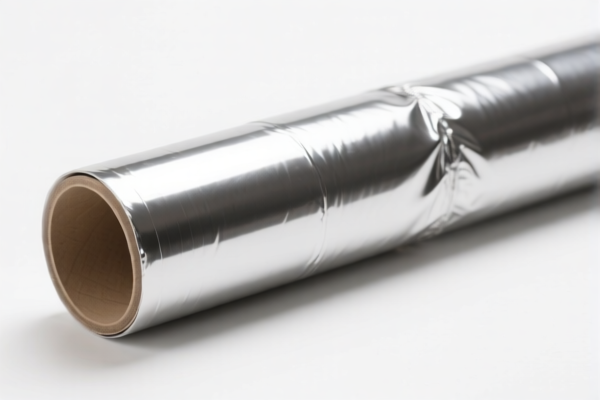
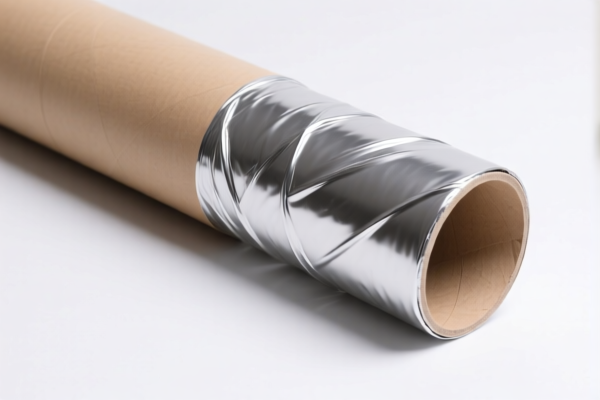
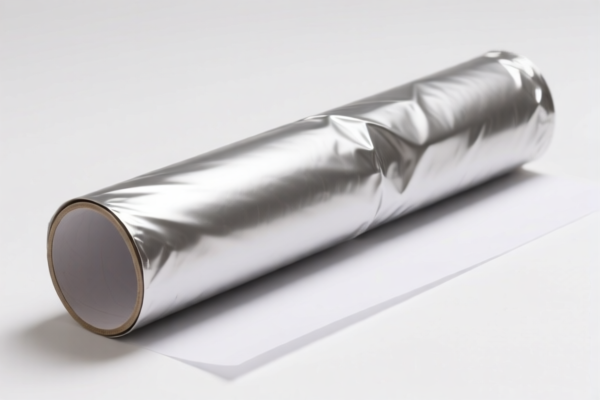
AI Analysis
📜 Coated Corrugated Paper Roll (涂布瓦楞原纸卷)
🌐 HS Code Reference & Customs Clearance Guide | 2026 Latest Tariff Analysis | Professional Clearance Strategy
📌 I. Product Definition & Classification: Do You Really Understand "Coated Corrugated Paper"?
Coated Corrugated Paper Rolls are specialized packaging materials used primarily in the manufacturing of corrugated cardboard boxes, cartons, and shipping containers. Unlike standard kraft linerboard, these rolls undergo a surface coating process to enhance printability, moisture resistance, and barrier properties.
In international trade, classification is critical because the type of coating and the final intended use (e.g., general packaging vs. specific beverage container substrate) determine the HS Code. Misclassification can lead to significant duty liabilities, especially under current US-China trade policies.
⚠️ Key Distinction:
- If the paper is primarily identified by its surface coating characteristics (plastic/chemical coating for barrier properties) → It often falls under Chapter 48.11.
- If the paper is identified by its primary function (printing/writing surface) or falls under a general catch-all provision for coated paper not elsewhere specified → It may fall under Chapter 48.10 or other specific subheadings.
- Note: The provided data infers classifications based on "catch-all principles," "printing/writing purposes," and "coating/impregnation features."
📦 II. HS Code Classification Details (2026 Latest Tariff Authority Cross-Reference)
| HS Code | Product Description (Inferred) | Application Scenario | Key Classification Feature |
|---|---|---|---|
4810.13.20.90 |
Coated Paper Rolls, General Catch-All | General packaging, standard coated linerboard | Based on catch-all principle for other items in this heading not specified elsewhere. |
4810.13.19.00 |
Coated Paper Rolls, Printed/Writing Use | High-quality packaging with printability focus | Based on inference of printing or writing purposes. |
4811.51.60.00 |
Coated Paper Rolls, Coated/Impregnated Feature | Barrier packaging, moisture-resistant liners | Based on coating/impregnation/covering characteristics (Chapter 48.11). |
4811.51.20.10 |
Coated Paper Rolls, Plastic Coated / Beverage Substrate | Beverage bottles cartons, specific plastic-laminated paper | Based on plastic coating and beverage container substrate use. |
4811.59.60.00 |
Coated Kraft Paper Rolls, Plastic Covered | Heavy-duty packaging, plastic-coated kraft board | Based on plastic coating type of paper products. |
🔍 Critical Reminder:
- Chapter 48.10 vs. 48.11:
-4810generally covers paper/board coated with minerals (e.g., clay) for printing.
-4811covers paper/board coated with plastics, resins, or other substances (barrier properties).
- The Inferred Logic: The data provided uses specific inferences (e.g., "based on catch-all principle") to assign these codes. In practice, you must select the code that best matches the technical specification sheet of your product. If the coating is plastic-based,4811is more likely. If it's mineral/clay-based for printing,4810is more likely.
- All listed codes carry a 35% Total Tax Rate due to US trade policies against Chinese goods.
💰 III. 2026 Latest Tariff Rate Details (Including Additional Duties & Policy Surcharges)
✅ Applicable Country: United States (US)
✅ Country of Origin: China (CN)
✅ Effective Time: From November 10, 2025 (including subsequent imports)
🎯 1. 4810.13.20.90 & 4810.13.19.00 —— Coated Paper Rolls (Chapter 48.10)
| Item | Content |
|---|---|
| Base Tariff | 0% (ad valorem) |
| USITC Additional Duty | +25% (Under USITC Footnote 9903.88.01 or related Section 301 provisions) |
| IEEPA Additional Duty | +10% (Targeting Chinese/HK products under International Emergency Economic Powers Act) |
| Total Tax Rate | 35% |
| Tax Calculation | CIF Value × 35% |
| De Minimis Exemption | ❌ Not Eligible (deny_de_minimis applies to Section 301/IEEPA items) |
| Legal Basis Path | IEEPA:9903.01.25 → IEEPA:9903.01.24 → USITC:4810.xxxx → FOOTNOTE:9903.88.01 |
📌 Explanation:
- The 25% USITC duty is a retaliation tariff under Section 301 of the Trade Act.
- The 10% IEEPA duty is an additional national security/emergency tariff.
- Total 35% is a high barrier. This is not a "low-value" package; de minimis (Section 321) exemptions do not apply.
🎯 2. 4811.51.60.00 & 4811.51.20.10 & 4811.59.60.00 —— Coated Paper Rolls (Chapter 48.11)
| Item | Content |
|---|---|
| Base Tariff | 0% (ad valorem) |
| USITC Additional Duty | +25% |
| IEEPA Additional Duty | +10% |
| Total Tax Rate | 35% |
| Tax Calculation | CIF Value × 35% |
| De Minimis Exemption | ❌ Not Eligible |
| Legal Basis Path | IEEPA:9903.01.25 → IEEPA:9903.01.24 → USITC:4811.xxxx → FOOTNOTE:9903.88.01 |
📌 Note:
- Whether classified under 48.10 or 48.11, the additional duties are consistent at 35% for Chinese-origin goods.
- The distinction between4811.51(plastic-coated) and4811.59(other plastic-coated) depends on the specific type of plastic/resin used and the manufacturing process.
- Do not assume lower duties because it is "paper." The coating and origin drive the cost.
🛠️ IV. Customs Clearance Practical Advice (Battle-Tested Pitfall Guide)
✅ 1. Documentation Checklist (Non-Negotiable)
| Document | Required? | Description |
|---|---|---|
| ✅ Product Specification Sheet | ✔️ | Must detail coating type (plastic, resin, clay), basis weight, and finish. |
| ✅ Certificate of Origin (CO) | ✔️ | Proves Chinese origin. Without it, you may still face the tariff, but it’s essential for audit trails. |
| ✅ Commercial Invoice | ✔️ | Must clearly state "Coated Corrugated Paper Roll" and HS Code. |
| ✅ Packing List | ✔️ | Must show net/gross weight and number of rolls. |
| ✅ Bill of Lading/Air Waybill | ✔️ | Standard shipping document. |
| ✅ Import Entry Summary | ✔️ | Filed by your customs broker. |
✅ 2. Declaration Tips (Key Mantras)
🔥 "Specify Coating, Specify Origin, Ignore De Minimis!"
| Scenario | Correct Declaration | Incorrect Practice |
|---|---|---|
| Plastic-Coated Paper | 4811.51.20.10 or 4811.59.60.00 |
Declaring as "Cardboard" (76%) or generic "Paper" |
| Clay-Coated Paper for Printing | 4810.13.19.00 or 4810.13.20.90 |
Declaring as "Packaging Material" (too vague) |
| Small Sample Shipment | Pay 35% Duty | Assuming de minimis (under $800) applies ❌ |
| Mixed Shipment | Separate HS Codes for different coating types | Bundling under one code to simplify → Audit Risk |
✅ 3. Special Handling Cases
| Situation | Handling Advice |
|---|---|
| OEM Custom Coating | Provide technical data showing the coating process (e.g., polyethylene lamination) to justify 4811 over 4810. |
| Beverage Container Substrate | If used specifically for drink cartons, emphasize 4811.51.20.10 to ensure accurate classification, though tax remains 35%. |
| Transshipment Risk | Never route Chinese goods through third countries (e.g., Vietnam, Mexico) without substantial transformation. US Customs (CBP) aggressively pursues circumvention. The Country of Origin remains China, and the 35% tariff will be assessed. |
| Pre-Ruling Strategy | Apply for an Advance Ruling from US CBP if the coating type is ambiguous. This provides legal certainty before shipping. |
🌍 V. Global Market Comparison (2026 Latest)
| Country/Region | Recommended HS Code | Tariff (China Origin) | Certification Requirements | Notes |
|---|---|---|---|---|
| 🇺🇸 USA | 4810.13.20.90 / 4811.51.20.10 |
35% | FDA (if food contact), ASTM | High barrier due to Section 301 + IEEPA. No de minimis. |
| 🇨🇳 China | Same Codes | 5-10% | CCC (if applicable) | Low duty, but export restrictions may apply. |
| 🇪🇺 EU | 4811 or 4810 |
6-9% | REACH, FSC/PEFC (Sustainability) | No Section 301 tariffs. Green packaging standards important. |
| 🇯🇵 Japan | 4811 or 4810 |
3-8% | JIS Standards | Moderate duty. Focus on quality and consistency. |
| 🇬🇧 UK | 4811 or 4810 |
5-8% | UKCA | Post-Brexit rules apply. |
📌 Conclusion:
- The US market is uniquely punitive for Chinese paper products due to the 35% combined tariff.
- EU, Japan, and UK are far more cost-effective for Chinese exports.
- Strategic Shift: If selling to the US, consider manufacturing in Vietnam, Thailand, or Mexico (with genuine transformation) to avoid the 35% tariff, but ensure compliance with US Rules of Origin.
📌 VI. Common Mistakes & Pitfall Guide (Lessons Learned)
❌ Mistake 1: Assuming "Paper" shipments under $800 are duty-free.
👉 Consequence: CBP seizes goods and fines importer. Section 301/IEEPA items are explicitly excluded from de minimis.
❌ Mistake 2: Vague Description ("Packaging Paper").
👉 Consequence: Customs delays classification, leading to detention, storage fees, and potential re-assignment to a higher duty code.
❌ Mistake 3: Misclassifying Plastic-Coated Paper as Mineral-Coated (4810).
👉 Consequence: Although the tax rate here is the same (35%), incorrect classification triggers audits and potential penalties for fraud or negligence.
❌ Mistake 4: Transshipping via Southeast Asia without processing.
👉 Consequence: CBP’s Section 301 Exclusions and Anti-Circumvention rules will apply the 35% tariff anyway, plus penalties for false labeling.
✅ Correct Approach:
"Coated Kraft Paper Roll, Plastic Laminated, 150gsm, for Corrugated Box Liner, Made in China, HS 4811.51.20.10"
🎯 VII. Conclusion: Precise Classification Saves Money!
🎯 Remember the Mantra:
🔹 "Coated Paper = 35% Tax in US!"
🔹 "No De Minimis for Section 301 Items!"
🔹 "Be Specific in Description, Avoid Audits!"
📌 Pro Tip:
If your business relies on US imports of coated paper:
1. Calculate Landed Cost including the 35% duty immediately.
2. Explore Duty-Exempt Alternatives: Check if any specific subheadings have been excluded (rare for paper).
3. Supply Chain Diversification: Consider sourcing from non-China origins to avoid the IEEPA 10% + Section 301 25% surcharge.
📣 Immediate Action:
📞 Consult a US Customs Broker BEFORE shipping.
📄 Provide full product specs for Pre-Ruling Application.
🚀 Ensure your invoice description matches the HS Code exactly.
✨ Professional Clearance Starts with Accurate Classification!
💼 Every Percent of Duty Counts—Don’t Let Hidden Taxes Erode Your Margin!
Customer Reviews
About HS Code Classification
The Harmonized System (HS) is an internationally standardized nomenclature developed by the World Customs Organization (WCO) to classify traded products. Over 200 countries use the HS system as the basis for customs tariffs, trade statistics, and import/export regulations.
Each HS code follows a hierarchical structure:
- Chapter (2 digits) — Broad category of goods (e.g., Chapter 84: Machinery and Mechanical Appliances)
- Heading (4 digits) — More specific grouping within the chapter
- Subheading (6 digits) — Internationally standardized breakdown, used by all WCO member countries
- National subdivisions (8-10 digits) — Country-specific extensions for further classification, such as US HTSUS 10-digit codes
Correct HS code classification is essential for smooth customs clearance, accurate duty payment, and compliance with trade regulations. Misclassification can lead to customs delays, overpayment of duties, or penalties.
When importing from CN to US, the applicable tariff rates may include:
- Most-Favored-Nation (MFN) rate — The standard duty rate applied to WTO members
- General rate — Applied to countries without trade agreements
- Trade remedy duties — Additional tariffs such as Section 301 (anti-dumping), Section 232 (national security), or countervailing duties
The information provided on this page is for reference purposes only. For official classification, please consult with your local customs authority or a licensed customs broker.