Coated Gasket Tape
CN → US| HS Code | Tariff Rate | Origin | Destination | Doc |
|---|---|---|---|---|
| 4823908000 | 35.0% | CN | US | Official Doc |
| 4823906000 | 35.0% | CN | US | Official Doc |
| 3926904590 | 38.5% | CN | US | Official Doc |
| 4811594040 | 35.0% | CN | US | Official Doc |
| 3926909989 | 22.8% | CN | US | Official Doc |
Product Images
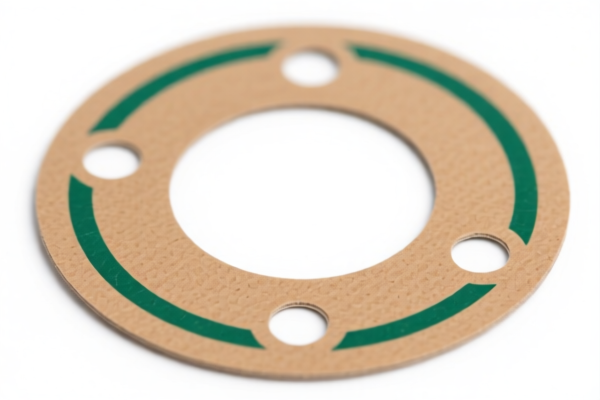
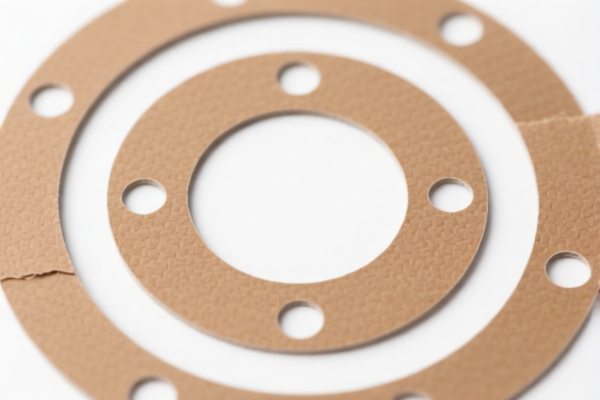
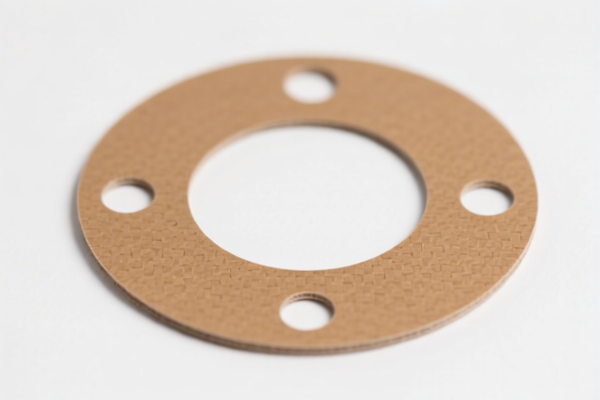
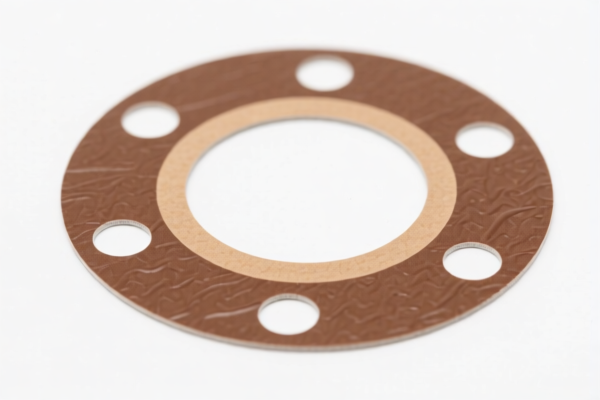
AI Analysis
🏗️ Coated Gasket Tape (Waterproof Coated Paper Gaskets)
🌐 HS Code Reference & Customs Clearance Guide | 2026 Latest Tariff Analysis | Professional Clearance Strategy 📌 I. Product Definition & Classification: What Exactly is "Coated Gasket Tape"?
Coated Gasket Tape (specifically waterproof coated paper gaskets) is a composite industrial material widely used in sealing applications for machinery, automotive, and construction sectors. In international trade, the classification is critical and often disputed because it involves two conflicting material characteristics: 1. Paper Base: The core material is cellulose-based paper. 2. Coated Layer: The surface is treated with a waterproofing agent (which may be plastic-based or chemical).
⚠️ Key Distinction Point: * If the coating is considered a mere surface treatment (impregnation) that doesn't change the essential character of the paper → It stays in Chapter 48 (Paper). * If the coating is a plastic layer that gives the product the characteristics of plastic articles → It may shift to Chapter 39 (Plastics). * If it is considered a finished article (gasket) made of plastic material → It falls under Plastic Gaskets.
📦 II. HS Code Classification Details (2026 Latest Tariff Authority Mapping)
| HS Code | Product Description | Logic/Reasoning | Essential Character |
|---|---|---|---|
4823.90.80.00 |
Waterproof coated paper gaskets; material is paper; waterproof coating belongs to morphological processing. | The coating is viewed as a physical/chemical treatment that retains the paper's identity. The final form is a "gasket." | ✅ Paper |
4823.90.60.00 |
Waterproof coated paper gaskets; material is paper; waterproof coating meets coating characteristics. | Similar to above, but emphasizes the "coated paper" aspect under Chapter 48. | ✅ Paper |
3926.90.45.90 |
Waterproof coated paper gaskets; form is gasket; inferred to contain plastic coating; classified as other gaskets/seals. | Customs infers plastic presence due to waterproof nature. Classified as a plastic article (gasket). | ❌ Plastic (Inferred) |
4811.59.40.40 |
Waterproof coated paper gaskets; material is paper; form is coated; meets coated plastic paper characteristics. | Focuses on the "Plastic-Coated Paper" aspect. Even if it's a gasket shape, the material definition dominates. | ✅ Paper/Plastic Composite |
3926.90.99.89 |
Waterproof coated paper gaskets; material is cellulose; form is gasket; classified as other plastic material products. | A catch-all for plastic articles not specifically listed elsewhere. Assumes the plastic coating defines the product. | ❌ Plastic |
🔍 Critical Reminder: * Chapter 48 (Paper) generally has 0% Base Duty but attracts high additional tariffs (USITC + IEEPA). * Chapter 39 (Plastics) generally has Base Duty (3.5% - 5.3%) but may attract lower or different additional tariffs depending on specific footnote interpretations. * The "Plastic Inference" Trap: If Customs determines the coating is >50% plastic by weight or essential character, you risk being moved to Chapter 39, which changes the tariff structure significantly.
💰 III. 2026 Latest Tariff Rate Details (Including Surcharges & Policy Add-ons)
✅ Applicable Country: United States (US) ✅ Origin: China (CN) ✅ Effective Date: From November 10, 2025 (and subsequent imports)
🎯 1. Chapter 48 Classifications (4823.90.80.00, 4823.90.60.00, 4811.59.40.40)
These codes are classified as Paper Products.
| Item | Content |
|---|---|
| Base Tariff Rate | 0.0% (Ad valorem) |
| USITC Additional Duty | +25.0% (Under USITC Footnote for Chapter 48 items from China) |
| IEEPA Additional Duty | +10.0% (Section 122 Clause – Targeting specific Chinese inputs/materials) |
| Total Effective Rate | 35.0% |
| Tax Calculation | CIF Value × 35% |
| De Minimis Exemption | ❌ Not Eligible (deny_de_minimis) |
| Legal Basis Path | IEEPA:122-Clause → USITC:4823/4811 → FOOTNOTE:China-Specific |
📌 Explanation: * Although the base duty is 0%, the 25% USITC tariff applies to many paper articles. * The 10% IEEPA (Section 122) is a specific add-on for certain material inputs. * Total: 35%. This is a high-cost entry point for paper-based gaskets.
🎯 2. Chapter 39 Classifications (3926.90.45.90, 3926.90.99.89)
These codes are classified as Plastic Articles/Gaskets.
| Item | Content |
|---|---|
| Base Tariff Rate | 3.5% (3926.90.45.90) or 5.3% (3926.90.99.89) |
| USITC Additional Duty | +25.0% (For 3926.90.45.90) or +7.5% (For 3926.90.99.89 - Note: Lower surcharge applies to generic plastic items) |
| IEEPA Additional Duty | +10.0% (Section 122 Clause) |
| Total Effective Rate | 38.5% (for 45.90) or 22.8% (for 99.89) |
| Tax Calculation | CIF Value × Rate |
| De Minimis Exemption | ❌ Not Eligible |
| Legal Basis Path | IEEPA:122-Clause → USITC:3926 → FOOTNOTE:Plastic-Varies |
📌 Critical Analysis: *
3926.90.99.89(22.8%) is the LOWEST TAX option among all five codes. This is because the USITC surcharge for "Other Plastic Articles" is only 7.5%, not 25%. *3926.90.45.90(38.5%) is the HIGHEST due to the combination of 3.5% base + 25% surcharge + 10% IEEPA. * Risk: To claim the lower 22.8% rate, you must prove the product is essentially a "Plastic Article" (Chapter 39), not just coated paper. This requires strong evidence that the plastic coating defines the essential character.
🛠️ IV. Customs Clearance Practical Advice (Actionable Pitfall Guide)
✅ 1. Preparation Checklist (Must-Haves)
| Document | Required? | Purpose |
|---|---|---|
| ✅ Material Safety Data Sheet (MSDS) | ✔️ | To identify the composition of the "coating" (Plastic vs. Chemical). |
| ✅ Cross-Section Microscopy Report | ✔️ | Proves the ratio of paper to coating. Crucial for Chapter 39 vs. 48 argument. |
| ✅ Product Photographs | ✔️ | Clear shot of the coating texture and edge layers. |
| ✅ Technical Specification Sheet | ✔️ | Must specify: "Paper Core" + "Waterproof Coating Material Type". |
| ✅ Commercial Invoice | ✔️ | Description must match the chosen HS Code logic (e.g., "Plastic-Coated Gasket" vs. "Waterproof Paper Gasket"). |
| ✅ Bill of Lading | ✔️ | Consistency with invoice description. |
✅ 2. Declaration Strategy (Key Principles)
🔥 "Define the Essential Character: If Plastic Dominates, Choose Ch 39. If Paper Dominates, Choose Ch 48."
| Scenario | Recommended HS Code | Reasoning |
|---|---|---|
| Thin Plastic Layer (<10% weight) | 4823.90.80.00 (35%) |
Paper is essential character. High tax, but safer if coating is minimal. |
| Thick Plastic Lamination | 3926.90.99.89 (22.8%) |
Best for Cost Saving. Plastic gives essential character. |
| Inferred Plastic Coating (Risky) | 3926.90.45.90 (38.5%) |
Avoid if possible. High tax + high scrutiny. |
| Specific Coated Paper Product | 4811.59.40.40 (35%) |
If it’s clearly "Coated Paper" rather than a finished "Plastic Gasket". |
✅ 3. Special Considerations
| Issue | Handling Advice |
|---|---|
| Customs Audits | Customs may dispute "Paper" vs. "Plastic". Have the Microscopy Report ready to prove coating thickness/material. |
| Section 122 (IEEPA) | Applies to ALL five codes. Do not try to avoid this by changing HS code unless the product origin changes. |
| De Minimis (800 USD) | ALL these codes are deny_de_minimis. Small shipments will still face full duties. Plan volume accordingly. |
| Labeling | Ensure labels do not mislead. If labeled "Plastic Gasket" but declared as Paper, it’s fraud. Be consistent. |
🌍 V. Global Market Clearance Comparison (2026 Overview)
| Country/Region | Recommended HS Code | Est. Total Duty | Certification | Notes |
|---|---|---|---|---|
| 🇺🇸 USA | 3926.90.99.89 |
22.8% | None specific | Lowest Tax. Requires proof of plastic character. |
| 🇺🇸 USA | 4823.90.80.00 |
35.0% | None specific | High Tax. Safer if paper content >80%. |
| 🇨🇳 China | 4823.90 / 3926.90 |
0% - 5% | None | Low import duty. No additional US-style surcharges. |
| 🇪🇺 EU | 4823.90 / 3926.90 |
4% - 6.5% | REACH | Standard MFN rates. No Section 122 equivalent. |
| 🇬🇧 UK | 4823.90 / 3926.90 |
4% - 6.5% | UKCA | Post-Brexit rules align with EU for classification. |
📌 Conclusion: * The USA is the most complex market due to Section 122 and Chapter 301 (USITC) overlaps. * For US Imports,
3926.90.99.89(22.8%) is the optimal target if you can prove the plastic coating is essential. * If you cannot prove plastic dominance, you are stuck with 35% for paper-based codes.
📌 VI. Common Errors & Pitfalls (Lessons Learned)
❌ Error 1: Declaring as 4823.90 (Paper) when the product is clearly plastic-laminated.
👉 Consequence: Customs reclassifies to 3926 and assesses penalties for incorrect declaration.
❌ Error 2: Ignoring the 10% IEEPA (Section 122). 👉 Consequence: Even if you get the base HS right, you miss the 10% add-on → Back taxes + Interest.
❌ Error 3: Using "Gasket" as the only description. 👉 Consequence: Ambiguity. Customs will inspect physically. If they see plastic, they may apply the higher plastic tariff.
❌ Error 4: Assuming De Minimis applies. 👉 Consequence: Shipments under $800 are NOT exempt. They are subject to full duty.
✅ Correct Approach:
"Waterproof Coated Paper Gasket Tape, [X]mm thickness, Plastic-Coated Surface, For Industrial Sealing, Made in China" Pair this with a Microscopy Report proving the coating composition.
🎯 VII. Conclusion: Professional Declaration, Cost Optimization!
🎯 Key Takeaways:
🔹 "Paper = 35% Tax. Plastic (Generic) = 22.8% Tax." 🔹 "Section 122 (10%) is unavoidable for China-origin." 🔹 "De Minimis is OFF the table. Every shipment pays duty."
📌 Pro Tip:
If your plastic coating is <5% by weight, consider sticking to Chapter 48 (4823.90.80.00) to avoid the hassle of proving "essential character" for plastic. However, if the coating is significant, fighting for 3926.90.99.89 can save you 12.2% in duties!
📣 Immediate Action:
📞 Contact your customs broker with the Material Composition Report. 📄 Request an Advance Ruling from US CBP if the shipment volume is high. 🚀 Optimize your supply chain to handle the 22.8% - 35% duty burden effectively.
✨ Professional clearance starts with precise classification! 💼 Every percentage point saved is pure profit!
Customer Reviews
About HS Code Classification
The Harmonized System (HS) is an internationally standardized nomenclature developed by the World Customs Organization (WCO) to classify traded products. Over 200 countries use the HS system as the basis for customs tariffs, trade statistics, and import/export regulations.
Each HS code follows a hierarchical structure:
- Chapter (2 digits) — Broad category of goods (e.g., Chapter 84: Machinery and Mechanical Appliances)
- Heading (4 digits) — More specific grouping within the chapter
- Subheading (6 digits) — Internationally standardized breakdown, used by all WCO member countries
- National subdivisions (8-10 digits) — Country-specific extensions for further classification, such as US HTSUS 10-digit codes
Correct HS code classification is essential for smooth customs clearance, accurate duty payment, and compliance with trade regulations. Misclassification can lead to customs delays, overpayment of duties, or penalties.
When importing from CN to US, the applicable tariff rates may include:
- Most-Favored-Nation (MFN) rate — The standard duty rate applied to WTO members
- General rate — Applied to countries without trade agreements
- Trade remedy duties — Additional tariffs such as Section 301 (anti-dumping), Section 232 (national security), or countervailing duties
The information provided on this page is for reference purposes only. For official classification, please consult with your local customs authority or a licensed customs broker.