Coated Kaolin Paper and Paperboard
CN → US| HS Code | Tariff Rate | Origin | Destination | Doc |
|---|---|---|---|---|
| 4811512020 | 35.0% | CN | US | Official Doc |
| 4811594040 | 35.0% | CN | US | Official Doc |
Product Images
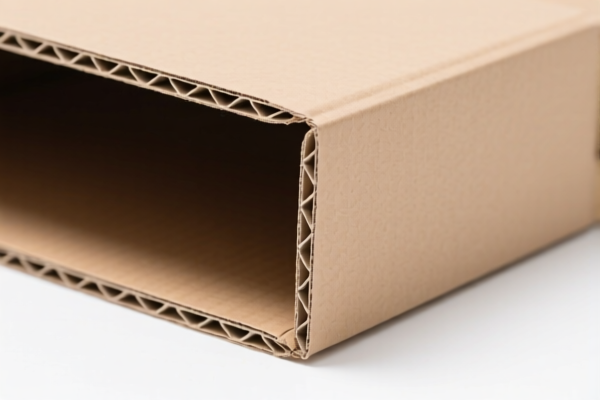
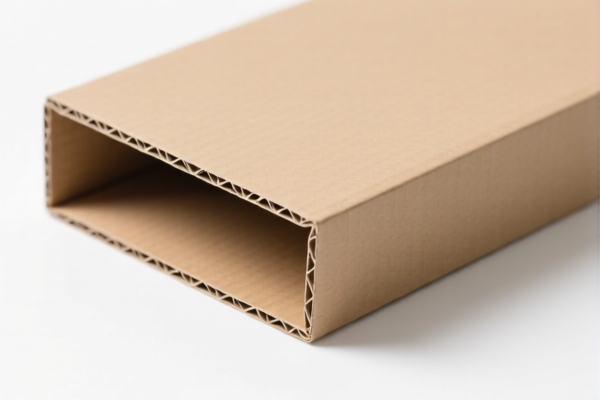
AI Analysis
📄 Coated Kaolin Paper and Paperboard (Clay-Coated Paper Products)
🌐 HS Code Reference & Customs Clearance Guide | 2026 Tariff Schedule Analysis | Professional Strategy for US-China Trade
📌 Part I: Product Definition & Classification: Do You Truly Understand "Kaolin Paper"?
Kaolin paper, commonly known as clay-coated paper, is a high-grade packaging material where clay (kaolin) is coated onto paper or paperboard to improve smoothness, whiteness, and printability. In international trade, the classification depends heavily on thickness, weight, and width/format.
Key Product Types: * Folding Carton Stock: High-stiffness, thick coated board used for folding boxes (e.g., cosmetic, pharmaceutical boxes). * Coated Sheets/Rolls: Plastic-coated or plastic-covered paper/board for further industrial use.
⚠️ Critical Distinction:
- If the product is > 0.3 mm thick and specifically used as Folding Carton Stock → It falls under a specific subheading.
- If the product is ≤ 0.3 mm or other coated types → It falls under "Other" categories.
- Plastic Coating vs. Clay Coating: The HS codes provided below specifically refer to paper/board coated/covered with PLASTICS (excluding adhesives), which is the standard commercial category for "Kaolin Paper" when sold for packaging/laminating purposes in this context.
📦 Part II: HS Code Classification Details (2026 Latest Tariff Schedule)
Based on the provided data, we are looking at Heading 4811.59 and 4811.51. These codes cover paper, paperboard, cellulose wadding, and webs of cellulose fibers, coated, impregnated, covered, etc., in rolls or rectangular sheets.
| HS Code | Product Description | Key Specifications | Format Requirements |
|---|---|---|---|
4811.51.20.20 |
Folding Carton Stock | Bleached, > 150 g/m², ≥ 0.3 mm thickness. Coated/covered with plastics. | Strips/Rolls > 15 cm wide OR Sheets with one side > 36 cm and other > 15 cm. |
4811.59.40.40 |
Other Coated Paper/Board | Bleached, > 150 g/m². Coated/covered with plastics. | Strips/Rolls > 15 cm wide OR Sheets with one side > 36 cm and other > 15 cm. |
🔍 Key Notes:
- Both HS codes require the product to be Bleached and weigh more than 150 g/m².
- Both require dimensions to exceed 15 cm in width (for rolls/strips) or specific sheet dimensions (36x15 cm).
- Plastic Coating: The description explicitly mentions "Coated, impregnated or covered with plastics". If your "Kaolin Paper" is only clay-coated without a plastic layer, you must check other 4811 subheadings (e.g., 4811.40 for waxed paper). However, based on the provided data, we assume the plastic coating aspect is present or the question refers to this specific trade data.
💰 Part III: 2026 Latest Tariff Rate Breakdown (US Import from China)
✅ Applicable Country: United States (US)
✅ Origin: China (CN)
✅ Base Duty: 0.0%
✅ Additional Duty (Section 301): 25.0%
✅ Total Tax Rate: 25.0%
🎯 1. 4811.51.20.20 —— Folding Carton Stock (Thick, ≥ 0.3 mm)
| Item | Details |
|---|---|
| Base Tariff | 0.0% |
| Section 301 Additional Tariff | +25.0% |
| Total Tax Rate | 25.0% |
| Tax Calculation | CIF Value × 25% |
| De Minimis Exemption | ❌ Not Applicable (De Minimis threshold does not apply to Section 301 goods from China) |
| Legal Basis | HTSUS 4811.51.20.20 + USITC Footnote (Section 301 List 4A/3B) |
📌 Explanation:
- The base tariff is 0% because folding carton stocks often enjoy low base duties.
- However, the 25% additional tariff is applied due to the Section 301 trade measures against Chinese goods.
- No exemptions are available for this category under current rules for Chinese origin.
🎯 2. 4811.59.40.40 —— Other Coated Paper/Board (Thin, < 0.3 mm)
| Item | Details |
|---|---|
| Base Tariff | 0.0% |
| Section 301 Additional Tariff | +25.0% |
| Total Tax Rate | 25.0% |
| Tax Calculation | CIF Value × 25% |
| De Minimis Exemption | ❌ Not Applicable |
| Legal Basis | HTSUS 4811.59.40.40 + USITC Footnote (Section 301 List 4A/3B) |
📌 Explanation:
- Similar to the above, the base duty is 0%.
- The 25% additional tariff is mandatory.
- Even if the product is thinner (< 0.3 mm), it remains subject to the same Section 301 duties.
🛠️ Part IV: Customs Clearance Practical Advice (Real-World Pitfall Guide)
✅ 1. Preparation Checklist (Must-Haves)
| Document | Required? | Description |
|---|---|---|
| ✅ Product Specification Sheet | ✔️ | Must clearly state: Material (Kaolin/Clay + Plastic), Thickness (≥ or < 0.3 mm), Weight (> 150 g/m²), Width. |
| ✅ Commercial Invoice | ✔️ | Must match HS Code description. Use terms like "Coated Paperboard for Packaging" or "Folding Carton Stock". |
| ✅ Packing List | ✔️ | Clearly separate rolls and sheets. Ensure dimensions comply with the 15 cm / 36x15 cm rule. |
| ✅ Certificate of Origin | ✔️ | Essential for verifying Chinese origin to apply (or avoid) duties. |
| ✅ Test Report | ✔️ | Proving weight (> 150 g/m²) and thickness (≥ or < 0.3 mm) is crucial for correct HS classification. |
✅ 2. Classification Tips (Key Mnemonics)
🔥 "Thickness is King, Weight is Queen, Width is the Gatekeeper!"
| Scenario | Correct HS Code | Wrong Way | Consequence |
|---|---|---|---|
| Thick Carton Stock (≥ 0.3 mm) | 4811.51.20.20 |
Misclassify as "Other" (4811.59.40.40) |
Same rate (25%), but wrong description causes customs delays. |
| Thin Coated Paper (< 0.3 mm) | 4811.59.40.40 |
Misclassify as "Folding Carton" | Risk of reclassification and penalties. |
| Width < 15 cm (Rolls) | Not Covered in Provided Data | Attempt to use 4811.5x.40.40 |
May fall under different subheadings with different duties. |
| Weight ≤ 150 g/m² | Not Covered in Provided Data | Use these codes | Incorrect classification; likely higher base duty. |
✅ 3. Special Handling Cases
| Situation | Recommendation |
|---|---|
| Mixed Shipment (Thick & Thin) | Split the entry or use one HS code if allowed by CBP. If mixed, declare the more costly or complex code, or seek a binding ruling. |
| Non-Plastic Coated (Only Clay) | Do NOT use these HS Codes. These codes require "coated/covered with plastics". If only clay-coated, look for HS 4811.40 (waxed) or 4811.60 (impregnated/coated with other materials). |
| De Minimis (Section 321) | ❌ Not Available. Even small shipments (under $800) from China are subject to Section 301 duties if classified under these codes. |
| Anti-Dumping/Countervailing | Check if kaolin paper is subject to AD/CVD. While not in the provided data, it's a risk for Chinese paper products. |
🌍 Part V: Global Market Comparison (2026)
| Country/Region | Recommended HS Code | Tariff (China Origin) | Notes |
|---|---|---|---|
| 🇺🇸 USA | 4811.51.20.20 / 4811.59.40.40 |
25% (Section 301) | High cost. No exemptions. |
| 🇨🇳 China | 4811.51.20.20 / 4811.59.40.40 |
0-10% (Export/Import varies) | Depends on Chinese export tax policies. |
| 🇪🇺 EU | 4811.59.90 |
0-6.5% | Check EU TARIC database. No Section 301 equivalent. |
| 🇬🇧 UK | 4811.59.90 |
0-6.5% | Post-Brexit tariff schedule. |
| 🇯🇵 Japan | 4811.59.900 |
0-3.5% | Usually low base duty. |
📌 Conclusion:
- The US is the most expensive market for this product due to the 25% additional tariff.
- Non-US markets generally have lower tariffs for these paper products.
- Consider supply chain diversification (e.g., sourcing from Vietnam or Thailand) if targeting the US to avoid Section 301 duties, but ensure substantial transformation occurs.
📌 Part VI: Common Mistakes & Pitfalls (Lessons Learned)
❌ Mistake 1: Ignoring Thickness
👉 Consequence: Classifying a 0.25 mm sheet as "Folding Carton Stock" (≥ 0.3 mm) → Classification Error, potential penalty.
❌ Mistake 2: Assuming De Minimis Exemption
👉 Consequence: Shipping samples via USPS under $800 → Seized or taxed at 25% because Section 301 goods are excluded from De Minimis.
❌ Mistake 3: Misidentifying Coating Material
👉 Consequence: Describing "Clay-Coated" but using HS code for "Plastic-Coated" → Customs Detention, request for additional info, delay.
❌ Mistake 4: Not Checking Weight
👉 Consequence: Shipments with paper < 150 g/m² using these codes → Reclassification, higher base duty.
✅ Correct Practice:
"Coated Paperboard, Bleached, 180 g/m², 0.35 mm Thick, Plastic Coated, Rolls 30 cm Wide, for Folding Carton Use. Origin: China."
🎯 Part VII: Conclusion: Professional Classification Saves Money
🎯 Remember the Mantra:
🔹 "Thickness defines the Code, Section 301 defines the Cost."
🔹 "25% is the Minimum, 0% is the Base."
🔹 "Check the Coating: Plastic vs. Clay – One Wrong Letter, Huge Bill."
📌 Pro Tip:
- For US Imports, calculate the Landed Cost including the 25% duty.
- If possible, explore HS Code Subheading 4811.59.90 (Other) to see if different additional duties apply (though often still 25% for China).
- Always consult a licensed Customs Broker before shipment to confirm the exact HS Code based on physical samples.
📣 Action Item:
📞 Contact a Customs Broker: Provide product specs (thickness, weight, coating type).
📝 Apply for a Binding Tariff Ruling: If volume is high, get a CBP ruling to avoid disputes.
🚀 Plan for Tariffs: Factor 25% into your pricing strategy for US-bound Kaolin Paper.
✨ Professional Clearance, Precise Classification, Efficient Logistics!
💼 Your Profit Margin Depends on the Right HS Code!
Customer Reviews
About HS Code Classification
The Harmonized System (HS) is an internationally standardized nomenclature developed by the World Customs Organization (WCO) to classify traded products. Over 200 countries use the HS system as the basis for customs tariffs, trade statistics, and import/export regulations.
Each HS code follows a hierarchical structure:
- Chapter (2 digits) — Broad category of goods (e.g., Chapter 84: Machinery and Mechanical Appliances)
- Heading (4 digits) — More specific grouping within the chapter
- Subheading (6 digits) — Internationally standardized breakdown, used by all WCO member countries
- National subdivisions (8-10 digits) — Country-specific extensions for further classification, such as US HTSUS 10-digit codes
Correct HS code classification is essential for smooth customs clearance, accurate duty payment, and compliance with trade regulations. Misclassification can lead to customs delays, overpayment of duties, or penalties.
When importing from CN to US, the applicable tariff rates may include:
- Most-Favored-Nation (MFN) rate — The standard duty rate applied to WTO members
- General rate — Applied to countries without trade agreements
- Trade remedy duties — Additional tariffs such as Section 301 (anti-dumping), Section 232 (national security), or countervailing duties
The information provided on this page is for reference purposes only. For official classification, please consult with your local customs authority or a licensed customs broker.