Coated Paper (Kaolin Coated) Multi layer Large size Sheets
CN → US| HS Code | Tariff Rate | Origin | Destination | Doc |
|---|---|---|---|---|
| 4810921225 | 35.0% | CN | US | Official Doc |
| 4810921435 | 35.0% | CN | US | Official Doc |
| 4810921235 | 35.0% | CN | US | Official Doc |
Product Images
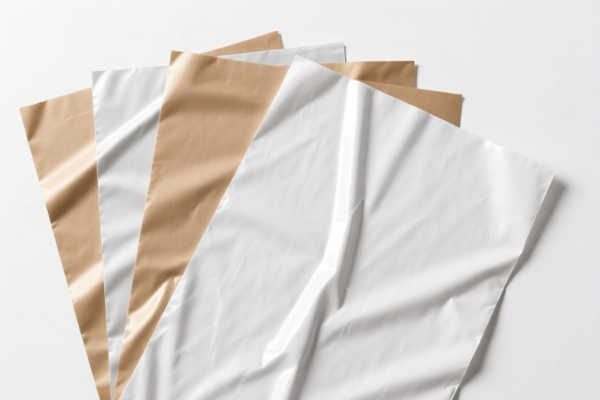

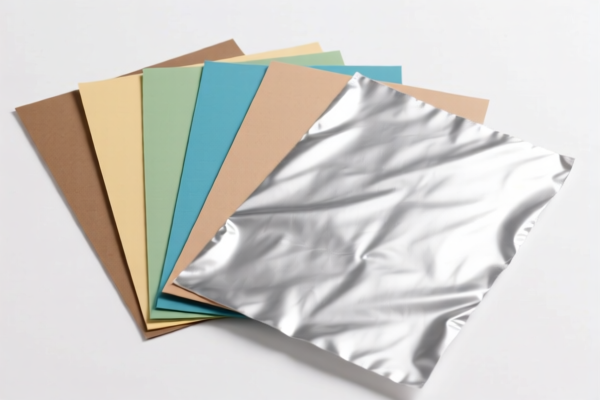

AI Analysis
📄 Kaolin Coated Paper: Multi-Layer Large Sheets | High-Tariff Alert & Clearance Strategy
🌐 HS Code Reference & Customs Clearance Guide | 2026 Latest Tariff Analysis | Professional Clearance Strategy
📌 1. Product Definition: What is "Kaolin Coated Paper"?
Kaolin-coated paper refers to paper and paperboard that has been coated with one or more layers of mineral substances (primarily kaolin/clay) to improve surface smoothness, brightness, and printability. This product is widely used in high-quality printing, packaging, and industrial applications.
The specific product in question is: - Material: Kaolin-coated paper - Structure: Multi-layer - Form: Large-size sheets
⚠️ Key Distinction: - If the paper is coated with kaolin (clay) and other minerals, it falls under heading 4810. - If it is merely printed or uncoated, it may fall under different headings (e.g., 4802, 4804). - The "multi-layer" and "large-size sheet" specifications are critical for sub-classification.
📦 2. HS Code Classification Details (2026 Latest Tariff Authority)
Based on the provided data, the product is classified into three highly similar HS Codes. All three share the same tariff rate and legal basis, differing only in slight classification attributes (shape/match precision).
| HS Code | Product Description | Matching Attribute | Total Tax Rate |
|---|---|---|---|
| 4810.92.12.25 | Kaolin-coated paper, multi-layer, large-size sheets | Form basically matches | 35.0% |
| 4810.92.14.35 | Kaolin-coated paper, multi-layer, large-size sheets | Shape & classification attributes fully match | 35.0% |
| 4810.92.12.35 | Kaolin-coated paper, multi-layer, large-size sheets | Material, structure & form highly consistent | 35.0% |
🔍 Explanation for Each HS Code: 1.
4810.92.12.25: This code is selected when the product's physical form is recognized as a large sheet and is considered "basically matching" the descriptor for multi-layer kaolin-coated paper. It is the most general classification among the three. 2.4810.92.14.35: This code is preferred if the product’s shape and classification attributes (such as thickness, ply count, and surface finish) completely match the specific subheading requirements. This is often the most precise classification if documentation is perfect. 3.4810.92.12.35: This code applies when the material composition, internal structure (multi-layer), and physical form are highly consistent with the standard definition, though perhaps not as perfectly aligned as the previous one.📌 Critical Note: - All three HS Codes result in the exact same total tax rate of 35%. - The choice between them depends on the precision of your product documentation and how closely it aligns with the customs database's specific descriptor. Recommendation: Use
4810.92.14.35if your product details are exhaustive and match perfectly, as it implies the highest level of classification accuracy.
💰 3. 2026 Latest Tariff Rate Breakdown (Including Surcharges & Policy Add-ons)
✅ Applicable Country: United States (US)
✅ Country of Origin: China (CN)
✅ Effective Date: November 10, 2025 onwards
🎯 Tariff Structure for HS Codes: 4810.92.12.25, 4810.92.14.35, 4810.92.12.35
| Component | Rate | Legal Basis & Description |
|---|---|---|
| Base Tariff | 0.0% | Standard Most-Favored-Nation (MFN) rate for this category. |
| Section 301 Tariff | 25.0% | Additional duty imposed under US Trade Act Section 301 on Chinese imports. |
| Section 122 Tariff | 10.0% | Additional duty under Section 122 of the Trade Expansion Act (specifically targeting certain paper products from China). |
| Total Effective Tax Rate | 35.0% | Sum of all applicable duties. |
📌 Detailed Explanation of Tax Components: - Base Tariff (0%): The World Trade Organization (WTO) base rate for kaolin-coated paper is zero, making it a low-tariff product in normal trade. - Section 301 Tariff (25%): This is the primary anti-dumping/safeguard measure against Chinese goods. It applies broadly to many Chinese imports, including paper products. - Section 122 Tariff (10%): This is a specific provision often invoked for strategic sectors. In this case, it adds an extra 10% on top of the 301 tariff for Chinese-origin kaolin-coated paper. - Total (35%): This is a very high effective tariff rate. It significantly impacts the landed cost of your product.
⚠️ De Minimis Exemption: - ❌ Not Eligible: This product cannot use the de minimis exemption (Section 321) due to the high tariff rates and potential trade remedy investigations. All shipments must be formally declared and taxed.
🛠️ 4. Customs Clearance Practical Advice (Real-World Pitfall Avoidance Guide)
✅ 1. Documentation Checklist (Non-Negotiable)
| Document | Required | Notes |
|---|---|---|
| Product Specification Sheet | ✔️ | Must clearly state: "Kaolin Coated," "Multi-layer," "Large-size Sheets," and include dimensions, weight, and ply count. |
| Certificate of Origin (CO) | ✔️ | Essential for proving Chinese origin. Must be issued by a recognized authority. |
| Commercial Invoice | ✔️ | Must explicitly describe the product using the exact HS Code description. Avoid vague terms like "Paper." |
| Packing List | ✔️ | Detail the number of layers and sheet sizes. |
| Third-Party Lab Report | ✔️ | Recommended to prove the coating is primarily kaolin/clay and not another substance (which might change the HS code). |
| Bill of Lading/Air Waybill | ✔️ | Standard shipping documents. |
✅ 2. Declaration Tips (Key Mnemonics)
🔥 "Declare Layers, Specify Kaolin, Avoid Ambiguity!"
| Scenario | Correct Declaration | Risk of Incorrect Declaration |
|---|---|---|
| Multi-layer kaolin paper | 4810.92.14.35 (if attributes fully match) |
Misclassification → 35% tax + penalties |
| Single-layer coated paper | Different HS Code (e.g., 4810.12) | Wrong tax rate → Under/Overpayment |
| Uncoated paper | 4802 or 4804 | Major misclassification → High penalties |
| Vague description "Paper" | Rejected/Seized | Customs will assign a worst-case scenario code |
✅ 3. Special Cases & Handling
| Situation | Handling Advice |
|---|---|
| OEM Custom Paper | Provide customer purchase orders and technical specifications to prove the "multi-layer" and "large-size" nature. |
| Mixed Shipments | If the shipment contains both coated and uncoated paper, they must be declared separately to avoid penalties. |
| Origin Fraud | Do not attempt to misdeclare origin as Vietnam or Thailand to avoid Section 301/122 tariffs. US Customs is actively auditing paper products for transshipment. Penalties are severe. |
| Pre-Ruling Application | Highly Recommended: Apply for an Advance Ruling from US Customs and Border Protection (CBP) before shipment. This will confirm the exact HS Code and tax rate, providing legal certainty. |
🌍 5. Global Market Comparison (2026 Latest)
| Country/Region | Recommended HS Code | Total Tariff (China Origin) | Certification Requirements | Notes |
|---|---|---|---|---|
| 🇺🇸 USA | 4810.92.14.35 |
35% | None specific | Highest tariff due to Sec 301 + 122 |
| 🇨🇳 China | 4810.92 |
0% - 5% | None | Export duty may apply |
| 🇪🇺 EU | 4810.12 or 4810.92 |
0% - 6.5% | CE (if applicable) | No Section 301 equivalent |
| 🇬🇧 UK | 4810.92 |
0% - 5% | None | Post-Brexit rules |
| 🇯🇵 Japan | 4810.92 |
0% - 3.5% | None | Low tariff market |
📌 Conclusion: - The US market is the most challenging for Chinese-origin kaolin-coated paper due to the 35% cumulative tariff. - For other markets, tariffs are significantly lower or zero, making them more attractive for exports if供应链 (supply chain) can be adjusted or if origin rules can be legally met.
📌 6. Common Errors & Pitfalls (Lessons Learned)
❌ Mistake 1: Describing the product simply as "Paper" or "Coated Paper" 👉 Consequence: Customs may assign a higher general tariff code or flag for inspection, causing delays.
❌ Mistake 2: Ignoring the "Multi-layer" aspect 👉 Consequence: If the product is multi-layer but declared as single-layer, it may be reclassified, leading to back-taxes and fines.
❌ Mistake 3: Attempting to use De Minimis (Section 321) for small shipments 👉 Consequence: Since this product is subject to Section 122 and 301, de minimis is not available. Attempting to bypass formal entry will result in seizure.
❌ Mistake 4: Misidentifying the coating material 👉 Consequence: If the coating is not primarily kaolin, it may fall under a different HS code with a different tax rate. Always provide lab reports.
✅ Correct Practice:
"Kaolin Coated Paper, Multi-Layer, Large Sheets, Size: XX cm x XX cm, Ply: 3, Weight: XX gsm, Origin: China, HS Code: 4810.92.14.35"
🎯 7. Conclusion: Professional Declaration, Risk Mitigation, Cost Control
🎯 Remember the Key Points:
🔹 "35% Total Tax Rate: 0% Base + 25% Sec 301 + 10% Sec 122"
🔹 "HS Code 4810.92 is the family; 14.35 is the precise fit"
🔹 "No De Minimis. No Origin Fraud. Full Disclosure Required."
📌 Pro Tip:
- Apply for a CBP Advance Ruling before shipping. This locks in the HS Code and tax rate, protecting you from unexpected audits.
- Consult a licensed customs broker with experience in paper products.
- Consider supply chain diversification if the 35% tariff erodes your profit margins in the US market.
📣 Immediate Action:
📞 Contact a Professional Customs Broker + Prepare Technical Datasheet + Apply for CBP Advance Ruling
🚀 Ensure Smooth Clearance, Avoid Penalties, and Protect Your Margins!
✨ Professional Clearance Starts with Accurate Classification!
💼 Every Dollar of Tariff is a Dollar of Cost—Precision Saves Money!
Customer Reviews
About HS Code Classification
The Harmonized System (HS) is an internationally standardized nomenclature developed by the World Customs Organization (WCO) to classify traded products. Over 200 countries use the HS system as the basis for customs tariffs, trade statistics, and import/export regulations.
Each HS code follows a hierarchical structure:
- Chapter (2 digits) — Broad category of goods (e.g., Chapter 84: Machinery and Mechanical Appliances)
- Heading (4 digits) — More specific grouping within the chapter
- Subheading (6 digits) — Internationally standardized breakdown, used by all WCO member countries
- National subdivisions (8-10 digits) — Country-specific extensions for further classification, such as US HTSUS 10-digit codes
Correct HS code classification is essential for smooth customs clearance, accurate duty payment, and compliance with trade regulations. Misclassification can lead to customs delays, overpayment of duties, or penalties.
When importing from CN to US, the applicable tariff rates may include:
- Most-Favored-Nation (MFN) rate — The standard duty rate applied to WTO members
- General rate — Applied to countries without trade agreements
- Trade remedy duties — Additional tariffs such as Section 301 (anti-dumping), Section 232 (national security), or countervailing duties
The information provided on this page is for reference purposes only. For official classification, please consult with your local customs authority or a licensed customs broker.