Coated Paper Gasket Sheets
CN → US| HS Code | Tariff Rate | Origin | Destination | Doc |
|---|---|---|---|---|
| 4823908000 | 35.0% | CN | US | Official Doc |
| 4823906000 | 35.0% | CN | US | Official Doc |
| 3926904590 | 38.5% | CN | US | Official Doc |
| 4811594040 | 35.0% | CN | US | Official Doc |
| 3926909989 | 22.8% | CN | US | Official Doc |
Product Images
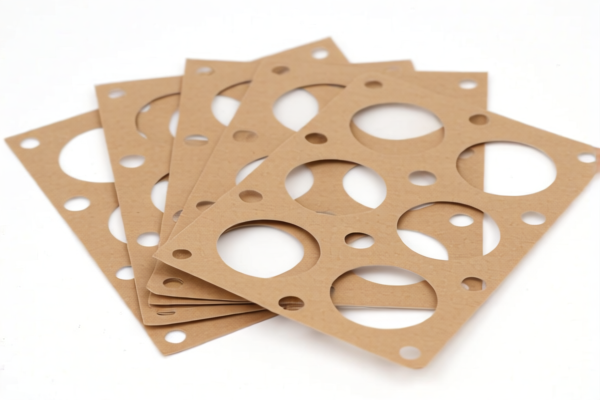

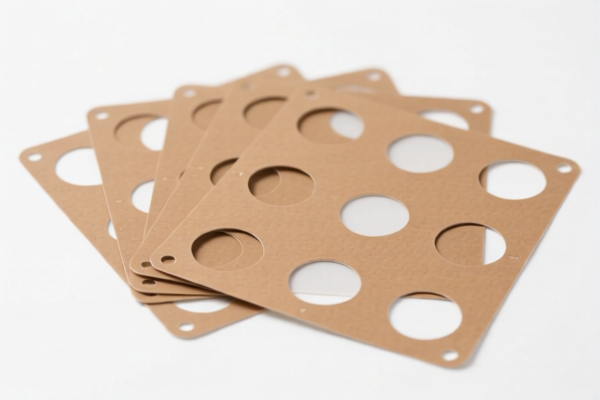
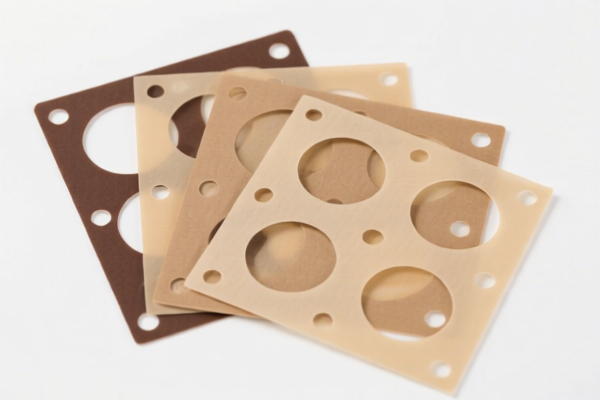
AI Analysis
📄 Coated Paper Gasket Sheets: The Ultimate HS Code & Tax Guide (2026 Edition)
🌐 HS Code Reference & Customs Clearance Guide | 2026 Latest Tariff Analysis | Professional Entry Strategy
📌 1. Product Definition: What Exactly Are "Coated Paper Gasket Sheets"?
Coated Paper Gasket Sheets are composite materials consisting of a paper base treated with a coating to enhance durability, resistance, or sealing properties. In international trade, the classification depends heavily on the nature of the coating, the material composition, and the final form (cut sheets vs. raw rolls).
The key confusion lies in whether the product is viewed primarily as: 1. Paper with a surface treatment (Section XI). 2. Plastic/Resin-coated Paper where the plastic defines the character (Section XXIX/Thirty-nine). 3. Plastic Articles where the paper is merely a carrier (Chapter 39).
⚠️ Critical Distinction Point:
- If the coating is waterproofing agent or non-plastic resin applied via impregnation/sizing → Tends toward Chapter 48 (Paper).
- If the coating is polymer/plastic and gives the essential character → Tends toward Chapter 39 (Plastics).
- The function (gasket) is secondary to the material nature in HS classification unless specific "gasket" headings apply broadly.
📦 2. HS Code Classification Matrix (Based on Provided Data)
| HS Code | Product Description (Summary) | Key Classification Logic | Total Tax Rate (China Origin to US) |
|---|---|---|---|
4823.90.80.00 |
Waterproof coated paper gaskets; material is paper; waterproof coating is considered form processing. | Primary material: Paper. Coating is a surface treatment, not a plastic laminate. | 35.0% |
4823.90.60.00 |
Waterproof coated paper gaskets; material is paper; coating meets coating characteristics. | Primary material: Paper. Meets specific coating definitions under Chapter 48. | 35.0% |
3926.90.45.90 |
Waterproof coated paper gaskets; inferred plastic coating; classified as other washers/gaskets. | Primary material: Plastic (due to coating). Paper is substrate. | 38.5% |
4811.59.40.40 |
Waterproof coated paper gaskets; form is coated; fits paper/cardboard coated with plastic. | Primary material: Paper. Coated with plastic but remains in Chapter 48 due to specific subheading. | 35.0% |
3926.90.99.89 |
Waterproof coated paper gaskets; material is cellulosic; form is gasket; classified as other plastic material articles. | Primary material: Cellulose-based plastic composite. Broad "other plastic articles" category. | 22.8% |
🔍 Analysis of Discrepancy:
- The tax rate ranges from 22.8% to 38.5%.
-3926.90.99.89offers the lowest rate but requires proving the item is primarily a "plastic material article" derived from cellulose, which is a riskier classification for standard paper.
-4823.90.80.00and4811.59.40.40are safer for paper-heavy items but carry higher tariffs.
💰 3. 2026 Tariff Rate Breakdown (Detailed Tax Clauses)
✅ Applicable Market: United States (US)
✅ Country of Origin: China (CN)
✅ Effective Date: 2025/2026 (Subject to ongoing trade policies)
🎯 1. 4823.90.80.00 & 4823.90.60.00 & 4811.59.40.40 (Paper-Based Classifications)
| Item | Content |
|---|---|
| Base Duty | 0.0% (Most paper products have low base duties) |
| Section 301 Duty | +25.0% (Retaliatory tariff on Chinese goods) |
| Section 122 Duty | +10.0% (Specific trade remedy/legislation tariff) |
| Total Effective Rate | 35.0% |
| Calculation Basis | CIF Value × 35% |
| De Minimis Exemption? | ❌ No (Deny de minimis) |
| Legal Basis Path | Section 301: 9903.88.01 → Section 122 → USITC: 4823/4811 |
📌 Explanation:
- These HS codes fall under Chapter 48 (Paper and Paperboard).
- While the base duty is 0%, the Section 301 (25%) and Section 122 (10%) tariffs apply aggressively.
- Risk: If customs determines the "plastic" coating gives the essential character, they may reclassify to Chapter 39, potentially increasing the tax or creating inconsistency.
🎯 2. 3926.90.45.90 (Plastic Article - Gaskets)
| Item | Content |
|---|---|
| Base Duty | 3.5% |
| Section 301 Duty | +25.0% |
| Section 122 Duty | +10.0% |
| Total Effective Rate | 38.5% |
| Calculation Basis | CIF Value × 38.5% |
| De Minimis Exemption? | ❌ No (Deny de minimis) |
| Legal Basis Path | Section 301 → Section 122 → USITC: 3926 |
📌 Explanation:
- This code treats the item as a plastic gasket.
- The base duty is higher (3.5%) compared to paper (0%), plus the same附加 tariffs.
- Why so high? It is explicitly categorized under "other plastic articles" with specific gasket subheadings that attract Section 301 duties.
🎯 3. 3926.90.99.89 (Other Plastic Material Articles)
| Item | Content |
|---|---|
| Base Duty | 5.3% |
| Section 301 Duty | +7.5% (Note: Different from 25% here, likely due to specific exclusion or different list) |
| Section 122 Duty | +10.0% |
| Total Effective Rate | 22.8% |
| Calculation Basis | CIF Value × 22.8% |
| De Minimis Exemption? | ❌ No (Deny de minimis) |
| Legal Basis Path | Section 301 (Lower Tier) → Section 122 → USITC: 3926.99.89 |
📌 Explanation:
- This is the lowest tax rate (22.8%) in the dataset.
- ⚠️ High Risk: This classification requires proving the item is a "cellulosic plastic article" and falls under "Other."
- The Section 301 rate here is only 7.5%, not 25%. This suggests it may be on a different list or exempt from the full 301 retaliation.
- Customs Scrutiny: High. Customs may challenge this if the paper content is significant (>50%). You need strong technical data to support the "plastic character" claim.
🛠️ 4. Customs Clearance Practical Advice (Avoiding Pitfalls)
✅ 1. Documentation Checklist (Non-Negotiable)
| Document | Required? | Description |
|---|---|---|
| ✅ Technical Data Sheet | ✔️ | Must specify: Paper basis weight, coating type (plastic vs. resin), coating weight (gsm), and waterproofing mechanism. |
| ✅ Composition Breakdown | ✔️ | % of Paper vs. Coating. Critical for proving "Essential Character." |
| ✅ Product Images | ✔️ | Cross-section view showing layers. Clear photo of the gasket cut. |
| ✅ Commercial Invoice | ✔️ | Must use the exact HS Code. Description: "Waterproof Coated Paper Gasket Sheets, [Model], for [Industry Use]." |
| ✅ Certificate of Origin | ✔️ | Proof of China origin triggers Section 301/122. |
| ✅ Third-Party Lab Report | Optional but Recommended | Proof of material composition (e.g., FTIR analysis for coating type). |
✅ 2. Declaration Strategy
🔥 "Paper or Plastic? It's all in the Coating Weight!"
| Scenario | Recommended HS Code | Declaration Tip |
|---|---|---|
| Thin coating (<10-15% weight) | 4823.90.80.00 / 4811.59.40.40 |
Emphasize "Paper-based" and "Surface Treatment." |
| Thick plastic laminate (>50% weight) | 3926.90.45.90 |
Emphasize "Plastic-coated" and "Waterproof Barrier." |
| Cellulosic Plastic Composite | 3926.90.99.89 |
High Risk. Only use if lab reports confirm plastic polymer matrix. Justify lower tax. |
📌 Warning:
- Do NOT switch HS codes arbitrarily to save tax without technical justification. Customs audits the technical specifications, not just the invoice.
- If you declare3926.90.99.89(22.8%) but the coating is thin, you risk penalties, back taxes, and seizure.
✅ 3. Special Cases
| Case | Handling Advice |
|---|---|
| Custom-Cut Gaskets | If pre-cut, ensure description includes "Cut to Shape." If sold in sheets, emphasize "Sheets." |
| OEM for Industrial Use | Provide end-user info. Helps prove "Industrial Application" if challenged. |
| Mixed Shipments | If shipping with other items, ensure HS codes are clearly separated on the packing list. |
🌍 5. Global Market Comparison (2026)
| Country/Region | Recommended HS Code | Est. Tariff (China Origin) | Key Certifications | Notes |
|---|---|---|---|---|
| 🇺🇸 USA | 4823.90.80.00 / 3926.90.45.90 |
22.8% - 38.5% | None specific, but accurate HS is critical | Section 301 & 122 apply. High volatility. |
| 🇪🇺 EU | 4823.90.80 / 3926.90.90 | 0% - 6.5% | REACH (if plastic) | No Section 301. EU has lower base duties. |
| 🇨🇳 China | 4823.90.80 | 5% - 10% | CCC (if applicable) | Low barrier, easy entry. |
| 🇯🇵 Japan | 4823.90.80 | 0% - 8% | PSE (if electrical) | Free Trade Agreement (FTA) benefits if applicable. |
📌 Conclusion:
- USA is the most complex market due to Section 301 & 122 tariffs.
- EU/Asia are more forgiving but require REACH/PSE compliance for plastic coatings.
- Optimization: If volume is high, consider tariff engineering (e.g., adjusting coating thickness) to shift from3926.90.45.90(38.5%) to4823.90.80.00(35%) or3926.90.99.89(22.8%) with proper documentation.
📌 6. Common Mistakes & How to Avoid Them
❌ Mistake 1: Declaring as "Paper" when coating is thick plastic.
👉 Consequence: Customs reclassifies to Chapter 39 → Higher Base Duty + 25% Section 301 → Back taxes.
❌ Mistake 2: Using 3926.90.99.89 without proof of "Plastic Character."
👉 Consequence: Audit triggers. You must prove the 7.5% Section 301 rate is valid. Failure → Full 25% + Penalties.
❌ Mistake 3: Vague Description: "Paper Gasket."
👉 Consequence: Customs cannot determine if it's paper or plastic. Delays, exams, potential reclassification.
✅ Fix: Use "Waterproof Coated Paper Gasket Sheet, Coating Material: [Specify], Coating Weight: [X] gsm."
🎯 7. Conclusion: Precision is Profit
🎯 Key Takeaway:
🔹 "Coating Thickness Determines Tax!"
🔹 "Paper = 35% Risk | Plastic = 38.5% Risk | Composite = 22.8% Risk (But High Audit)"
🔹 "Documentation is Your Shield."
📌 Pro Tip:
If you are shipping to the US, apply for an Advance Ruling with CBP if the classification is ambiguous. It provides legal certainty and protects against future audits.
📣 Immediate Action:
📞 Consult a customs broker with material analysis reports.
🚀 Verify the coating type before declaring. One wrong digit can cost 10-15% of your FOB value.
✨ Professional Customs Clearance Starts with Accurate Classification!
💼 Save Money, Stay Compliant, Ship Confidently!
Customer Reviews
About HS Code Classification
The Harmonized System (HS) is an internationally standardized nomenclature developed by the World Customs Organization (WCO) to classify traded products. Over 200 countries use the HS system as the basis for customs tariffs, trade statistics, and import/export regulations.
Each HS code follows a hierarchical structure:
- Chapter (2 digits) — Broad category of goods (e.g., Chapter 84: Machinery and Mechanical Appliances)
- Heading (4 digits) — More specific grouping within the chapter
- Subheading (6 digits) — Internationally standardized breakdown, used by all WCO member countries
- National subdivisions (8-10 digits) — Country-specific extensions for further classification, such as US HTSUS 10-digit codes
Correct HS code classification is essential for smooth customs clearance, accurate duty payment, and compliance with trade regulations. Misclassification can lead to customs delays, overpayment of duties, or penalties.
When importing from CN to US, the applicable tariff rates may include:
- Most-Favored-Nation (MFN) rate — The standard duty rate applied to WTO members
- General rate — Applied to countries without trade agreements
- Trade remedy duties — Additional tariffs such as Section 301 (anti-dumping), Section 232 (national security), or countervailing duties
The information provided on this page is for reference purposes only. For official classification, please consult with your local customs authority or a licensed customs broker.