Coated Paper and Paperboard
CN → US| HS Code | Tariff Rate | Origin | Destination | Doc |
|---|---|---|---|---|
| 4811512010 | 35.0% | CN | US | Official Doc |
| 4810132090 | 35.0% | CN | US | Official Doc |
| 4810131900 | 10.0% | CN | US | Official Doc |
| 4811512040 | 35.0% | CN | US | Official Doc |
| 4811516000 | 35.0% | CN | US | Official Doc |
Product Images

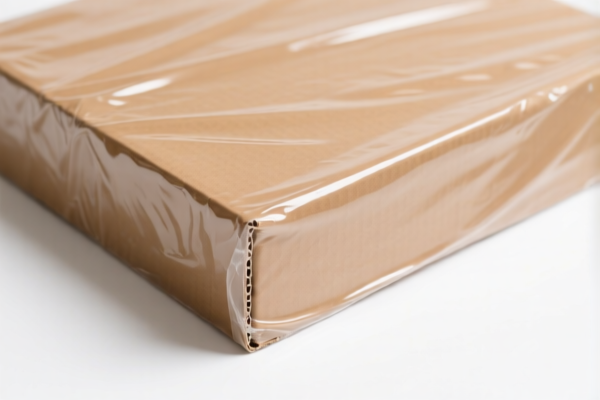
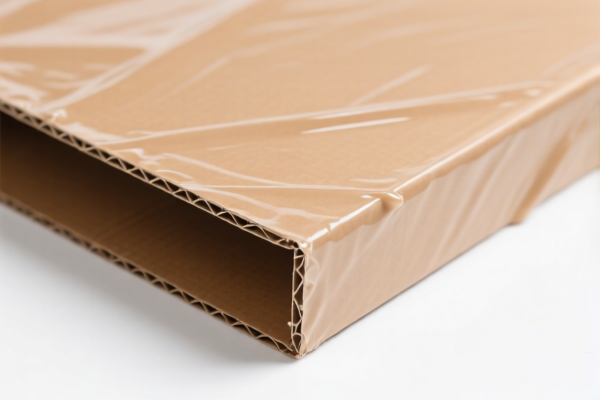

AI Analysis
📜 Coated Paper & Paperboard (涂布纸板)
🌐 HS Code Reference & Customs Clearance Guide | 2024/2025 Tariff Full Analysis | Professional Entry Strategies
📌 I. Product Definition & Classification: Do You Truly Understand "Coated Paperboard"?
Coated paper and paperboard are essential materials in the global packaging, printing, and beverage industries. In international trade, they are strictly classified based on their final application, coating composition, and specific use cases. Misclassification leads to massive tariff discrepancies (from 10% to 35%).
Key Distinctions: 1. Beverage Base Materials: Specifically coated for liquid containment (e.g., milk cartons, juice boxes). 2. Printing/Graphic Purposes: High-quality surface for marketing, labels, and books. 3. General Packaging: Standard protective or structural packaging. 4. Plastic-Coated: Specifically impregnated or covered with plastic materials.
⚠️ Critical Classification Point:
- If used for beverage containers or general packaging (non-print specific): Often subject to higher retaliatory tariffs (35% Total).
- If used for printing/graphics: Subject to lower retaliatory tariffs (10% Total).
- Plastic coating triggers specific sub-headings with high tariff rates.
📦 II. HS Code Classification Details (2024/2025 Latest Tariff Schedule)
| HS Code | Product Description | Application Scenario | Total Tax Rate (China Origin → US) |
|---|---|---|---|
4811.51.20.10 |
Coated Paperboard: Base material for beverage containers | Milk cartons, juice boxes, liquid packaging boards | 35.0% |
4810.13.20.90 |
Coated Paperboard: Meets definition of coated paperboard | General coated paper, standard packaging, industrial use | 35.0% |
4810.13.19.00 |
Coated Paperboard: For printing or graphic purposes | High-end brochures, labels, luxury packaging, art prints | 10.0% |
4811.51.20.40 |
Coated Paperboard: For packaging purposes | General consumer packaging, non-print specific cartons | 35.0% |
4811.51.60.00 |
Plastic-Coated Paper & Board: Coated, impregnated, or covered with plastic | Wet-strength papers, plastic-laminated boards, heavy-duty packaging | 35.0% |
🔍 Key Reminder:
- Printing vs. General Use: The single most important distinction for tariff savings.4810.13.19.00is for printing/graphics (10%). The others are for beverage/packaging/plastic (35%).
- "Coated" Definition: Includes paper coated with clay, calcium carbonate, or other substances to improve surface properties.
- Plastic Coating: If the coating is plastic (not just clay/pigment), it falls under4811.51.60.00, which is high-tariff.
💰 III. 2024/2025 Tariff Rate Breakdown (Including Add-ons & Policy Surcharges)
✅ Applicable Country: United States (US)
✅ Country of Origin: China (CN)
✅ Effective Date: Current rates apply (Section 301 & IEEPA surcharges included)
🎯 1. High-Tariff Category: 4811.51.20.10, 4810.13.20.90, 4811.51.20.40, 4811.51.60.00
(Beverage Base, General Packaging, Plastic-Coated)
| Item | Detail |
|---|---|
| Base Tariff | 0.0% (ad valorem) |
| Section 301 Surcharge | +25.0% (Retaliatory tariff on Chinese goods) |
| 122 Clause Surcharge | +10.0% (Additional USITC provision) |
| Total Tax Rate | 35.0% |
| Tax Calculation | CIF Value × 35% |
| De Minimis Eligibility | ❌ No (Deny de minimis) |
| Legal Basis Path | Section 301 → 122 Clause → USITC Code |
📌 Explanation:
- These codes are classified as "industrial/base materials" or "plastic-coated," attracting the full Section 301 tariff (25%) plus the 122 Clause (10%).
- Total 35% is a significant cost driver. Must be factored into FOB pricing.
🎯 2. Low-Tariff Category: 4810.13.19.00
(Printing or Graphic Purposes)
| Item | Detail |
|---|---|
| Base Tariff | 0.0% (ad valorem) |
| Section 301 Surcharge | 0.0% (Exempted or not applied to this specific graphic use) |
| 122 Clause Surcharge | +10.0% |
| Total Tax Rate | 10.0% |
| Tax Calculation | CIF Value × 10% |
| De Minimis Eligibility | ❌ No (Deny de minimis) |
| Legal Basis Path | 122 Clause → USITC:4810.13.19.00 |
📌 Explanation:
- This is the key tariff optimization code. If your coated paper is used for high-quality printing, labels, or graphic arts, it qualifies for this lower tier.
- Savings: 25% lower than the packaging/beverage category.
- Requirement: Must prove the end-use is printing/graphic, not structural packaging or beverage lining.
🛠️ IV. Customs Clearance Practical Advice (Pitfall Avoidance Guide)
✅ 1. Documentation Checklist (Mandatory)
| Document | Required | Purpose |
|---|---|---|
| ✅ Product Specification Sheet | ✔️ | Must detail coating type (clay, plastic, etc.), weight, and dimensions. |
| ✅ End-Use Declaration | ✔️ | Critical for 4810.13.19.00. Must state "For Printing/Graphics" to justify 10% rate. |
| ✅ Commercial Invoice | ✔️ | Clear description: e.g., "Coated Paperboard for Label Printing" vs. "Coated Board for Juice Boxes." |
| ✅ Certificate of Origin (CO) | ✔️ | Required for origin verification. |
| ✅ Photos of Product & Labeling | ✔️ | To prove coating type (e.g., plastic film visible vs. matte clay coating). |
| ✅ Packing List | ✔️ | Consistent with invoice. |
✅ 2. Declaration Tips (Key Mantras)
🔥 "Printing gets 10%, Packaging gets 35%! Declare End-Use Clearly!"
| Scenario | Correct HS Code | Error Consequence |
|---|---|---|
| Paper for booklets, catalogs, labels | 4810.13.19.00 (10%) |
Misdeclared as packaging → 25% extra tax + penalty |
| Paper for milk cartons, juice boxes | 4811.51.20.10 (35%) |
Correctly declared |
| Paper covered with plastic film | 4811.51.60.00 (35%) |
Incorrectly declared as "coated paper" → 35% (no savings) |
| General packaging board | 4811.51.20.40 (35%) |
Correctly declared |
✅ 3. Special Case Handling
| Situation | Strategy |
|---|---|
| Mixed Shipments | Separate shipments if possible. Print-grade paper and packaging paper have different HS codes. Mixing them risks classification for the higher rate. |
| Plastic-Coated vs. Clay-Coated | Ensure invoice states "Clay-Coated" for 4810.13.20.90 or 4810.13.19.00. If it contains plastic, it must go to 4811.51.60.00 (35%). |
| Beverage Base Material | Must provide proof of use (e.g., customer letter) to justify 4811.51.20.10. |
🌍 V. Global Market Comparison (2024/2025)
| Country/Region | Recommended HS Code | Tariff (China Origin) | Notes |
|---|---|---|---|
| 🇺🇸 USA | 4810.13.19.00 |
10% | Best rate for printing. 4811.51.20.10 is 35%. |
| 🇨🇳 China | 4810.13.19.00 |
~10-13% | Import duty + VAT. Lower than US. |
| 🇪🇺 EU | 4810.13.19.00 |
~6.5% | No Section 301 equivalents. Standard MFN rates apply. |
| 🇬🇧 UK | 4810.13.19.00 |
~6.5% | Post-Brexit tariffs. No retaliatory surcharges. |
| 🇯🇵 Japan | 4810.13.19.00 |
~6% | Standard tariff. Low risk. |
📌 Conclusion:
- USA is the only market with severe 35% tariffs for non-printing coated paper.
- Optimization Opportunity: If possible, structure supply chain to classify goods as "for printing/graphic purposes" to save 25%.
📌 VI. Common Mistakes & Pitfalls (Lessons Learned)
❌ Mistake 1: Declaring all coated paper as "Coated Paperboard" without specifying end-use.
👉 Result: Customs may assign the highest applicable rate (35%) or delay shipment for classification review.
❌ Mistake 2: Calling plastic-coated paper "Clay-Coated" to avoid 35% tariff.
👉 Result: Seized goods, fines, and potential fraud charges. Plastic coating is visually distinct and testable.
❌ Mistake 3: Ignoring the "122 Clause" (10% add-on).
👉 Result: Underpayment of duties. Always calculate Total Tax = Base + Section 301 + 122 Clause.
❌ Mistake 4: Mixing print-grade and packaging-grade paper in one shipment.
👉 Result: High risk of audit. If the entire batch is audited, the highest rate may apply to the whole shipment.
✅ Correct Practice:
"Coated Paperboard, 250gsm, Clay-Coated, For High-Gloss Magazine Printing, Model XYZ, No Plastic Content"
🎯 VII. Conclusion: Precise Declaration Saves Money!
🎯 Remember the Mantra:
🔹 "Printing is 10%, Packaging is 35%! Separate them to save 25%!"
🔹 "Plastic Coating = 35%! Clay Coating for Printing = 10%!"
🔹 "HS Code Determines Tariff, Wrong Code Costs Big!"
📌 Pro Tip:
If your coated paper is originating from Vietnam, Thailand, or Malaysia, you may qualify for lower or zero tariffs in the US.
Consider supply chain diversification to avoid Chinese origin surcharges.
📣 Immediate Action:
📞 Consult a licensed customs broker.
📄 Provide detailed product specs and end-use declarations.
🚀 Ensure accurate HS Code classification to maximize profit margins!
✨ Professional Customs Clearance Starts with Precise Classification!
💼 Every 1% of tariff saved is pure profit!
Customer Reviews
About HS Code Classification
The Harmonized System (HS) is an internationally standardized nomenclature developed by the World Customs Organization (WCO) to classify traded products. Over 200 countries use the HS system as the basis for customs tariffs, trade statistics, and import/export regulations.
Each HS code follows a hierarchical structure:
- Chapter (2 digits) — Broad category of goods (e.g., Chapter 84: Machinery and Mechanical Appliances)
- Heading (4 digits) — More specific grouping within the chapter
- Subheading (6 digits) — Internationally standardized breakdown, used by all WCO member countries
- National subdivisions (8-10 digits) — Country-specific extensions for further classification, such as US HTSUS 10-digit codes
Correct HS code classification is essential for smooth customs clearance, accurate duty payment, and compliance with trade regulations. Misclassification can lead to customs delays, overpayment of duties, or penalties.
When importing from CN to US, the applicable tariff rates may include:
- Most-Favored-Nation (MFN) rate — The standard duty rate applied to WTO members
- General rate — Applied to countries without trade agreements
- Trade remedy duties — Additional tariffs such as Section 301 (anti-dumping), Section 232 (national security), or countervailing duties
The information provided on this page is for reference purposes only. For official classification, please consult with your local customs authority or a licensed customs broker.