Coated Rayon Non woven Fabric (25g/m² or less, Filter Material)
CN → US| HS Code | Tariff Rate | Origin | Destination | Doc |
|---|---|---|---|---|
| 5911400100 | 43.0% | CN | US | Official Doc |
| 5911900080 | 38.8% | CN | US | Official Doc |
| 5903902500 | 42.5% | CN | US | Official Doc |
| 5903902000 | 35.0% | CN | US | Official Doc |
Product Images
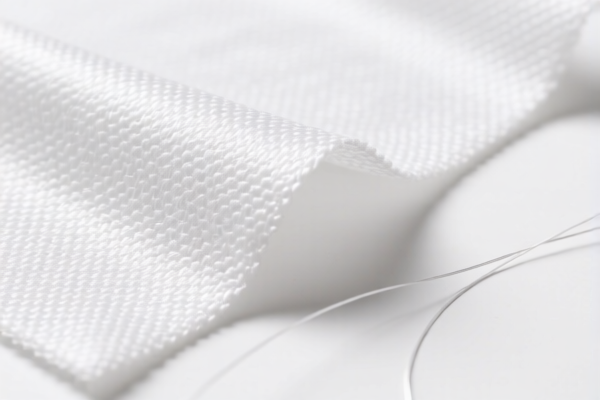
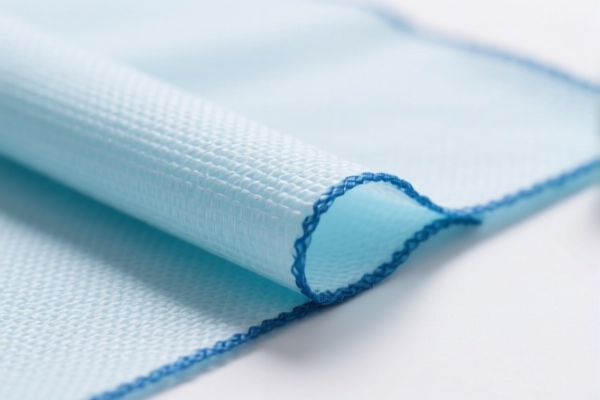
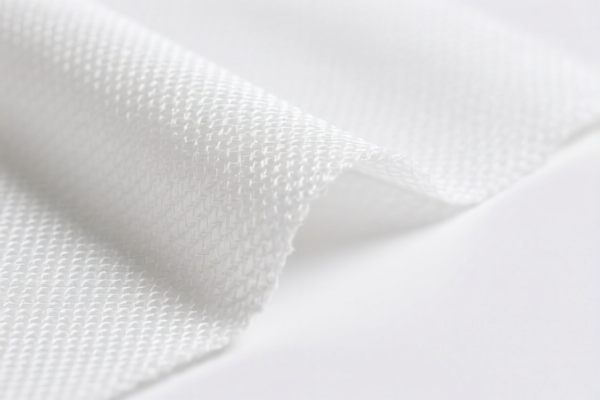

AI Analysis
🧵 Coated Rayon Non-Woven Fabric (Filter Material, ≤25g/m²)
🌐 HS Code Reference & Customs Clearance Guide | 2026 Latest Tariff Analysis | Professional Clearance Strategy
📌 I. Product Definition & Classification: What Exactly Is "Coated Rayon Non-Woven Fabric"?
This product is a technical textile composed of Rayon (Viscose Fiber) formed into a Non-Woven Fabric structure, subsequently treated with a Coating (Impregnated/Laminated with Plastic/Rubber). Its primary application is as a Filter Material, typically used in industrial air filtration, liquid filtration, or specialized separation processes.
⚠️ Key Classification Conflict:
The core dispute lies in whether the product is classified primarily as a Technical Textile for Filtration (Heading 5911) or as a Coated Textile Fabric (Heading 5903).
- Heading 5911 covers "Textile products and articles, for technical uses, including... filters."
- Heading 5903 covers "Textile fabrics impregnated, coated, covered or laminated with plastics."Customs Logic: If the coating is incidental to the filtration function and the fabric retains its non-woven structure for filtration, 5911 is often preferred. If the coating changes the essential character to a "plastic-coated fabric," 5903 may apply. The weight (≤25g/m²) suggests a lightweight filter media, often favoring 5911, but coatings can trigger 5903.
📦 II. HS Code Classification Details (Based on Provided Data)
| HS Code | Product Description | Matching Criteria | Total Tax Rate |
|---|---|---|---|
| 5911.40.01.00 | Non-Woven Filter Fabrics | Match Successful. Material: Rayon. Form: Non-Woven. Use: Filter Material. Fits technical textile & filter fabric characteristics. | 43.0% |
| 5911.90.00.80 | Other Technical Textile Products | Basis for Match: Material: Rayon (Viscose). Form: Non-woven, uncoated/unlaminated (Note: Data implies "non-woven" focus). Use: Filter Material. Fits "Technical Textile" definition under 5911.90. | 38.8% |
| 5903.90.25.00 | Coated Textile Fabrics (Other) | Match Successful. Material: Rayon (Artificial Fiber). Form: Coated Fabric. Fits "Textile fabrics impregnated, coated, covered or laminated with plastics." Classified under "Other." | 42.5% |
| 5903.90.20.00 | Coated Textile Fabrics (Other) | Basis for Match: Material: Rayon. Form: Coated Fabric. Matches "Plastic/Rubber coated textile fabric" characteristics. Material and form align with "Artificial Fiber" and "Impregnated/Coated" requirements. | 35.0% |
🔍 Critical Distinction:
- 5911 Codes (43.0% & 38.8%): Focus on the Filter/Technical Use and Non-Woven nature.
- 5903 Codes (42.5% & 35.0%): Focus on the Coating/Plastic Laminate nature, regardless of filter use.
- Why Two 5911s? One is specific for certain filter fabrics (5911.40), the other is a residual "other" category (5911.90).
- Why Two 5903s? Different sub-categories for coated fabrics, likely based on specific plastic types or weight/thickness nuances not fully detailed in the summary but affecting the base rate.
💰 III. 2026 Latest Tariff Rate Breakdown (Including Surcharges & Policy Add-ons)
✅ Applicable Country: United States (US)
✅ Origin: China (CN)
✅ Effective Date: From November 10, 2025 (including subsequent imports)
🎯 1. 5911.40.01.00 —— Non-Woven Filter Fabrics (High Tax Scenario)
| Item | Details |
|---|---|
| Base Tariff | 8.0% (Ad Valorem) |
| Section 301 Surcharge (USITC) | +25.0% |
| Section 122 Surcharge (IEEPA) | +10.0% (Targeting China/HK products) |
| Total Tax Rate | 43.0% |
| Tax Calculation | CIF Value × 43.0% |
| De Minimis Exemption | ❌ Not Applicable (deny_de_minimis) |
| Legal Path | IEEPA:122 → USITC:5911.40.01.00 → Footnote:301 |
📌 Explanation:
- The 8.0% base is standard for technical textiles.
- The 25% Section 301 is a major penalty for Chinese imports in this category.
- The 10% Section 122 is an additional layer for national security/economic reasons.
- Total 43% is extremely high, significantly impacting profitability.
🎯 2. 5911.90.00.80 —— Other Technical Textile Products (Medium-High Tax)
| Item | Details |
|---|---|
| Base Tariff | 3.8% |
| Section 301 Surcharge (USITC) | +25.0% |
| Section 122 Surcharge (IEEPA) | +10.0% |
| Total Tax Rate | 38.8% |
| Tax Calculation | CIF Value × 38.8% |
| De Minimis Exemption | ❌ Not Applicable |
| Legal Path | IEEPA:122 → USITC:5911.90.00.80 → Footnote:301 |
📌 Note:
- Lower base rate (3.8% vs 8.0%) makes this 4.2 percentage points cheaper than 5911.40.01.00.
- Still subject to full surcharges.
- Suitable if the product doesn’t fit the specific "5911.40" filter criteria but is still a technical textile.
🎯 3. 5903.90.25.00 —— Coated Textile Fabrics (High Tax)
| Item | Details |
|---|---|
| Base Tariff | 7.5% |
| Section 301 Surcharge (USITC) | +25.0% |
| Section 122 Surcharge (IEEPA) | +10.0% |
| Total Tax Rate | 42.5% |
| Tax Calculation | CIF Value × 42.5% |
| De Minimis Exemption | ❌ Not Applicable |
| Legal Path | IEEPA:122 → USITC:5903.90.25.00 → Footnote:301 |
📌 Explanation:
- Classified as a coated fabric.
- High base rate (7.5%) + surcharges = 42.5%.
- Risk: If customs deems the coating minimal, they may reject this and push for 5911, or vice versa.
🎯 4. 5903.90.20.00 —— Coated Textile Fabrics (Lowest Total Tax)
| Item | Details |
|---|---|
| Base Tariff | 0.0% |
| Section 301 Surcharge (USITC) | +25.0% |
| Section 122 Surcharge (IEEPA) | +10.0% |
| Total Tax Rate | 35.0% |
| Tax Calculation | CIF Value × 35.0% |
| De Minimis Exemption | ❌ Not Applicable |
| Legal Path | IEEPA:122 → USITC:5903.90.20.00 → Footnote:301 |
📌 Key Insight:
- This is the most cost-effective classification with a 35.0% total rate.
- Base tariff is 0%, meaning only surcharges apply.
- Strategy: If your product can be legitimately classified here (e.g., specific type of coating or fabric structure that fits 5903.90.20), this saves 3-8 percentage points compared to other options.
- Caution: Must ensure the product truly meets the "coated fabric" definition under this specific subheading and not the more specific 5911 filter category.
🛠️ IV. Customs Clearance Practical Advice (Battle-Tested Pitfall Guide)
✅ 1. Document Checklist (Mandatory)
| Document | Required | Notes |
|---|---|---|
| ✅ Product Specification Sheet | ✔️ | Must detail: Rayon content, Non-woven structure, Coating type/thickness, Weight (≤25g/m²), Filtration efficiency (if any). |
| ✅ Material Composition Statement | ✔️ | Explicitly state "100% Rayon/Viscose" and "Coating: [Type of Plastic/Rubber]." |
| ✅ Product Photos (Clear) | ✔️ | Show texture (non-woven), coating surface, and label if available. |
| ✅ Third-Party Test Report | ✔️ | Filtration performance, coating adhesion test, fiber analysis. |
| ✅ Commercial Invoice | ✔️ | Description: "Coated Rayon Non-Woven Fabric for Filter Use, ≤25g/m²." Avoid vague terms like "Textile." |
| ✅ Packing List | ✔️ | Weight and dimensions per roll/package. |
| ✅ Certificate of Origin (CO) | ✔️ | Mandatory for proving Chinese origin (triggers surcharges). |
✅ 2. Declaration Tips (Key Mantras)
🔥 "Material & Form First, Function Second!"
- If declaring as Filter (5911): Emphasize "Non-Woven," "Rayon," and "Filter Application."
- If declaring as Coated (5903): Emphasize "Plastic Coated," "Rayon Fabric," and "Coating Process."
- Avoid: Listing "Filter" as the primary description if you choose 5903, as customs may reclassify to 5911 based on use. Conversely, don't hide the coating if you choose 5911.
| Scenario | Correct Declaration | Wrong Approach |
|---|---|---|
| Lightweight Filter Media | 5911.40.01.00 or 5911.90.00.80 |
Declare as "Fabric" → 42-43% tax |
| Heavy Coated Filter | 5903.90.20.00 (if applicable) |
Declare as "Technical Textile" → 38.8-43% tax |
| Unclear Coating | Provide test reports showing coating is integral | Omit coating details → High risk of audit & reclassification |
✅ 3. Special Handling
| Scenario | Advice |
|---|---|
| Rayon Source | Ensure Rayon is clearly identified. Synthetic fibers (Polyester) have different HTS codes. |
| Coating Type | Specify the polymer type (e.g., PVC, PU, PE). Different polymers may have different subheadings under 5903. |
| Weight Verification | ≤25g/m² is critical. If >25g/m², it may fall into a different weight-based category, changing the HS code. |
| Pre-Ruling Application | Highly Recommended. Given the conflict between 5911 and 5903, apply for an Advance Ruling from US CBP to lock in the classification and avoid post-clearance audits. |
🌍 V. Global Market Comparison (2026 Latest)
| Country/Region | Recommended HS Code | Tariff Rate | Certification | Notes |
|---|---|---|---|---|
| 🇺🇸 USA | 5903.90.20.00 |
35.0% | N/A (General) | Lowest cost option among US choices. |
| 🇺🇸 USA | 5911.40.01.00 |
43.0% | N/A | Highest cost, safest for filter-specific claims. |
| 🇨🇳 China | 5911.40.01.00 |
~10-12% | CCC (if applicable) | Lower tariffs, no US surcharges. |
| 🇪🇺 EU | 5903.90.90 |
~6-8% | CE/REACH | No Section 301/122 equivalents. |
| 🇬🇧 UK | 5903.90.90 |
~6-8% | UKCA | Post-Brexit rules similar to EU. |
📌 Conclusion:
- USA: The 35.0% rate (5903.90.20.00) is the strategic target if legally justifiable.
- China/EU/UK: Tariffs are significantly lower, but US market dominance makes the 35% vs 43% difference critical.
📌 VI. Common Mistakes & Pitfalls (Blood-Tear Lessons)
❌ Mistake 1: Declaring as "Textile Fabric" without specifying "Non-Woven" or "Coated"
👉 Consequence: Customs may assign a generic code with higher base rates or audit for misclassification.
❌ Mistake 2: Ignoring the "Filter" use when declaring 5903
👉 Consequence: Customs may reclassify to 5911.40.01.00 (43%) due to "principal use" rules, resulting in a 7.5% tax hike.
❌ Mistake 3: Incorrect Weight Declaration (>25g/m²)
👉 Consequence: If actual weight is higher, it may fall into a different HTS subheading with different tax implications.
❌ Mistake 4: Assuming Rayon = Polyester
👉 Consequence: Wrong material classification → Penalty + Back Taxes.
✅ Correct Approach:
"Rayon Non-Woven Fabric, Coated with [Polymer], Weight ≤25g/m², Used for Industrial Filtration, Model XYZ, US Origin: China."
🎯 VII. Conclusion: Professional Declaration, Cost Savings, Risk Mitigation!
🎯 Remember the Mantra:
🔹 "Coated or Filter? 5903 is Cheaper (35%), 5911 is Safer (43%)."
🔹 "HS Code Determines Destiny, Tax Difference is Key, Declaration Precision Saves Thousands!"
📌 Pro Tip:
If your product can be classified under 5903.90.20.00, do NOT automatically default to 5911. The 8% total tax difference is significant for high-volume imports.
Action Step:
📞 Consult a customs broker to verify if your specific coating and structure fit 5903.90.20.00.
🚀 Apply for an Advance Ruling to secure the 35% rate and avoid future disputes.
✨ Professional Clearance Starts with Precise Classification!
💼 Every Percentage Point Saved is Pure Profit!
Customer Reviews
About HS Code Classification
The Harmonized System (HS) is an internationally standardized nomenclature developed by the World Customs Organization (WCO) to classify traded products. Over 200 countries use the HS system as the basis for customs tariffs, trade statistics, and import/export regulations.
Each HS code follows a hierarchical structure:
- Chapter (2 digits) — Broad category of goods (e.g., Chapter 84: Machinery and Mechanical Appliances)
- Heading (4 digits) — More specific grouping within the chapter
- Subheading (6 digits) — Internationally standardized breakdown, used by all WCO member countries
- National subdivisions (8-10 digits) — Country-specific extensions for further classification, such as US HTSUS 10-digit codes
Correct HS code classification is essential for smooth customs clearance, accurate duty payment, and compliance with trade regulations. Misclassification can lead to customs delays, overpayment of duties, or penalties.
When importing from CN to US, the applicable tariff rates may include:
- Most-Favored-Nation (MFN) rate — The standard duty rate applied to WTO members
- General rate — Applied to countries without trade agreements
- Trade remedy duties — Additional tariffs such as Section 301 (anti-dumping), Section 232 (national security), or countervailing duties
The information provided on this page is for reference purposes only. For official classification, please consult with your local customs authority or a licensed customs broker.