Coated Rayon Non woven Fabric (25g/m² or less, Filtration Material)
CN → US| HS Code | Tariff Rate | Origin | Destination | Doc |
|---|---|---|---|---|
| 5911400100 | 43.0% | CN | US | Official Doc |
| 5911900080 | 38.8% | CN | US | Official Doc |
| 5903902500 | 42.5% | CN | US | Official Doc |
| 5903902000 | 35.0% | CN | US | Official Doc |
Product Images
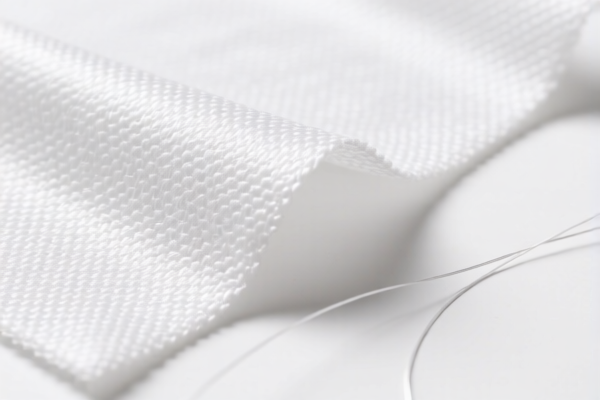
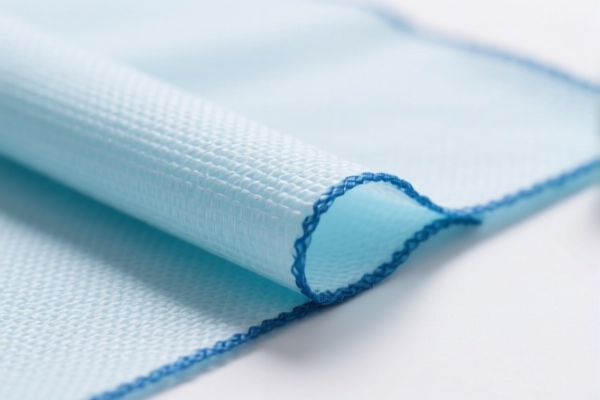
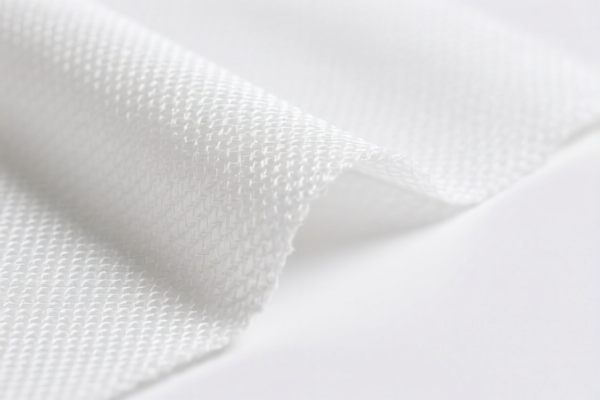

AI Analysis
🧵 Coated Rayon Non-Woven Fabric (Filtration Material ≤25g/m²)
🌐 HS Code Reference & Customs Clearance Guide | 2026 Latest Tariff Analysis | Professional Level Clearance Strategy
📌 1. Product Definition & Classification: Do You Really Understand "Coated Rayon Non-Woven Fabric"?
Coated rayon non-woven fabric is a high-performance technical textile, primarily used in industrial filtration, chemical separation, and specialized cleaning applications. In international trade, it is classified based on its material composition, processing method, and specific use case.
Key Distinction Points:
- If the fabric is uncoated or merely impregnated with resin for stiffness without full coating/layering, it may fall under 5911.40.01.00 (Rayon non-woven, filtration material).
- If the fabric is fully coated with plastic/rubber (e.g., PVC, PU) to create a waterproof, chemical-resistant barrier, it is classified under 5903.90 (Textiles impregnated, coated, covered, or laminated with plastics/rubber).
- Critical Note: The weight (≤25g/m²) does not change the HS code category but may affect duty calculations in some jurisdictions. However, for US-China trade, the tariff rates are driven by the HS code and origin, not weight.
📦 2. HS Code Classification Details (2026 Latest Tariff Authority Comparison)
| HS Code | Product Description | Application Scenario | Key Characteristics |
|--------|--------------------------|--------------------------|
| 5911.40.01.00 | Rayon non-woven fabric, filtration material, classified under technical textile & filtration fabric | Industrial filters, air filtration, liquid filtration, chemical processing | Uncoated or lightly impregnated rayon non-woven |
| 5911.90.00.80 | Viscose fiber non-woven fabric, filtration material, meets technical textile definition | High-efficiency filtration, precision filtration, medical filtration | Viscose-based non-woven, technical use |
| 5903.90.25.00 | Rayon fiber coated fabric, meets definition of textile fabric impregnated, coated, covered, or laminated with plastics | Chemical-resistant filters, heavy-duty filtration, outdoor filtration | Plastic-coated rayon non-woven |
| 5903.90.20.00 | Rayon fiber coated fabric, meets characteristics of plastic/rubber-coated textile fabric | General-purpose coated filtration fabric, cost-effective filtration | Fully plastic/rubber-coated rayon |
🔍 Key Reminder:
-5911.xxxxcodes apply to non-woven fabrics used for filtration without full plastic coating.
-5903.90.xxxxcodes apply to textiles coated with plastics/rubber, regardless of filtration use.
- Misclassification between5911and5903can lead to significant tariff differences (e.g., 0% vs. 7.5% base duty).
💰 3. 2026 Latest Tariff Rate Details (Including Additional Taxes & Policy Surcharges)
✅ Applicable Country: United States (US)
✅ Country of Origin: China (CN)
✅ Effective Date: From November 10, 2025 (including subsequent imports)
🎯 1. 5911.40.01.00 —— Rayon Non-Woven Fabric, Filtration Material
| Item | Content |
|---|---|
| Base Duty Rate | 8.0% (ad valorem) |
| Section 301 Additional Duty | +25.0% |
| IEEPA Additional Duty | +10.0% (for China/HK products, from Nov 10, 2025) |
| Total Duty Rate | 43.0% |
| Duty Calculation | CIF Value × 43.0% |
| De Minimis Exemption Eligibility | ❌ Not Eligible (deny_de_minimis) |
| Legal Basis Path | IEEPA:9903.01.25 → IEEPA:9903.01.24 → USITC:5911.40.01.00 → FOOTNOTE:9903.88.01 |
📌 Explanation:
- The 25% Section 301 duty applies to all Chinese-origin goods under USITC Footnote 9903.88.01.
- The 10% IEEPA duty is a special surcharge on Chinese products under the International Emergency Economic Powers Act.
- Total 43% is a very high tariff rate, requiring careful pre-import cost estimation.
🎯 2. 5911.90.00.80 —— Viscose Fiber Non-Woven Fabric, Filtration Material
| Item | Content |
|---|---|
| Base Duty Rate | 3.8% (ad valorem) |
| Section 301 Additional Duty | +25.0% |
| IEEPA Additional Duty | +10.0% |
| Total Duty Rate | 38.8% |
| Duty Calculation | CIF Value × 38.8% |
| De Minimis Exemption Eligibility | ❌ Not Eligible |
| Legal Basis Path | IEEPA:9901.25 → IEEPA:9903.01.24 → USITC:5911.90.00.80 → FOOTNOTE:9903.88.01 |
📌 Note:
- Viscose rayon is a type of artificial fiber; this code applies to uncoated filtration fabrics.
- 38.8% is slightly lower than5911.40.01.00due to a lower base duty (3.8% vs. 8.0%).
🎯 3. 5903.90.25.00 —— Coated Rayon Fabric, Technical Use
| Item | Content |
|---|---|
| Base Duty Rate | 7.5% (ad valorem) |
| Section 301 Additional Duty | +25.0% |
| IEEPA Additional Duty | +10.0% |
| Total Duty Rate | 42.5% |
| Duty Calculation | CIF Value × 42.5% |
| De Minimis Exemption Eligibility | ❌ Not Eligible |
| Legal Basis Path | IEEPA:9903.01.25 → IEEPA:9903.01.24 → USITC:5903.90.25.00 → FOOTNOTE:9903.88.01 |
📌 Explanation:
- This code applies to plastic-coated rayon fabrics.
- 42.5% is close to5911.40.01.00but has a higher base duty (7.5% vs. 8.0%) and lower Section 301 impact due to different legal categorization.
🎯 4. 5903.90.20.00 —— Coated Rayon Fabric, General Use
| Item | Content |
|---|---|
| Base Duty Rate | 0.0% (ad valorem) |
| Section 301 Additional Duty | +25.0% |
| IEEPA Additional Duty | +10.0% |
| Total Duty Rate | 35.0% |
| Duty Calculation | CIF Value × 35.0% |
| De Minimis Exemption Eligibility | ❌ Not Eligible |
| Legal Basis Path | IEEPA:9901.25 → IEEPA:9903.01.24 → USITC:5903.90.20.00 → FOOTNOTE:9903.88.01 |
📌 Key Advantage:
- This code has a 0% base duty, making it the lowest total tariff (35.0%) among all options.
- Suitable for general-purpose coated fabrics not specifically designated as "filtration material" under technical textile definitions.
🛠️ 4. Customs Clearance Practical Advice (Real-World Pitfall Avoidance Guide)
✅ 1. Required Documentation Checklist (All Mandatory)
| Document | Required | Notes |
|---|---|---|
| ✅ Product Specification Sheet | ✔️ | Includes material composition (rayon/viscose), weight (≤25g/m²), coating type (if any) |
| ✅ Technical Data Sheet (TDS) | ✔️ | Details filtration efficiency, chemical resistance, tensile strength |
| ✅ Product Photos (with Label) | ✔️ | Clear view of brand, model, material composition |
| ✅ Third-Party Test Report | ✔️ | ISO, ASTM, or EN standards for filtration performance |
| ✅ Commercial Invoice | ✔️ | Must clearly state "Coated Rayon Non-Woven Fabric for Filtration" |
| ✅ Certificate of Origin (CO) | ✔️ | If not Chinese origin, can apply for preferential tariff |
| ✅ Packing List | ✔️ | Specify unit weight, total quantity, and packaging type |
✅ 2. Declaration Tips (Critical Mnemonic)
🔥 “Coat Changes Code, Filtration Defines Use, Name Precision Saves Money!”
| Scenario | Correct Declaration | Wrong Practice |
|---|---|---|
| Uncoated Rayon Non-Woven for Filtration | 5911.40.01.00 or 5911.90.00.80 |
Misdeclared as coated → 35–43% |
| Plastic-Coated Rayon for General Use | 5903.90.20.00 |
Misdeclared as filtration → 38.8–42.5% |
| Plastic-Coated Rayon for Technical Filtration | 5903.90.25.00 |
Misdeclared as general → 35.0% |
| Any Rayon Non-Woven for Filtration | Must specify "Filtration Material" | Omitting use → Higher base duty |
✅ 3. Special Handling Cases
| Scenario | Recommendation |
|---|---|
| OEM Custom Coated Fabric | Provide customer order + coating specification to avoid misclassification |
| Fabric with Mixed Uses | Declare primary use (e.g., "Filtration Material") to qualify for 5911 codes |
| Coated Fabric for Medical Use | If medical filtration, provide FDA registration documents |
| Small Quantity Imports | Still subject to full duties; no de minimis exemption for Chinese origin |
🌍 5. Global Market Comparison (2026 Latest)
| Country/Region | Recommended HS Code | Tariff | Certification Required | Notes |
|---|---|---|---|---|
| 🇺🇸 United States | 5911.40.01.00 or 5903.90.20.00 |
35.0–43.0% (China) | ISO, ASTM, RoHS | High tariffs due to Section 301 + IEEPA |
| 🇨🇳 China | 5911.40.01.00 |
5.0% | No special requirements | No additional surcharges |
| 🇪🇺 European Union | 5911.40.01.00 |
4.0% | CE, REACH | No additional surcharges |
| 🇬🇧 United Kingdom | 5911.40.01.00 |
4.0% | UKCA, REACH | Post-Brexit rules apply |
| 🇦🇺 Australia | 5911.40.01.00 |
5.0% | ADR | No additional surcharges |
📌 Conclusion:
- The US is the only market imposing high additional tariffs on Chinese-origin rayon non-woven fabrics.
- EU and UK offer significantly lower tariffs (4–5%), making them more attractive for export.
- Consider supply chain diversification to Vietnam, India, or Turkey to avoid US surcharges.
📌 6. Common Mistakes & Pitfall Avoidance (Lessons from Hard Experiences)
❌ Mistake 1: Declaring coated fabric as "uncoated non-woven" to get lower base duty
👉 Consequence: Customs inspection reveals coating → Back taxes + penalties!
❌ Mistake 2: Using "Filtration Material" for non-filtration purposes
👉 Consequence: Misclassification → Higher duty (43% vs. 35%) + audit risk
❌ Mistake 3: Omitting coating type in description
👉 Consequence: Customs unable to determine correct code → Delay or rejection
❌ Mistake 4: Assuming all non-wovens fall under 5911
👉 Consequence: Coated fabrics must go under 5903 → Tariff error
✅ Correct Practice:
“Rayon Non-Woven Fabric, 25g/m², Plastic-Coated (PVC), for Industrial Filtration, Model XYZ, ISO 9001 Certified”
🎯 7. Conclusion: Precise Declaration, Time & Cost Savings!
🎯 Remember the Mnemonic:
🔹 “Coat or No Coat? Filtration or General? Code Choice Matters!”
🔹 “HS Code Determines Duty, 8% vs. 0% Base, 35% vs. 43% Total, Declare Right, Save Big!”
📌 Pro Tip:
If your fabric is originally from Vietnam, India, or Thailand, you may qualify for IEEPA exemption, reducing tariffs to 0–5%.
Apply for Advance Ruling before shipment to avoid clearance risks.
📣 Take Action Now:
📞 Contact Professional Customs Broker + Provide Product Photos + Apply for HS Code Advance Ruling
🚀 Let your coated rayon non-woven fabric pass through customs smoothly, efficiently, and profitably!
✨ Professional Customs Clearance Starts with Accurate Classification!
💼 Every Cent of Cost Deserves Precise Calculation!
Customer Reviews
About HS Code Classification
The Harmonized System (HS) is an internationally standardized nomenclature developed by the World Customs Organization (WCO) to classify traded products. Over 200 countries use the HS system as the basis for customs tariffs, trade statistics, and import/export regulations.
Each HS code follows a hierarchical structure:
- Chapter (2 digits) — Broad category of goods (e.g., Chapter 84: Machinery and Mechanical Appliances)
- Heading (4 digits) — More specific grouping within the chapter
- Subheading (6 digits) — Internationally standardized breakdown, used by all WCO member countries
- National subdivisions (8-10 digits) — Country-specific extensions for further classification, such as US HTSUS 10-digit codes
Correct HS code classification is essential for smooth customs clearance, accurate duty payment, and compliance with trade regulations. Misclassification can lead to customs delays, overpayment of duties, or penalties.
When importing from CN to US, the applicable tariff rates may include:
- Most-Favored-Nation (MFN) rate — The standard duty rate applied to WTO members
- General rate — Applied to countries without trade agreements
- Trade remedy duties — Additional tariffs such as Section 301 (anti-dumping), Section 232 (national security), or countervailing duties
The information provided on this page is for reference purposes only. For official classification, please consult with your local customs authority or a licensed customs broker.