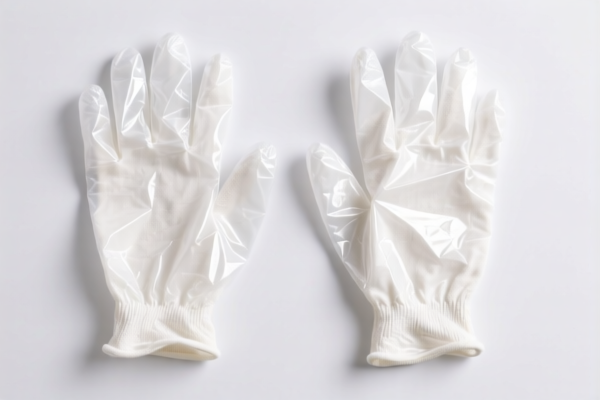
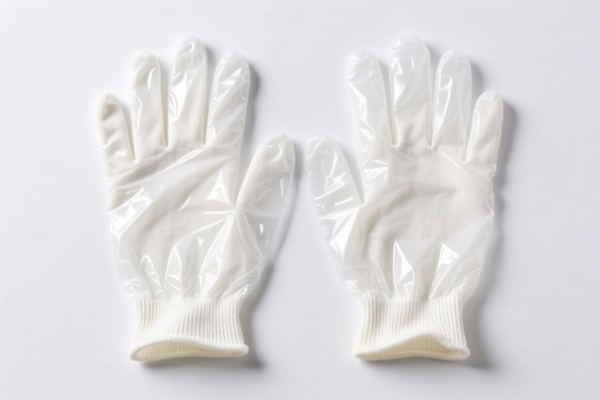
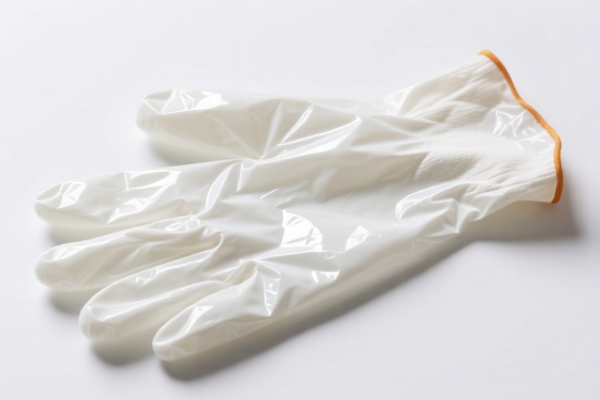
Coated/Covered Plastic/Rubber Cotton Blend Fourchette Gloves
CN → US| HS Code | Tariff Rate | Origin | Destination | Doc |
|---|---|---|---|---|
| 6216002910 | 30.5% | CN | US | Official Doc |
| 6116107510 | 23.2% | CN | US | Official Doc |
| 6216002930 | 30.5% | CN | US | Official Doc |
| 6116107520 | 23.2% | CN | US | Official Doc |
| 4015195100 | 49.0% | CN | US | Official Doc |
Product Images

AI Analysis
🧤 Coated/Covered Plastic/Rubber Cotton Blend Fourchette Gloves
📉 High-Tariff Alert: Strategic HS Code Classification & US Customs Clearance Guide
🌐 HS Code Reference & Customs Clearance Guide | 2026 Latest Tariff Analysis | Professional Compliance Strategy
📌 一、Product Definition: What Exactly Are "Fourchette Gloves"?
Fourchette Gloves (also known as Mittens with Finger Separation or Partial-Mittens) are a hybrid protective glove category. They differ from standard gloves by featuring a shared compartment for two fingers (usually index and middle) or distinct finger slots that are partially connected, often designed for enhanced dexterity while maintaining warmth or protection.
In international trade, the classification hinges on three critical factors: 1. Material Composition: Is it knitted (Chapter 61) or made-up (Chapter 62)? 2. Coating/Covering: Is it merely "covered" (light plastic film) or "impregnated/coated" (thick rubber/latex layer)? 3. Seam Structure: Does it have side seams (glove-like) or finger gussets/separations (mitten-like)?
⚠️ Critical Distinction:
- Knitted vs. Made-up: If the base is knitted or crocheted (e.g., standard cotton knit gloves), it falls under Chapter 61. If it is cut and sewn from fabric without knitting (e.g., woven cotton cut into shape), it falls under Chapter 62.
- Coating Type: "Impregnated" or "Coated" with rubber/plastic significantly impacts duty rates due to US Trade Section 301 and IEEPA tariffs.
- Fourchette Design: This specific structure often triggers scrutiny under 6216.00 (Gloves, mittens, and mitts, other than those of heading 6116 or 4015) if not clearly classified as knit.
📦 II. HS Code Classification Matrix (Based on Provided Data)
The following HS Codes are derived strictly from your provided data. Note that all entries are subject to high combined tariffs due to US-China trade policies.
| HS Code | Summary Description (From Data) | Total Tax Rate | Key Tariff Components |
|---|---|---|---|
| 6216.00.29.10 | Cotton blend, coated with plastic/rubber, finger-seam (fourchette) gloves | 30.5% | Base: 13.0% + Sec 301: 7.5% + IEEPA: 10% |
| 6116.10.75.10 | Cotton blend, impregnated/coated with plastic/rubber, side-seam gloves | 23.2% | Base: 13.2% + Sec 301: 0.0% + IEEPA: 10% |
| 6216.00.29.30 | Cotton blend, covered with plastic/rubber, side-seam structure | 30.5% | Base: 13.0% + Sec 301: 7.5% + IEEPA: 10% |
| 6116.10.75.20 | Cotton blend, side-seam, coated with plastic/rubber, synthetic fiber restriction category | 23.2% | Base: 13.2% + Sec 301: 0.0% + IEEPA: 10% |
| 4015.19.51.00 | Coated plastic/rubber gloves, inferred as vulcanized rubber or rubber-containing material | 49.0% | Base: 14.0% + Sec 301: 25.0% + IEEPA: 10% |
🔍 Key Observation:
- Chapter 61 (Knitted) gloves generally enjoy 0% Section 301 tariffs (resulting in 23.2% total), whereas Chapter 62 (Made-up) gloves incur 7.5% Section 301 tariffs (resulting in 30.5% total).
- Chapter 40 (Rubber) gloves face the highest punitive tariffs (25% Section 301), leading to a massive 49.0% total rate.
- "Fourchette" (Finger Separation) typically aligns with 6216.00 if made of non-knitted fabric, but must be carefully distinguished from side-seam gloves.
💰 III. Detailed Tariff Breakdown & Legal Basis (US Market)
✅ Applicable Country: United States (US)
✅ Origin: China (CN)
✅ Effective Date: Post-November 2025 (Includes Section 301 & IEEPA adjustments)
🎯 1. Chapter 62: Gloves, Mittens, and Mitts (Other than Knitted)
Applies to HS Codes: 6216.00.29.10 & 6216.00.29.30
| Item | Detail |
|---|---|
| Base Tariff | 13.0% (Ad Valorem) |
| Section 301 Tariff | +7.5% (List 3/B4 Exclusions did not cover most cotton blend gloves) |
| IEEPA Tariff | +10% (Additional duty on Chinese goods) |
| Total Combined Rate | 30.5% |
| De Minimis Exemption | ❌ NOT Eligible |
| Legal Path | USITC:6216.00.29.10 → USITC:Footnote 9903.88.01 → IEEPA:9903.01.25 |
📌 Explanation:
- These are made-up gloves (cut and sewn from woven/non-knitted fabric).
- The 7.5% Section 301 duty is a major cost driver.
- Even if "fourchette" (finger separation) is mentioned, if the base material is not knitted, it remains in Chapter 62.
🎯 2. Chapter 61: Knitted or Crocheted Gloves
Applies to HS Codes: 6116.10.75.10 & 6116.10.75.20
| Item | Detail |
|---|---|
| Base Tariff | 13.2% |
| Section 301 Tariff | 0.0% (Many knitted textile goods are excluded from higher Section 301 brackets) |
| IEEPA Tariff | +10% |
| Total Combined Rate | 23.2% |
| De Minimis Exemption | ❌ NOT Eligible |
| Legal Path | USITC:6116.10.75.10 → USITC:Footnote 9903.88.01 → IEEPA:9903.01.24 |
📌 Strategic Advantage:
- If your "Fourchette Gloves" are knitted (e.g., cotton knit base with rubber coating), you SAVE 7.3% compared to Chapter 62.
- Ensure the product description explicitly states "Knitted" to justify Chapter 61.
🎯 3. Chapter 40: Articles of Rubber
Applies to HS Code: 4015.19.51.00
| Item | Detail |
|---|---|
| Base Tariff | 14.0% |
| Section 301 Tariff | +25.0% (High punitive tariff on rubber products) |
| IEEPA Tariff | +10% |
| Total Combined Rate | 49.0% |
| De Minimis Exemption | ❌ NOT Eligible |
| Legal Path | USITC:4015.19.51.00 → USITC:Footnote 9903.88.01 → IEEPA:9903.01.25 |
📌 Avoid This Classification Unless Necessary:
- Only use if the glove is primarily composed of vulcanized rubber or similar rubber materials, not just "coated" fabric.
- The 25% Section 301 duty makes this the most expensive option.
🛠️ IV. Customs Clearance Practical Advice (Pitfall Avoidance)
✅ 1. Documentation Checklist (Mandatory)
| Document | Required | Purpose |
|---|---|---|
| ✅ Product Specification Sheet | ✔️ | Must detail: Base material (Knitted vs. Woven), Coating Type (Plastic/Rubber), and Finger Structure (Fourchette vs. Side-Seam). |
| ✅ Material Composition Statement | ✔️ | Explicitly state % of Cotton, Polyester, Rubber, etc. |
| ✅ Technical Drawings/Schematics | ✔️ | Show the finger separation structure to prove "Fourchette" design if claiming specific subheadings. |
| ✅ Commercial Invoice | ✔️ | Must use precise terms: "Cotton Blend Knitted Gloves with Rubber Coating" vs. "Cotton Blend Woven Gloves Coated with Plastic". |
| ✅ Photos of Product | ✔️ | Clear images showing the inner lining, coating thickness, and finger construction. |
✅ 2. Classification Strategy & Tips
🔥 Golden Rule: "Knit Saves 7.3%, Rubber Costs 25%!"
| Scenario | Recommended HS Code | Reasoning |
|---|---|---|
| Knitted Cotton Base + Rubber Coating | 6116.10.75.10 or 6116.10.75.20 |
Chapter 61 has 0% Section 301. Lowest duty (23.2%). |
| Woven/Cut-and-Sew Cotton + Plastic Coating | 6216.00.29.10 (if Fourchette) |
Chapter 62 incurs 7.5% Section 301. Duty 30.5%. |
| Vulcanized Rubber Glove | 4015.19.51.00 |
Avoid unless unavoidable. Duty is 49.0%. |
| Ambiguous "Coated" Term | Use Knitted if possible | "Coated" can be interpreted broadly. If the base is knit, argue for Chapter 61 to save taxes. |
✅ 3. Specific Advice for "Fourchette" Design
- Fourchette vs. Side-Seam:
- If the glove has separate finger slots (even if partially connected), customs may inspect under 6216.00 (Gloves/Mitts).
- If it is a standard glove with a side seam, ensure it is classified under 6216.00.29.30 or 6116.10.75.xx based on material.
- Documentation Tip: Clearly label the product as "Fourchette Gloves" or "Partial-Mitten Gloves" in the invoice description to distinguish from standard gloves, which may affect duty scrutiny but not necessarily rate if material is the same.
✅ 4. Prohibited/Restricted Items
- Synthetic Fiber Restriction:
- HS Code
6116.10.75.20mentions "Synthetic Fiber Restriction Category". - If your cotton blend contains nylon, polyester, or other synthetics, ensure compliance with US textile labeling laws (FTC) and import quotas (if any).
- Misdeclaration of fiber content can lead to penalties and detention.
🌍 V. Global Market Comparison (2026)
| Region | Recommended HS Code | Tariff (China Origin) | Notes |
|---|---|---|---|
| 🇺🇸 USA | 6116.10.75.10 (if Knitted) |
23.2% | Best rate due to 0% Sec 301. |
| 🇺🇸 USA | 6216.00.29.10 (if Woven) |
30.5% | Higher due to 7.5% Sec 301. |
| 🇪🇺 EU | 6116/6216 | 4% | No Section 301. Much cheaper than US. |
| 🇨🇳 China | 6116/6216 | 13-14% | Base rate only. No IEEPA/Sec 301. |
📌 Conclusion for US Importers:
- Prioritize Knitted (Chapter 61) products to save 7.3% in Section 301 tariffs.
- Avoid Chapter 40 (Rubber) unless the product is purely rubber, as the 25% Sec 301 duty is prohibitive.
- Always declare "Knitted" if true, as it is the most tax-efficient classification for cotton blend gloves.
📌 VI. Common Errors & Pitfalls (Lessons Learned)
❌ Error 1: Classifying knitted gloves as "Made-up" (Chapter 62)
👉 Consequence: Pay an extra 7.5% Section 301 duty unnecessarily.
✅ Fix: Provide knit structure diagrams or sample swatches to prove Chapter 61.
❌ Error 2: Describing rubber-coated gloves as "Plastic" to avoid Chapter 40
👉 Consequence: If customs determines it is rubber, they may reclassify to 4015.19.51.00 and charge 49%.
✅ Fix: Accurately disclose material composition. If it is a fabric base with plastic coating, use Chapter 61/62. If it is solid rubber, prepare for 49%.
❌ Error 3: Ignoring IEEPA Tariff (10%)
👉 Consequence: Under-declaring total cost.
✅ Fix: All Chinese-origin goods under these headings are subject to 10% IEEPA. Include this in cost models.
❌ Error 4: Vague Product Description
👉 Consequence: Customs holds shipment for classification review.
✅ Fix: Use precise language: "Cotton Knit Gloves, Rubber Coated, Fourchette Design, US Origin/China Origin, IEEPA Compliant."
🎯 VII. Conclusion: Professional Declaration, Cost Efficiency
🎯 Remember:
🔹 "Knit is 23%, Woven is 30%, Rubber is 49%!"
🔹 "IEEPA 10% applies to ALL Chinese origin gloves!"
🔹 "Fourchette design does not change tariff rate, but Material does!"
📌 Pro Tip:
If your product can be manufactured in Vietnam, Mexico, or Thailand, you may exempt from IEEPA and Section 301 tariffs.
Consider supply chain diversification for high-volume orders to cut costs by up to 30%.
📣 Immediate Action:
📞 Consult a Customs Broker for a Binding Ruling (Advance Ruling) on your specific "Fourchette Glove" design.
🚀 Optimize your HS Code to Chapter 61 (Knitted) whenever possible to maximize profit margins.
✨ Precision in Classification Saves Money!
💼 Every percentage point counts in US Customs Clearance!
Customer Reviews
About HS Code Classification
The Harmonized System (HS) is an internationally standardized nomenclature developed by the World Customs Organization (WCO) to classify traded products. Over 200 countries use the HS system as the basis for customs tariffs, trade statistics, and import/export regulations.
Each HS code follows a hierarchical structure:
- Chapter (2 digits) — Broad category of goods (e.g., Chapter 84: Machinery and Mechanical Appliances)
- Heading (4 digits) — More specific grouping within the chapter
- Subheading (6 digits) — Internationally standardized breakdown, used by all WCO member countries
- National subdivisions (8-10 digits) — Country-specific extensions for further classification, such as US HTSUS 10-digit codes
Correct HS code classification is essential for smooth customs clearance, accurate duty payment, and compliance with trade regulations. Misclassification can lead to customs delays, overpayment of duties, or penalties.
When importing from CN to US, the applicable tariff rates may include:
- Most-Favored-Nation (MFN) rate — The standard duty rate applied to WTO members
- General rate — Applied to countries without trade agreements
- Trade remedy duties — Additional tariffs such as Section 301 (anti-dumping), Section 232 (national security), or countervailing duties
The information provided on this page is for reference purposes only. For official classification, please consult with your local customs authority or a licensed customs broker.