Coated/Fabric Layer (70 150g)
CN → US| HS Code | Tariff Rate | Origin | Destination | Doc |
|---|---|---|---|---|
| 5906992000 | 35.0% | CN | US | Official Doc |
| 5906912000 | 35.0% | CN | US | Official Doc |
| 3921905010 | 39.8% | CN | US | Official Doc |
| 5903102090 | 35.0% | CN | US | Official Doc |
Product Images

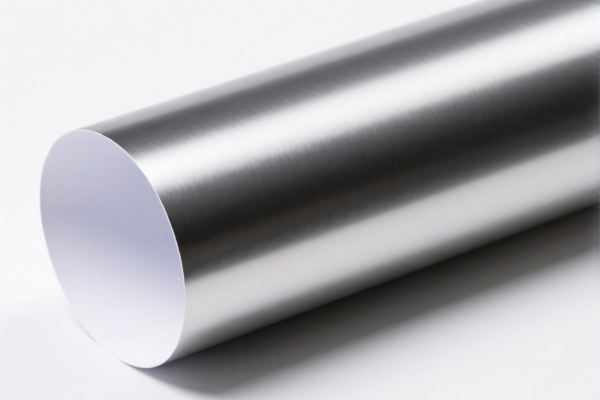
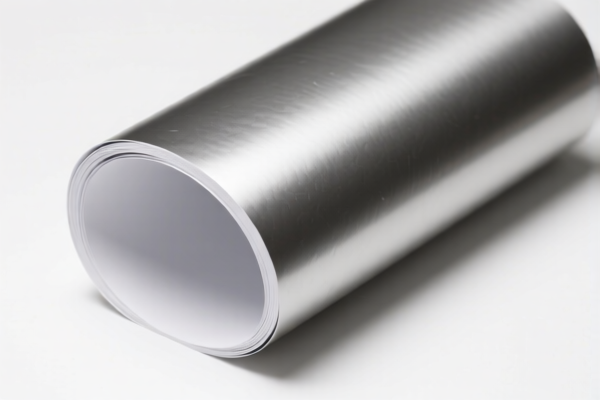
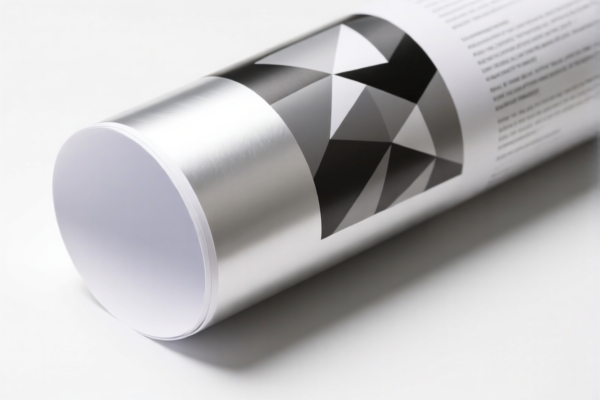
AI Analysis
🧵 Coated/Fabric Layer (70–150g) – Advanced HS Code & Tariff Guide | 2026 Global Trade Compliance | Expert Clearing Strategy
🌐 HS Code Reference & Customs Clearance Masterclass | 2026 Updated Tariff Breakdown | Pro-Level Import Planning
📌 One Product, Multiple Classifications – Know Which HS Code Applies & Why
You're importing coated or laminated fabric with a weight between 70–150g/m². This material is not a plain textile — it's a composite with a rubber or plastic coating/layer that significantly alters its physical properties and trade classification.
This guide will break down every possible HS code from your data, explain why each applies, what the real tax burden is, and give actionable customs advice to avoid delays, penalties, or massive overpayment.
📦 1. HS Code Classification Breakdown (2026 Official Tariff Authority Data)
| HS Code | Product Description | Key Classification Logic | Tax Rate | Tax Type |
|---|---|---|---|---|
5906.99.20.00 |
Other coated fabrics (not otherwise specified), with rubber/plastic coating, >70% rubber/plastic by weight | Matches coated fabric + weight >70g + rubber/plastic >70% | 35.0% | Base: 0% + 25% + 10% |
5906.91.20.00 |
Coated fabrics with rubber or plastic, used for industrial/technical purposes, >70% rubber/plastic | Matches coating + weight + material dominance | 35.0% | Base: 0% + 25% + 10% |
3921.90.50.10 |
Other plates, sheets, film, foil, and strip of plastic, with coating/layer | Classified as plastic sheet/film due to coating morphology and material dominance | 39.8% | Base: 4.8% + 25% + 10% |
5903.10.20.90 |
Coated fabrics with polyvinyl chloride (PVC), >70% plastic content | Matches PVC coating, weight, and plastic content >70% | 35.0% | Base: 0% + 25% + 10% |
✅ Key Insight:
The same physical product can fall under four different HS codes, depending on how you describe it, what material dominates, and how the coating is applied.
💰 2. 2026 Tariff Breakdown – Full Tax Clause Explanation (US Focus)
✅ Applicable Country: United States (US)
✅ Origin: China (CN)
✅ Effective Date: November 10, 2025 (inclusive)
✅ Legal Basis: U.S. Trade Act 301, IEEPA, and Footnote 9903.88.01
🎯 1. 5906.99.20.00 – Coated Fabric (General Case)
| Tax Component | Rate | Legal Basis | Notes |
|---|---|---|---|
| Base Tariff | 0% | HTSUS 5906.99.20.00 | Standard rate for unlisted coated fabrics |
| Section 301 (USITC) Add-on | +25% | USITC Footnote 9903.88.01 | Applies to Chinese-origin goods under Section 301 |
| IEEPA (International Emergency Economic Powers Act) | +10% | IEEPA: 9903.01.24 | Targeted at China/Hong Kong goods for national security concerns |
| Total Effective Tariff | 35.0% | — | — |
🔍 Why This Applies:
- The fabric has a rubber or plastic coating that exceeds 70% by weight.
- It’s not a simple textile — it’s rubberized or plasticized.
- It fits the "other coated fabrics" category under 5906.99.20.00.📌 Critical Note:
This is not a "textile" — it’s a composite material. Do not claim it as a "fabric" in the pure textile sense.
🎯 2. 5906.91.20.00 – Coated Fabric (Industrial/Technical Use)
| Tax Component | Rate | Legal Basis | Notes |
|---|---|---|---|
| Base Tariff | 0% | HTSUS 5906.91.20.00 | For technical/industrial coated fabrics |
| Section 301 Add-on | +25% | USITC Footnote 9903.88.01 | Same as above |
| IEEPA Add-on | +10% | IEEPA: 9903.01.24 | Same as above |
| Total Effective Tariff | 35.0% | — | — |
🔍 Why This Applies:
- The coating is rubber or plastic, and the fabric is used in industrial, construction, or technical applications.
- The weight (70–150g) and coating dominance (>70%) confirm this is not a consumer textile.📌 Key Distinction:
5906.91.20.00is for functional/industrial use, while5906.99.20.00is general-purpose.
Choose based on end-use — this affects duty eligibility.
🎯 3. 3921.90.50.10 – Plastic Plates, Sheets, Film, or Foil (Coated/Composite)
| Tax Component | Rate | Legal Basis | Notes |
|---|---|---|---|
| Base Tariff | 4.8% | HTSUS 3921.90.50.10 | Standard for unlisted plastic sheets/films |
| Section 301 Add-on | +25% | USITC Footnote 9903.88.01 | Applies to Chinese goods |
| IEEPA Add-on | +10% | IEEPA: 9903.01.24 | Applies to China/HK goods |
| Total Effective Tariff | 39.8% | — | — |
🔍 Why This Applies:
- The coating/layer morphology (rubber/plastic layer) suggests plastic sheet/film rather than textile.
- The weight (70–150g) is within range for plastic film (e.g., PVC sheets).
- If the coating dominates the structure, it may be classified as a plastic product, not a fabric.📌 High-Risk Category:
This is the highest tariff of all four. If your product is more plastic than textile, this could be the correct code — but it’s a red flag.⚠️ Warning:
If you misclassify a plastic sheet as fabric, you’ll pay only 35% — but if you misclassify a fabric as plastic, you’ll pay 39.8% — 4.8% more.
🎯 4. 5903.10.20.90 – PVC-Coated Fabric (Polyvinyl Chloride)
| Tax Component | Rate | Legal Basis | Notes |
|---|---|---|---|
| Base Tariff | 0% | HTSUS 5903.10.20.90 | For PVC-coated fabrics |
| Section 301 Add-on | +25% | USITC Footnote 9903.88.01 | Applies to China-origin goods |
| IEEPA Add-on | +10% | IEEPA: 9903.01.24 | Applies to China/HK goods |
| Total Effective Tariff | 35.0% | — | — |
🔍 Why This Applies:
- The coating is PVC (polyvinyl chloride).
- The plastic content exceeds 70%.
- The weight (70–150g) matches PVC-coated fabric standards.📌 Key Tip:
If your product is PVC-based, this is the most precise code. Use it to avoid disputes.
🛠️ 3. Customs Clearance Pro Tips (Real-World Strategies)
✅ 1. Document Checklist (MUST-HAVE)
| Document | Required? | Why It Matters |
|---|---|---|
| ✅ Product Specification Sheet | ✔️ | Must state: material (PVC/rubber), coating thickness, % plastic/rubber content |
| ✅ Material Test Report (Lab) | ✔️ | Prove >70% rubber/plastic by weight |
| ✅ Product Photos (with scale) | ✔️ | Show coating layer, texture, thickness |
| ✅ Commercial Invoice | ✔️ | Clearly state: “PVC-Coated Fabric, 100g/m², 85% PVC” |
| ✅ Certificate of Origin (CO) | ✔️ | If from China → triggers 301/IEEPA tariffs |
| ✅ Technical Drawings / Cross-Section Diagram | ✔️ | Show coating layer vs. base fabric |
| ✅ FCC/CE/RoHS (if applicable) | ✔️ | For electronics or industrial use |
✅ 2. 申报技巧 (The Golden Rule)
🔥 “Weight + Coating + Material >70% = Not a Fabric”
| Scenario | Correct HS Code | Why? |
|---|---|---|
| Coated fabric, 100g, 80% PVC | 5903.10.20.90 |
Specific PVC code |
| Coated fabric, 120g, rubber layer | 5906.91.20.00 |
Industrial use |
| Coated fabric, 80g, plastic layer dominates | 3921.90.50.10 |
If it behaves like plastic sheet |
| General coated fabric, 70g, unknown material | 5906.99.20.00 |
Default fallback |
📌 Never say: “This is a textile” — unless it’s 100% textile.
✅ 3. Special Cases & Risk Mitigation
| Situation | Recommended Action |
|---|---|
| Unclear coating material | Get a lab test before shipment |
| PVC coating suspected | Use 5903.10.20.90 — most accurate |
| Rubber coating, industrial use | Use 5906.91.20.00 — better than 5906.99.20.00 |
| Plastic layer >50% by weight | Consider 3921.90.50.10 — but risk 39.8% |
| Shipment to US from China | Prepay 35–39.8% — no exemption |
🌍 4. Global Market Comparison (2026)
| Country | Recommended HS Code | Base Duty | Extra Taxes | Total Effective Duty |
|---|---|---|---|---|
| 🇺🇸 USA (China origin) | 5903.10.20.90 or 3921.90.50.10 |
0–4.8% | +25% +10% | 35.0% – 39.8% |
| 🇨🇳 China | 5906.99.20.00 |
5% | None | 5% |
| 🇪🇺 EU | 5906.99.20.00 |
0% | None | 0% |
| 🇦🇺 Australia | 5906.99.20.00 |
5% | None | 5% |
| 🇯🇵 Japan | 5906.99.20.00 |
0% | None | 0% |
📌 Insight:
- Only the US imposes 301 + IEEPA tariffs.
- China, EU, Japan, Australia have no extra tariffs on this product.
📌 5. Common Mistakes & Costly Errors
❌ Mistake 1: Claiming “coated fabric” but using 5903.10.20.90 when not PVC
👉 Result: Incorrect code → audit risk, penalties, reclassification
❌ Mistake 2: Using 3921.90.50.10 without lab proof of plastic dominance
👉 Result: 39.8% tax on a fabric → overpayment
❌ Mistake 3: Not providing material test report
👉 Result: Customs rejects declaration → delay, storage fees, re-export
❌ Mistake 4: Using “textile” in invoice description
👉 Result: Misclassification → duty increase, penalties
✅ Correct Description Example:
“PVC-Coated Fabric, 100g/m², 85% PVC by weight, for industrial use, not for apparel”
🎯 6. Final Verdict: Which HS Code Should You Use?
| If Your Product Is... | Use HS Code | Why |
|---|---|---|
| PVC-coated, >70% plastic | 5903.10.20.90 |
Most precise, avoids disputes |
| Rubber-coated, industrial | 5906.91.20.00 |
Matches technical use |
| General coated fabric, unknown material | 5906.99.20.00 |
Safe default |
| Plastic layer dominates, film-like | 3921.90.50.10 |
Only if lab proof exists |
🚨 Warning:
Do not use3921.90.50.10unless you have lab proof — it’s 4.8% more expensive.
📌 7. Pro Tip: Get a Pre-Ruling (Advance Ruling)
📞 Contact a U.S. Customs Broker or Trade Attorney to apply for an Advance Ruling before shipment.
✅ Benefits: - Lock in HS Code before arrival - Avoid audits & penalties - Reduce risk of 39.8% tax - Save thousands in duty
✨ Conclusion: Precision Pays Off
🔹 “Coated fabric” ≠ “textile” — it’s a composite.
🔹 Weight (70–150g) + >70% rubber/plastic = 35–39.8% duty in the US.
🔹 PVC? Use5903.10.20.90— most accurate.
🔹 Plastic layer dominates? Use3921.90.50.10— but only with proof.
🔹 Never guess — test, document, and pre-ruling.
📣 Take Action Now:
📞 Contact a customs expert
📄 Get a lab test & technical diagram
📝 Apply for Advance Ruling
🚀 Ship with confidence — no surprises, no delays
✨ Your Product. Your Duty. Your Risk.
💼 One wrong code = 4.8% more in duty.
✅ One right code = Peace of mind.
🎯 Pro Tip: If your product is from Vietnam, Mexico, or Thailand, you may avoid 301 + IEEPA tariffs — save 35%.
📌 Consider shifting origin if you're shipping to the U.S. in volume.
🔐 Stay Compliant. Stay Competitive. Stay Ahead.
🚀 Your next shipment starts with the right HS Code.
Customer Reviews
About HS Code Classification
The Harmonized System (HS) is an internationally standardized nomenclature developed by the World Customs Organization (WCO) to classify traded products. Over 200 countries use the HS system as the basis for customs tariffs, trade statistics, and import/export regulations.
Each HS code follows a hierarchical structure:
- Chapter (2 digits) — Broad category of goods (e.g., Chapter 84: Machinery and Mechanical Appliances)
- Heading (4 digits) — More specific grouping within the chapter
- Subheading (6 digits) — Internationally standardized breakdown, used by all WCO member countries
- National subdivisions (8-10 digits) — Country-specific extensions for further classification, such as US HTSUS 10-digit codes
Correct HS code classification is essential for smooth customs clearance, accurate duty payment, and compliance with trade regulations. Misclassification can lead to customs delays, overpayment of duties, or penalties.
When importing from CN to US, the applicable tariff rates may include:
- Most-Favored-Nation (MFN) rate — The standard duty rate applied to WTO members
- General rate — Applied to countries without trade agreements
- Trade remedy duties — Additional tariffs such as Section 301 (anti-dumping), Section 232 (national security), or countervailing duties
The information provided on this page is for reference purposes only. For official classification, please consult with your local customs authority or a licensed customs broker.