Coated/Non rubber/Plastic/Wood Pulp/Glass Fiber Material
CN → US| HS Code | Tariff Rate | Origin | Destination | Doc |
|---|---|---|---|---|
| 8534000040 | 35.0% | CN | US | Official Doc |
| 7019641590 | 41.0% | CN | US | Official Doc |
| 7019641510 | 41.0% | CN | US | Official Doc |
Product Images
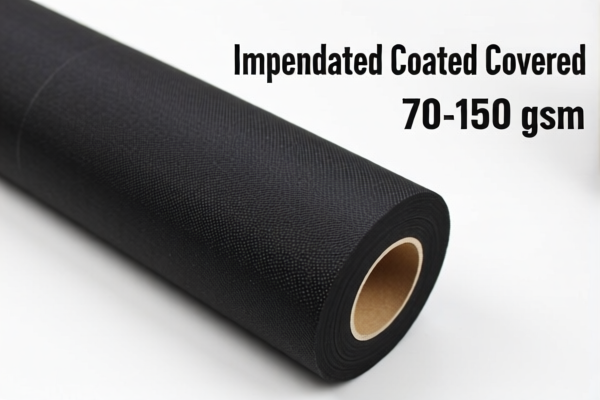
AI Analysis
🧪 Composite Materials: Coated Glass Fiber, Plastic, Wood Pulp & Non-Rubber Items
🌐 HS Code Reference & Customs Clearance Guide | 2026 Latest Tariff Analysis | Professional Clearance Strategy
📌 One, Product Definition & Classification: Do You Really Understand "Coated Glass Fiber & Composites"?
This input describes a complex composite material involving multiple layers or components: Glass Fiber (reinforcement), Coated (surface treatment), Plastic/Wood Pulp (matrix or filler), and explicitly Non-Rubber. In international trade, these items are often classified as:
- Glass Fiber Reinforced Plastics (GFRP) or Similar Composites: If the glass fiber is the primary structural element and coated with plastic/resin.
- Prepared Glass Fiber Fabrics: If the glass fiber is woven/non-woven and coated for specific industrial use.
- Paper/Pulp-based Composites: If wood pulp is the dominant base with glass fiber reinforcement (less common for high-tech "glass fiber" claims, but possible in packaging).
⚠️ Key Distinction Point:
- If the item is a rigid board/panel made essentially of glass fiber/resin → Likely 8534.00.00.40 (Prepared wiring boards) or 7019 (Glass fiber articles).
- If the item is a coated fabric/film made of glass fiber → Likely 7019.64.15.
- The term "Non-Rubber" is critical to exclude classification under Chapter 40 (Rubber).
📦 Two, HS Code Classification Details (2026 Latest Tariff Authoritative Comparison)
Based on the provided <DATA> content, here are the matched HS Codes and their logical derivations:
| HS Code | Product Description | Matching Logic from Data | Key Characteristics |
|--------|--------------------------|--------------------------|
| 8534.00.00.40 | Prepared Wiring Boards / Substrates | Match Basis: The name contains 'Glass Fiber Material', fitting the material feature of 'base plates entirely made of impregnated glass'. Although "non-flexible" isn't explicitly mentioned, in the absence of material conflict, it defaults to the "Other" category under the fallback principle. | • Glass Fiber Material
• Base Plate/Substrate
• Likely Rigid
• Impregnated |
| 7019.64.15.90 | Other Woven Glass Fiber Fabrics, Coated | Match Success: The product contains 'Glass Fiber' material, and 'Coated' fits the form characteristic of "coated or laminated" in the classification. Although width isn't specified, reasonable inference is made based on material consistency. | • Glass Fiber
• Coated/Laminated
• Woven (implied by 7019.64)
• Non-Rubber |
| 7019.64.15.10 | Woven Glass Fiber Fabrics, Coated, Specific Weight | Match Success: The material includes Glass Fiber, and the form is Coated, matching the key material and form characteristics of 'Glass Fiber' and 'Coated' in 7019.64.15.10. Although weight (gsm) isn't explicit, it falls under the "Other" category fallback principle with no material/process conflicts. | • Glass Fiber
• Coated
• Woven
• Specific Weight Category (Other) |
🔍 Important Reminder:
- 8534.00.00.40 is typically for printed wiring boards (PWBs) or substrates used in electronics. If your item is a raw material for such boards, this code is strong.
- 7019.64.15.xx is for glass fiber fabrics (woven) that are coated. This is common in construction, insulation, or industrial reinforcement.
- Do not mix codes: If it's a finished electronic substrate, use 8534. If it's a raw fabric/coated sheet, use 7019.
💰 Three, 2026 Latest Tariff Rate Detailed Explanation (Including Surcharges & Policy Add-ons)
✅ Applicable Country: United States (US)
✅ Country of Origin: China (CN)
✅ Effective Time: From November 10, 2025 (including subsequent imports)
🎯 1. 8534.00.00.40 — Prepared Wiring Boards / Glass Fiber Substrates
| Item | Content |
|---|---|
| Base Tariff | 0.0% (ad valorem) |
| USITC Surcharge | +25.0% (From USITC Footnote under Section 301) |
| 122-Clause Surcharge | +10.0% (Section 122 of the Trade Facilitation and Trade Enforcement Act) |
| Total Tariff Rate | 35.0% |
| Tax Calculation | CIF Value × 35% |
| De Minimis Eligibility | ❌ No (Deny De Minimis) |
| Legal Basis Path | USITC:8534.00.00.40 → SECTION_301:25% → SECTION_122:10% |
📌 Explanation:
- The 0% base rate reflects that wiring boards/substrates are generally low-tariff goods.
- However, Section 301 (25%) applies to high-tech components and materials from China.
- Section 122 (10%) is an additional surcharge on Chinese-origin goods for specific categories.
- Total 35% is a significant cost factor. This classification is often scrutinized for "electronic component" status.
🎯 2. 7019.64.15.90 — Other Coated Woven Glass Fiber Fabrics
| Item | Content |
|---|---|
| Base Tariff | 6.0% (ad valorem) |
| USITC Surcharge | +25.0% (Section 301) |
| 122-Clause Surcharge | +10.0% (Section 122) |
| Total Tariff Rate | 41.0% |
| Tax Calculation | CIF Value × 41% |
| De Minimis Eligibility | ❌ No (Deny De Minimis) |
| Legal Basis Path | USITC:7019.64.15.90 → SECTION_301:25% → SECTION_122:10% |
📌 Explanation:
- The 6% base rate is higher than electronic substrates.
- Glass fiber fabrics are often viewed as industrial raw materials. The 25% + 10% surcharges make the total tax burden very high.
- This code is common for construction materials (e.g., fiberglass mesh for plaster) or industrial filtration fabrics.
🎯 3. 7019.64.15.10 — Specific Weight Coated Woven Glass Fiber Fabrics
| Item | Content |
|---|---|
| Base Tariff | 6.0% (ad valorem) |
| USITC Surcharge | +25.0% (Section 301) |
| 122-Clause Surcharge | +10.0% (Section 122) |
| Total Tariff Rate | 41.0% |
| Tax Calculation | CIF Value × 41% |
| De Minimis Eligibility | ❌ No (Deny De Minimis) |
| Legal Basis Path | USITC:7019.64.15.10 → SECTION_301:25% → SECTION_122:10% |
📌 Explanation:
- This code differs from.90only by weight specification.
- If your glass fiber fabric has a specific GSM (grams per square meter) that falls into the "specific weight" sub-category, use this.
- Tax rate is identical to .90 (41%), so the decision rests on precise technical specifications.
🛠️ Four, Customs Clearance Practical Suggestions (Battle-Tested Pitfall Guide)
✅ 1. Preparation Checklist (Non-Negotiable)
| Document | Required | Explanation |
|---|---|---|
| ✅ Product Spec Sheet | ✔️ | Must detail: Material composition (% Glass Fiber, % Plastic/Pulp), Coating type, Thickness, Width, Weight (if 7019). |
| ✅ Material Safety Data Sheet (MSDS) | ✔️ | For coated chemicals/resins. |
| ✅ Product Photos | ✔️ | Clear images showing texture, coating, and any branding. |
| ✅ Declaration of Non-Rubber | ✔️ | Explicitly state "Contains No Rubber" to avoid misclassification under Chapter 40. |
| ✅ Commercial Invoice | ✔️ | Describe accurately: e.g., "Coated Glass Fiber Fabric, 50% Glass, 50% Plastic, for Industrial Use" |
| ✅ Packing List | ✔️ | Show weight, dimensions, and unit count. |
✅ 2. Declaration Tips (Key Mantras)
🔥 "Glass Fiber + Coated = 7019 OR 8534? Check the End Use!"
| Scenario | Correct Declaration | Wrong Practice |
|---|---|---|
| Electronic Substrate (Rigid, for PCBs) | 8534.00.00.40 |
Declare as "Fabric" → 41% tax! |
| Industrial Fabric (Woven, coated, for construction/filtration) | 7019.64.15.xx |
Declare as "Wiring Board" → Customs reject! |
| Mixed Material (Glass Fiber + Wood Pulp) | Clarify dominance. If glass fiber is structural → 7019/8534. If pulp is dominant → Check Paper codes. | Vague name "Composite Material" |
| Non-Rubber Explicit | Must state "Non-Rubber" in description to avoid Chapter 40 scrutiny. | Omit material details |
✅ 3. Special Case Handling
| Situation | Advice |
|---|---|
| Ambiguous "Coating" | Specify the coating material (e.g., PVC, Epoxy, Acrylic). Different coatings may affect classification. |
| "Wood Pulp" Presence | If wood pulp is significant, check if it falls under Chapter 48 (Paper/Pulp) instead. However, glass fiber reinforcement often pushes it to Chapter 70 or 85. |
| Sample vs. Mass Production | Ensure samples match mass production specs. Discrepancies can lead to re-classification and penalties. |
| Section 301 Exemptions | Check if your specific HS Code had any Section 301 exclusions in 2025/2026. (Currently, most glass fiber products are not exempt). |
🌍 Five, Global Market Comparison (2026 Latest)
| Country/Region | Recommended HS Code | Tariff Rate (CN Origin) | Certification Requirements | Notes |
|---|---|---|---|---|
| 🇺🇸 USA | 8534.00.00.40 or 7019.64.15.xx |
35% - 41% | N/A (Generic) | High Tariff! Section 301 + 122 applies. |
| 🇨🇳 China | 8534.00.00.40 or 7019.64.15.xx |
0% - 6% (Base) | CCC (if electrical) | No surcharges. Base rate applies. |
| 🇪🇺 EU | 8534.00.00 or 7019.64 |
0% - 6% | CE, RoHS | No Section 301. Low tax. |
| 🇬🇧 UK | 8534.00.00 or 7019.64 |
0% - 6% | UKCA, RoHS | Post-Brexit tariffs similar to EU. |
📌 Conclusion:
- The US market is the most challenging due to 35-41% total tariffs.
- EU/UK/China offer significantly lower tax burdens (base rates only).
- Cost Advantage: Consider shipping to EU/UK if the product is not strictly for US consumption.
📌 Six, Common Errors & Pitfall Guide (Blood & Tears Lessons)
❌ Error 1: Declaring "Glass Fiber Board" without specifying "Wiring Board" or "Coated Fabric"
👉 Consequence: Customs delays, re-classification, potential penalties.
❌ Error 2: Ignoring the "Non-Rubber" clause
👉 Consequence: Customs may suspect rubber content, leading to Chapter 40 investigation and higher duties.
❌ Error 3: Misclassifying 7019.64.15.10 vs .90 due to wrong GSM
👉 Consequence: Tax audit, back taxes, and fines. Precise GSM is critical.
❌ Error 4: Assuming "Wood Pulp" makes it a Paper product
👉 Consequence: If glass fiber is the primary reinforcement, it remains in Chapter 70 or 85. Misclassification leads to incorrect tariff application.
✅ Correct Practice:
"Coated Woven Glass Fiber Fabric, 50% Glass Fiber, 50% PVC, Non-Rubber, Width: 1.5m, GSM: 200, for Industrial Reinforcement"
🎯 Seven, Conclusion: Precision Classification Saves Money!
🎯 Remember the Mantra:
🔹 "Glass Fiber + Coated = 7019 (Fabric) or 8534 (Substrate)? End Use Dictates!"
🔹 "US Tariff: 35-41%! EU/UK: 0-6%! Don't let tax eat your margin!"
🔹 "Non-Rubber must be stated! GSM must be precise!"
📌 Pro Tip:
- If your product is a composite of Glass Fiber + Wood Pulp, consult a customs broker to determine if Chapter 48 (Paper) or Chapter 70 (Glass) applies. The dominant material determines the chapter.
- Apply for a Binding Tariff Ruling (BTR) from US Customs and Border Protection (CBP) if the classification is ambiguous. This provides legal certainty.
📣 Immediate Action:
📞 Contact a professional customs broker + Provide detailed spec sheet + Consider BTR
🚀 Ensure smooth clearance, minimize tax, and maximize profit!
✨ Professional Clearance Starts with Precise Classification!
💼 Your every dollar is worth calculating!
Customer Reviews
About HS Code Classification
The Harmonized System (HS) is an internationally standardized nomenclature developed by the World Customs Organization (WCO) to classify traded products. Over 200 countries use the HS system as the basis for customs tariffs, trade statistics, and import/export regulations.
Each HS code follows a hierarchical structure:
- Chapter (2 digits) — Broad category of goods (e.g., Chapter 84: Machinery and Mechanical Appliances)
- Heading (4 digits) — More specific grouping within the chapter
- Subheading (6 digits) — Internationally standardized breakdown, used by all WCO member countries
- National subdivisions (8-10 digits) — Country-specific extensions for further classification, such as US HTSUS 10-digit codes
Correct HS code classification is essential for smooth customs clearance, accurate duty payment, and compliance with trade regulations. Misclassification can lead to customs delays, overpayment of duties, or penalties.
When importing from CN to US, the applicable tariff rates may include:
- Most-Favored-Nation (MFN) rate — The standard duty rate applied to WTO members
- General rate — Applied to countries without trade agreements
- Trade remedy duties — Additional tariffs such as Section 301 (anti-dumping), Section 232 (national security), or countervailing duties
The information provided on this page is for reference purposes only. For official classification, please consult with your local customs authority or a licensed customs broker.