Coaxial Cable
CN → US| HS Code | Tariff Rate | Origin | Destination | Doc |
|---|---|---|---|---|
| 9001100085 | 41.7% | CN | US | Official Doc |
| 9001100075 | 41.7% | CN | US | Official Doc |
| 8529909800 | 35.0% | CN | US | Official Doc |
| 8529909760 | 85.0% | CN | US | Official Doc |
Product Images
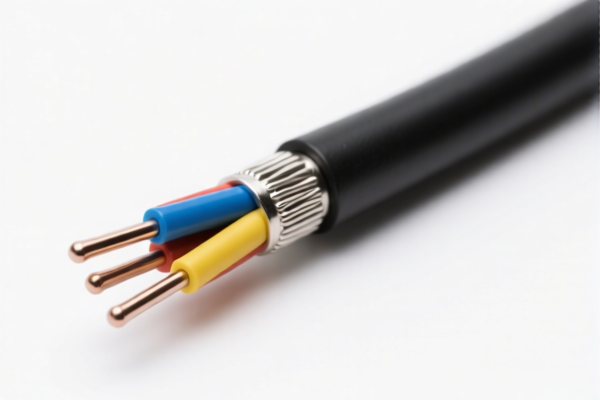
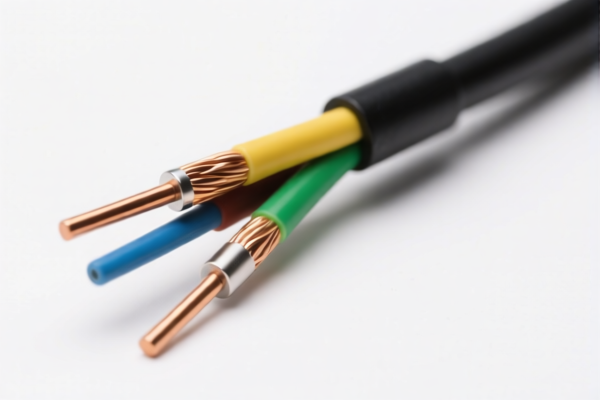
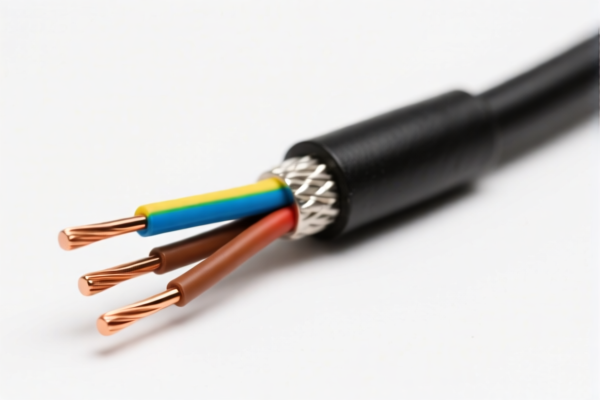
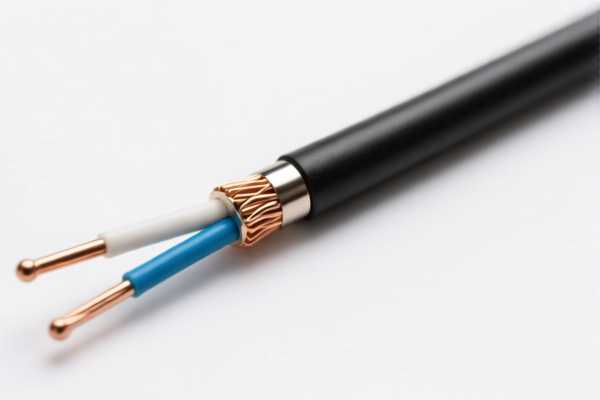
AI Analysis
📡 Coaxial Cable (The Backbone of Signal Transmission)
🌐 HS Code Reference & Customs Clearance Guide | 2026 Latest Tariff Analysis | Professional Strategy
Coaxial Cable is a versatile transmission medium used to carry radio frequency signals with low attenuation. It consists of an inner conductor, an insulating dielectric layer, a metallic shield, and an outer jacket. In international trade, it is primarily classified under Chapter 90 (Optical Fibers/Cables) or Chapter 85 (Electrical Cables), depending on its construction.
⚠️ Critical Distinction:
- If the cable contains Optical Fibers (even if shielded with metal/coaxial layers), it falls under HS 9001.
- If the cable is Purely Electrical/Copper (no optical fibers), it falls under HS 8544 or related headings.
- However, based on the<DATA>provided, we focus on specific subcategories including Optical Fiber Bundles/Cables and Parts for Display/Radio Apparatus.
📦 二、HS Code Classification Matrix (Based on Provided Data)
| HS Code | Product Description | Key Characteristics | Applicable Scenario |
|---|---|---|---|
9001.10.00.85 |
Optical fiber bundles and cables: Other | Contains optical fibers, bundled or cabled, not specifically plastic | Standard glass/plastic fiber optic cables for telecom/data |
9001.10.00.75 |
Optical fiber bundles and cables: Plastic optical fiber bundles and cables | Made entirely of plastic optical fibers | Short-range data transmission, audio cables, automotive lighting |
8529.90.98.00 |
Parts suitable for use solely or principally with apparatus of headings 8524 to 8528: Other: Other: Other | Spare parts for monitors/displays (e.g., internal coaxial connectors, RF cables inside TV/monitor) | Internal components for TVs, monitors, or projection equipment |
8529.90.97.60 |
Parts suitable for use solely or principally with apparatus of headings 8524 to 8528: Of radar, radio navigational aid or radio remote control apparatus: Other | Coaxial cables/wiring for radar, radio navigation, or remote control systems | Specialized industrial or military radio/radar equipment |
🔍 Key Insight:
- The term "Coaxial Cable" often leads to misclassification. If it carries light signals (fiber optics), it is HS 9001.
- If it is an electrical coaxial cable (RF coax), it typically goes to HS 8544. However, the provided data only lists Optical Fiber codes (9001) and Parts Codes (8529).
- If you have a standard electrical coaxial cable (e.g., RG-58, RG-6), it is NOT listed in the provided<DATA>. You must check HS 8544.31 or 8544.42 separately.
- If you have an Optical Coaxial Cable (fiber optic with shielding), use HS 9001.10.
💰 三、2026 Latest Tariff Rate Breakdown (For China-Origin Goods to USA)
✅ Applicable Countries: United States (US)
✅ Origin: China (CN)
✅ Effective Date: Post-2025 Policy Adjustments
🎯 1. 9001.10.00.85 – Optical Fiber Bundles/Cables (Other)
| Item | Detail |
|---|---|
| Base Tariff | 6.7% (Ad Valorem) |
| Additional Tariff | +25.0% (Section 301) |
| Total Tariff | 31.7% |
| Tax Calculation | CIF Value × 31.7% |
| De Minimis Exemption | ❌ Not Available (High risk of audit) |
| Legal Path | USITC:9001.10.00.85 → Section 301: 31.7% |
📌 Explanation:
- The base rate for optical fibers is modest, but the 25% additional tariff significantly increases landed cost.
- This applies to glass and plastic fiber optic cables (excluding plastic-only fibers which have a 0% rate).
🎯 2. 9001.10.00.75 – Plastic Optical Fiber Bundles/Cables
| Item | Detail |
|---|---|
| Base Tariff | 0.0% |
| Additional Tariff | 0.0% |
| Total Tariff | 0.0% |
| Tax Calculation | Free |
| De Minimis Exemption | ✅ Available (Low risk, but ensure material is pure plastic fiber) |
| Legal Path | USITC:9001.10.00.75 |
📌 Explanation:
- Plastic Optical Fiber (POF) is duty-free! This is a crucial savings point for short-range applications (e.g., home audio, automotive data links).
- Verification Required: Provide material test reports confirming the core material is plastic (PMMA, etc.), not glass.
🎯 3. 8529.90.98.00 – Parts for Display Apparatus (Coaxial/RF Components)
| Item | Detail |
|---|---|
| Base Tariff | 0.0% |
| Additional Tariff | +25.0% |
| Total Tariff | 25.0% |
| Tax Calculation | CIF Value × 25.0% |
| De Minimis Exemption | ❌ Not Available |
| Legal Path | USITC:8529.90.98.00 → Section 301: 25% |
📌 Explanation:
- If your "coaxial cable" is actually an internal component for a TV or monitor (e.g., ribbon coax, internal RF wiring), it may be classified here.
- Risk: High scrutiny. Must prove it is a "part suitable solely or principally" for displays.
🎯 4. 8529.90.97.60 – Parts for Radio/Radar Apparatus (High-Risk Category)
| Item | Detail |
|---|---|
| Base Tariff | 0.0% |
| Additional Tariff | +25.0% |
| Steel/Aluminum/Copper Surcharge | +50.0% |
| Total Tariff | 75.0% |
| Tax Calculation | CIF Value × 75.0% |
| De Minimis Exemption | ❌ Not Available |
| Legal Path | USITC:8529.90.97.60 → Section 301: 25% + Metal Surcharge: 50% |
📌 Explanation:
- WARNING: If the cable contains copper (conductor) or aluminum/steel (shielding/jacket) and is used in radar, radio navigational, or remote control apparatus, this 75% rate applies!
- This is the highest risk category. The 50% surcharge is for metal content.
- Recommendation: Avoid this classification unless absolutely necessary. Consider if the cable can be classified as a general-purpose cable (HS 8544) to avoid this punitive rate.
🛠️ 四、Customs Clearance Practical Advice
✅ 1. Documentation Checklist
| Document | Requirement | Notes |
|---|---|---|
| Product Spec Sheet | ✔️ Must | Detail core material (Glass vs. Plastic), conductor type (Copper/Aluminum), and application |
| Material Certificate | ✔️ Critical | For 9001.10.00.75, prove it is Plastic Optical Fiber to claim 0% duty |
| Intended Use Statement | ✔️ Required | For HS 8529 codes, provide letter stating "Used in Monitor/TV Assembly" or "Radio Navigation System" |
| Commercial Invoice | ✔️ Mandatory | Clearly describe product: "Plastic Optical Fiber Cable" vs. "Glass Fiber Optic Cable" |
| Packing List | ✔️ Mandatory | Separate items if mixed (e.g., POF + Glass Fiber) |
✅ 2. Classification Strategy & Pitfalls
| Scenario | Recommended HS Code | Reason |
|---|---|---|
| Standard Fiber Optic Cable (Glass core) | 9001.10.00.85 |
31.7% duty. Standard telecom/data use. |
| Plastic Optical Fiber Cable (POF) | 9001.10.00.75 |
0% duty. Best for cost-saving if application allows. |
| Coaxial Cable inside a TV | 8529.90.98.00 |
25% duty. Must be an internal part, not a standalone cable. |
| Coaxial Cable for Radar/Antenna | 8529.90.97.60 |
75% duty. Contains copper/metal. Avoid if possible. |
| Standard Electrical Coax (RG-6, etc.) | NOT LISTED | Falls under HS 8544. Check separate HS 8544.31/42 rules. |
🔥 Critical Warning:
- Do not label a glass fiber optic cable as "Plastic" to get 0% duty. Customs will test and impose penalties.
- If using HS 8529 codes, ensure the cable is not sold separately as a general-purpose cable. It must be clearly identified as a part of a specific apparatus (TV, Radar).
✅ 3. Special Cases
| Case | Handling |
|---|---|
| Mixed Shipment (POF + Glass Fiber) | Declare Separately. Do not bundle. POF gets 0%, Glass gets 31.7%. |
| OEM Components | Provide end-product manufacturer invoice to prove "Part" status for HS 8529. |
| Metal Content | If classifying under HS 8529.90.97.60, expect 50% surcharge on metal value. Negotiate with supplier on material composition if possible. |
🌍 五、Global Market Comparison (2026)
| Country | Recommended HS (If Optical) | Tariff | Notes |
|---|---|---|---|
| 🇺🇸 USA | 9001.10.00.75 (POF) |
0% | Best for POF. Glass POF is 31.7%. |
| 🇺🇸 USA | 9001.10.00.85 (Glass) |
31.7% | High duty on standard fiber. |
| 🇪🇺 EU | 9001.10 |
0% | Most optical fibers are duty-free in EU. |
| 🇨🇳 China | 9001.10 |
0% | Import duty is 0% for most optical fibers. |
| 🇯🇵 Japan | 9001.10 |
0% | Duty-free for optical fibers. |
📌 Conclusion:
- USA is the most expensive market for standard glass fiber optics (31.7%).
- Plastic Optical Fiber (POF) is Duty-Free in the USA. Use POF where bandwidth/speed requirements allow.
- EU/China/Japan are more favorable for optical fiber imports.
📌 六、Common Mistakes & Pitfalls (Lessons Learned)
❌ Mistake 1: Classifying all "Coaxial" cables as Electrical (HS 8544) when they contain Fiber.
👉 Result: Wrong classification, penalties, and potential seizure.
👉 Fix: Always check for optical fibers. If present, use HS 9001.
❌ Mistake 2: Mislabeling Glass Fiber as Plastic to get 0% duty.
👉 Result: Customs lab tests reveal glass. 60% penalty + back taxes.
👉 Fix: Be truthful. Use POF if application permits.
❌ Mistake 3: Classifying a standalone coaxial cable as a "Part" (HS 8529).
👉 Result: Customs rejects "Part" classification if it’s a general-use cable.
👉 Fix: If sold separately, use HS 8544. Only use HS 8529 if it’s an OEM part for a specific device.
❌ Mistake 4: Ignoring the 50% Metal Surcharge for radar/radio parts.
👉 Result: Unexpected 75% duty bill.
👉 Fix: Avoid HS 8529.90.97.60 if possible. Use general cable codes if applicable.
🎯 七、Conclusion: Strategic Import Planning
🎯 Key Takeaways:
🔹 Plastic Optical Fiber = 0% Duty in USA. Optimize product design to use POF if bandwidth allows.
🔹 Glass Fiber Optic = 31.7% Duty. Factor this into pricing.
🔹 Avoid HS 8529.90.97.60 unless necessary due to the 75% combined duty.
🔹 Standard Electrical Coax is not in this data set. Use HS 8544 and check those specific rates.
📌 Pro Tip:
For high-volume imports of glass fiber optics to the USA, consider supply chain diversification (e.g., sourcing from Vietnam, Mexico) to potentially avoid Section 301 tariffs.
✨ Professional Clearance, Precision Classification!
💼 Every Percent Saved is Pure Profit!
Customer Reviews
About HS Code Classification
The Harmonized System (HS) is an internationally standardized nomenclature developed by the World Customs Organization (WCO) to classify traded products. Over 200 countries use the HS system as the basis for customs tariffs, trade statistics, and import/export regulations.
Each HS code follows a hierarchical structure:
- Chapter (2 digits) — Broad category of goods (e.g., Chapter 84: Machinery and Mechanical Appliances)
- Heading (4 digits) — More specific grouping within the chapter
- Subheading (6 digits) — Internationally standardized breakdown, used by all WCO member countries
- National subdivisions (8-10 digits) — Country-specific extensions for further classification, such as US HTSUS 10-digit codes
Correct HS code classification is essential for smooth customs clearance, accurate duty payment, and compliance with trade regulations. Misclassification can lead to customs delays, overpayment of duties, or penalties.
When importing from CN to US, the applicable tariff rates may include:
- Most-Favored-Nation (MFN) rate — The standard duty rate applied to WTO members
- General rate — Applied to countries without trade agreements
- Trade remedy duties — Additional tariffs such as Section 301 (anti-dumping), Section 232 (national security), or countervailing duties
The information provided on this page is for reference purposes only. For official classification, please consult with your local customs authority or a licensed customs broker.