Cobalt Sulfide Ore
CN → USProduct Images
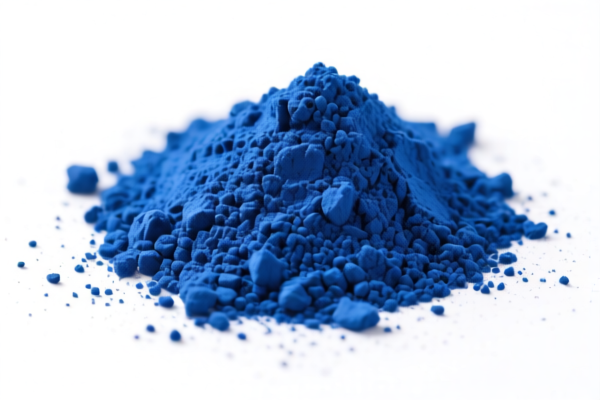
AI Analysis
🌋 Cobalt Sulfide Ore (Cobaltite & Erythrite Group Minerals)
🌐 HS Code Reference & Customs Clearance Guide | 2026 Latest Tariff Analysis | Professional-Level Clearance Strategy
📌 I. Product Definition & Classification: Do You Truly Understand "Cobalt Sulfide Ore"?
Cobalt sulfide ore refers to natural minerals where cobalt exists primarily in the form of sulfides (such as cobaltite, $CoAsS$, or other complex sulfide ores). In international trade, these are classified as raw mineral products, distinct from processed cobalt salts, metallic cobalt, or cobalt compounds.
Key Distinction:
- Raw Ore/Concentrate: Natural minerals mined from the earth, possibly crushed or beneficiated, but not chemically processed into pure cobalt salts or metal. → Classified under Chapter 26.
- Processed Cobalt Products: Cobalt oxides, cobalt sulfate, cobalt metal, etc. → Classified under Chapter 28 or Chapter 79.
⚠️ Critical Differentiation Point:
- If the material is natural mineral rock or concentrate containing cobalt sulfide → HS Code 2620.19.00.00 (or similar based on origin/species).
- If it is chemically synthesized cobalt sulfide ($CoS$, $Co_9S_8$) for industrial use (e.g., battery precursors) → HS Code 2851.00.00.00.
- Common Mistake: Exporters often misclassify natural cobalt sulfide ore as "cobalt compound" (2851) to avoid high tariffs, but customs will demand geological/mineral proof.
📦 II. HS Code Classification Details (2026 Latest Tariff Authority Comparison)
| HS Code | Product Description | Applicable Scenario | Contains Chemical Processing? |
|---|---|---|---|
2620.19.00.00 |
Residues from the treatment of cobalt ores and concentrates (not elsewhere specified); other cobalt residues | Cobalt sulfide ore concentrate, roasted cobalt sulfide ore | ❌ No (physical beneficiation) |
2620.20.00.00 |
Coppersmith's dross and other copper residues; cobalt residues from other sources | Impure cobalt sulfide waste | ❌ No |
2851.00.00.00 |
Cobalt sulfides (pure or synthetic) | Synthetic cobalt sulfide for battery material, catalysts | ✅ Yes (chemical synthesis) |
2614.00.00.00 |
Titanium ores and concentrates | Confusion risk: Not cobalt | ❌ N/A |
2619.00.00.00 |
Ferroalloys | Confusion risk: Cobalt is not iron-based | ❌ N/A |
🔍 Key Reminder:
- Natural Cobalt Sulfide Ore (e.g., from DRC, Australia, Canada) must be declared as mineral residues/ores under Chapter 26.
- Synthetic Cobalt Sulfide (used in high-tech battery precursors) is a chemical product under Chapter 28.
- Do not misdeclare natural ore as chemical product to evade tariffs – customs will require assay reports and origin certificates.
💰 III. 2026 Latest Tariff Rate Details (Including Additional Taxes & Policy Surcharges)
✅ Applicable Country: United States (US)
✅ Origin: China (CN) (Note: Most cobalt sulfide ore originates from DRC, but if processed/exported from China, these rates apply. For DRC origin, GSP or preferential rates may apply.)
✅ Effective Time: November 10, 2025 onwards
🎯 1. 2620.19.00.00 —— Cobalt Residues & Ore Concentrates (Natural/Processed)
| Item | Content |
|---|---|
| Base Tariff | 0% (ad valorem) |
| USITC Additional Tariff | +25% (from USITC Footnote 9903.88.01, under Section 301) |
| IEEPA Additional Tariff | +10% (targeting Chinese products, effective Nov 10, 2025) |
| Total Tariff | 35% |
| Tax Calculation | CIF Value × 35% |
| De Minimis Exemption Eligible | ❌ No (deny_de_minimis) |
| Legal Basis Path | IEEPA:9903.01.25 → USITC:2620.19.00.00 → FOOTNOTE:9903.88.01 |
📌 Explanation:
- The 25% USITC tariff is part of the Section 301 tariffs on Chinese goods;
- The 10% IEEPA tariff is a new surcharge on Chinese-origin cobalt-related residues;
- Total 35% is significant for low-margin bulk commodities.
- Note: If cobalt ore originates from Democratic Republic of Congo (DRC), it may qualify for GSP (Generalized System of Preferences) or specific exemptions, reducing tariffs to 0%~5% (check current USITC rulings).
🎯 2. 2851.00.00.00 —— Synthetic Cobalt Sulfide (Chemical Product)
| Item | Content |
|---|---|
| Base Tariff | 0% |
| USITC Additional Tariff | +25% |
| IEEPA Additional Tariff | +10% |
| Total Tariff | 35% |
| Tax Calculation | CIF × 35% |
| De Minimis Exemption Eligible | ❌ No |
| Legal Basis Path | IEEPA:9903.01.25 → USITC:2851.00.00.00 → FOOTNOTE:9903.88.01 |
📌 Note:
- Synthetic cobalt sulfide faces the same high tariffs as natural ore residues if originating from China.
- Strategic Tip: If sourcing from non-China origins (e.g., DRC, Canada), apply for preferential origin certification to reduce tariffs.
🛠️ IV. Customs Clearance Practical Advice (Battle-Tested Pitfall Avoidance)
✅ 1. Required Documentation Checklist (No Omissions)
| Document | Mandatory | Description |
|---|---|---|
| ✅ Assay Report | ✔️ | Must show Co, S, As, Fe, and other element content. Critical for distinguishing ore vs. chemical. |
| ✅ Mineralogical Analysis | ✔️ | XRD (X-ray Diffraction) report to confirm crystal structure (natural sulfide vs. synthetic). |
| ✅ Certificate of Origin (CO) | ✔️ | Essential for GSP claims if from DRC or other eligible countries. |
| ✅ Commercial Invoice | ✔️ | Clearly state "Cobalt Sulfide Ore Concentrate" or "Synthetic Cobalt Sulfide". Avoid vague terms like "cobalt material". |
| ✅ Packing List | ✔️ | Detail net/gross weight, packaging type (bulk/ton bags). |
| ✅ MSDS/SDS | ✔️ | Required for hazardous material handling (if applicable). |
| ✅ Bill of Lading | ✔️ | Must match invoice weight and description. |
✅ 2. Declaration Tips (Key Mantra)
🔥 "Ore is Chapter 26, Chemical is 28, assay proves the truth!"
| Scenario | Correct Declaration | Wrong Practice |
|---|---|---|
| Natural Cobalt Sulfide Ore | 2620.19.00.00 |
Misdeclare as 2851 → 35% tariff + penalty |
| Synthetic Cobalt Sulfide | 2851.00.00.00 |
Misdeclare as 2620 → Delayed clearance |
| DRC-Origin Cobalt Ore | 2620.19.00.00 + GSP Claim |
Miss GSP → Pay 35% instead of 0-5% |
| Mixed Ore (Co + Cu/Ni) | Declare as primary metal residue | Split declaration → Higher total tax |
✅ 3. Special Case Handling
| Situation | Handling Advice |
|---|---|
| High Arsenic Content | Cobalt sulfide (cobaltite) often contains arsenic. Ensure arsenic levels meet US EPA/customs standards. If too high, may be classified as hazardous waste. |
| GSP Origin (DRC) | Apply for Form A or digital GSP certificate. Verify if the specific cobalt product still qualifies for preferential treatment in 2026. |
| Battery-Grade Material | If intended for EV batteries, ensure compliance with Uyghur Forced Labor Prevention Act (UFLPA) documentation if transiting through China. |
| Mixed Metals | If cobalt is secondary to copper/nickel, declare based on primary metal content. |
🌍 V. Global Market Comparison (2026 Latest)
| Country/Region | Recommended HS Code | Tariff (China Origin) | Certification | Notes |
|---|---|---|---|---|
| 🇺🇸 USA | 2620.19.00.00 |
35% | No specific | High tariffs due to Section 301/IEEPA |
| 🇨🇳 China | 2620.19.00.00 |
0% | N/A | Import tariff-free for raw ore |
| 🇪🇺 EU | 2620.19.00.00 |
0% | REACH Compliance | No additional tariffs |
| 🇯🇵 Japan | 2620.19.00.00 |
0% | JIS Standards | Stable supply chain |
| 🇰🇷 South Korea | 2620.19.00.00 |
0% | KCS | Key market for battery materials |
📌 Conclusion:
- USA is the only major market imposing high additional tariffs on Chinese-origin cobalt residues/ore.
- EU, Japan, Korea have 0% tariffs, making them more attractive for Chinese exporters.
- If shipping to USA, consider transshipment (e.g., from Canada or DRC) to reduce tariff burden, but ensure compliance with anti-circumvention laws.
📌 VI. Common Mistakes & Pitfall Guide (Lessons Learned)
❌ Mistake 1: Declaring natural cobalt sulfide ore as "cobalt compound" (2851)
👉 Consequence: Customs demands assay report → Delay + Potential 35% tariff + Penalty.
❌ Mistake 2: Ignoring arsenic content in cobaltite ore
👉 Consequence: Classified as hazardous waste → Denied entry or disposal costs.
❌ Mistake 3: Failing to claim GSP for DRC-origin ore
👉 Consequence: Pay 35% instead of 0-5% → Unnecessary cost increase.
❌ Mistake 4: Using vague descriptions like "cobalt material"
👉 Consequence: Customs classification uncertainty → Audit risk.
✅ Correct Declaration:
"Natural Cobalt Sulfide Ore Concentrate, Co Content >X%, As Content <Y%, Origin: DRC, HS Code 2620.19.00.00, GSP Eligible"
🎯 VII. Conclusion: Precise Classification Saves Money!
🎯 Remember the Mantra:
🔹 "Ore is 26, Chemical is 28, assay proves it all!"
🔹 "GSP can cut 30%, but only if origin is right!"
📌 Pro Tip:
If your cobalt sulfide ore originates from non-China countries (e.g., DRC, Australia, Canada), apply for preferential origin certification to reduce tariffs to 0%~5%.
For China-origin cobalt sulfide, consider tariff engineering or supply chain diversification to mitigate the 35% burden.
📣 Immediate Action:
📞 Contact a licensed customs broker + Provide Assay Report + Apply for GSP Certificate (if eligible)
🚀 Let your cobalt sulfide ore clear customs smoothly, avoid tariffs, and maximize profit!
✨ Professional Clearance Starts with Accurate Classification!
💼 Every dollar of tariff saved is pure profit!
Customer Reviews
About HS Code Classification
The Harmonized System (HS) is an internationally standardized nomenclature developed by the World Customs Organization (WCO) to classify traded products. Over 200 countries use the HS system as the basis for customs tariffs, trade statistics, and import/export regulations.
Each HS code follows a hierarchical structure:
- Chapter (2 digits) — Broad category of goods (e.g., Chapter 84: Machinery and Mechanical Appliances)
- Heading (4 digits) — More specific grouping within the chapter
- Subheading (6 digits) — Internationally standardized breakdown, used by all WCO member countries
- National subdivisions (8-10 digits) — Country-specific extensions for further classification, such as US HTSUS 10-digit codes
Correct HS code classification is essential for smooth customs clearance, accurate duty payment, and compliance with trade regulations. Misclassification can lead to customs delays, overpayment of duties, or penalties.
When importing from CN to US, the applicable tariff rates may include:
- Most-Favored-Nation (MFN) rate — The standard duty rate applied to WTO members
- General rate — Applied to countries without trade agreements
- Trade remedy duties — Additional tariffs such as Section 301 (anti-dumping), Section 232 (national security), or countervailing duties
The information provided on this page is for reference purposes only. For official classification, please consult with your local customs authority or a licensed customs broker.