Coca Cola Cup Lid
CN → US| HS Code | Tariff Rate | Origin | Destination | Doc |
|---|---|---|---|---|
| 8309900085 | 37.6% | CN | US | Official Doc |
| 8309900080 | 37.6% | CN | US | Official Doc |
| 3923500000 | 40.3% | CN | US | Official Doc |
| 3923109000 | 38.0% | CN | US | Official Doc |
| 7010202000 | 37.5% | CN | US | Official Doc |
Product Images
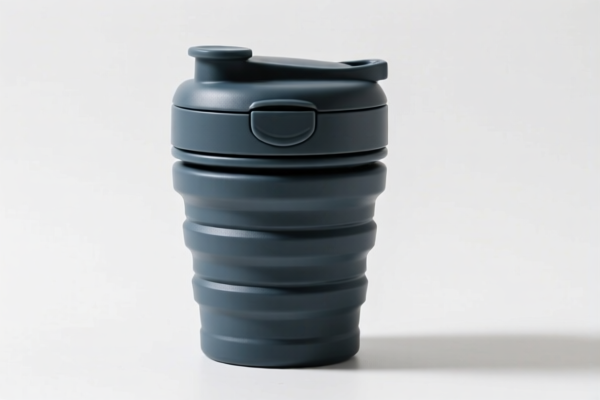
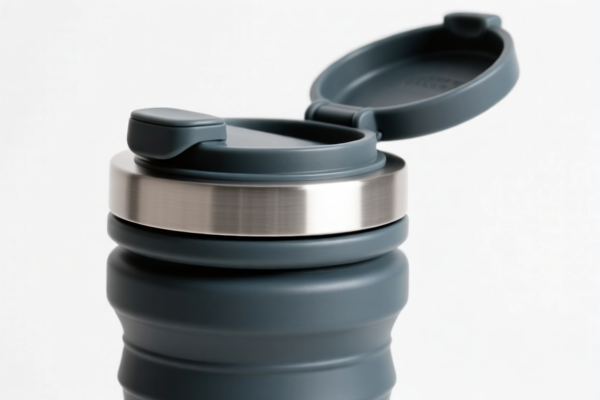
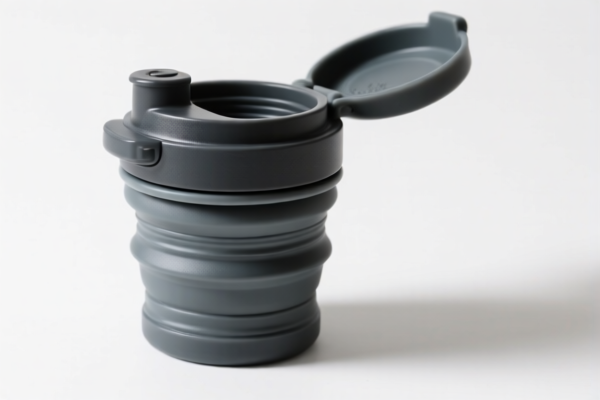
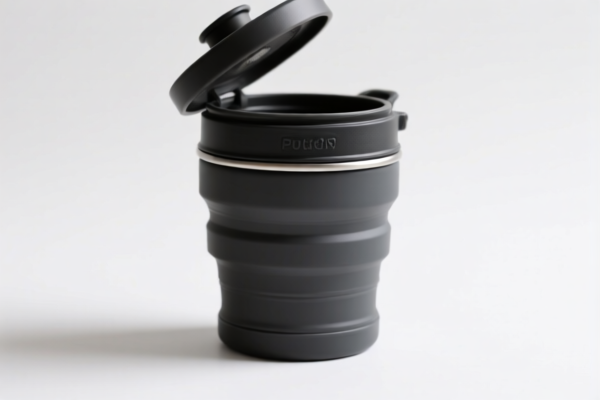
AI Analysis
🥤 Coca Cola Cup Lid: The Ultimate Classification & Customs Clearance Guide
🌐 HS Code Reference & Customs Strategy | 2026 Latest Tariff Analysis | Professional Level Clearance Tactics
📌 I. Product Definition & Classification: Do You Really Understand "Cup Lids"?
A Coca Cola Cup Lid is a critical accessory for beverage containers, designed to seal cups and prevent spills. In international trade, the classification depends heavily on material and functional integration. Based on common sense and standard trade practices, these lids are typically made of Plastic, Glass, or Ferrous/Non-ferrous Metal.
⚠️ Key Distinction Point:
- If made of Plastic → Typically classified under Chapter 39 (Articles of Plastics);
- If made of Metal → Typically classified under Chapter 83 (Miscellaneous Articles of Base Metal);
- If made of Glass → Typically classified under Chapter 70 (Glass and Glassware).
Critical Insight: The material dictates the HS Code chapter. Misclassification can lead to significant tax discrepancies, especially with the complex US tariff structure (Base + Section 301 + 122/Emergency Tariffs).
📦 II. HS Code Classification Details (2026 Latest Tariff Authority Comparison)
Based on the provided data, here are the 5 most likely HS Codes for "Coca Cola Cup Lid," categorized by material and function.
| HS Code | Product Description & Rationale | Material Assumption | Total Tax Rate | Tax Breakdown |
|---|---|---|---|---|
| 8309.90.00.85 | Lids, caps, and other closures (Other) | Base Metal (Iron/Steel) | 37.6% | Base: 2.6% + Sec 301: 25.0% + Sec 122/Emergency: 10% |
| 8309.90.00.80 | Lids, caps, and other closures (Other) | Base Metal (Non-Ferrous/Aluminum) | 37.6% | Base: 2.6% + Sec 301: 25.0% + Sec 122/Emergency: 10% |
| 3923.50.00.00 | Articles for the conveyance or packing of goods: Stoppers, Lids, Caps & Closers | Plastic (Rigid/Standard) | 40.3% | Base: 5.3% + Sec 301: 25.0% + Sec 122/Emergency: 10% |
| 3923.10.90.00 | Articles for the conveyance or packing of goods: Sacks, Bags, Boxes... (Other) | Plastic (Flexible/Other Sealing) | 38.0% | Base: 3.0% + Sec 301: 25.0% + Sec 122/Emergency: 10% |
| 7010.20.20.00 | Glass containers: Stoppers, Lids, Caps & Other Closers | Glass | 37.5% | Base: 2.5% + Sec 301: 25.0% + Sec 122/Emergency: 10% |
🔍 Key Logic Explanation:
- 8309 Series: Explicitly covers "Stoppers, Caps, Lids" of base metal. Common for high-end reusable or industrial beverage caps.
- 3923 Series: Covers plastic articles for packing/pouring.3923.50is specific for "Stoppers, lids, caps," while3923.10is for general sacks/bags. For standard plastic cup lids,3923.50is often more precise, but3923.10may apply if considered part of a flexible packaging system.
- 7010 Series: Specifically lists "Stoppers, lids, caps" for glass containers. If the lid itself is glass (rare for casual use but possible for specific storage), this applies.
💰 III. 2026 Latest Tariff Rate Details (Including Add-ons, Policy Surcharges)
✅ Applicable Country: United States (US)
✅ Origin: China (CN) (Note: Tax details assume China origin based on the "122条款" and "301" reference in data)
✅ Effective Time: 2025/2026 Regulations
🎯 1. Plastic Lids (HS: 3923.50 / 3923.10)
| Item | Content |
|---|---|
| Base Rate | 3.0% – 5.3% |
| Section 301 Surcharge | +25.0% |
| Section 122 / Emergency Tariff | +10.0% |
| Total Effective Rate | 38.0% – 40.3% |
| Tax Calculation | CIF Value × Total Rate |
| De Minimis Exemption | ❌ NOT Applicable (High value surcharges usually bypass $800 exemption if properly classified as high-risk) |
| Legal Basis Path | HTSUS:3923.50 → Trade Act Sec 301 → Emergency Tariff Order 122 |
📌 Interpretation:
- Plastic lids are heavily taxed due to the combination of base tariffs and multiple surcharges.
- 3923.50 is often preferred for rigid plastic lids as it is more specific than the general packing articles in 3923.10.
- Total tax ~40% is significantly higher than metal or glass counterparts in some cases, making cost optimization crucial.
🎯 2. Metal Lids (HS: 8309.90)
| Item | Content |
|---|---|
| Base Rate | 2.6% |
| Section 301 Surcharge | +25.0% |
| Section 122 / Emergency Tariff | +10.0% |
| Total Effective Rate | 37.6% |
| Tax Calculation | CIF Value × 37.6% |
| De Minimis Exemption | ❌ NOT Applicable |
| Legal Basis Path | HTSUS:8309.90 → Trade Act Sec 301 → Emergency Tariff Order 122 |
📌 Interpretation:
- Metal lids benefit from a slightly lower base rate (2.6%) compared to plastic.
- The surcharges (25% + 10%) are identical to plastic goods.
- Total tax 37.6% is the lowest among the options, making metal lids (if applicable) the most tax-efficient choice from a pure duty perspective.
🎯 3. Glass Lids (HS: 7010.20)
| Item | Content |
|---|---|
| Base Rate | 2.5% |
| Section 301 Surcharge | +25.0% |
| Section 122 / Emergency Tariff | +10.0% |
| Total Effective Rate | 37.5% |
| Tax Calculation | CIF Value × 37.5% |
| De Minimis Exemption | ❌ NOT Applicable |
| Legal Basis Path | HTSUS:7010.20 → Trade Act Sec 301 → Emergency Tariff Order 122 |
📌 Interpretation:
- Glass lids have the lowest base rate (2.5%).
- Total tax 37.5% is the absolute lowest in this set.
- However, glass lids are rare for standard "Coca Cola cups" (which are usually plastic or metal-lined). This code is for glass stoppers/caps used with glass bottles.
🛠️ IV. Customs Clearance Practical Advice (Battle-Tested Pitfall Avoidance)
✅ 1. Documentation Checklist (Non-Negotiable)
| Document | Mandatory? | Description |
|---|---|---|
| ✅ Product Specification Sheet | ✔️ | Must specify Material (Plastic Type, Metal Alloy, Glass Type), Dimensions, and Intended Use. |
| ✅ Material Declaration | ✔️ | Explicitly state "100% Polypropylene" or "Aluminum Alloy" to justify HS Code. |
| ✅ Product Photos | ✔️ | Clear images of the lid, showing any branding (Coca Cola logo) and structure. |
| ✅ Commercial Invoice | ✔️ | Must match HS Code description precisely (e.g., "Plastic Cup Lids" not just "Lids"). |
| ✅ Packing List | ✔️ | Net/Gross weight, number of units. |
| ✅ Origin Certificate (if applicable) | ✔️ | If sourced from non-China countries, may reduce surcharges (check US trade agreements). |
✅ 2. Classification Strategy (Key Mantras)
🔥 "Material is King, Function is Queen, Don't Split the Ship!"
| Scenario | Correct HS Code | Incorrect Practice | Risk |
|---|---|---|---|
| Standard Plastic Lid | 3923.50.00.00 |
Use 3923.10 (General) |
Possible penalty for less specific classification; tax diff (40.3% vs 38.0%). |
| Metal Cap/Lid | 8309.90.00.85 |
Use 7326 (Other steel articles) |
High risk of audit; different tax base. |
| Glass Stopper | 7010.20.20.00 |
Use 7010.90 (Other glass) |
Missing specific "lid" classification; may face questions. |
| Mixed Package | Classify by Value/Weight | Ship as "Mixed Goods" | Customs may classify all as the highest-taxed item. |
✅ 3. Special Handling Tips
| Situation | Advice |
|---|---|
| OEM Coca-Cola Lids | Provide authorization letter from Coca-Cola or contract proof to prove genuine goods, avoiding IP issues. |
| Plastic Type | Specify if it's Food-Grade (PP/PE). Non-food grade may face FDA/CPSC scrutiny. |
| Small Quantity (De Minimis) | If under $800, still verify if surcharges apply. Recent enforcement suggests high-risk categories (like packaging from China) may be scrutinized even for small shipments. |
| Labeling | Ensure labels are in English and clearly state "Not for Resale" if samples, to avoid consumer confusion. |
🌍 V. Global Market Comparison (2026 Latest)
| Country/Region | Recommended HS Code | Base Duty | Add-ons | Total Est. | Notes |
|---|---|---|---|---|---|
| 🇺🇸 USA | 3923.50 or 8309.90 |
2.6–5.3% | +35% (301+122) | 37.6–40.3% | High taxes due to China origin. |
| 🇨🇳 China (Import) | 3923.50 |
5–10% | None | 5–10% | No surcharges for imports into China. |
| 🇪🇺 EU | 3923.50 |
3–6% | None | 3–6% | No Section 301/122 equivalent. |
| 🇬🇧 UK | 3923.50 |
3–6% | None | 3–6% | Post-Brexit, no US surcharges. |
| 🇯🇵 Japan | 3923.50 |
5–10% | None | 5–10% | No surcharges. |
📌 Conclusion:
- USA is the most expensive market for importing cup lids from China due to the 35% surcharge (25% 301 + 10% 122).
- EU, UK, Japan are significantly cheaper, with only base tariffs applying.
- Strategy: If shipping to the US, consider duty mitigation through supply chain diversification (e.g., sourcing lids from Vietnam or Mexico if possible) or applying for Exclusions (if available).
📌 VI. Common Mistakes & Pitfalls (Lessons Learned)
❌ Mistake 1: Classifying all lids under 3923.10 (Sacks/Bags) because it's "general packing."
👉 Consequence: Customs may reclassify to 3923.50 (Lids/Caps) which has a higher base rate (5.3% vs 3.0%) and audit risks.
❌ Mistake 2: Ignoring the Material. Saying "Lid" without specifying "Plastic" or "Metal."
👉 Consequence: Customs will assign the highest possible duty rate or require a re-classification, causing delays.
❌ Mistake 3: Assuming De Minimis ($800) applies automatically.
👉 Consequence: If the shipment is deemed "high-risk" or if surcharges apply to de minimis (policy changes), you face unexpected taxes and detention fees.
❌ Mistake 4: Mixing Plastic and Metal lids in one shipment without separate declaration.
👉 Consequence: Customs may classify the entire shipment under the higher-taxed material or demand separate HS Codes for each.
✅ Correct Approach:
"Plastic Cup Lids, Food-Grade Polypropylene, PP, for Beverage Containers, Model XYZ, Made in China"
🎯 VII. Conclusion: Precision Classification Saves Money!
🎯 Remember the Mantra:
🔹 "Material First, Code Specific, Taxes High in US, Document Clearly!"
🔹 "Plastic 40%, Metal 37.6%, Glass 37.5% – Know Your Base Rate!"
📌 Pro Tip:
If you are importing large volumes to the US, apply for HS Code Advanced Ruling or consult a customs broker to verify if any Section 301 Exclusions apply to your specific product type. Even a 1% reduction in base duty or avoiding a misclassification can save thousands of dollars.
📣 Take Action Now:
📞 Contact a Licensed Customs Broker
📄 Provide Material Specs & Photos
🚀 Ensure Smooth Clearance, Avoid Delays, Protect Margins!
✨ Professional Customs Clearance Starts with Accurate Classification!
💼 Your Every Penny Deserves Precise Calculation!
Customer Reviews
About HS Code Classification
The Harmonized System (HS) is an internationally standardized nomenclature developed by the World Customs Organization (WCO) to classify traded products. Over 200 countries use the HS system as the basis for customs tariffs, trade statistics, and import/export regulations.
Each HS code follows a hierarchical structure:
- Chapter (2 digits) — Broad category of goods (e.g., Chapter 84: Machinery and Mechanical Appliances)
- Heading (4 digits) — More specific grouping within the chapter
- Subheading (6 digits) — Internationally standardized breakdown, used by all WCO member countries
- National subdivisions (8-10 digits) — Country-specific extensions for further classification, such as US HTSUS 10-digit codes
Correct HS code classification is essential for smooth customs clearance, accurate duty payment, and compliance with trade regulations. Misclassification can lead to customs delays, overpayment of duties, or penalties.
When importing from CN to US, the applicable tariff rates may include:
- Most-Favored-Nation (MFN) rate — The standard duty rate applied to WTO members
- General rate — Applied to countries without trade agreements
- Trade remedy duties — Additional tariffs such as Section 301 (anti-dumping), Section 232 (national security), or countervailing duties
The information provided on this page is for reference purposes only. For official classification, please consult with your local customs authority or a licensed customs broker.