Cockpit Cover
CN → US| HS Code | Tariff Rate | Origin | Destination | Doc |
|---|---|---|---|---|
| 8607995000 | 38.1% | CN | US | Official Doc |
| 3926909989 | 22.8% | CN | US | Official Doc |
| 3926909940 | 22.8% | CN | US | Official Doc |
| 8907900090 | 17.5% | CN | US | Official Doc |
Product Images
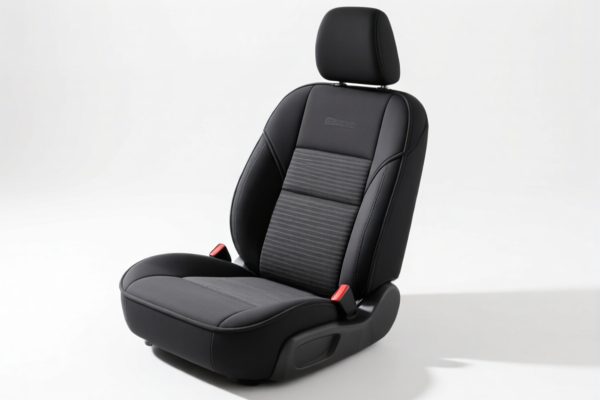
AI Analysis
🚂 Cockpit Cover (舱盖)
🌐 HS Code Reference & Customs Clearance Guide | 2026 Latest Tariff Analysis | Professional Clearance Strategy
📌 I. Product Definition & Classification: Do You Really Understand "Cockpit Cover"?
A Cockpit Cover (舱盖) is a protective enclosure or lid used in various industrial contexts. In international trade, its classification depends entirely on its material, application, and structural nature. It is not a single standardized item but rather a component that falls into different categories based on how it is used:
Railway Components: If used as part of a railway vehicle’s roof or enclosure system.
Plastic/Composite Parts: If made primarily of plastic or composite materials for general industrial use.
Floating Structures: If used as a covering for boats, barges, or other marine vessels.
⚠️ Key Distinction Point:
- If it is a structural part of a train/carriage → It belongs to Railway Vehicle Parts.
- If it is a plastic lid/cover for machinery or storage → It belongs to Plastic Articles.
- If it is part of a boat or barge → It belongs to Floating Structures.
📦 II. HS Code Classification Details (2026 Latest Tariff Authority Reference)
Based on the provided data, here are the possible HS Code classifications for "Cockpit Cover" depending on its specific use and material:
| HS Code | Product Description | Application Scenario | Material/Nature |
|---|---|---|---|
8607.99.50.00 |
Parts of railway vehicles (Cover as a railway vehicle component) | Railway train roofs, cabin enclosures, train covers | Metallic or composite structural part |
3926.90.99.89 |
Other plastic articles (Cover as a plastic/composite product) | Industrial plastic covers, equipment lids, non-railway plastic parts | Plastic or composite material |
3926.90.99.40 |
Other plastic articles (Cover inferred as plastic lid) | General-purpose plastic covers, container lids | Plastic material |
3926.90.99.89 |
Other plastic articles (Cover as generic plastic item) | Catch-all for plastic covers not elsewhere specified | Plastic material |
8907.90.00.90 |
Other floating structures (Cover as part of a floating structure) | Boat covers, barge roofs, marine vessel enclosures | Part of a marine/floating structure |
🔍 Key Reminder:
- Railway covers are strictly classified under Chapter 86 (Railways/Trams). Misclassifying a train part as a generic plastic item will lead to severe penalties.
- Plastic covers fall under Chapter 39 (Plastics). The specific sub-code depends on the exact type of plastic article.
- Marine covers are classified under Chapter 89 (Ships/Boats). If the cover is an integral part of a floating structure, it must be declared as such.
💰 III. 2026 Latest Tariff Rate Details (Including Additional Taxes)
✅ Applicable Country: United States (US)
✅ Country of Origin: China (CN)
✅ Effective Date: From November 10, 2025 (for subsequent imports)
🎯 1. 8607.99.50.00 —— Railway Vehicle Parts (Cockpit Cover for Trains)
| Item | Detail |
|---|---|
| Base Tariff Rate | 3.1% (ad valorem) |
| Section 301 Additional Tariff | +25.0% |
| Section 122 Tariff | +10.0% |
| Total Tariff Rate | 38.1% |
| Tax Calculation | CIF Value × 38.1% |
| De Minimis Exemption | ❌ Not Eligible |
| Legal Basis | Base Tariff (3.1%) + Section 301 (25%) + Section 122 (10%) |
📌 Explanation:
- 3.1% is the standard Most Favored Nation (MFN) rate for railway parts.
- 25% is the additional tariff imposed under Section 301 of the Trade Act against Chinese goods.
- 10% is an additional tariff under Section 122 (often related to national security or specific trade actions).
- Total: 38.1% is a high tariff, so precise classification as a railway part is critical to avoid misclassification penalties.
🎯 2. 3926.90.99.89 & 3926.90.99.40 —— Other Plastic Articles (Plastic Cockpit Covers)
| Item | Detail |
|---|---|
| Base Tariff Rate | 5.3% (ad valorem) |
| Section 301 Additional Tariff | +7.5% |
| Section 122 Tariff | +10.0% |
| Total Tariff Rate | 22.8% |
| Tax Calculation | CIF Value × 22.8% |
| De Minimis Exemption | ❌ Not Eligible |
| Legal Basis | Base Tariff (5.3%) + Section 301 (7.5%) + Section 122 (10%) |
📌 Note:
- These two HS codes (3926.90.99.89and3926.90.99.40) have the same total tariff rate of 22.8%.
- 7.5% is the additional tariff under Section 301 for plastic articles.
- 10% is the Section 122 additional tariff.
- This rate is lower than railway parts (38.1%), but higher than some other plastic goods.
🎯 3. 8907.90.00.90 —— Other Floating Structures (Marine Cockpit Covers)
| Item | Detail |
|---|---|
| Base Tariff Rate | 0.0% (ad valorem) |
| Section 301 Additional Tariff | +7.5% |
| Section 122 Tariff | +10.0% |
| Total Tariff Rate | 17.5% |
| Tax Calculation | CIF Value × 17.5% |
| De Minimis Exemption | ❌ Not Eligible |
| Legal Basis | Base Tariff (0%) + Section 301 (7.5%) + Section 122 (10%) |
📌 Note:
- This is the lowest tariff rate among all options (17.5%).
- Base rate is 0%, but additional tariffs still apply.
- Only applicable if the cover is part of a floating structure (boat/barge). Misclassification here is a major risk.
🛠️ IV. Customs Clearance Practical Advice (Avoiding Pitfalls)
✅ 1. Required Documentation Checklist (Mandatory)
| Document | Required? | Description |
|---|---|---|
| ✅ Product Specifications | ✔️ | Material (Plastic/Metal), Dimensions, Weight, Intended Use |
| ✅ Technical Drawings/Photos | ✔️ | Show structure, mounting, and integration (e.g., is it on a train or boat?) |
| ✅ Commercial Invoice | ✔️ | Must clearly state "Cockpit Cover" and specify application (Railway/Plastic/Marine) |
| ✅ Packing List | ✔️ | List contents clearly, avoid mixing with unrelated items |
| ✅ Certificate of Origin (CO) | ✔️ | Required for tariff calculations (China origin) |
| ✅ Third-Party Test Report | ✔️ | If for railway/marine, may need safety certification (e.g., AAR, ABS) |
✅ 2. Declaration Strategy (Key Rules)
🔥 "Declare Correctly, Pay Less! Wrong Code = Heavy Penalty!"
| Scenario | Correct Declaration | Wrong Declaration | Consequence |
|---|---|---|---|
| Railway Train Cover | 8607.99.50.00 (38.1%) |
Declare as "Plastic Cover" (3926...) |
Severe Penalty + Back Taxes + Possible Seizure |
| Plastic Equipment Cover | 3926.90.99.89 (22.8%) |
Declare as "Railway Part" (8607...) |
Overpay 15.3% unnecessarily |
| Boat Cover | 8907.90.00.90 (17.5%) |
Declare as "Plastic Cover" | Overpay 5.3% unnecessarily |
| Generic Plastic Lid | 3926.90.99.40 (22.8%) |
N/A | Standard rate applies |
📌 Critical Rule:
- Railway parts MUST be declared under Chapter 86.
- Plastic items MUST be declared under Chapter 39.
- Marine parts MUST be declared under Chapter 89.
- Do NOT mix categories!
✅ 3. Special Cases
| Scenario | Advice |
|---|---|
| OEM Custom Covers | Provide client’s design specs to prove intended use (Railway/Plastic/Marine) |
| Multi-Material Covers | If made of plastic + metal frame, declare based on primary function/material or consult a customs broker |
| Used vs. New | Tariff rates are generally the same, but condition may affect valuation |
| Pre-Ruling Request | Highly Recommended: Apply for an Advance Ruling from CBP to confirm HS Code before shipment |
🌍 V. Global Market Comparison (2026 Latest)
| Country/Region | Recommended HS Code | Tariff Rate (China Origin) | Notes |
|---|---|---|---|
| 🇺🇸 United States | Depends on Use | 17.5% ~ 38.1% | High additional taxes (301 + 122) |
| 🇨🇳 China | Depends on Use | 5% ~ 10% | No additional 301/122 taxes |
| 🇪🇺 European Union | Depends on Use | 0% ~ 4% | No Section 301/122 taxes |
| 🇬🇧 United Kingdom | Depends on Use | 0% ~ 4% | Post-Brexit tariffs vary |
| 🇯🇵 Japan | Depends on Use | 0% ~ 5% | No additional US-style tariffs |
📌 Conclusion:
- US imports face the highest costs due to Section 301 and Section 122 tariffs.
- Accurate classification is crucial to avoid overpaying or facing penalties.
📌 VI. Common Mistakes & Pitfalls (Lessons Learned)
❌ Mistake 1: Declaring a Railway Cover as a "Plastic Part"
👉 Result: Penalties, Back Taxes + 38.1% - 22.8% = 15.3% Underpayment Fine
❌ Mistake 2: Declaring a Plastic Cover as a "Railway Part"
👉 Result: Overpayment of 15.3% in taxes
❌ Mistake 3: Not specifying the intended use in the invoice
👉 Result: Customs Delay, Additional Inspection, Potential Misclassification
❌ Mistake 4: Using vague terms like "Cover" without details
👉 Result: CBP Request for Information (RFI), Shipment Hold
✅ Correct Approach:
"Cockpit Cover, Material: [Plastic/Metal], Intended Use: [Railway Vehicle/Boat/Industrial Equipment], Model: XYZ, Origin: China"
🎯 VII. Conclusion: Precise Classification Saves Money!
🎯 Remember the Rules:
🔹 "Railway = 38.1%, Plastic = 22.8%, Marine = 17.5%"
🔹 "Wrong Code = Fine + Delay + Extra Cost!"📌 Pro Tip:
- If unsure, always apply for a CBP Advance Ruling before shipping.
- Provide detailed photos, specs, and intended use to your customs broker.
📣 Immediate Action:
📞 Contact a Licensed Customs Broker
📄 Provide Product Details + Photos + Intended Use
🚀 Ensure Smooth Clearance & Optimal Tariff Rates!
✨ Professional Customs Clearance Starts with Accurate Classification!
💼 Every Dollar Saved Counts!
Customer Reviews
About HS Code Classification
The Harmonized System (HS) is an internationally standardized nomenclature developed by the World Customs Organization (WCO) to classify traded products. Over 200 countries use the HS system as the basis for customs tariffs, trade statistics, and import/export regulations.
Each HS code follows a hierarchical structure:
- Chapter (2 digits) — Broad category of goods (e.g., Chapter 84: Machinery and Mechanical Appliances)
- Heading (4 digits) — More specific grouping within the chapter
- Subheading (6 digits) — Internationally standardized breakdown, used by all WCO member countries
- National subdivisions (8-10 digits) — Country-specific extensions for further classification, such as US HTSUS 10-digit codes
Correct HS code classification is essential for smooth customs clearance, accurate duty payment, and compliance with trade regulations. Misclassification can lead to customs delays, overpayment of duties, or penalties.
When importing from CN to US, the applicable tariff rates may include:
- Most-Favored-Nation (MFN) rate — The standard duty rate applied to WTO members
- General rate — Applied to countries without trade agreements
- Trade remedy duties — Additional tariffs such as Section 301 (anti-dumping), Section 232 (national security), or countervailing duties
The information provided on this page is for reference purposes only. For official classification, please consult with your local customs authority or a licensed customs broker.