Coconut Chair
CN → USProduct Images

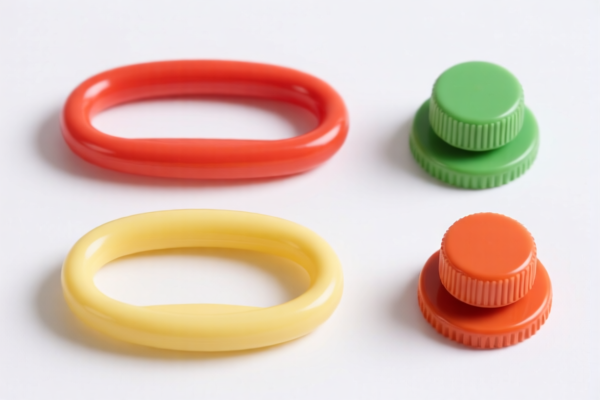
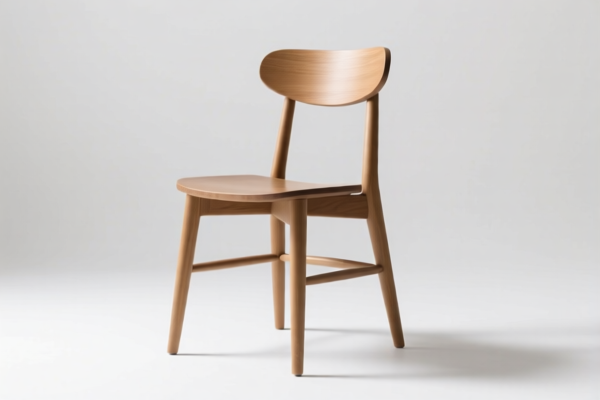
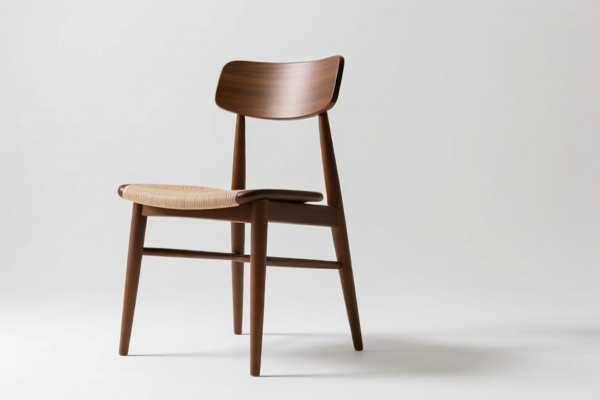
AI Analysis
🥥 The "Coconut Chair" (Decorative Furniture)
🌐 HS Code Reference & Customs Clearance Guide | 2026 Latest Tariff Analysis | Professional Logistics Strategy
📌 I. Product Definition & Classification: Is it a "Coconut" or a "Chair"?
A "Coconut Chair" is a popular decorative furniture item, typically shaped like a coconut or made from coconut shell fibers (coir). In international trade, it is NOT classified as an agricultural product (coconuts) nor as raw materials. It is strictly classified as Furniture.
Key Distinction: * Raw/Processed Coconut Shell/Husk: If sold as raw material for crafts → Chapter 14 (Vegetable Plaiting Materials). * Finished Furniture: If assembled or designed for sitting → Chapter 94 (Furniture).
⚠️ Critical Classification Rule:
- If the item is a finished chair intended for use (even if decorative), it MUST be classified under Heading 9403.
- Misclassifying it as "vegetable material" (Chapter 14) to avoid higher furniture tariffs is a major compliance risk and can lead to severe penalties.
📦 II. HS Code Classification Details (2026 Authoritative Tariff)
| HS Code | Product Description | Applicable Scenario | Material Composition |
|---|---|---|---|
9403.20.00.00 |
Furniture of metal, other than office furniture | Metal-frame coconut chairs (common for outdoor/decorative) | Metal frame + Coir/Resin |
9403.60.80.00 |
Other wooden furniture | If the "coconut" shell is integrated into a wooden frame structure | Wood + Natural Fiber |
9403.70.00.00 |
Furniture of plastics | Fully molded plastic resin chairs shaped like coconuts | Plastic/Resin |
9403.89.00.00 |
Other furniture of other materials | Furniture made primarily of coconut coir, rattan, or other vegetable plaiting materials | Coir/Plant Fiber |
9403.90.00.00 |
Parts of furniture | Disassembled coconut chair parts, cushions, or frames not yet assembled | N/A |
🔍 Key Reminder:
- Most commercial "Coconut Chairs" found in home decor are made of metal frames with coir wrapping or resin.
- If made of metal, use9403.20.00.00.
- If made of plastic/resin, use9403.70.00.00.
- If made primarily of coconut coir (natural fiber) without metal/plastic structural dominance, use9403.89.00.00or9403.60.80.00(if wood-supported).
- Do not classify under1404(Vegetable Products) unless it is raw, unprocessed husk.
💰 III. 2026 Latest Tariff Rate Details (USA Market Focus)
✅ Applicable Country: United States (US)
✅ Country of Origin: China (CN)
✅ Effective Date: Post-November 2025 (Section 301 & IEEPA impacts)
🎯 1. 9403.20.00.00 – Metal Furniture (Common for Metal-Frame Coconut Chairs)
| Item | Content |
|---|---|
| Base MFN Rate | 0% (ad valorem) |
| Section 301 (USITC) | +25% (Footnote 9903.88.01) |
| IEEPA surcharge | +10% (For China-origin goods, effective Nov 2025) |
| Total Effective Rate | 35% |
| De Minimis Exemption | ❌ Not Eligible (Section 301 goods are excluded from 8 U.S.C. 1324b de minimis relief) |
| Legal Path | IEEPA:9903.01.25 → USITC:9403.20.00.00 → SECTION 301:9903.88.01 |
📌 Explanation:
- Metal furniture from China faces 35% total duty.
- This is a high-cost item for importers.
- No de minimis exemption: Even if shipped via postal小包 (under $800), if classified as Section 301 goods, duties may still apply or trigger stricter scrutiny.
🎯 2. 9403.70.00.00 – Plastic/Resin Furniture (Molded Coconut Chairs)
| Item | Content |
|---|---|
| Base MFN Rate | 0% |
| Section 301 (USITC) | +25% |
| IEEPA surcharge | +10% |
| Total Effective Rate | 35% |
| De Minimis Exemption | ❌ Not Eligible |
| Legal Path | IEEPA:9903.01.25 → USITC:9403.70.00.00 → SECTION 301:9903.88.01 |
📌 Explanation:
- Plastic resin chairs are also subject to the same 35% duty.
- Despite being "plastic," they are furniture, not general consumer goods, so the Section 301 list applies.
🎯 3. 9403.89.00.00 – Other Furniture (Natural Fiber/Coir)
| Item | Content |
|---|---|
| Base MFN Rate | 0% |
| Section 301 (USITC) | +25% |
| IEEPA surcharge | +10% |
| Total Effective Rate | 35% |
| De Minimis Exemption | ❌ Not Eligible |
| Legal Path | IEEPA:9903.01.25 → USITC:9403.89.00.00 → SECTION 301:9903.88.01 |
📌 Explanation:
- Even if marketed as "eco-friendly natural coir," if it is a finished chair, it falls under 9403.
- No tariff advantage for using natural materials if it’s classified as furniture.
🛠️ IV. Customs Clearance Practical Advice (Avoiding Pitfalls)
✅ 1. Required Documentation Checklist
| Document | Mandatory? | Notes |
|---|---|---|
| ✅ Product Photos | ✔️ | Show the entire chair, label, and material composition |
| ✅ Material Declaration | ✔️ | Clearly state: "Metal frame with coir wrapping" or "Molded resin" |
| ✅ Commercial Invoice | ✔️ | Description must be specific: "Decorative Coconut Shaped Chair, Metal Frame" |
| ✅ Packing List | ✔️ | Include dimensions and weight (crucial for freight calculation) |
| ✅ FCC/CE Cert | ✔️ | Not required for furniture, but if it has LED lighting, FCC is needed |
| ✅ CPSC Compliance | ✔️ | If marketed for children’s use, ASTM F2057 compliance is mandatory |
✅ 2. Classification Tips (Key Mnemonic)
🔥 "Chair First, Material Second! Don't call it 'Nuts'!"
| Scenario | Correct HS Code | Wrong Code | Consequence of Error |
|---|---|---|---|
| Metal frame + coir wrap | 9403.20.00.00 |
1404.20.00.00 (Vegetable materials) |
Misclassification: 35% duty instead of 0% + penalties |
| Resin molded chair | 9403.70.00.00 |
3926.90.00.00 (General plastic articles) |
Misclassification: 35% vs 25% (still high, but incorrect) |
| Wooden frame + coconut shell | 9403.60.80.00 |
4415.20.00.00 (Cases/packing) |
Misclassification: Duty evasion suspicion |
| Disassembled chair parts | 9403.90.00.00 |
9403.20.00.00 |
Potential Penalty: Parts may have different duty rates |
✅ 3. Special Cases
| Case | Handling Advice |
|---|---|
| LED Coconut Chair | Must include FCC ID and declare as "Furniture with electronic components" |
| Child-Sized Coconut Chair | Must comply with CPSC (Consumer Product Safety Commission) and ASTM standards. Warning: High safety scrutiny |
| OEM Custom Design | Provide design files to prove it’s a unique furniture piece, not a generic commodity |
| Dropshipping (De Minimis) | Risk Alert: Even if under $800, Section 301 goods from China are exempt from de minimis relief. Duties will be collected. |
🌍 V. Global Market Comparison (2026)
| Country/Region | Recommended HS Code | Tariff Rate | Certification Requirements | Notes |
|---|---|---|---|---|
| 🇺🇸 USA | 9403.20.00.00 |
35% (China) | FCC (if LED), CPSC (if child) | High duty due to Section 301 |
| 🇨🇳 China | 9403.20.00.00 |
5-10% | CCC (if applicable) | Lower duty, stable market |
| 🇪🇺 EU | 9403.20.00.00 |
0-3% | CE (if LED), REACH | Free Trade Agreement (FTA) may apply |
| 🇬🇧 UK | 9403.20.00.00 |
0-3% | UKCA | Post-Brexit rules apply |
| 🇦🇺 Australia | 9403.20.00.00 |
5% | RCM (if LED) | No major anti-dumping duties |
📌 Conclusion:
- USA is the most expensive market for coconut chairs due to 35% combined duty.
- EU and UK offer lower tariffs (often 0-3%), making them more profitable for exporters.
- Consider supply chain adjustment: If shipping to the US, consider sourcing from Vietnam or Mexico to avoid Section 301 duties.
📌 VI. Common Mistakes & Pitfalls (Lessons Learned)
❌ Mistake 1: Classifying as 1404.20.00.00 (Vegetable materials)
👉 Result: CBP rejects declaration, applies 35% duty + 2% penalty for misclassification.
❌ Mistake 2: Ignoring CPSC for child-sized chairs
👉 Result: Product recall, fines, and ban from US market.
❌ Mistake 3: Assuming de minimis ($800) applies to Section 301 goods
👉 Result: Package held at customs, duties demanded, delayed delivery.
❌ Mistake 4: Vague description "Coconut Decor"
👉 Result: CBP questions classification, leads to audit.
✅ Correct Practice:
"Decorative Coconut Shaped Chair, Metal Frame with Coconut Coir Wrapping, Model XYZ, Non-Children Use"
🎯 VII. Conclusion: Professional Classification Saves Money!
🎯 Remember:
🔹 "It’s a Chair, Not a Coconut!"
🔹 "Section 301 applies to Furniture from China – 35% Duty!"
🔹 "De Minimis Does NOT Apply to Section 301 Goods!"
📌 Pro Tip:
If you are importing large volumes to the USA, consider:
1. Transshipping through a third country (e.g., Vietnam) to change country of origin.
2. Applying for a Section 301 Exclusion (if available for specific HTS codes).
3. Using a Bonded Warehouse to defer duty payments until sale.
📣 Action Required:
📞 Consult a licensed customs broker.
📸 Provide clear product photos and material specs.
🚀 Get an Advance Ruling to ensure correct classification and avoid surprise duties.
✨ Smart Shipping, Accurate Classification, Higher Profits!
💼 Every Dollar Saved in Duties is Pure Profit!
Customer Reviews
About HS Code Classification
The Harmonized System (HS) is an internationally standardized nomenclature developed by the World Customs Organization (WCO) to classify traded products. Over 200 countries use the HS system as the basis for customs tariffs, trade statistics, and import/export regulations.
Each HS code follows a hierarchical structure:
- Chapter (2 digits) — Broad category of goods (e.g., Chapter 84: Machinery and Mechanical Appliances)
- Heading (4 digits) — More specific grouping within the chapter
- Subheading (6 digits) — Internationally standardized breakdown, used by all WCO member countries
- National subdivisions (8-10 digits) — Country-specific extensions for further classification, such as US HTSUS 10-digit codes
Correct HS code classification is essential for smooth customs clearance, accurate duty payment, and compliance with trade regulations. Misclassification can lead to customs delays, overpayment of duties, or penalties.
When importing from CN to US, the applicable tariff rates may include:
- Most-Favored-Nation (MFN) rate — The standard duty rate applied to WTO members
- General rate — Applied to countries without trade agreements
- Trade remedy duties — Additional tariffs such as Section 301 (anti-dumping), Section 232 (national security), or countervailing duties
The information provided on this page is for reference purposes only. For official classification, please consult with your local customs authority or a licensed customs broker.