Coconut Palm Fiber Mattress
CN → US| HS Code | Tariff Rate | Origin | Destination | Doc |
|---|---|---|---|---|
| 9404299095 | 41.0% | CN | US | Official Doc |
| 9404299087 | 41.0% | CN | US | Official Doc |
Product Images

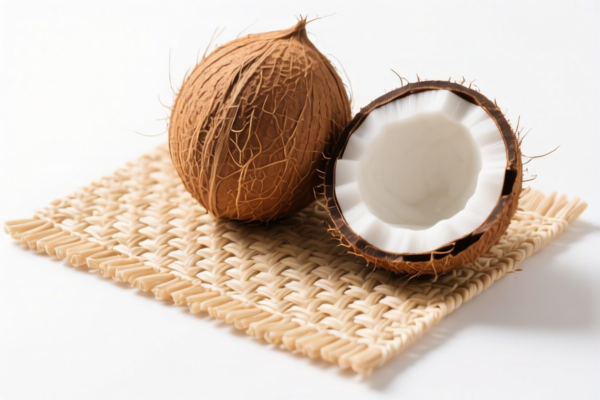
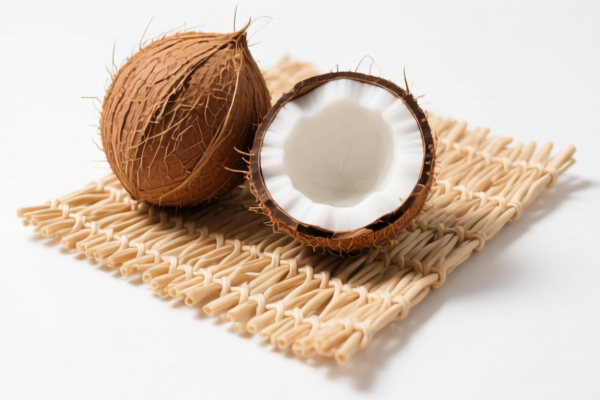
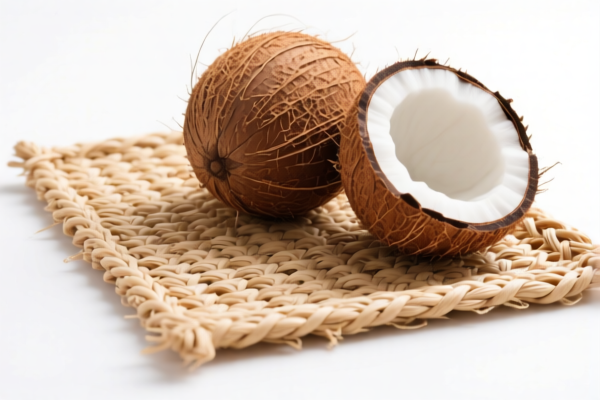
AI Analysis
🌴 Coconut Palm Fiber Mattresses (Coir Mattresses)
🌐 HS Code Reference & Customs Clearance Guide | 2026 Latest Tariff Analysis | Professional Entry Strategy
📌 I. Product Definition & Classification: What Exactly is a "Coconut Palm Fiber Mattress"?
Coconut palm fiber (Coir) mattresses are specialty bedding products made from the fibrous husk of coconuts. Unlike traditional spring or foam mattresses, Coir mattresses are known for their high firmness, breathability, and natural antibacterial properties.
In international trade, they are classified under Chapter 94 (Furniture), specifically within Heading 9404 (Mattresses, bedding, and similar furnishings). The classification depends heavily on the material composition and physical dimensions.
⚠️ Key Distinction:
- Material: If the filling is primarily coconut fiber (coir) mixed with other materials (like latex, cotton, or springs), it falls under "Of other materials".
- Dimensions: The US Customs and Border Protection (CBP) distinguishes tariffs based on size. Mattresses exceeding specific dimensions (Width > 91cm, Length > 184cm, Depth > 8cm) are categorized differently from "Other" general sizes.
📦 II. HS Code Classification Details (2026 Latest Tariff Authority)
Based on the provided data, the relevant HS Codes and their descriptions are as follows:
| HS Code | Product Description | Applicability |
|---|---|---|
9404.29.90.95 |
Mattresses: Of other materials: Other: Other: Other | Standard or non-standard sized mattresses made of mixed natural/synthetic materials (including coir). |
9404.29.90.87 |
Mattresses: Of other materials: Other: Other: Of a width exceeding 91 cm, of a length exceeding 184 cm, and a depth exceeding 8 cm | Large/Super King or Custom-sized mattresses exceeding these three specific dimensions. |
🔍 Critical Note:
- Both codes fall under "Of other materials", meaning they are not primarily made of rubber or foam (which would be 9404.30 or 9404.90).
- Coconut fiber is considered an "other material" in this context.
- The primary differentiator for9404.29.90.87is strictly physical size. If your mattress exceeds W>91cm, L>184cm, and D>8cm, it must use this code. Otherwise, use9404.29.90.95.
💰 III. 2026 Latest Tariff Rate Breakdown (Detailed Tax Clauses)
✅ Applicable Market: United States (US)
✅ Origin: China (CN) (Assumed based on typical coir supply chains, but verify origin)
✅ Effective Time: Current 2026 Tariff Schedule
🎯 1. HS Code 9404.29.90.95 – General "Other" Mattresses
| Item | Content |
|---|---|
| Base Tariff Rate | 0.0% |
| Section 301 / Additional Tariff | 0.0% |
| Total Tax Rate | 0.0% |
| Tax Detail | 基础关税: 0.0%, 加征关税: 0.0% |
| Legal Basis | HTSUS 9404.29.90.95 |
📌 Explanation:
- This code currently enjoys zero tariff status.
- No Section 301 punitive tariffs are applied to this specific sub-category of mattresses.
- Cost Advantage: This is a highly competitive classification for importers, as no duty is payable on the CIF value.
🎯 2. HS Code 9404.29.90.87 – Large Size Mattresses
| Item | Content |
|---|---|
| Base Tariff Rate | 0.0% |
| Section 301 / Additional Tariff | 0.0% |
| Total Tax Rate | 0.0% |
| Tax Detail | 基础关税: 0.0%, 加征关税: 0.0% |
| Legal Basis | HTSUS 9404.29.90.87 |
📌 Explanation:
- Despite being a larger, more premium-sized product, this code also carries 0.0% total duty.
- No Hidden Fees: Unlike some electronics or furniture categories, mattresses do not face the 25% Section 301 tariffs in this specific sub-heading.
- Consistency: Both standard and large coir mattresses are taxed equally at 0%, simplifying cost forecasting.
🛠️ IV. Customs Clearance Practical Advice (Battle-Tested Tips)
✅ 1. Required Documentation Checklist
| Document | Required? | Explanation |
|---|---|---|
| ✅ Product Specification Sheet | ✔️ | Must clearly state: Material Composition (e.g., "100% Coconut Coir," "Coir + Latex Blend"), Dimensions (L x W x H), and Hardness (Firm/Soft). |
| ✅ Material Declaration | ✔️ | Confirm if the mattress contains any springs or synthetic foam. If yes, ensure it still qualifies as "Of other materials" and not "Of rubber/foam." |
| ✅ Commercial Invoice | ✔️ | Must explicitly describe the goods as "Coconut Palm Fiber Mattress" or "Coir Mattress", not just "Bedding." |
| ✅ Packing List | ✔️ | Include vacuum-packed dimensions (if applicable) vs. expanded dimensions, as CBP may measure for classification purposes. |
| ✅ Certificate of Origin (CO) | ✔️ | To prove origin for any potential free trade agreements (though currently 0% duty, CO is good practice). |
✅ 2. Classification Strategy (Key Mnemonic)
🔥 "Check Size First, Then Material! No Spring, No Foam = 0% Duty!"
| Scenario | Correct HS Code | Reason |
|---|---|---|
| Standard Coir Mattress (Width ≤ 91cm OR Length ≤ 184cm OR Depth ≤ 8cm) |
9404.29.90.95 |
Does not meet the "Large Size" criteria. Falls under "Other." |
| Large Coir Mattress (Width > 91cm AND Length > 184cm AND Depth > 8cm) |
9404.29.90.87 |
Meets all three dimensional thresholds. |
| Mattress with Inner Springs | Caution! | If springs are the primary support, it might be 9404.90 (different tax). Verify if it’s still "Of other materials." |
| Mattress with >50% Foam | Caution! | Might be classified as 9404.30 (Foam). Check material weight ratio. |
✅ 3. Special Clearance Situations
| Situation | Handling Advice |
|---|---|
| Vacuum-Packed Mattresses | Declare both compressed and expanded dimensions. CBP may use expanded size for classification if the packaging is temporary. |
| Coir + Latex Blend | Clearly specify the percentage. If coir is dominant, argue for "Of other materials." If latex is dominant, re-evaluate under 9404.30. |
| Custom Sizes | If the mattress is custom-made and exceeds the 91/184/8cm limits, always use 9404.29.90.87 to avoid misclassification penalties. |
| Wooden Frame Included | If the mattress is shipped with a wooden frame, it is considered a set. The entire set may be classified under the mattress code if the mattress is the essential character. |
🌍 V. Global Market Comparison (2026 Latest)
| Country/Region | Recommended HS Code | Tariff Rate | Notes |
|---|---|---|---|
| 🇺🇸 USA | 9404.29.90.95 / .87 |
0.0% | No Section 301 tariffs on this sub-heading. Very favorable. |
| 🇨🇳 China | 9404.29.90.95 |
~5-10% | Import tax for domestic sales. |
| 🇪🇺 EU | 9404.29 |
6.5% | No additional tariffs for coir mattresses. |
| 🇦🇺 Australia | 9404.29 |
5% | GST applies on top. |
| 🇨🇦 Canada | 9404.29 |
0% | Preferential tariff for many origins. |
📌 Conclusion:
- The US market is currently the most tariff-friendly for coconut palm fiber mattresses among major Western markets.
- 0% duty allows for higher profit margins compared to foam or spring mattresses which may face higher duties.
📌 VI. Common Mistakes & Pitfalls (Lessons Learned)
❌ Mistake 1: Misclassifying as 9404.30.20 (Foam Mattresses)
👉 Consequence: If the mattress is primarily coir, not foam, this is a misdeclaration. While the duty might be similar, it invites CBP audit and potential penalties for false classification.
❌ Mistake 2: Ignoring Dimensional Criteria for .87
👉 Consequence: Using .95 for a large mattress is technically incorrect, though tax is the same. However, if duty rates change in the future, this error could lead to retroactive penalties. Always match dimensions to code.
❌ Mistake 3: Vague Description: "Bedding"
👉 Consequence: CBP may classify under 6306.90 (Other textiles) or 9404.90 (Other), which could have different duty rates or require additional documentation (e.g., textile quotas). Be Specific: "Coconut Fiber Mattress."
❌ Mistake 4: Not Declaring Material Composition
👉 Consequence: If the mattress contains hidden springs or synthetic fibers, CBP may reclassify it to a higher duty rate. Full disclosure is key.
✅ Correct Declaration Example:
"Coconut Palm Fiber (Coir) Mattress, Vacuum Packed, Firm Support, Made of Natural Coconut Husk Fiber Bound with Natural Latex. Dimensions: 193cm L x 102cm W x 15cm H. HS Code: 9404.29.90.95."
🎯 VII. Conclusion: Professional Clearance for Zero Duty!
🎯 Remember This Mnemonic:
🔹 "Coir is 'Other', Check Size, Zero Duty is Here!"
🔹 W>91, L>184, D>8 → Code .87
🔹 Else → Code .95
🔹 Both = 0% Duty in US!
📌 Pro Tip:
Since the tariff is 0%, the biggest risk is classification accuracy and material composition disputes.
- Recommendation: Provide a third-party material test report confirming the percentage of coconut fiber vs. other materials.
- Action: Use the correct HS code based on exact expanded dimensions to ensure compliance and avoid future audits.
📣 Immediate Action:
📞 Contact your freight forwarder with the exact material breakdown and dimensions.
📄 Prepare a detailed packing list showing expanded dimensions.
🚀 Leverage the 0% duty for competitive pricing in the US market!
✨ Professional Customs Clearance Starts with Precise Classification!
💼 Your Profit Margin Depends on Your HS Code Choice!
Customer Reviews
About HS Code Classification
The Harmonized System (HS) is an internationally standardized nomenclature developed by the World Customs Organization (WCO) to classify traded products. Over 200 countries use the HS system as the basis for customs tariffs, trade statistics, and import/export regulations.
Each HS code follows a hierarchical structure:
- Chapter (2 digits) — Broad category of goods (e.g., Chapter 84: Machinery and Mechanical Appliances)
- Heading (4 digits) — More specific grouping within the chapter
- Subheading (6 digits) — Internationally standardized breakdown, used by all WCO member countries
- National subdivisions (8-10 digits) — Country-specific extensions for further classification, such as US HTSUS 10-digit codes
Correct HS code classification is essential for smooth customs clearance, accurate duty payment, and compliance with trade regulations. Misclassification can lead to customs delays, overpayment of duties, or penalties.
When importing from CN to US, the applicable tariff rates may include:
- Most-Favored-Nation (MFN) rate — The standard duty rate applied to WTO members
- General rate — Applied to countries without trade agreements
- Trade remedy duties — Additional tariffs such as Section 301 (anti-dumping), Section 232 (national security), or countervailing duties
The information provided on this page is for reference purposes only. For official classification, please consult with your local customs authority or a licensed customs broker.