Coconut Shell Activated Carbon Adsorbent
CN → US| HS Code | Tariff Rate | Origin | Destination | Doc |
|---|---|---|---|---|
| 3802100020 | 39.8% | CN | US | Official Doc |
| 8421390190 | 35.0% | CN | US | Official Doc |
| 8421290065 | 35.0% | CN | US | Official Doc |
| 3802100050 | 39.8% | CN | US | Official Doc |
| 2803000010 | 35.0% | CN | US | Official Doc |
Product Images
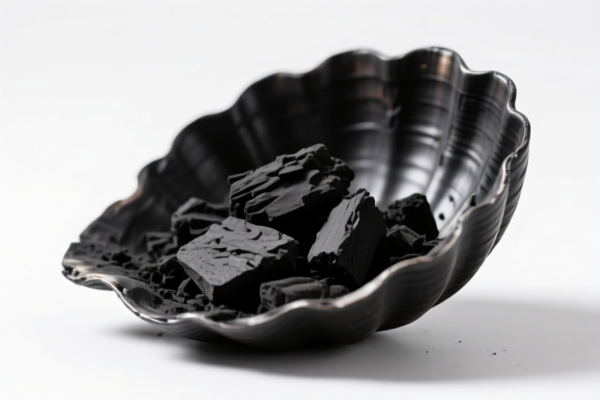
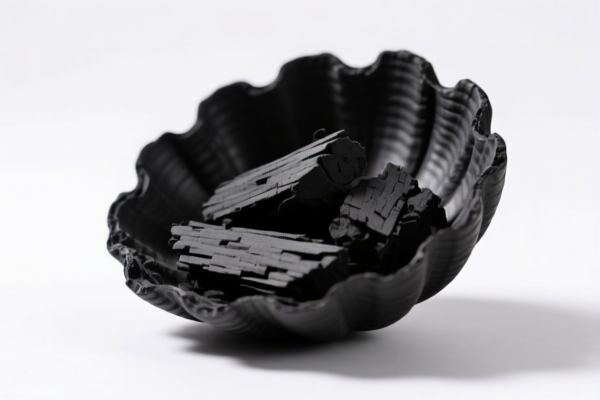
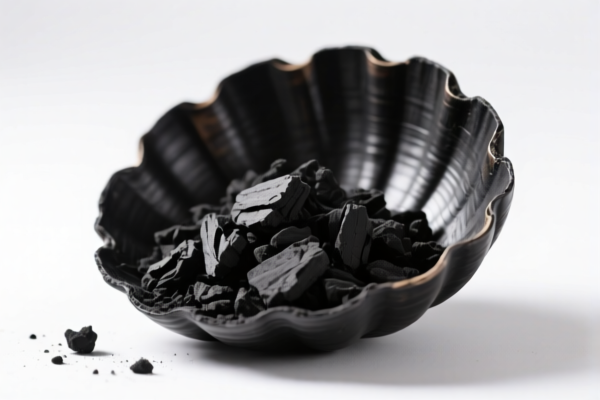
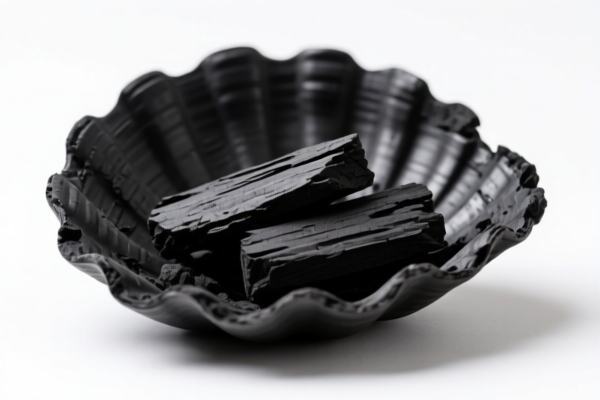
AI Analysis
🥥 Activated Carbon Adsorbent (Coconut Shell Based)
🌐 HS Code Reference & Clearance Guide | 2026 Latest Tariff Analysis | Professional Customs Strategy
📌 I. Product Definition & Classification: Do You Truly Understand "Activated Carbon"?
Activated Carbon is a highly porous form of carbon used for adsorption. In international trade, the classification depends heavily on the raw material source (coconut shell vs. other materials) and the intended application (general adsorption vs. filtration media).
Key Distinctions: * Coconut Shell Origin: Specifically refers to adsorbents derived from carbonized coconut shells, typically falling under Chapter 38. * Filter/Media Function: If the carbon is specifically structured or certified for filtering liquids/gases, it may fall under Chapter 84 (Machinery/Filtering Equipment). * Basic Carbon Form: If classified merely as carbon or charcoal without specific adsorbent treatment, it may fall under Chapter 28.
⚠️ Critical Classification Point:
- Coconut Shell Source: Triggers specific sub-headings in 3802.10 (Animal Veg. Origin) with a base duty of 4.8%.
- General Carbon Source: Falls under 3802.90 (Other) or 2803.00 (Carbon) with a base duty of 0.0%.
- Filter Application: If marketed strictly as a "filtering medium" for machinery, it may align with 8421 categories.
📦 II. HS Code Classification Details (2026 Latest Tariff Authority Comparison)
| HS Code | Product Description | Application Scenario | Raw Material | Base Duty |
|---|---|---|---|---|
3802.10.00.20 |
Activated carbon adsorbents of animal or vegetable origin (Coconut Shell) | General adsorption, water purification, gold recovery | Coconut Shell Derived | 4.8% |
3802.10.00.50 |
Other activated carbon adsorbents (Carbon-based) | General adsorption, chemical processing | General Carbon | 4.8% |
8421.39.01.90 |
Adsorbents for filtering/purifying gases (Carbon) | Air filtration systems, HVAC units | Activated Carbon | 0.0% |
8421.29.00.65 |
Adsorbents for filtering/purifying liquids or gases | Industrial liquid filtration, oil purification | Coconut Activated Carbon | 0.0% |
2803.00.00.10 |
Carbon, black, such as lampblack or other carbon forms | Raw carbon material, simple charcoal | Carbon Form | 0.0% |
🔍 Key Reminder:
- Coconut Shell is a specific "Vegetable Origin" → Use 3802.10.00.20.
- Generic Carbon Adsorbent → Use 3802.10.00.50.
- Filter Media intended for machinery integration → Use 8421 series (Base 0%).
- Raw Carbon → Use 2803.00.00.10 (Base 0%).
💰 III. 2026 Latest Tariff Rate Breakdown (Including Surcharges & Policy Add-ons)
✅ Applicable Country: United States (US)
✅ Country of Origin: China (CN)
✅ Effective Date: November 10, 2025 (for subsequent imports)
🎯 1. 3802.10.00.20 —— Activated Carbon Adsorbent (Coconut Shell Origin)
| Item | Details |
|---|---|
| Base Tariff | 4.8% (ad valorem) |
| Section 301 Surcharge | +25.0% (USITC Footnote 9903.88.01) |
| Section 122 Surcharge | +10.0% (Specific trade remedy) |
| Total Tariff Rate | 39.8% |
| Tax Calculation | CIF Value × 39.8% |
| De Minimis Eligibility | ❌ Not Eligible (deny_de_minimis) |
| Legal Path | USITC:3802.10.00.20 → FOOTNOTE:301_Section → IEEPA:122_Clause |
📌 Explanation:
- Base 4.8%: Standard MFN rate for vegetable-origin activated carbon.
- 25% Section 301: Standard trade war surcharge on Chinese goods.
- 10% Section 122: Additional levy under specific US trade acts.
- Total 39.8%: High burden due to multiple layers of tariffs.
🎯 2. 8421.39.01.90 & 8421.29.00.65 —— Adsorbents for Filtering/Purifying (Gas/Liquid)
| Item | Details |
|---|---|
| Base Tariff | 0.0% (ad valorem) |
| Section 301 Surcharge | +25.0% |
| Section 122 Surcharge | +10.0% |
| Total Tariff Rate | 35.0% |
| Tax Calculation | CIF Value × 35.0% |
| De Minimis Eligibility | ❌ Not Eligible |
| Legal Path | USITC:8421.xxxx → FOOTNOTE:301_Section → IEEPA:122_Clause |
📌 Explanation:
- Base 0%: Machinery/filter parts often have lower base rates.
- Surcharges: Still fully subject to Section 301 (25%) and Section 122 (10%) if origin is China.
- Savings: Saves 4.8% compared to coconut shell classification.
🎯 3. 3802.10.00.50 —— Other Activated Carbon Adsorbents (General Carbon)
| Item | Details |
|---|---|
| Base Tariff | 4.8% (ad valorem) |
| Section 301 Surcharge | +25.0% |
| Section 122 Surcharge | +10.0% |
| Total Tariff Rate | 39.8% |
| Tax Calculation | CIF Value × 39.8% |
| De Minimis Eligibility | ❌ Not Eligible |
| Legal Path | USITC:3802.10.00.50 → FOOTNOTE:301_Section → IEEPA:122_Clause |
📌 Note:
- Same total rate as Coconut Shell (3802.10.00.20) because the base duty is identical (4.8%).
- Differentiation is purely based on raw material documentation.
🎯 4. 2803.00.00.10 —— Carbon, Black, Other Forms
| Item | Details |
|---|---|
| Base Tariff | 0.0% (ad valorem) |
| Section 301 Surcharge | +25.0% |
| Section 122 Surcharge | +10.0% |
| Total Tariff Rate | 35.0% |
| Tax Calculation | CIF Value × 35.0% |
| De Minimis Eligibility | ❌ Not Eligible |
| Legal Path | USITC:2803.00.00.10 → FOOTNOTE:301_Section → IEEPA:122_Clause |
📌 Note:
- Base 0%: Raw carbon forms often have lower base duties.
- Risk: Must prove it is not "activated carbon" (which falls under Ch 38) but rather raw carbon/black carbon. Misclassification here can lead to penalties.
🛠️ IV. Customs Clearance Practical Advice (Battle-Tested Pitfall Guide)
✅ 1. Required Documentation Checklist (Non-Negotiable)
| Document | Required | Purpose |
|---|---|---|
| ✅ Product Specification Sheet | ✔️ | Must explicitly state "Coconut Shell" vs. "Other Carbon" vs. "Filter Media" |
| ✅ Bill of Materials (BOM) | ✔️ | Confirms raw material source (e.g., carbonized coconut shells) |
| ✅ Certificate of Origin (CO) | ✔️ | Critical for determining Section 301 applicability |
| ✅ Commercial Invoice | ✔️ | Must match HS Code description precisely (e.g., "Adsorbent for Filtration") |
| ✅ Packing List | ✔️ | Shows net/gross weight for duty calculation |
| ✅ Third-Party Test Report | ✔️ | Proves adsorption capacity or carbon content if challenged |
✅ 2. Declaration Strategy (Key Mantra)
🔥 “Source Defines Base, Function Defines Chapter, Origin Defines Surcharge!”
| Scenario | Correct HS Code | Wrong Approach | Consequence |
|---|---|---|---|
| Coconut Shell Adsorbent | 3802.10.00.20 |
Declaring as 2803.00.00.10 |
Overpayment of 4.8% base duty |
| General Carbon Adsorbent | 3802.10.00.50 |
Declaring as 8421 |
Underpayment risk if not filter media |
| Filter Media for Machines | 8421.39.01.90 or 8421.29.00.65 |
Declaring as 3802 |
Pay extra 4.8% base duty |
| Raw Carbon/Black Carbon | 2803.00.00.10 |
Declaring as 3802 |
Underpayment risk if it is activated |
✅ 3. Special Case Handling
| Situation | Recommendation |
|---|---|
| OEM Custom Adsorbent | Provide customer spec sheet proving it is "for filtration systems" to qualify for 8421 (35%) |
| Blended Material | If >50% coconut shell by volume, declare as 3802.10.00.20 |
| Bulk vs. Packaged | Bulk may be classified differently than retail-ready filter cartridges; ensure consistency |
| Pre-Cleared Stock | If already in US warehouse, check existing entry summaries for correct precedent |
🌍 V. Global Market Clearance Comparison (2026 Latest)
| Country/Region | Recommended HS Code | Total Tariff (China Origin) | Certification | Notes |
|---|---|---|---|---|
| 🇺🇸 USA | 3802.10.00.20 |
39.8% | None specific | High surcharges (301 + 122) |
| 🇺🇸 USA | 8421.29.00.65 |
35.0% | None specific | Lower base duty, same surcharges |
| 🇨🇳 China | 3802.10.00.20 |
4.8% (Import) | None | No Section 301/122 |
| 🇪🇺 EU | 3802.10.00 |
6.5% (Approx.) | REACH | No trade war surcharges |
| 🇬🇧 UK | 3802.10.00 |
6.5% (Approx.) | UK REACH | Post-Brexit alignment with EU |
📌 Conclusion:
- USA is the most expensive market due to layered surcharges.
- Optimization Tip: If your product is purely a filtering medium for machinery, use 8421 codes to save 4.8% base duty.
- Documentation is Key: Proving "Filter Media" status vs. "Raw Adsorbent" can lower the base tax.
📌 VI. Common Mistakes & Pitfalls (Blood-Teaching Lessons)
❌ Mistake 1: Declaring all activated carbon as 2803.00.00.10 (Carbon)
👉 Result: Customs may reclassify as 3802 (Activated Carbon) → Back taxes + Penalties for undervaluation.
❌ Mistake 2: Ignoring "Coconut Shell" origin
👉 Result: Using 3802.10.00.50 (General) instead of .20 (Coconut) may seem fine for duty, but origin misrepresentation can trigger audits.
❌ Mistake 3: Claiming 8421 (Filter) without proving functional integration
👉 Result: If shipped as loose granules without being part of a filtration system, customs may reject 8421 → Reclassified to 3802/2803.
❌ Mistake 4: Not disclosing Section 122 applicability
👉 Result: Failure to include 10% surcharge → Customs holds shipment for underpayment.
✅ Correct Action:
“Coconut Shell Activated Carbon Adsorbent, Granular, for Water Purification, HS: 3802.10.00.20, Origin: China, Subject to 25% 301 + 10% 122”
🎯 VII. Conclusion: Precision Classification Saves Money!
🎯 Remember the Mantra:
🔹 “Coconut = 3802.20 (4.8% Base), Filter = 8421 (0% Base), Carbon = 2803 (0% Base)”
🔹 “Surcharges are Fixed (35%): 25% 301 + 10% 122”
🔹 “Save 4.8% by proving it’s a Filter or Raw Carbon, not just Adsorbent!”
📌 Pro Tip:
If you are shipping loose granules, ensure your invoice specifies "Adsorbent."
If shipping in cartridges/filters, specify "Filter Media" to target 8421.
Always request a Pre-Ruling from CBP if the application is ambiguous.
📣 Immediate Action:
📞 Contact your customs broker with product specs + raw material proof
🚀 Optimize your HS Code to save 4.8% base duty + avoid compliance risks!
✨ Professional Clearance Starts with Accurate Classification!
💼 Your Bottom Line Depends on the Details!
Customer Reviews
About HS Code Classification
The Harmonized System (HS) is an internationally standardized nomenclature developed by the World Customs Organization (WCO) to classify traded products. Over 200 countries use the HS system as the basis for customs tariffs, trade statistics, and import/export regulations.
Each HS code follows a hierarchical structure:
- Chapter (2 digits) — Broad category of goods (e.g., Chapter 84: Machinery and Mechanical Appliances)
- Heading (4 digits) — More specific grouping within the chapter
- Subheading (6 digits) — Internationally standardized breakdown, used by all WCO member countries
- National subdivisions (8-10 digits) — Country-specific extensions for further classification, such as US HTSUS 10-digit codes
Correct HS code classification is essential for smooth customs clearance, accurate duty payment, and compliance with trade regulations. Misclassification can lead to customs delays, overpayment of duties, or penalties.
When importing from CN to US, the applicable tariff rates may include:
- Most-Favored-Nation (MFN) rate — The standard duty rate applied to WTO members
- General rate — Applied to countries without trade agreements
- Trade remedy duties — Additional tariffs such as Section 301 (anti-dumping), Section 232 (national security), or countervailing duties
The information provided on this page is for reference purposes only. For official classification, please consult with your local customs authority or a licensed customs broker.