Code Care 鞋类配件
CN → US| HS Code | Tariff Rate | Origin | Destination | Doc |
|---|---|---|---|---|
| 4205008000 | 35.0% | CN | US | Official Doc |
| 6406909000 | 17.5% | CN | US | Official Doc |
| 4205002000 | 35.0% | CN | US | Official Doc |
Product Images
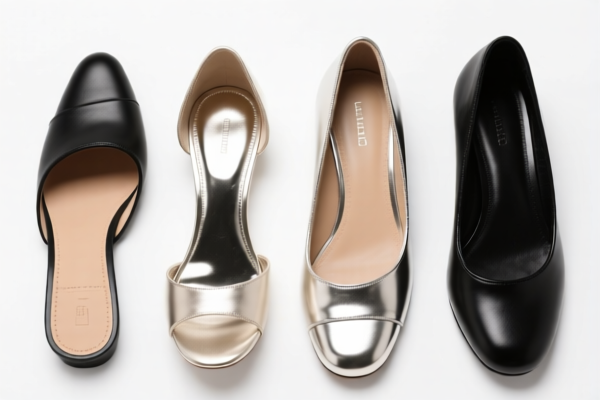
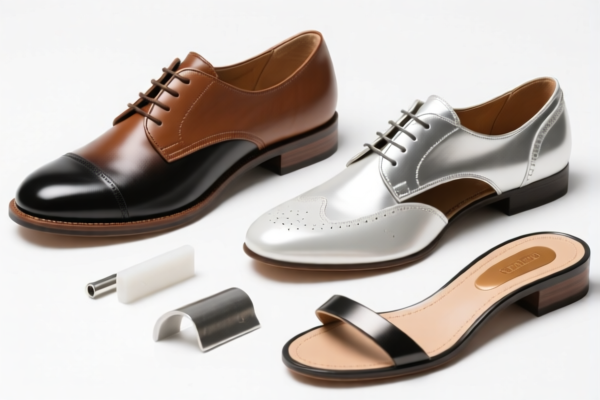
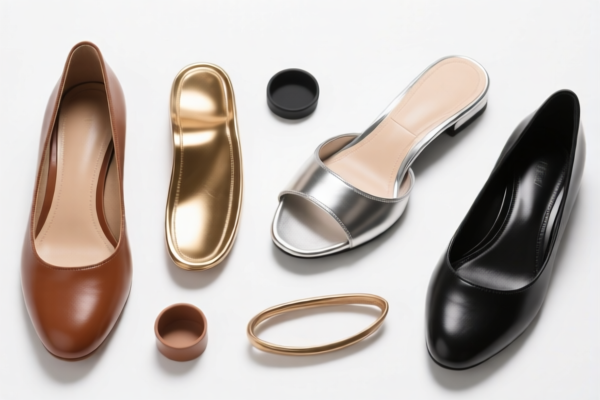
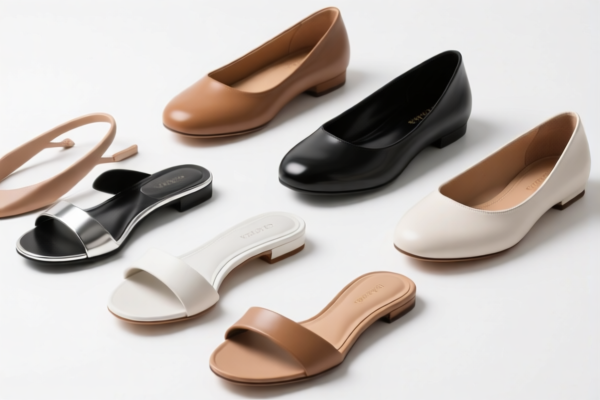
AI Analysis
👟 Shoe Accessories (Leather Goods & Footwear Parts)
🌐 HS Code Reference & Customs Clearance Guide | 2026 Latest Tariff Analysis | Professional Clearance Strategy
📌 I. Product Definition & Classification: Do You Really Understand "Shoe Accessories"?
Shoe accessories are auxiliary components used in the manufacture, repair, or assembly of footwear. In international trade, they are strictly categorized based on material composition and functional purpose. They generally fall into two main branches:
Leather Products (Chapter 42): Accessories made primarily of leather or composite leather, such as linings, insoles, heels, or decorative leather parts. These are classified as "Other leather articles." Footwear Parts (Chapter 64): General components regardless of material (but typically rubber, plastic, or mixed materials if not specified as leather), such as soles, uppers, laces, or other unfinished parts destined specifically for footwear assembly.
⚠️ Key Distinction Point:
- If the item is primarily leather/composite leather and functions as a general leather good or accessory → Classify under Chapter 42 (e.g.,4205).
- If the item is explicitly a part of a shoe (like a sole, upper, or lace) and fits the "footwear parts" definition → Classify under Chapter 64 (e.g.,6406).
- Critical Note: Misclassification between "Leather Goods" and "Footwear Parts" leads to significant tariff differences and potential customs detention.
📦 II. HS Code Classification Details (2026 Latest Tariff Authority Comparison)
Based on the provided data, here are the three primary classifications identified for "Shoe Accessories," along with their matching logic and tax implications.
| HS Code | Product Description | Matching Logic & Summary | Total Tax Rate |
|---|---|---|---|
4205.00.80.00 |
Other Leather Articles | Match Basis: Based on the product name "Shoe Accessories," it is inferred that the material is leather or composite leather. It falls under the category of "Other leather articles" components/parts. | 35.0% |
6406.90.90.00 |
Other Footwear Parts | Match Success: The product name "Shoe Accessories" aligns with the HSCODE definition of "Footwear Parts" in terms of usage. Judged as a fallback category rule. | 17.5% |
4205.00.20.00 |
Other Leather Articles | Inference: Common sense suggests shoe accessories include shoe laces. This does not conflict with the material scope of "Leather or Regenerated Leather Articles." It fits the fallback category matching logic. | 35.0% |
🔍 Key Reminder:
-4205Series: Apply if the accessory is Leather. High tariff burden due to USITC and IEEPA surcharges.
-6406Series: Apply if the accessory is a Functional Shoe Part (e.g., soles, uppers, laces made of non-leather materials). Lower tariff burden.
- Shoelaces Exception: While often leather, they are frequently classified under6406.90if considered strictly as footwear parts. However, if deemed "Leather Articles," they fall under4205. The data shows both possibilities exist.
💰 III. 2026 Latest Tariff Rate Details (Including Surcharges & Policy Add-ons)
✅ Applicable Country: United States (US)
✅ Country of Origin: China (CN)
✅ Effective Time: From November 10, 2025 (including subsequent imports)
🎯 1. 4205.00.80.00 & 4205.00.20.00 —— Other Leather Articles
| Item | Content |
|---|---|
| Base Duty Rate | 0.0% (ad valorem) |
| USITC Surcharge | +25.0% (Under USITC Footnote related to Section 301) |
| IEEPA Surcharge | +10.0% (Specific 122 Clause Tariff targeting China/HK products, effective Nov 10, 2025) |
| Total Tax Rate | 35.0% |
| Tax Calculation | CIF Value × 35% |
| De Minimis Exemption | ❌ Not Available (deny_de_minimis) |
| Legal Basis Path | IEEPA:9903.01.25 → USITC:4205.00.x0.00 → FOOTNOTE:301_Applicable |
📌 Explanation:
- The 25% USITC Surcharge comes from the "Additional Duties" under Section 301 of the U.S. Trade Act.
- The 10% IEEPA Surcharge is the specific "122 Clause Tariff" imposed on Chinese products under the International Emergency Economic Powers Act.
- Combined 35% is a high tariff category. For leather shoe accessories, this significantly impacts profit margins.
🎯 2. 6406.90.90.00 —— Other Footwear Parts
| Item | Content |
|---|---|
| Base Duty Rate | 0.0% |
| USITC Surcharge | +7.5% |
| IEEPA Surcharge | +10.0% (122 Clause Tariff) |
| Total Tax Rate | 17.5% |
| Tax Calculation | CIF Value × 17.5% |
| De Minimis Exemption | ❌ Not Available (deny_de_minimis) |
| Legal Basis Path | IEEPA:9903.01.25 → USITC:6406.90.90.00 → FOOTNOTE:301_Applicable |
📌 Note:
- This category offers a significant tariff advantage (17.5% vs. 35%).
- If your "Shoe Accessories" are clearly functional parts (e.g., rubber soles, plastic eyelets, synthetic uppers) rather than decorative leather goods, always aim for6406.90.90.00.
- Even if made of leather, if the primary function is strictly as a "part of footwear" and not a general "leather article," you may argue for this classification, but be prepared for customs scrutiny.
🛠️ IV. Customs Clearance Practical Advice (Combat Pitfall Guide)
✅ 1. Preparation Checklist (All Inevitable)
| Material | Must Provide | Description |
|---|---|---|
| ✅ Product Spec Sheet | ✔️ | Include material composition (Leather? Rubber? Plastic?), dimensions, and function. |
| ✅ Material Declaration | ✔️ | Explicitly state if it is "Genuine Leather," "Synthetic Leather," or "Other Materials." |
| ✅ Product Photos | ✔️ | Clear images showing the item’s relationship to footwear (e.g., attached to a shoe vs. standalone). |
| ✅ Commercial Invoice | ✔️ | Clearly describe as "Shoe Parts" or "Leather Accessories" matching the HS Code intent. |
| ✅ Packing List | ✔️ | Detail the contents. Avoid vague terms like "Miscellaneous Parts." |
✅ 2. Declaration Tips (Key Mantra)
🔥 "Material Defines Chapter, Function Defines Subheading!"
| Situation | Correct Declaration Method | Incorrect Practice |
|---|---|---|
| Leather Insoles/Linings | 4205.00.80.00 (Leather Article) |
Misdeclaring as 6406 to save tax → High Risk of Audit |
| Rubber/Plastic Soles | 6406.90.90.00 (Footwear Part) |
Misdeclaring as 4205 → Unnecessary 35% Tax |
| Leather Shoelaces | Check Intent: Often 4205.00.20.00 |
Declaring as 6406 without strong functional proof → Dispute |
| Complete Shoe | 6404.00.00.00 (Footwear) |
Declaring as "Parts" → Undervaluation Issue |
✅ 3. Special Handling
| Situation | Handling Suggestion |
|---|---|
| Mixed Materials | If the accessory is 90% leather, declare under 4205. If it's mixed but primarily for structural shoe use, argue for 6406. |
| OEM Custom Parts | Provide the customer’s design drawing showing the part’s specific fitment to a shoe model. |
| Shoelaces | These are the most contested. If made of leather, 4205 is safer. If synthetic, 6406 is standard. |
| Decorative Leather Tags | Clearly define as "Accessories" not "Parts" if they don't affect shoe function → 4205. |
🌍 V. Global Major Market Clearance Comparison (2026 Latest)
| Country/Region | Recommended HS Code | Tariff (China Origin) | Certification Requirements | Notes |
|---|---|---|---|---|
| 🇺🇸 USA | 4205.00.80.00 |
35.0% | None specific | High tariff for leather goods. |
| 🇺🇸 USA | 6406.90.90.00 |
17.5% | None specific | Lower tariff for functional parts. |
| 🇪🇺 EU | 4205.00 |
5-12% | CE (if applicable) | No Section 301 equivalent. |
| 🇨🇳 China | 4205.00 |
0-10% | None | Import duty varies. |
| 🇬🇧 UK | 4205.00 |
5-12% | None | Post-Brexit rules apply. |
📌 Conclusion:
- The US is the most critical market for tariff optimization. The difference between 17.5% and 35% is massive.
- Strategy: If your "Shoe Accessories" can be reasonably classified as6406.90.90.00(Footwear Parts), prioritize this declaration. Only use4205if the item is undeniably a general leather good.
📌 VI. Common Errors & Pitfall Guide (Blood & Tears Lessons)
❌ Mistake 1: Calling everything "Shoe Accessories" generically
👉 Consequence: Customs cannot determine the material/function → Delayed Release or Re-inspection.
❌ Mistake 2: Declaring Leather Shoelaces as 6406
👉 Consequence: If proven to be leather articles, back-tariffs of 17.5% will be charged + penalties.
❌ Mistake 3: Ignoring the "122 Clause" (IEEPA)
👉 Consequence: Forgetting to account for the extra 10% surcharge on top of the 301 tariff → Under-quoting costs.
❌ Mistake 4: Mixing "Footwear Parts" with "General Leather Goods" in one shipment
👉 Consequence: Each line item must be precisely coded. Mixed codes in one manifest without clear separation → Audit Flag.
✅ Correct Action:
"Shoe Parts: Rubber Outsole, Model XYZ, 100% Synthetic Rubber" →
6406.90.90.00
"Leather Accessory: Decorative Leather Patch, Genuine Cowhide" →4205.00.80.00
🎯 VII. Conclusion: Precise Classification Saves Money!
🎯 Remember the Mantra:
🔹 "Leather = 35%, Parts = 17.5%."
🔹 "Define Material First, Then Function."
🔹 "Don't Guess the HS Code; Prove It."
📌 Pro Tip:
If your volume is high, consider applying for a US Customs Border Protection (CBP) Binding Ruling before shipping. This provides legal certainty on whether your "Shoe Accessories" are 4205 or 6406.
📣 Immediate Action:
📞 Consult a Customs Broker + Provide Material Specs + Apply for Ruling if needed
🚀 Let your Shoe Accessories clear smoothly, pay less tax, and boost your profits!
✨ Professional Clearance Starts with Accurate Classification!
💼 Every percentage point of tariff saves is pure profit!
Customer Reviews
About HS Code Classification
The Harmonized System (HS) is an internationally standardized nomenclature developed by the World Customs Organization (WCO) to classify traded products. Over 200 countries use the HS system as the basis for customs tariffs, trade statistics, and import/export regulations.
Each HS code follows a hierarchical structure:
- Chapter (2 digits) — Broad category of goods (e.g., Chapter 84: Machinery and Mechanical Appliances)
- Heading (4 digits) — More specific grouping within the chapter
- Subheading (6 digits) — Internationally standardized breakdown, used by all WCO member countries
- National subdivisions (8-10 digits) — Country-specific extensions for further classification, such as US HTSUS 10-digit codes
Correct HS code classification is essential for smooth customs clearance, accurate duty payment, and compliance with trade regulations. Misclassification can lead to customs delays, overpayment of duties, or penalties.
When importing from CN to US, the applicable tariff rates may include:
- Most-Favored-Nation (MFN) rate — The standard duty rate applied to WTO members
- General rate — Applied to countries without trade agreements
- Trade remedy duties — Additional tariffs such as Section 301 (anti-dumping), Section 232 (national security), or countervailing duties
The information provided on this page is for reference purposes only. For official classification, please consult with your local customs authority or a licensed customs broker.